
1. Why Do Chemical Plant Automation Systems Need Protection Devices?
In chemical production sites, automation instruments and control systems often operate in complex and demanding environments. These sites usually include motors, variable frequency drives, power cables, control cables, lightning-induced surges, power grid fluctuations, poor grounding, and potentially explosive gases or dust.
Many failures may appear to be instrument damage at first, such as unstable DCS data, abnormal PLC modules, fluctuating transmitter signals, or damaged communication cards. However, the real causes are often related to signal interference, surge impact, or energy control in hazardous areas.
Therefore, in the design of chemical plant automation systems, signal isolators, safety barriers, and surge protective devices are essential protection components. Although all three are protective devices, their functions and protection purposes are different.
2. Signal Isolators: Solving Signal Interference and Ground Loop Problems
Signal isolators are mainly used for signal isolation, signal conversion, and anti-interference protection in automation control systems. They are typically installed between field instruments, PLCs, DCS systems, data acquisition modules, or actuators to reduce interference between different systems.
In chemical plants, unstable instrument signals can be caused by many factors, including:
- Ground potential differences between different control systems;
- Electromagnetic interference from motors, variable frequency drives, and high-power equipment;
- Long-distance signal transmission;
- Signal cables installed too close to power cables;
- Improper shielding or grounding;
- Ground loops caused by multiple devices sharing the same grounding system.
These problems may cause fluctuations in 4-20mA, 0-10V, pulse, frequency, switching, or communication signals. Minor issues can affect measurement accuracy, while serious problems may cause false alarms, incorrect interlocks, or unexpected actions.
A signal isolator electrically isolates the input and output sides while allowing the signal to be transmitted correctly. It helps cut off ground loop currents and reduce interference. For automation systems with complex grounding conditions, strong field interference, or long signal transmission distances, selecting the right signal isolator can significantly improve system stability.
3. Safety Barriers: Ensuring Intrinsic Safety in Hazardous Area Instrument Loops
Chemical plants often include hazardous areas, such as tank farms, reactor areas, loading zones, solvent areas, and dust environments. These areas may contain flammable or explosive gases, vapors, or dust, which means instrument loops must meet higher safety requirements.
For instrument loops in hazardous areas, accurate measurement is not enough. It is also necessary to ensure that sparks, excessive temperature, or excessive energy will not occur under fault conditions. If the voltage, current, or stored energy in the loop exceeds the safe limit, it may become an ignition source.
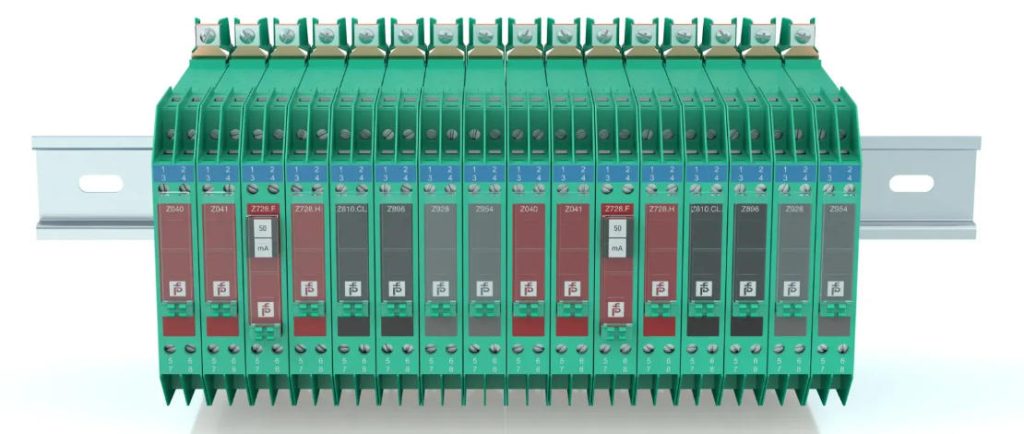
The main function of a safety barrier is to limit the voltage, current, and energy entering the hazardous area, keeping them within the allowable range for intrinsic safety. During normal operation, the safety barrier transmits instrument signals. When an abnormal condition occurs, it limits the energy on the hazardous side and reduces the risk of igniting explosive atmospheres.
Common safety barriers are generally divided into two types:
3.1 Zener Safety Barriers
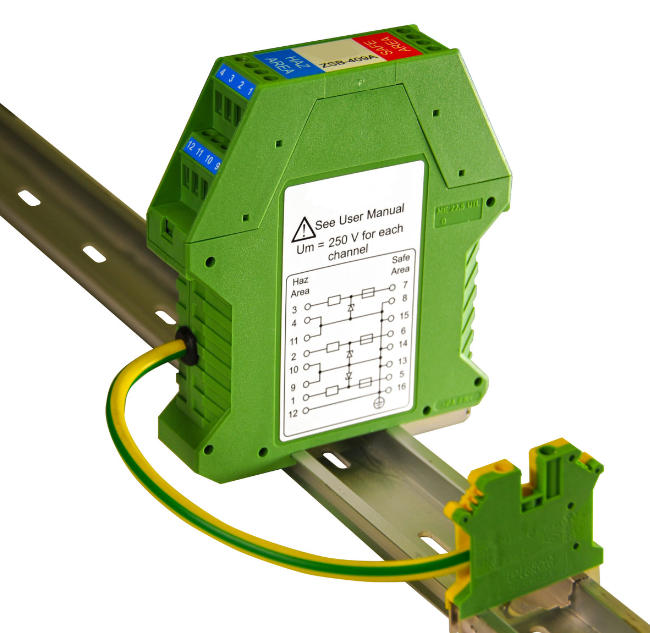
Zener safety barriers usually use Zener diodes, resistors, and fuses to achieve voltage and current limitation. They have a relatively traditional structure, but they require a reliable intrinsic safety grounding system. If the grounding system is not properly designed or installed, it may affect both safety protection and system stability.
3.2 Isolated Safety Barriers
Isolated safety barriers are more widely used in modern chemical plant projects. They not only limit the energy entering the hazardous area, but also provide electrical isolation between input, output, and power supply. Compared with Zener safety barriers, isolated safety barriers rely less on dedicated intrinsic safety grounding, are easier to install and maintain, and offer better anti-interference performance.
However, it is important to note that an isolated safety barrier does not eliminate the need for grounding. Protective grounding, shielding grounding, and equipotential bonding must still be implemented according to design standards and site requirements.
4. Surge Protective Devices: Preventing Equipment Damage from Lightning and Transient Overvoltage
Sudden equipment damage is common in chemical plant automation systems. For example, communication modules may fail after thunderstorms, control systems may become abnormal after high-power equipment starts or stops, or instrument modules may be damaged without obvious short circuits or overloads. These failures are often related to surge events.
A surge is a transient overvoltage that appears suddenly and lasts for a very short time, but it can have a high peak value and strong energy. For electronic equipment such as PLCs, DCS systems, transmitters, communication modules, and data acquisition modules, a single surge impact may cause hardware failure. It may also degrade components and shorten equipment service life.
Common sources of surges include:
- Lightning induction or lightning backflash;
- Power grid fluctuations;
- Startup and shutdown of high-power equipment;
- Transient overvoltage caused by switching operations;
- Inductive coupling in long-distance cables;
- Ground potential differences.
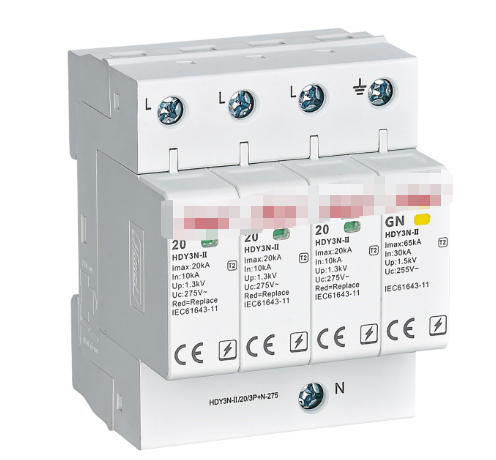
A surge protective device, also known as an SPD, is mainly used to limit transient overvoltage and discharge surge current to the grounding or equipotential bonding system, thereby protecting downstream equipment.
In chemical plants, surge protection should be carefully considered for power lines, instrument signal lines, communication lines, data lines, outdoor instruments, tank farm equipment, long-distance cables, and lines installed near high-voltage or high-power equipment.
5. What Is the Difference Between Signal Isolators, Safety Barriers, and Surge Protective Devices?
Although all three devices are used for protection in automation systems, their main functions are different.
| Protection Device | Main Function | Problems Solved | Common Installation Position |
|---|---|---|---|
| Signal Isolator | Electrical isolation and signal anti-interference | Ground loops, signal fluctuations, electromagnetic interference | Between PLC, DCS, transmitters, and actuators |
| Safety Barrier | Limits energy entering hazardous areas | Prevents ignition sources under fault conditions | Hazardous area instrument loops |
| Surge Protective Device | Limits transient overvoltage | Lightning induction, surge impact, equipment breakdown | Power lines, signal lines, communication lines, outdoor lines |
In practical projects, it is not advisable to assume that one type of protection device can solve all problems. Especially for SIS, ESD, interlock loops, and critical measurement loops, risk analysis should be carried out for the entire instrument loop. This includes signal source, installation area, cable route, grounding method, explosion-proof requirements, and surge discharge path.
6. Selection Tips for Chemical Plant Automation Protection Devices
To improve system reliability, chemical enterprises should consider the following points when designing or upgrading automation systems:
- Select protection devices according to the problem type
If the problem is unstable signals, priority should be given to isolation and anti-interference protection. For hazardous area instrument loops, safety barriers should be considered. If the site has a high risk of lightning or transient overvoltage, SPDs should be installed. - Design according to hazardous area classification
Instrument loops involving hazardous areas should be matched according to hazardous area classification, intrinsic safety parameters, and explosion-proof requirements. - Pay attention to grounding and shielding quality
The performance of many protection devices is closely related to the grounding system. Poor grounding may reduce protection effectiveness or even introduce new interference. - Evaluate critical loops as a complete system
For key interlock loops, emergency shutdown systems, and core control loops, engineers should evaluate the instruments, cables, cabinet modules, protection devices, and grounding system as a whole instead of focusing only on individual product specifications. - Choose reliable products suitable for industrial environments
Chemical plant environments are complex. Protection devices should offer stability, anti-interference capability, environmental adaptability, and relevant certifications to support long-term continuous operation.
Conclusion
The safe and stable operation of chemical plant automation systems depends on proper protection design. Signal isolators improve signal stability, safety barriers control the energy of hazardous area instrument loops, and surge protective devices prevent transient overvoltage from damaging equipment.
These three types of devices have different functions and cannot replace one another. Only by selecting and configuring them according to site conditions, hazardous area requirements, lightning protection, grounding design, and control system requirements can chemical plants reduce instrument failures, lower downtime risks, and improve the reliability and safety of automation systems.
FAQ
1. Can signal isolators and safety barriers be used interchangeably?
No, this is not recommended. Signal isolators are mainly used to solve signal interference and system isolation problems, while safety barriers are designed to limit energy in hazardous area instrument loops. Their design purposes are different.
2. Do all instruments in chemical plants need surge protective devices?
Not necessarily. This should be determined based on instrument location, cable length, lightning risk, equipment importance, and site grounding conditions. Outdoor instruments, long-distance lines, and critical control loops usually require special attention.
3. Does an isolated safety barrier still need grounding?
Yes. Although an isolated safety barrier does not rely on dedicated intrinsic safety grounding, protective grounding, shielding grounding, and equipotential bonding should still be implemented according to relevant standards and design requirements.
4. Does DCS signal fluctuation always mean the transmitter is faulty?
No. Signal fluctuation may be caused by the transmitter, but it may also result from ground loops, electromagnetic interference, cable installation issues, poor shielding, or abnormal module channels. The entire loop should be checked.