As urban infrastructure rapidly evolves toward intelligent and sustainable management, modern cities are placing greater emphasis on flood resilience, ecological restoration, and smart environmental monitoring. Urban rivers, landscape lakes, retention ponds, and wetland parks are now essential parts of the “Smart Water” ecosystem, requiring continuous and highly reliable hydrological data collection.
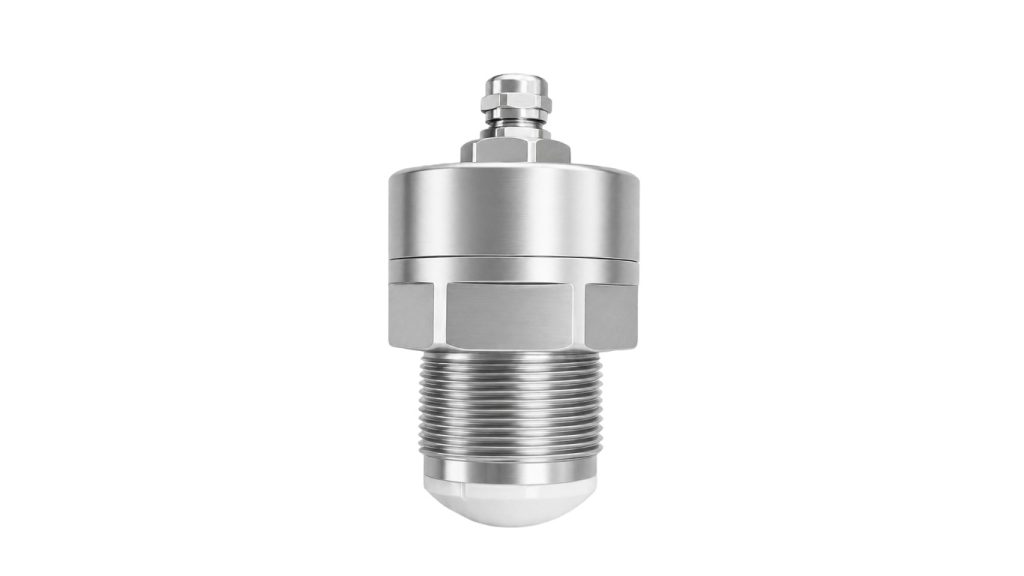
In these outdoor applications, conventional water level instruments often struggle with moisture, sediment buildup, floating debris, and unstable environmental conditions. To address these challenges, the JWrada®-23 stainless steel radar sensor provides a non-contact, high-precision monitoring solution specifically designed for demanding outdoor water management environments.
Powered by advanced 80GHz radar technology and housed in a robust stainless steel enclosure, the JWrada®-23 delivers stable and maintenance-friendly performance for long-term river and landscape water monitoring projects.
Why Traditional Water Level Instruments Face Limitations in Urban Water Systems
Unlike industrial tanks with relatively controlled conditions, urban waterways introduce a wide range of environmental variables that can negatively affect conventional sensors.
Exposure to Harsh Outdoor Conditions
Monitoring equipment installed near rivers and parks must endure prolonged exposure to rain, UV radiation, condensation, temperature fluctuations, and seasonal flooding. Over time, ordinary enclosures may crack, oxidize, or lose sealing performance.
Interference from Complex Water Surfaces
Floating leaves, algae, foam, drifting trash, and water turbulence frequently interfere with measurement signals. In narrow channels or under bridges, reflections from surrounding structures can also reduce measurement stability.
Maintenance Burden of Contact Sensors
Traditional contact-type devices such as float systems and submerged pressure transmitters require regular cleaning because mud, biofilm, and aquatic plants easily accumulate around sensing elements. This increases maintenance costs and operational downtime.
Demand for Real-Time Digital Monitoring
Modern smart city infrastructure requires continuous online monitoring, remote diagnostics, and cloud-based data integration. Older monitoring methods cannot fully satisfy these digital management requirements.
Core Advantages of the JWrada®-23 Stainless Steel Radar Sensor
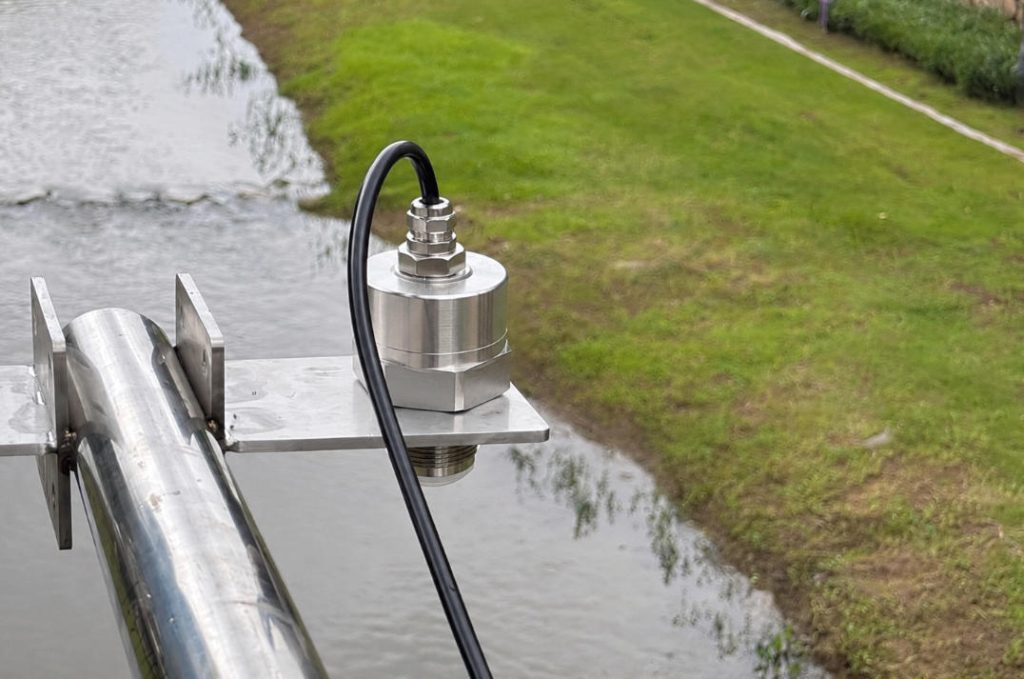
The JWrada®-23 radar sensor was developed specifically for hydrological and environmental monitoring applications where long-term reliability and precise measurement are critical.
Rugged Stainless Steel Construction
The sensor adopts a fully sealed stainless steel housing capable of operating in aggressive outdoor environments.
Corrosion Resistance for Long-Term Operation
The 316L stainless steel body effectively resists corrosion caused by humidity, polluted water, and saline environments, making it suitable for both freshwater and coastal monitoring projects.
IP68 Environmental Protection
Its IP68-rated enclosure protects internal electronics from rainwater, condensation, and temporary flooding, ensuring uninterrupted operation during severe weather conditions.
Strong Environmental Adaptability
Designed for wide-temperature operation, the JWrada®-23 maintains stable performance under both freezing winters and high-temperature summer conditions.
80GHz Radar Sensor Technology for Accurate Water Monitoring
The JWrada®-23 uses high-frequency FMCW radar technology to achieve stable and accurate non-contact measurement.
Narrow Beam for Improved Signal Focus
The compact radar beam minimizes interference from bridge structures, guardrails, and nearby obstacles. This is especially important in narrow rivers, artificial canals, and decorative landscape water systems.
High Measurement Resolution
The 80GHz radar sensor can detect tiny water level variations with excellent repeatability and rapid response speed, supporting early warning systems and intelligent flood management.
Stable Performance Under Difficult Conditions
Unlike ultrasonic devices, radar signals are largely unaffected by fog, humidity, rain, temperature fluctuations, or water vapor, ensuring reliable measurement continuity.
Non-Contact Radar Sensor Technology Reduces Maintenance Costs
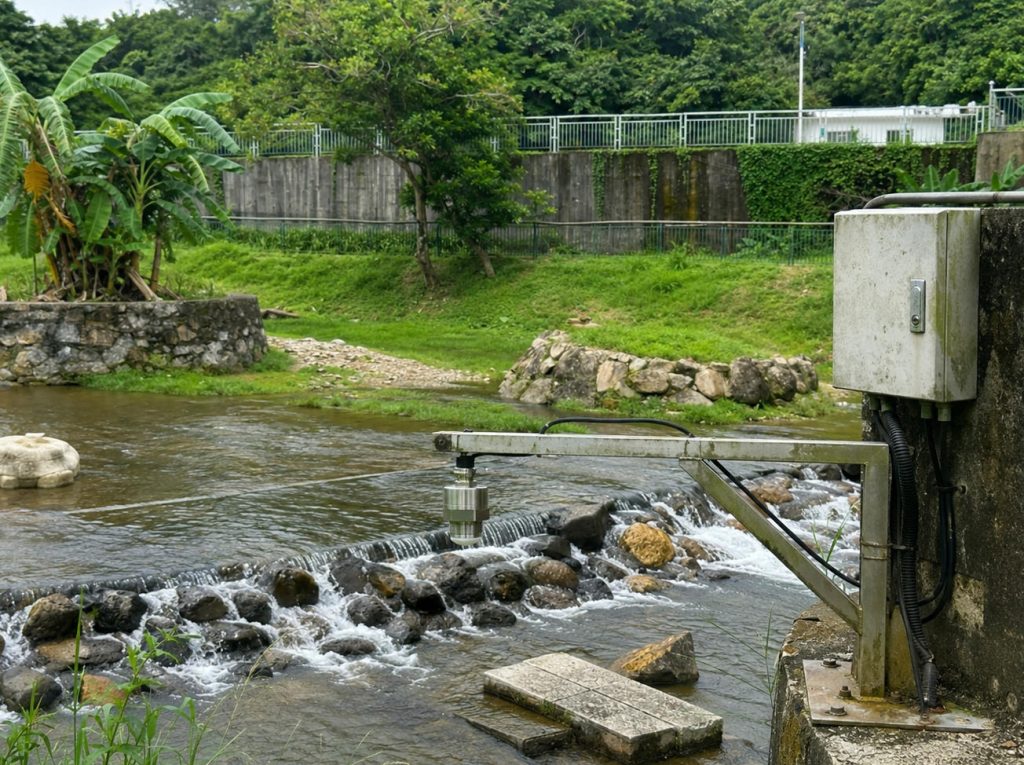
One of the most important advantages of the JWrada®-23 radar sensor is its non-contact operating principle.
Because the sensor does not physically touch the water surface, it avoids problems associated with sediment buildup, algae growth, and biological contamination. This significantly reduces maintenance frequency while extending equipment service life.
For municipal authorities and park management operators, this translates into lower labor costs, fewer maintenance interruptions, and improved long-term operational efficiency.
Practical Application: Smart Wetland Park Monitoring Project
Project Overview
A large ecological wetland park in South China required a reliable monitoring solution for its interconnected landscape waterways and flood retention zones. The site experiences seasonal storms, rapid water level fluctuations, and heavy vegetation growth.
The original submerged sensors frequently produced unstable readings because sediment and aquatic plants interfered with the sensing elements. Maintenance crews were forced to perform regular manual cleaning, increasing operational costs.
JWrada®-23 Deployment Strategy
To improve monitoring reliability, the project engineering team selected the JWrada®-23 radar sensor for installation at key hydrological monitoring locations.
Deployment points included:
- Landscape bridge sections
- Floodgate control areas
- Shoreline monitoring stations
- Ecological water circulation zones
All sensors were connected through RS485/Modbus communication interfaces and integrated into the local smart water management platform via wireless transmission networks.
Project Performance and Benefits
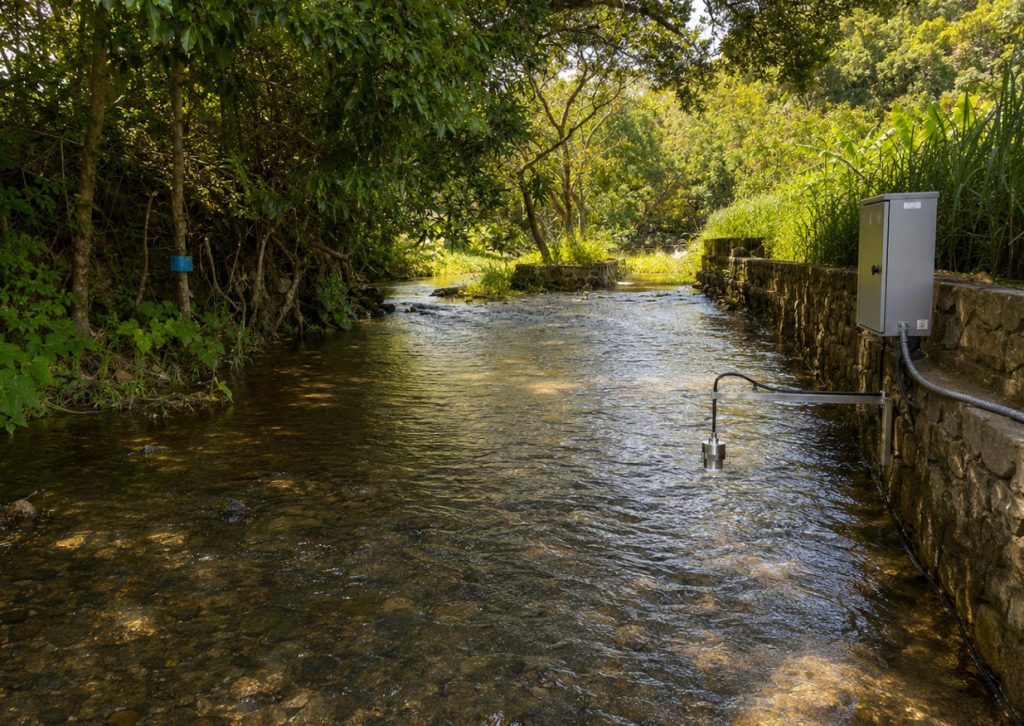
After implementation, the JWrada®-23 radar sensor system significantly improved monitoring stability and operational efficiency.
Reliable Operation During Severe Weather
Even during periods of heavy rainfall and flooding, the sensors maintained stable data output without signal loss or measurement drift.
Improved Smart Water Management
Real-time monitoring data enabled automatic pump control, ecological water replenishment, and dynamic floodgate regulation, improving overall water management efficiency.
Reduced Maintenance Requirements
Because the radar sensors operate without contacting the water surface, maintenance frequency dropped dramatically compared with the previous submerged sensors.
Supporting Sustainable Smart City Development
Modern cities require intelligent infrastructure capable of balancing safety, environmental sustainability, and operational efficiency. Accurate water level monitoring is becoming increasingly important for flood prevention, ecological restoration, and urban environmental management.
The JWrada®-23 stainless steel radar sensor combines durability, precision, and intelligent monitoring capability in a compact design suitable for demanding outdoor environments.
Whether installed in urban rivers, wetland parks, drainage systems, reservoirs, or landscape lakes, the JWrada®-23 provides a dependable long-term monitoring solution for modern smart water management projects.
radar sensor, water level radar sensor, stainless steel radar sensor, 80GHz radar sensor, non-contact radar sensor, smart water monitoring, river radar sensor, wetland monitoring sensor, hydrological radar sensor, landscape water level monitoring