Molten sulfur storage is a demanding level-measurement application.
The challenge is not simply high temperature. Sulfur can solidify on cooler surfaces, deposits can form around process connections, vapors may be present, and maintenance access may be limited.
These conditions make correct instrument selection and installation particularly important.
Why Is Molten Sulfur Difficult to Measure?
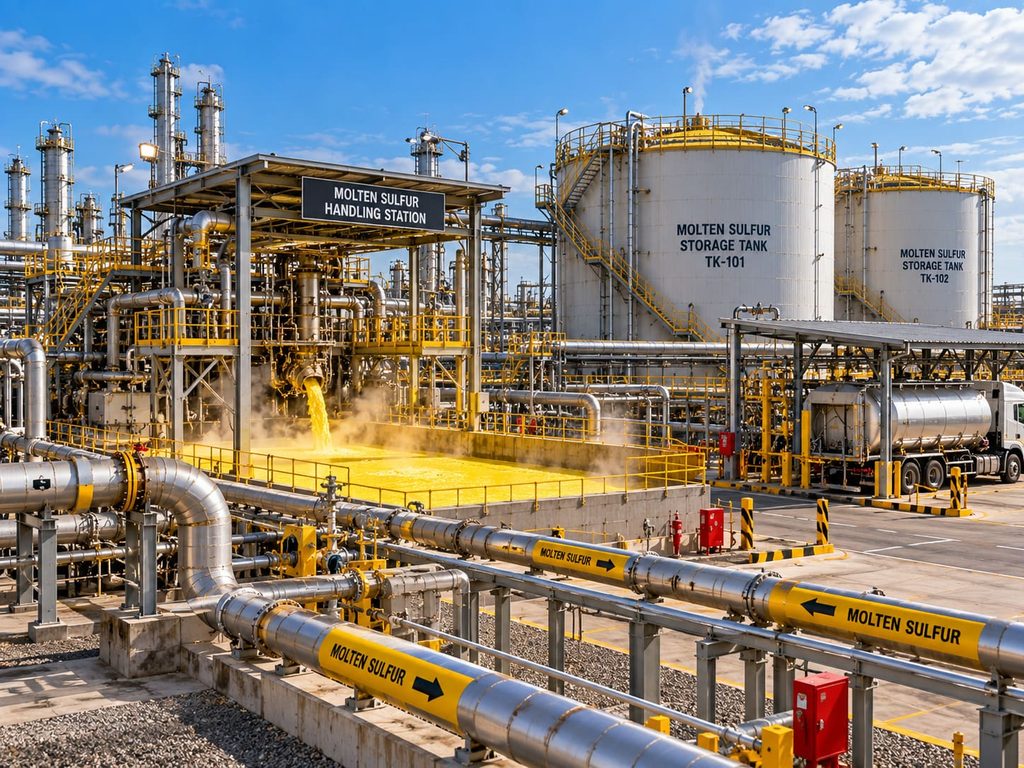
Sulfur must remain above its solidification range during storage and transfer.
Any relatively cold area around a nozzle, instrument connection, or exposed component can become a location where sulfur deposits develop.
A contact instrument exposed directly to the product may therefore require careful consideration.
Mechanical devices can also become difficult to maintain if solid sulfur restricts movement.
Why Consider Non-Contact Radar?
Radar measures the distance to the sulfur surface without requiring a long probe to remain immersed in the product.
This can reduce problems associated with mechanical sticking and direct coating of immersed measuring elements.
Radar also provides continuous output for inventory monitoring and process control.
However, “non-contact” does not mean “maintenance-free.”
The radar antenna and mounting nozzle still interact with the tank atmosphere. If sulfur vapor condenses and solidifies around the antenna or inside the nozzle, signal quality can deteriorate.
The Nozzle Is Often the Critical Area
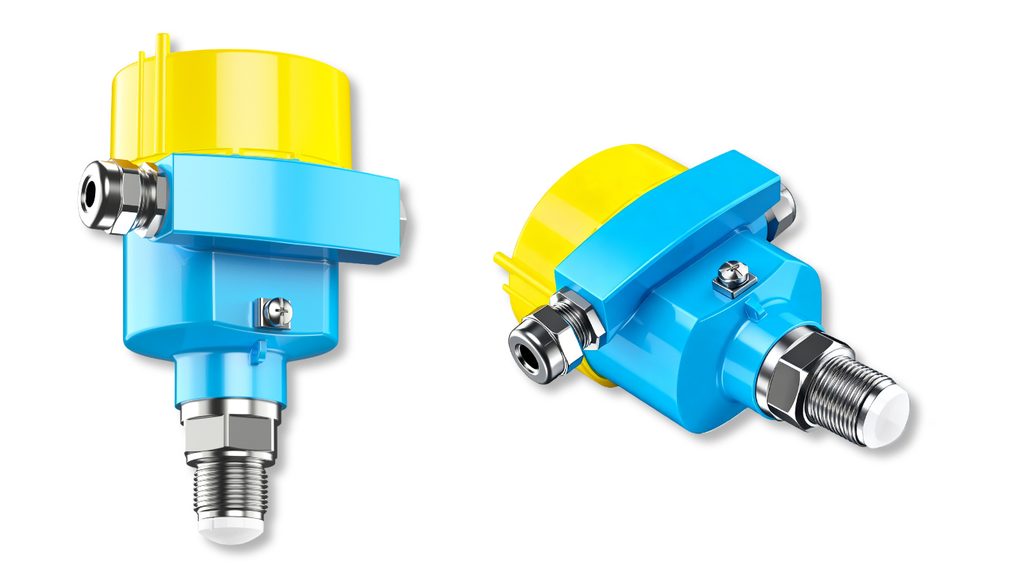
A radar mounted inside a long, cold nozzle can experience two problems simultaneously.
First, the nozzle itself can create unwanted radar reflections.
Second, sulfur may deposit inside the nozzle and gradually change the echo environment.
The mounting arrangement should therefore minimize unnecessary recesses and cold surfaces.
Where the process design requires it, thermal insulation, heating, or an appropriate cleaning or purging strategy may be considered.
The exact method must be compatible with the plant’s sulfur-handling procedures.
Vapor and Hazardous Conditions
Molten sulfur systems can involve hazardous gases and demanding process environments.
Instrument selection should therefore include the required pressure and temperature ratings, enclosure protection, wetted materials, and hazardous-area certification where applicable.
The complete installation—including cable entries, grounding, barriers, and wiring—must match the project’s hazardous-area design.
Continuous Measurement Is Only One Part of Tank Protection
A continuous radar transmitter can provide normal operating level and inventory information.
Critical overfill protection may require a separate measurement layer according to the facility’s process and safety philosophy.
The secondary device should be selected specifically for molten sulfur service rather than assuming that any conventional liquid level switch will remain reliable.
Radar Selection and Installation Details
Selecting a radar transmitter for molten sulfur service should be based on the complete process condition rather than temperature alone. Important factors include measuring range, tank height, nozzle dimensions, expected vapor conditions, pressure, antenna configuration, process connection, and the presence of internal structures. The chosen radar should have sufficient signal strength and focusing capability to distinguish the sulfur surface from false reflections created by the tank roof, nozzle, support beams, heating coils, ladders, or other metallic objects.
Radar frequency is also an important consideration. Higher-frequency radar instruments generally produce a narrower beam angle, which can be useful when the available mounting location is close to a tank wall or when internal obstructions must be avoided. A narrow beam can also help reduce interference from nearby structures. However, frequency alone should not determine the selection. The antenna design, process connection, mounting position, temperature rating, and resistance to deposition are equally important in a molten sulfur application.
The antenna should ideally be positioned so that it has a clear view of the product surface. Mounting directly above filling streams, strong turbulence, or major internal equipment should be avoided where practical. Although molten sulfur tanks are often relatively calm compared with agitated process vessels, filling and transfer operations can temporarily disturb the surface. The radar must therefore maintain a stable echo under both normal storage and operating conditions.
The process connection deserves particular attention. A short, well-designed nozzle is generally preferable to a long, narrow standpipe because excessive nozzle length can produce additional reflections and may create a cooler area where sulfur can condense or solidify. If a long nozzle cannot be avoided, the radar supplier’s recommendations for antenna size, nozzle diameter, and maximum nozzle length should be followed. The antenna should not be unnecessarily recessed into the connection.
Thermal management around the mounting point can be just as important as the radar electronics. Insulation may help reduce cold spots, while some installations may require heat tracing or another controlled heating method. Any heating arrangement must remain within the instrument’s allowable temperature limits and must comply with the site’s engineering and hazardous-area requirements. Excessive heating can be as undesirable as insufficient heating, so the objective is to maintain suitable local conditions rather than simply applying maximum heat.
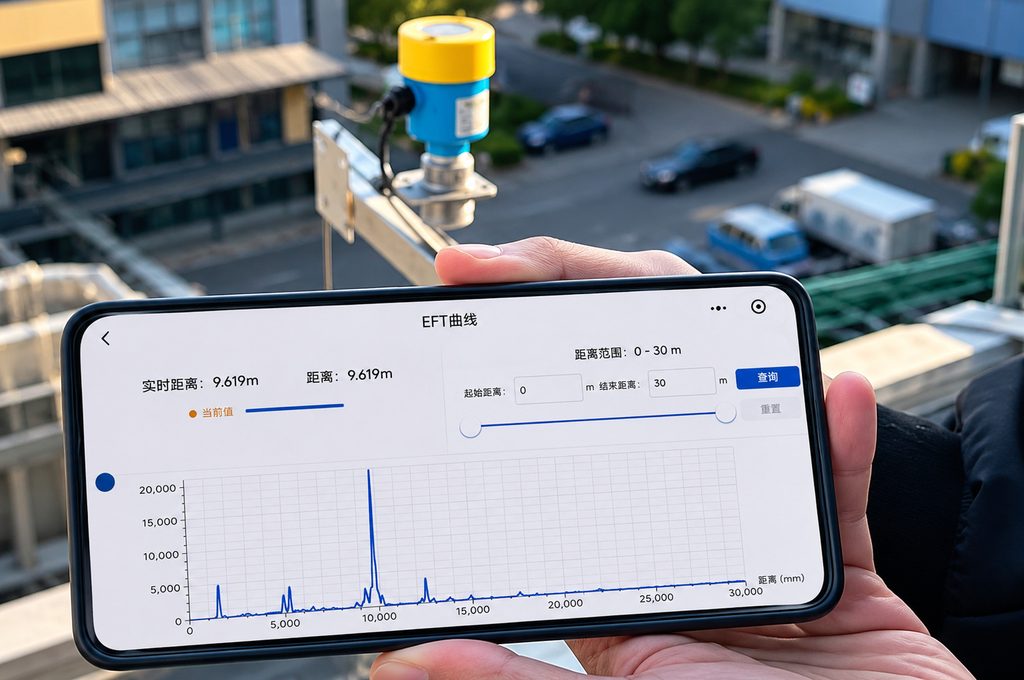
Diagnostics should also be considered during instrument selection. Modern radar transmitters can provide information such as echo strength, signal quality, device temperature, and historical echo curves. These diagnostics can help maintenance teams identify gradual buildup before it causes a measurement failure. A trend of declining signal quality, for example, may indicate changing process conditions or deposit formation around the antenna or nozzle.
For this reason, the preferred radar is not necessarily the model with the longest measuring range or the highest operating frequency. The better choice is the instrument whose antenna, process connection, temperature capability, signal processing, diagnostics, and certification match the actual tank design and operating conditions. Reviewing these details before installation can significantly reduce commissioning problems and improve long-term measurement reliability.
Commissioning
Radar commissioning should include verification at several operating levels.
The echo curve should be checked for reflections from the nozzle, tank wall, internal structures, and product surface.
If false-echo suppression is used, it should be configured carefully so that the true sulfur surface is not accidentally suppressed.
Conclusion
Molten sulfur tank level measurement is primarily an application of thermal management, installation engineering, and reliable signal interpretation.
Non-contact radar can reduce many problems associated with immersed mechanical devices, but the antenna and nozzle must still be protected from conditions that encourage sulfur deposition.
Successful measurement therefore depends on treating the complete installation—not just the transmitter—as part of the measurement system.