1. Project Background: Higher Requirements for Level Measurement in Daily Chemical Production
In the production of cosmetics and daily chemical products, makeup remover water and cleansing oil are two common high-demand consumer products. As production capacity increases, manufacturers are placing higher requirements on automation in batching, mixing, storage, filling, and inventory management. In the past, many workshops relied on manual level observation, weighing estimation, float level meters, or pressure-type level transmitters to determine the liquid level inside tanks. These methods may work for small-batch production, but in multi-product, multi-batch, and continuous production environments, problems such as discontinuous readings, frequent maintenance, poor system integration, and susceptibility to medium characteristics gradually become more obvious.
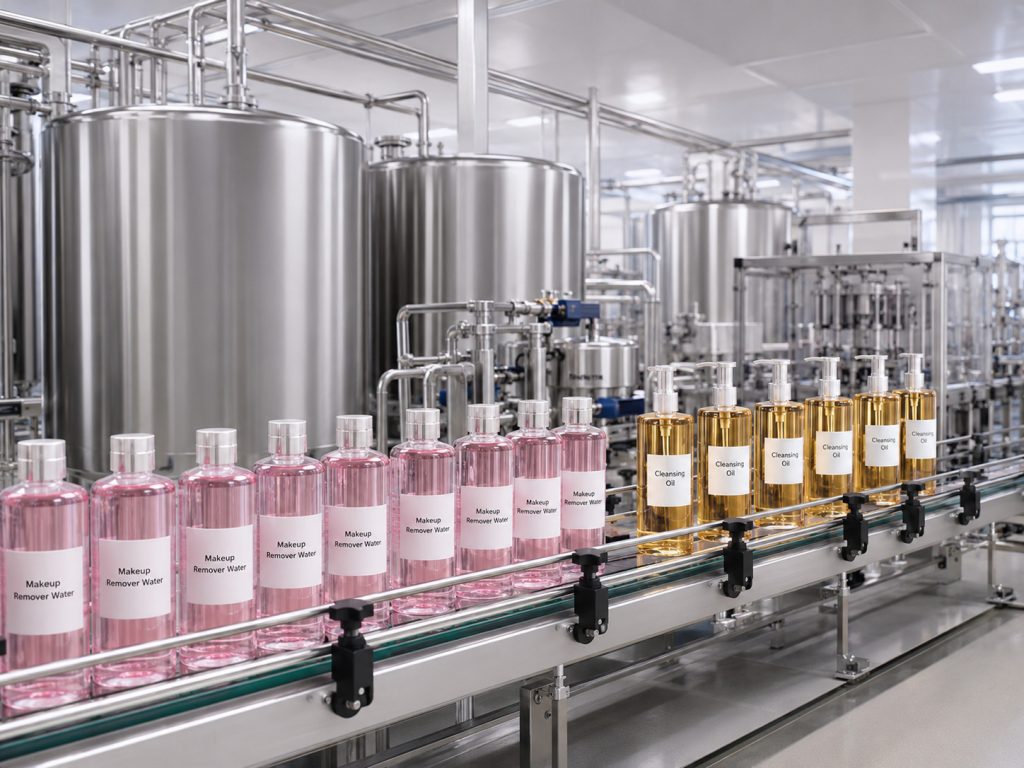
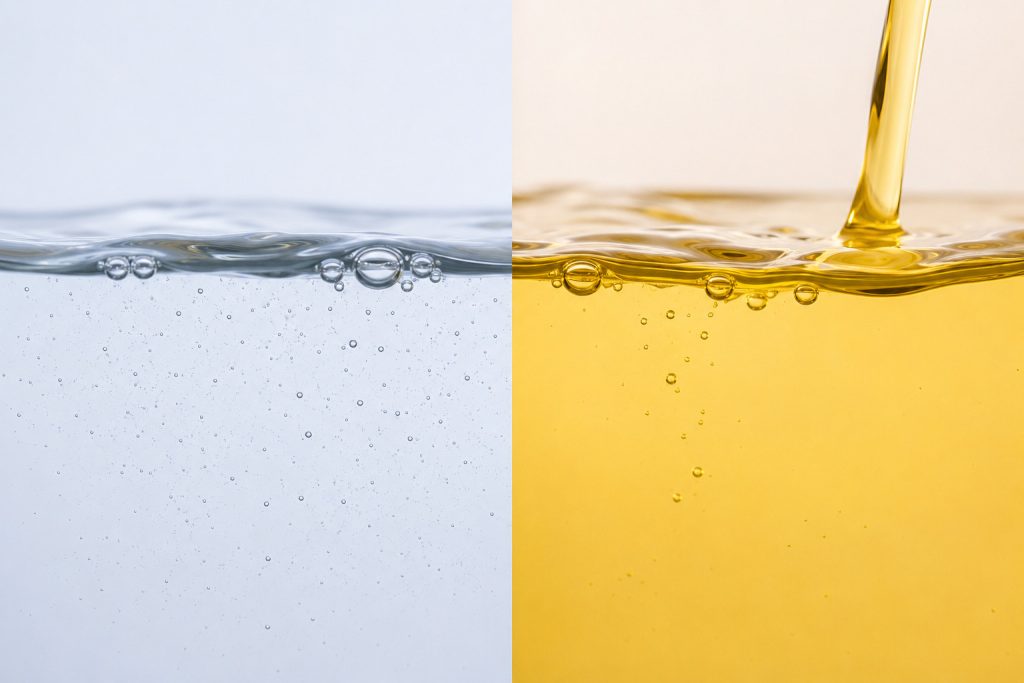
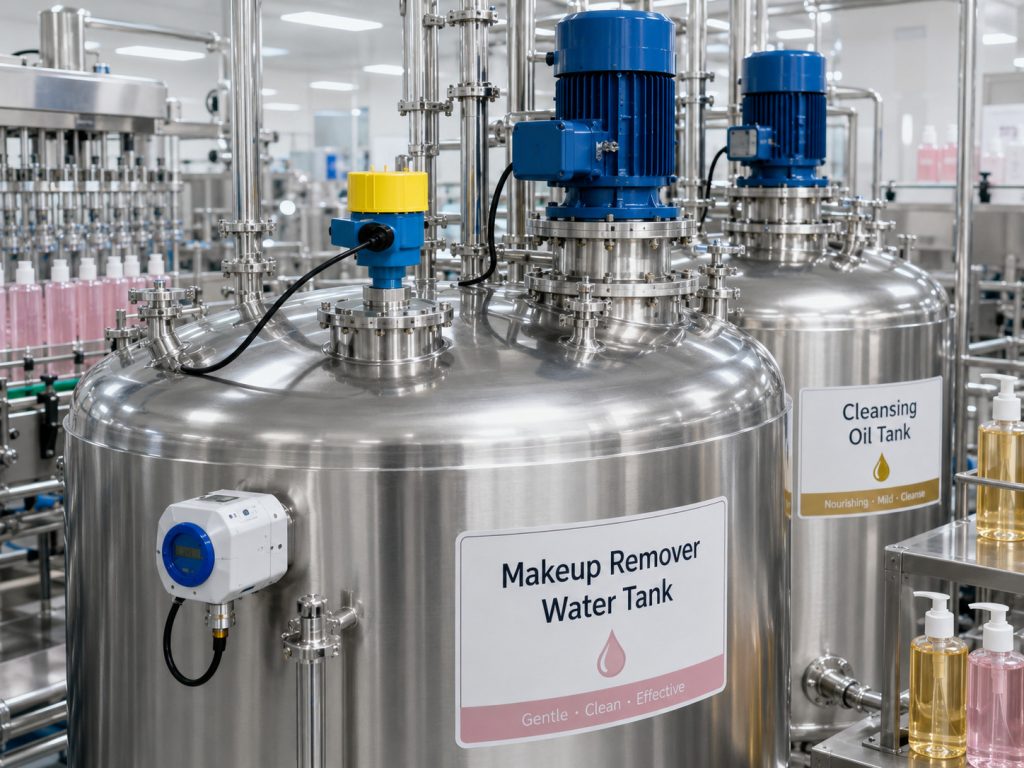
A daily chemical manufacturer mainly produces makeup remover water, cleansing oil, facial cleansing oil, toner, and other skincare-related products. Its workshop is equipped with multiple stainless steel mixing tanks, buffer tanks, finished product storage tanks, and pre-filling buffer tanks. Makeup remover water is generally a water-based formulation that may contain surfactants, moisturizers, solubilizers, and small amounts of fragrance. Cleansing oil, on the other hand, is mainly composed of oils, esters, emulsifiers, and plant-based oil ingredients. Although both are daily chemical liquids, they differ significantly in viscosity, dielectric properties, foam generation, wall adhesion, cleaning methods, and hygiene requirements. Therefore, they require level instruments with better stability and adaptability.
To improve production management, the manufacturer decided to use radar level meters on makeup remover water and cleansing oil production tanks to achieve continuous level monitoring, high and low level alarms, filling interlocks, batch data recording, and remote monitoring. After evaluating the working conditions on site, the company selected Jiwei 80GHz radar level meters as the core level measurement instruments.
2. Working Condition Analysis: Challenges in Measuring Makeup Remover Water and Cleansing Oil
The measurement challenges for makeup remover water tanks mainly involve agitation, foam, vapor, and hygiene requirements. During production, makeup remover water usually needs to go through batching, circulation, homogenization, or low-speed stirring. As a result, the liquid surface is not always completely still. Some formulas contain surfactants, which may generate slight foam during feeding or stirring. If ultrasonic level meters are used, sound wave propagation inside the tank may be affected by foam, temperature, humidity, and airflow, resulting in unstable level readings. If contact-type instruments are used, probes remain immersed in the medium for a long time, which may increase maintenance during cleaning, sterilization, or batch changeover.
The challenges of cleansing oil tanks are more closely related to the oil-based medium itself. Cleansing oil has a certain viscosity, and some oils, esters, and emulsifiers may form an oil film on contact probes, floats, guide rods, or side-mounted instruments. After long-term operation, this oil film may cause mechanical jamming, delayed response, or more frequent maintenance. In addition, cleansing oil usually has a lower dielectric constant than water-based liquids, which places higher demands on the echo recognition capability of the level instrument. If the tank contains agitators, spray balls, baffles, or feeding pipes, the instrument must also have strong false echo suppression capability.
From the perspective of daily chemical production management, level measurement is not only about knowing how much material remains in the tank. It is also closely related to formula dosing, batch consistency, filling efficiency, and overflow prevention. Makeup remover water and cleansing oil are usually high-value products. Excess residual liquid in the tank affects changeover efficiency, inaccurate level measurement may disrupt filling plans, and false high-level readings may lead to overflow and additional cleaning costs. Therefore, this project required a high-accuracy, low-maintenance, easy-to-integrate level measurement solution suitable for clean production environments.
3. Solution: Jiwei 80GHz Radar Level Meters for Daily Chemical Storage Tanks
Based on tank height, medium characteristics, installation space, and control system interface requirements, Jiwei 80GHz radar level meters were selected for non-contact continuous level measurement. For standard makeup remover water mixing tanks and small to medium-sized buffer tanks, a compact radar level meter solution can be used. For cleansing oil finished product tanks, agitated tanks, or areas with explosion-proof requirements, radar level meter models with corresponding explosion-proof capability and stronger anti-interference performance can be selected according to the site safety classification.
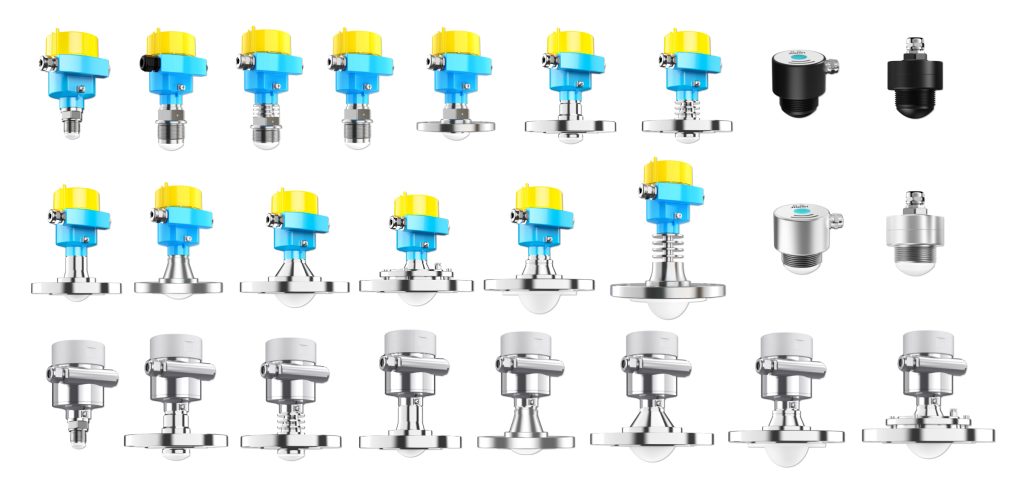
Jiwei radar level meters use 80GHz high-frequency millimeter-wave radar technology. The antenna emits electromagnetic waves toward the liquid surface. When the waves reach the surface of makeup remover water or cleansing oil, they are reflected back to the instrument. The meter calculates the distance from the sensor to the liquid surface based on the echo signal, and then converts this distance into the actual liquid level according to the tank height. Since the measurement process does not require the probe to contact the medium, problems such as oil adhesion, corrosion, contamination, and mechanical wear can be reduced.
In terms of signal output, the radar level meter can be connected to PLC, DCS, filling control systems, or smart factory platforms via 4-20mA, HART, RS485/Modbus, and other communication methods. Operators can view real-time level data in the control room and set high-level alarms, low-level alarms, empty tank protection, and filling interlocks. When the tank level reaches the upper limit, the system can remind operators to stop feeding. When the level drops below the lower limit, the system can stop the pump or remind operators to refill the tank, helping reduce the risks of overflow, pump idling, and material shortage.
4. Installation and Commissioning: Reducing Tank Opening and Improving Site Efficiency
When installing radar level meters on makeup remover water and cleansing oil tanks, the key is to ensure that the radar beam is directed toward the real liquid surface. During installation, the instrument should be kept away from feeding inlets, agitators, spray balls, tank wall reinforcements, and manhole edges to prevent the radar from directly detecting the feeding stream or internal structures. For flat-top or cone-bottom tanks, the installation position should be selected according to the tank structure so that the radar beam covers a stable liquid surface area.
For makeup remover water mixing tanks, if the stirring speed is low and the liquid surface fluctuation is not significant, the radar level meter can filter slight foam and dynamic liquid surface interference through parameter settings. For cleansing oil tanks, commissioning should focus on the echo strength of low-dielectric oil-based media. Through intelligent echo learning, false echo suppression, and target tracking functions, the instrument can distinguish the real liquid surface from reflections caused by internal tank structures. Jiwei radar level meters are equipped with intelligent echo algorithms, which help improve long-term measurement stability under complex working conditions.
In daily chemical workshops, tanks are often densely arranged, and the space on the tank top is limited. The 80GHz radar level meter has a narrow beam angle and concentrated energy, making it suitable for small and medium-sized tanks as well as complex tank-top environments. For compact installation spaces, threaded, flange, or clamp connections can be selected to balance installation convenience and hygienic cleaning requirements. With Bluetooth wireless commissioning, maintenance personnel do not need to frequently climb onto tanks, open covers, or approach hazardous areas. Parameters, operating status, and commissioning adjustments can be completed through a mobile device, greatly improving on-site maintenance efficiency.
5. Application Results: Stable Continuous Level Data and More Refined Production Management
After the radar level meters were put into operation, the level changes in the makeup remover water mixing tanks could be continuously recorded. Production personnel were able to monitor the level status during feeding, stirring, settling, and transfer in real time, reducing manual inspection and manual recording. Previously, manual observation was easily affected by viewing angle, foam, tank contamination, or scale reading errors. After radar level meters were adopted, level data was transmitted to the control system as standard signals, providing a reliable basis for automatic control and batch traceability.
In cleansing oil storage tanks, the advantages of non-contact measurement became even more obvious. Since the instrument does not extend into the liquid, it is not affected by float jamming caused by oil film adhesion, nor by viscous media coating the probe and affecting mechanical movement. During tank changeover or CIP cleaning, the radar level meter does not require disassembly of wetted components, reducing cleaning blind spots and maintenance work. For daily chemical factories with frequent product changeovers, this helps shorten downtime and improve production rhythm.
In pre-filling buffer tanks, the continuous level signal provided by the radar level meter helps the system determine material availability, preventing filling machines from stopping due to insufficient material and reducing overflow risk caused by overfilled buffer tanks. For high-value cleansing oil products, accurately knowing the remaining material in the tank also helps reduce tailing waste and optimize production planning and inventory management.
6. Core Advantages of Radar Level Meters in Makeup Remover Water and Cleansing Oil Applications
First, non-contact measurement is more suitable for hygienic daily chemical production. Radar level meters do not directly contact makeup remover water or cleansing oil, which reduces the risk of medium contamination and avoids adhesion, corrosion, crystallization, and mechanical wear. For daily chemical workshops that require frequent cleaning, product changeover, and batch management, non-contact level meters are easier to maintain in stable long-term operation.
Second, 80GHz high-frequency radar provides high accuracy and a narrow beam angle. Makeup remover water and cleansing oil tanks are often not very large, but they may contain agitators, feeding pipes, spray balls, or other internal structures. The concentrated beam of 80GHz radar reduces interference from tank walls and internal components, making it easier to lock onto the real liquid surface. It is suitable for small and medium-sized mixing tanks, buffer tanks, finished product tanks, and filling buffer tanks.
Third, strong anti-interference capability allows the instrument to adapt to agitation and foam. Slight foam may appear during makeup remover water production, while liquid fluctuation and wall adhesion may occur in cleansing oil production. Through intelligent echo processing algorithms, Jiwei radar level meters can identify false echoes, separate multiple echoes, and track the target liquid surface, maintaining stable measurement under complex conditions.
Fourth, radar level meters are suitable for both water-based and oil-based media. Makeup remover water and cleansing oil have different medium characteristics, and traditional instruments often require more adjustments according to density, viscosity, or conductivity. Radar level meters mainly rely on electromagnetic wave echo ranging. They are not dependent on medium density, are not affected by density changes like pressure-type instruments, and are less affected by viscosity and oil film compared with float-type instruments.
Fifth, low maintenance reduces the overall cost of ownership. Common problems of contact-type level instruments in oil-based media include adhesion, jamming, and cleaning maintenance. Radar level meters have no moving parts. After installation, stable operation can generally be maintained through parameter optimization and routine inspection. For daily chemical enterprises with multiple production lines and tanks, reducing even one tank-opening maintenance operation means saving downtime, labor, and cleaning validation costs.
Sixth, radar level meters are easy to connect to automation and digital systems. Modern cosmetics factories increasingly focus on batch traceability, smart warehousing, and production data management. Radar level meters can output standard analog or digital communication signals, making it easy to connect them to PLC, DCS, SCADA, MES, or IoT platforms. This enables level trend analysis, inventory reminders, automatic replenishment, and abnormal condition alarms.
Seventh, explosion-proof configurations can be selected according to site safety requirements. Some makeup remover water formulas may contain alcohol, solvents, or volatile fragrances, and some cleansing oil raw materials may involve flammable liquid storage. For areas with explosion-proof requirements, radar level meter models with appropriate explosion-proof certification should be selected according to process safety evaluation, improving the safety of on-site operation.
7. Selection Suggestions: Different Tanks Require Different Configurations
In makeup remover water and cleansing oil projects, radar level meter selection should not be based only on measuring range. It is also necessary to consider medium type, tank structure, whether agitation is present, whether foam exists, explosion-proof requirements, temperature and pressure, installation interface, and system communication method.
For makeup remover water mixing tanks, small buffer tanks, or ordinary non-explosion-proof areas, compact 80GHz radar level meters can be prioritized to meet requirements for high accuracy, low maintenance, and flexible installation. For cleansing oil finished product tanks, agitated tanks, oil-based medium tanks, or areas where volatile components may be present, it is recommended to select radar level meters with stronger anti-interference capability, explosion-proof design, and better material compatibility. If the tank contains vapor, foam, oil mist, or low-dielectric media, special attention should be paid to radar antenna type, beam angle, signal processing algorithm, and installation position.
Before installation, users are advised to provide information such as tank height, tank diameter, tank-top structure, medium name, temperature, pressure, agitation type, CIP cleaning requirements, output signal requirements, and explosion-proof classification. The instrument manufacturer can then provide a targeted selection recommendation. Proper selection and standardized installation are key to stable radar level meter operation.
8. Conclusion: Radar Level Meters Help Daily Chemical Factories Achieve Intelligent Level Management
Makeup remover water and cleansing oil may appear to be ordinary daily chemical liquids, but their production sites often involve multiple challenges, including hygiene requirements, formula differences, agitation and foam, oil adhesion, frequent product changeover, and automation management. Choosing the right level meter is not only about the measurement accuracy of one tank, but also about the safety, efficiency, and quality stability of the entire production line.
With advantages such as non-contact measurement, high accuracy, narrow beam angle, intelligent echo algorithms, low maintenance, and easy integration with control systems, Jiwei 80GHz radar level meters can adapt well to level measurement applications in makeup remover water and cleansing oil tanks. For daily chemical enterprises undergoing automation upgrades, digital factory construction, or domestic instrument replacement, radar level meters offer a reliable, economical, and intelligent level measurement solution.
From manual inspection to online monitoring, from single-point reading to data linkage, and from passive maintenance to intelligent operation, radar level meters are becoming an important tool for level management in cosmetics and daily chemical production. In the future, as the daily chemical industry continues to raise its requirements for safe production, clean manufacturing, and refined management, 80GHz radar level meters will play an even greater role in storage tanks for makeup remover water, cleansing oil, toner, essence, washing products, and oil-based raw materials.