1. Project Background: Why Chemical Liquid Storage Tanks Need a More Stable Level Measurement Solution
In pharmaceutical production, fine chemicals, environmental water treatment, pharmaceutical intermediate manufacturing, and automatic dosing systems, level measurement in chemical liquid storage tanks is directly related to production continuity, dosing accuracy, and on-site safety management. Chemical liquids usually have certain corrosive properties, volatility, or irritating odors. Some chemical liquids may also involve foam, crystallization, wall adhesion, and temperature changes, which place higher requirements on the stability of the radar level meter. If the level data is inaccurate, it may lead to insufficient dosing, chemical waste, pump idling, tank overflow, and even affect the stable operation of the entire process system. Therefore, selecting a reliable radar level meter is an effective way to improve chemical liquid level monitoring and process control.
In a water treatment chemical dosing project, several chemical liquid storage tanks were installed on site, mainly used for storing acid and alkali liquids, flocculants, disinfectants, and other auxiliary chemicals. The customer originally used traditional contact-type level instruments for chemical liquid level measurement. However, during long-term operation, the instrument probes were easily affected by chemical corrosion, crystallization adhesion, and contamination, resulting in large fluctuations in measured values and frequent maintenance. To improve the reliability of chemical liquid storage tank level monitoring, the customer finally selected the Jiwei 31 radar level meter as a non-contact level measurement solution.
2. Site Condition Analysis: Main Challenges in Chemical Liquid Level Measurement
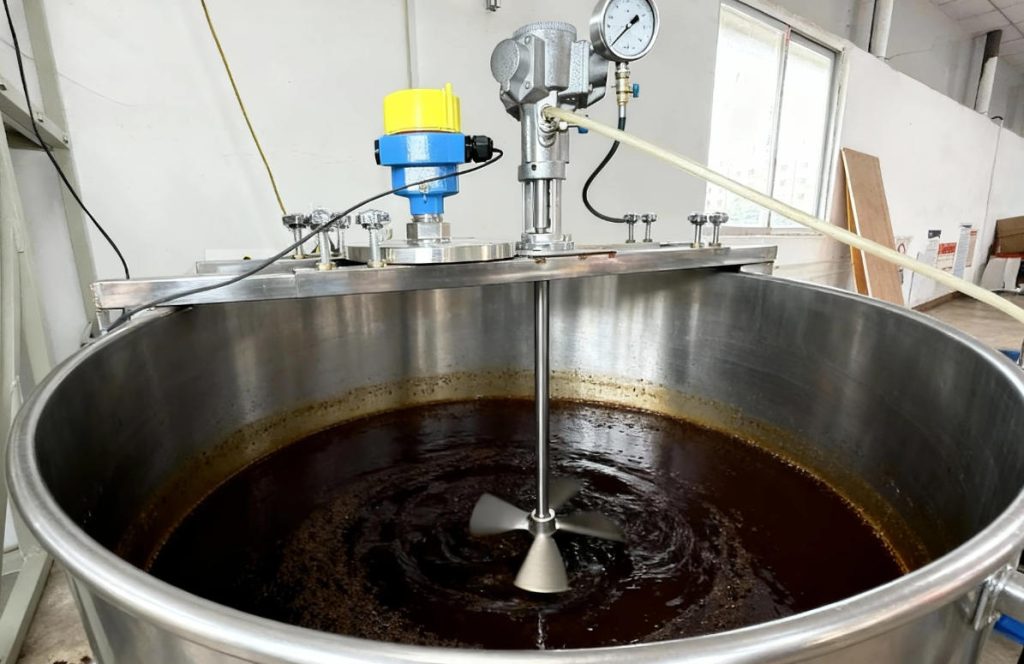
Chemical liquid level measurement may seem simple, but there are many challenges in actual applications. First, there are many types of chemical liquids, and different chemical liquids vary in dielectric constant, corrosiveness, volatility, and surface conditions. Ordinary level instruments often find it difficult to maintain long-term stable performance. Second, chemical liquid storage tanks are often made of plastic, fiberglass, or stainless steel. The installation space is limited, and the tank top may include feed inlets, agitators, pipe connections, and other structures, which place higher requirements on radar wave reflection and installation angle.
In addition, during dosing, refilling, or stirring, some chemical liquids may experience surface fluctuations, foam, or slight turbulence. If the instrument has insufficient anti-interference capability, problems such as signal jumps, echo loss, or false alarms may occur. For systems that require continuous dosing control, level measurement data must not only be accurate but also provide good real-time performance and stability.
In this project, the customer focused on three key issues: first, whether the radar level meter could avoid direct contact with the chemical liquid; second, whether the instrument was suitable for corrosive chemical liquid storage tanks; and third, whether later maintenance would be convenient. The Jiwei 31 radar level meter adopts a non-contact measurement method, effectively reducing direct corrosion and contamination of the instrument by chemical liquids and meeting the site requirements well.
3. Product Solution: Why the Jiwei 31 Radar Level Meter Was Selected
The Jiwei 31 radar level meter is a radar level instrument suitable for liquid level measurement, featuring non-contact measurement, convenient installation, stable measurement, and low maintenance. In chemical liquid storage tank level measurement applications, it can be installed on the tank top and continuously measure the liquid surface through radar waves without inserting a probe into the chemical liquid. Therefore, it can significantly reduce the risk of failures caused by corrosion, material adhesion, and contamination.
Compared with traditional float level meters, submersible level meters, or capacitive level meters, radar level meters offer more obvious advantages in chemical liquid measurement. Float level meters are easily affected by chemical crystallization, adhesion, and mechanical blockage. Submersible level meters need to be immersed in chemical liquids for a long time, which creates a higher corrosion risk. Capacitive level meters are more sensitive to changes in medium characteristics. By contrast, the Jiwei 31 radar level meter adopts non-contact measurement, which can reduce the impact of medium property changes on the instrument body and is more suitable for chemical liquid storage tanks that require long-term stable operation.
In this case, the on-site chemical liquid storage tanks were not very high, but the customer had high requirements for level data stability. The Jiwei 31 radar level meter not only met the requirements of small-range chemical liquid level measurement but also avoided interference from internal tank obstacles through proper installation and parameter settings. As a result, the output signal became more stable, providing reliable data support for pump start-stop control, low-level alarms, and chemical inventory management.
4. Installation and Commissioning: Key Considerations for Chemical Liquid Storage Tank Applications
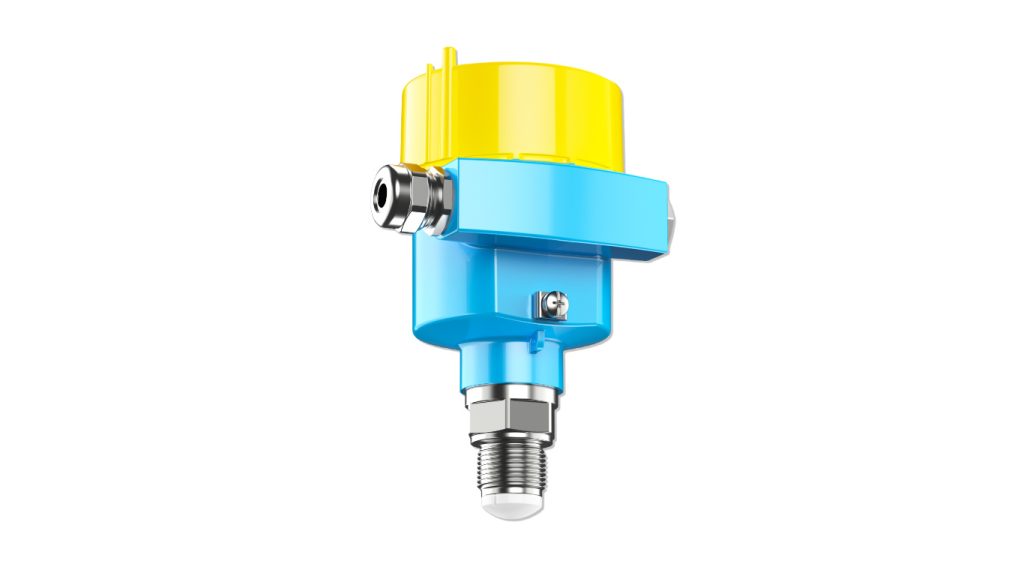
When the Jiwei 31 radar level meter is used in chemical liquid storage tanks, the installation position is very important. The instrument is usually installed in a relatively open position on the tank top, avoiding direct alignment with the inlet, agitator shaft, reinforcing ribs, or other internal components. If obvious obstacles exist inside the tank, false echo suppression should be performed during commissioning to reduce the impact of invalid reflections on the measurement results.
For plastic chemical liquid tanks or fiberglass chemical liquid tanks, flange or threaded installation can be adopted if the top opening conditions are suitable. During installation, the radar level meter should be vertically aligned with the liquid surface to avoid excessive inclination that may weaken the echo signal. If the chemical liquid produces volatile or corrosive gases, suitable process connections and sealing materials should be selected according to site conditions to ensure long-term stable operation of the instrument.
During commissioning, technicians set the parameters of the Jiwei 31 radar level meter according to the tank height, measuring range, empty-tank distance, full-tank distance, output signal, and alarm requirements. For chemical liquid storage tanks, it is recommended to observe the echo curve and output data during actual level changes to confirm that the instrument can maintain stable measurement during refilling, discharging, and static conditions.
5. Application Results: Improved Chemical Liquid Level Measurement Stability and Reduced Maintenance Costs
After the Jiwei 31 radar level meter was put into operation, the stability of on-site chemical liquid level measurement was significantly improved. Since the instrument does not directly contact the chemical liquid, it avoids common problems of traditional contact-type instruments, such as corrosion, crystallization adhesion, and probe contamination. Maintenance personnel no longer need to frequently disassemble and clean the instrument, greatly reducing daily maintenance workload.
During the operation of the dosing system, the radar level meter can continuously output a stable level signal, helping the control system accurately determine the remaining amount of chemical liquid. When the chemical liquid level reaches the low-level alarm value, the system can promptly remind staff to replenish the chemical, avoiding dosing interruption caused by insufficient liquid. When the level approaches the high level, it can also effectively reduce the risk of tank overflow and improve on-site operational safety.
According to customer feedback, after using the Jiwei 31 radar level meter, the chemical liquid storage tank level data became more intuitive and reliable, pump start-stop control became more stable, and chemical management became more convenient. For scenarios involving centralized management of multiple tanks, the continuous level data output by the radar level meter can also be connected to PLC, DCS, or a remote monitoring platform to realize digital management of chemical liquid inventory.
6. Case Summary: The Value of Radar Level Meters in Chemical Liquid Measurement
This project shows that the core value of the Jiwei 31 radar level meter in chemical liquid level measurement lies in stability, reliability, and low maintenance. Chemical liquid storage tanks often involve corrosion, volatility, crystallization, foam, and liquid surface fluctuations. During long-term operation, traditional contact-type level instruments are prone to frequent maintenance, measurement drift, and shortened service life. Through non-contact measurement, radar level meters effectively reduce the direct impact of chemical liquids on the instrument, making them more suitable for continuous operation and unattended applications.
For pharmaceutical companies, environmental engineering companies, water treatment system integrators, and fine chemical enterprises, selecting the right chemical liquid level meter can not only improve measurement accuracy but also reduce operation and maintenance costs and enhance the automation level of the system. The Jiwei 31 radar level meter has good application value in chemical liquid storage tanks, dosing tanks, acid and alkali liquid tanks, flocculant storage tanks, disinfectant storage tanks, and other scenarios.