
In chemical plants, some on-site faults may appear to be instrument failures, but in reality, they are not.
For example, a transmitter may output normally, but the signal fluctuates on the DCS screen. After thunderstorms, PLC modules or communication cards may suddenly fail. In hazardous areas, instrument loops rarely cause problems during normal operation, but once a fault occurs, intrinsic safety becomes critical, as excessive energy or sparks could create potential ignition risks.
Although these issues seem unrelated, on-site troubleshooting often revolves around three key factors: interference, surge, and energy.
In automation and electrical control systems, three common protection devices are used: signal isolators, surge protective devices (SPD), and intrinsic safety barriers.
They are not designed to make drawings more complex, but to ensure more stable and reliable operation under harsh industrial conditions.
1. Signal Fluctuation Does Not Always Mean Instrument Failure
When instrument signals become unstable, engineers often first check the transmitter, terminal connections, and I/O modules. This approach is reasonable, but many field issues are not caused by the instrument itself.
Common causes include:
- Ground potential differences between systems
- Electromagnetic interference from VFDs and motors
- Long signal cables routed near power lines
- Improper shielding or grounding practices
- Ground loops created by shared grounding systems
These factors can affect 4–20 mA, 0–10 V, pulse, frequency, and communication signals. Minor interference causes data fluctuation, while severe cases may lead to false alarms, incorrect actions, or even impact interlock logic.
Signal isolators are widely used to address these problems.
Installed between two systems, a signal isolator provides electrical isolation between input and output. The signal is transmitted normally, while ground loops and system-level interference are effectively blocked.
They are commonly used between PLCs, DCS systems, transmitters, actuators, and acquisition modules, especially in environments with strong electrical noise or long-distance signal transmission.
2. Hazardous Area Loops Require More Than Measurement Accuracy
In many high-risk chemical areas, explosive gases, vapors, or dust may be present. For instrument loops in these zones, the key concern is not only measurement stability, but also whether excessive energy could be released under fault conditions, potentially causing ignition.
Even a very small spark may become an ignition source.
An intrinsic safety barrier limits voltage, current, and energy entering hazardous areas. Under normal operation, it transmits signals; under fault conditions, it ensures that energy remains below ignition levels.
There are two common types:
- Zener barriers
- Isolated barriers
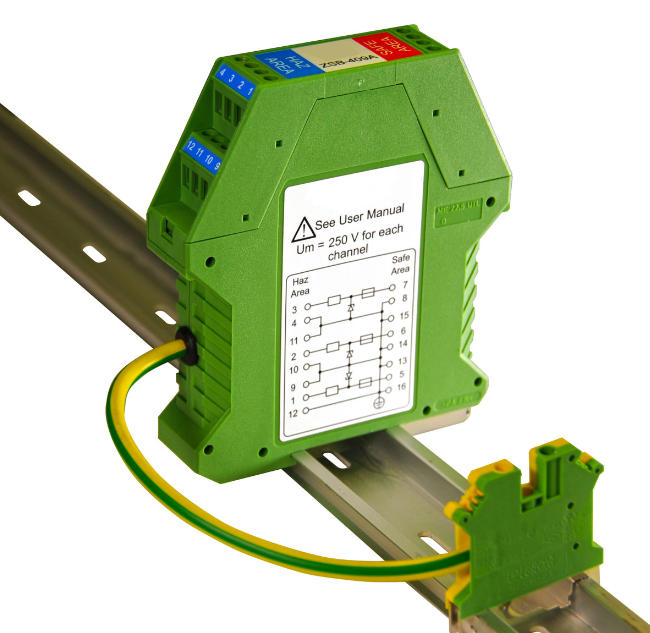
Zener barriers rely on Zener diodes, resistors, and fuses for protection and require a high-quality intrinsic safety grounding system. Poor grounding can reduce both safety and stability.
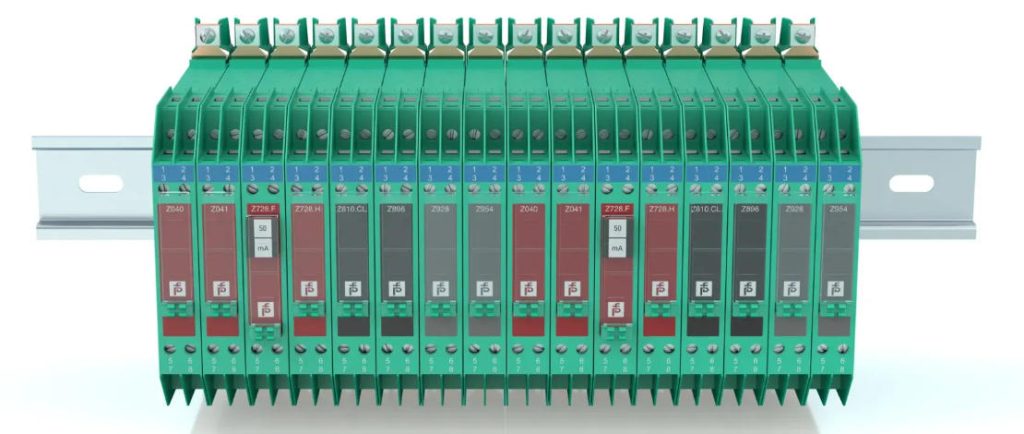
Isolated barriers are more widely used in modern projects. They integrate energy-limiting circuits, isolation modules, and signal processing units. They do not rely heavily on dedicated intrinsic safety grounding and generally offer better anti-interference performance and easier maintenance.
However, this does not eliminate the need for proper grounding practices such as shielding grounding, protective grounding, and equipotential bonding.
3. Sudden Equipment Failure May Be Caused by Surges
Another common failure pattern is unexpected equipment damage:
- Communication modules fail after thunderstorms
- Systems malfunction after large motor switching
- Instruments are damaged without visible short circuits or overloads
- Electronic modules fail suddenly despite normal power conditions
These issues are often related to electrical surges.
A surge is a short-duration overvoltage event. Although brief, it can carry high energy and damage PLCs, DCS systems, transmitters, and communication modules, or accelerate aging.
Surge sources include lightning induction, switching operations, motor start-stop events, power grid fluctuations, and induced overvoltage in long cable runs.
A surge protective device (SPD) is designed to handle such transient overvoltages.
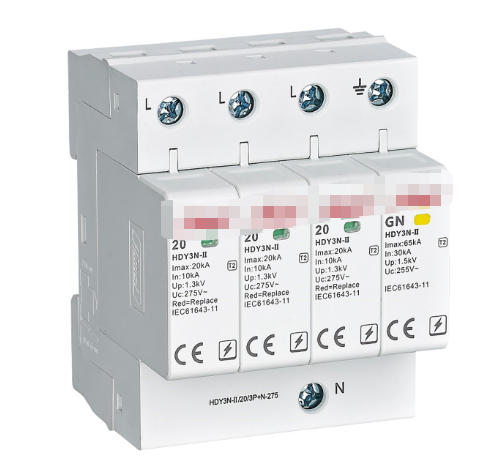
Under normal conditions, it has minimal impact on the system. When a surge occurs, it reacts quickly to limit voltage within safe levels and diverts surge current to grounding or equipotential systems, protecting downstream equipment.
In chemical plants, SPDs are commonly applied to power systems, control loops, communication lines, instrument circuits, and data networks—especially in outdoor installations, tank farms, loading areas, long-distance cables, and zones near lightning protection systems or high-power equipment.
4. These Three Devices Serve Different Protection Purposes
Although signal isolators, intrinsic safety barriers, and SPDs are all protection devices, they serve different functions:
- Signal isolators: improve signal stability by eliminating interference and ground loops
- Intrinsic safety barriers: prevent ignition risks by limiting energy in hazardous areas
- SPDs: protect equipment from lightning and switching surge damage
Therefore, protection design should not rely on a single device.
For critical systems such as SIS, ESD, and safety interlocks, engineers must evaluate the entire signal chain, including signal origin, cabinet routing, hazardous area transitions, cable length, grounding design, and surge discharge paths.
A well-designed protection system reduces long-term maintenance issues, while poor design often leads to repeated troubleshooting, module replacement, and system modifications.
Conclusion
The stability of chemical plant automation systems is not achieved by a single device.
- Signal interference can distort process data
- Energy risks in hazardous areas can lead to ignition hazards
- Surge events can instantly damage electronic modules
Signal isolators, intrinsic safety barriers, and SPDs address these three challenges respectively.
Although often unnoticed during normal operation, their importance becomes increasingly evident over time.
Many field failures are not unavoidable—they simply were not properly prevented at the design stage.