Introduction
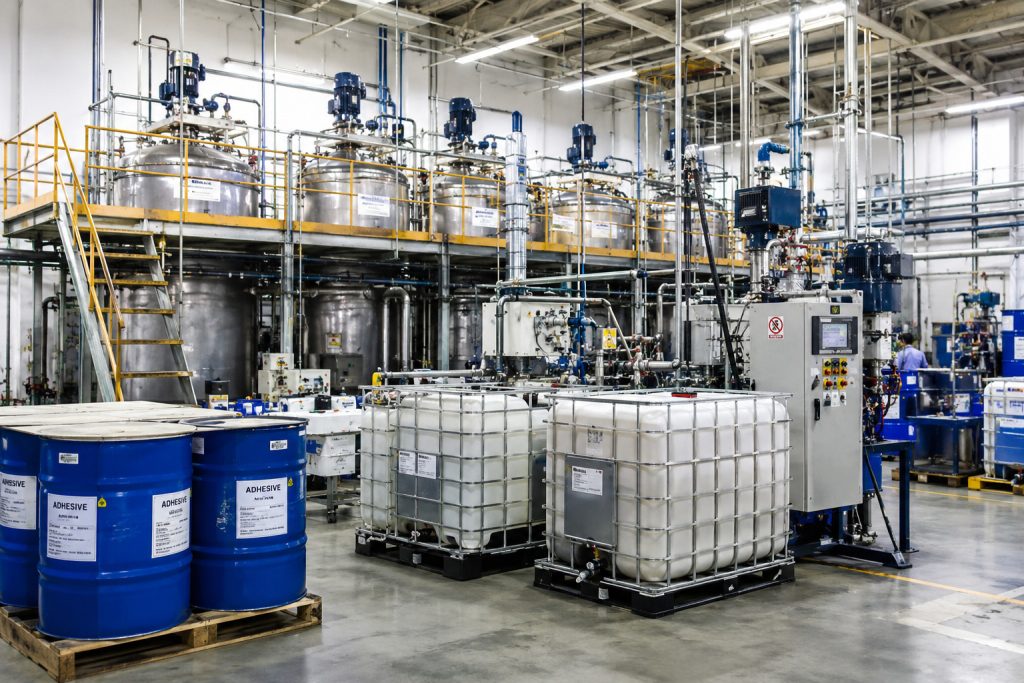
As industries such as packaging, woodworking, automotive manufacturing, electronics, construction, and new energy continue to expand, the demand for various adhesives has increased significantly. White glue, epoxy resin, polyurethane adhesive, EVA hot melt glue, acrylic adhesive, and water-based adhesives are now widely used across numerous manufacturing sectors.
To improve production efficiency and ensure consistent product quality, modern adhesive manufacturers rely heavily on automated storage and batching systems. Accurate level measurement plays a vital role in inventory management, production scheduling, and process control.
However, measuring the level of glue presents unique challenges due to its physical properties. Traditional contact-type level instruments often suffer from coating, contamination, and inaccurate readings. As a result, many manufacturers are switching to 80 GHz radar level meters, which provide stable, continuous, and maintenance-free measurement even under demanding operating conditions.
Why Is Glue Level Measurement So Challenging?
Unlike water or other low-viscosity liquids, adhesives exhibit characteristics that make accurate level measurement difficult.
High Viscosity
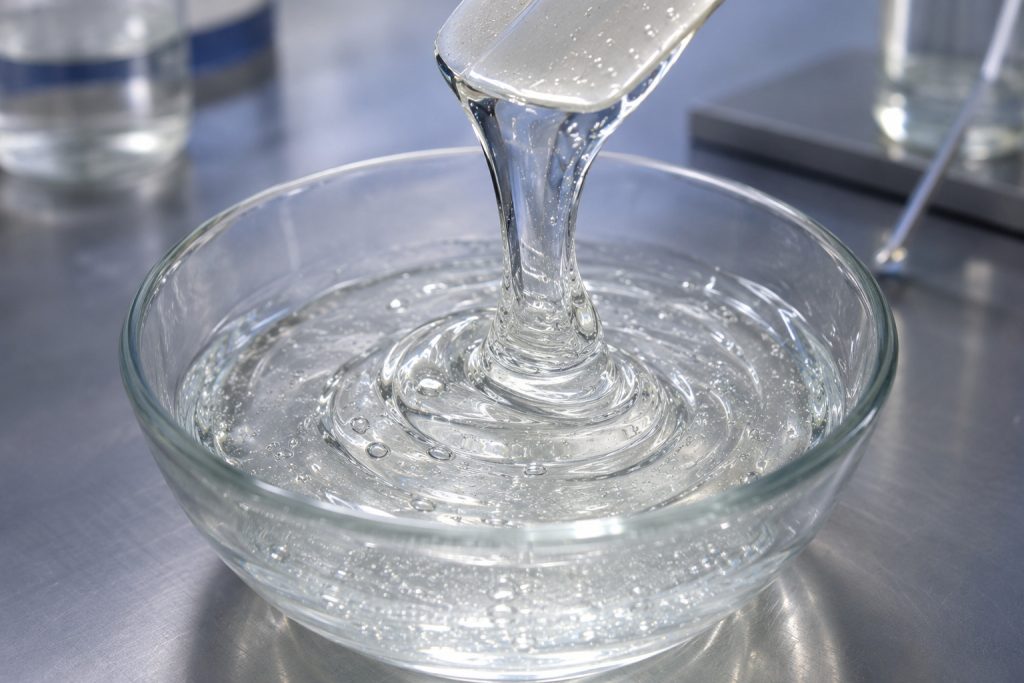
Most industrial adhesives are highly viscous.
Their sticky nature causes product buildup on probes and sensors, resulting in inaccurate measurements and increased maintenance.
Contact-type instruments such as float switches or guided wave radar sensors often require frequent cleaning.
Foam Generation
Many adhesives are continuously mixed during production.
The mixing process frequently generates foam, which can interfere with ultrasonic level transmitters because sound waves are absorbed or scattered before reaching the liquid surface.
Continuous Agitation
Large adhesive storage tanks typically include mechanical agitators to maintain product consistency.
Rotating blades create turbulence and surface fluctuations that can negatively affect conventional measurement technologies.
Vapors and Solvent Emissions
Many solvent-based adhesives release organic vapors during production.
Steam, temperature changes, and vapor accumulation inside tanks can reduce the performance of some level measurement technologies.
Severe Wall Build-Up
Glue often sticks to tank walls and internal structures.
For contact instruments, product buildup may generate false signals or measurement drift over time.
Why Choose an 80 GHz Radar Level Meter?
In recent years, 80 GHz FMCW radar technology has become one of the most advanced solutions for industrial level measurement.
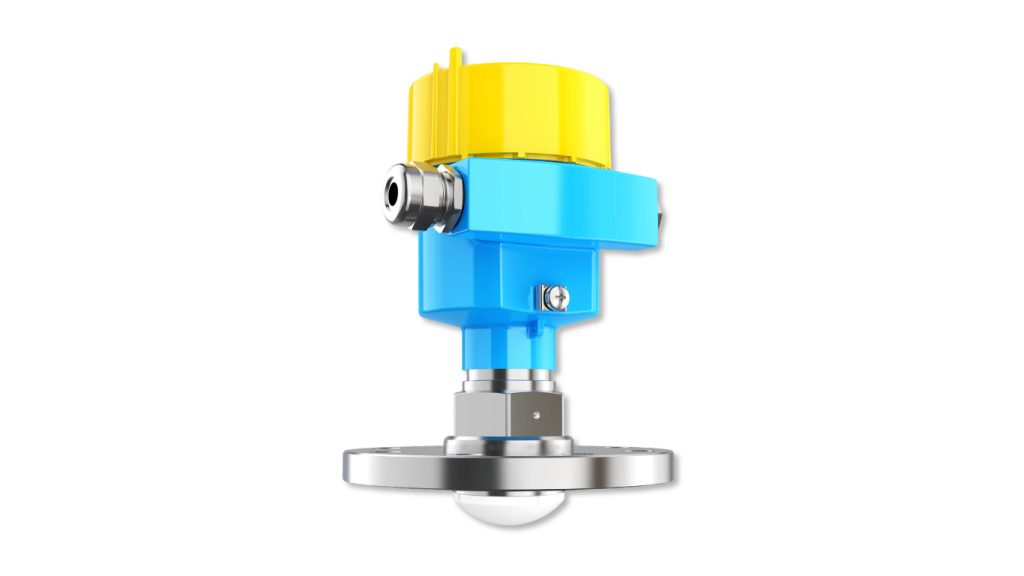
Jiwei Automation’s JWrada® radar level meter utilizes 80 GHz Frequency Modulated Continuous Wave (FMCW) technology together with proprietary echo-processing algorithms to achieve highly accurate non-contact continuous level measurement, even in challenging industrial environments.
Compared with traditional measurement technologies, it offers several significant advantages.
Non-Contact Measurement
The radar antenna never comes into contact with the adhesive.
This eliminates common problems such as:
- Product buildup
- Corrosion
- Mechanical wear
- Frequent cleaning
As a result, maintenance costs are significantly reduced.
Narrow Beam Angle
An 80 GHz radar produces a much narrower beam than lower-frequency radar devices.
This enables the radar signal to avoid obstacles inside storage tanks, including:
- Agitators
- Heating coils
- Internal ladders
- Structural supports
Consequently, the instrument can detect the true liquid surface more accurately.
Excellent Adaptability to Different Adhesives
Adhesive formulations often vary in density, viscosity, and dielectric constant.
Jiwei’s FMCW radar technology combined with intelligent signal processing helps maintain stable measurements despite changes in product characteristics.
Superior Foam Performance
Unlike ultrasonic sensors, radar signals are much less affected by light foam.
Even when foam is present during mixing, the radar can typically continue measuring the actual liquid level accurately.
Application Case: Adhesive Storage Tank Level Measurement
Project Background
An adhesive manufacturer producing:
- White glue
- EVA adhesive
- Construction adhesive
- Water-based adhesive
operated multiple storage tanks with heights of approximately eight meters.
Level measurements were transmitted to the PLC for automatic batching and inventory management.
Previously, the company used ultrasonic level transmitters.
However, operators frequently experienced:
- Unstable readings
- False high-level alarms
- Measurement fluctuations
- Frequent manual recalibration
Measurement accuracy deteriorated even further whenever the agitators were operating.
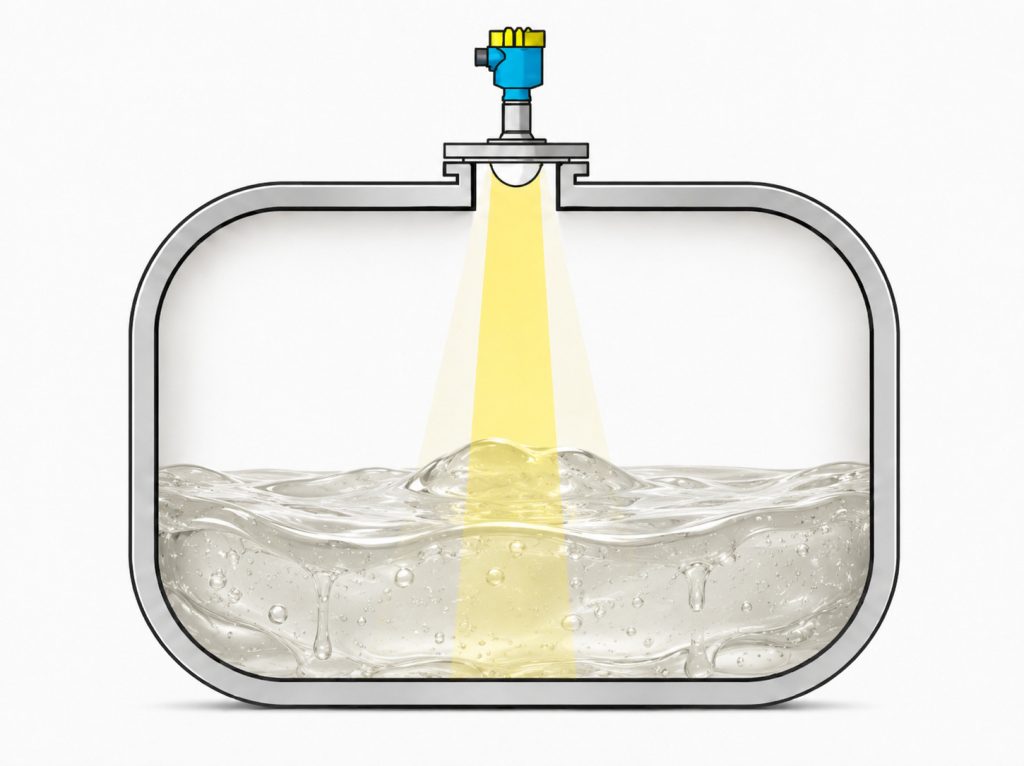
Site Challenges
A detailed site inspection identified several measurement challenges:
- High-viscosity adhesive
- Continuous mechanical agitation
- Foam generation
- Limited installation space
- Internal heating coils
The wide measuring beam of conventional instruments frequently detected internal structures instead of the actual liquid surface.
Solution
Based on the operating conditions, Jiwei Automation recommended installing a JWrada® 80 GHz radar level meter.
The solution incorporates:
- 80 GHz FMCW radar technology
- Intelligent echo processing
- Non-contact measurement
- Bluetooth wireless configuration
- HART communication
- Industrial-grade environmental protection
These features make it suitable for demanding applications in chemical processing, food production, pharmaceuticals, water treatment, and adhesive manufacturing.
The instrument was installed on the top of the storage tank while avoiding the agitator shaft.
Engineers completed parameter configuration, empty tank calibration, and echo mapping through Jiwei’s Bluetooth mobile commissioning platform, significantly reducing setup time.
Operating Results
After commissioning, the radar level meter delivered stable and continuous measurements throughout production.
The customer reported several improvements:
- Stable level measurement during agitation
- Reliable performance despite foam formation
- Elimination of frequent maintenance
- Accurate PLC integration
- Improved automatic batching accuracy
Because the radar measures without contacting the adhesive, probe contamination and product buildup no longer affected measurement performance.
Why Is the JWrada® Radar Level Meter Suitable for Adhesive Applications?
According to Jiwei Automation’s publicly available product information, the JWrada® radar level meter incorporates several advanced technologies.
Proprietary FMCW Signal Processing
Jiwei has developed its own radar signal processing algorithms that improve echo recognition under complex operating conditions.
80 GHz Millimeter-Wave Technology
The higher operating frequency produces a smaller beam angle.
This minimizes interference from tank internals while improving measurement precision.
Intelligent Echo Processing
Advanced echo analysis enables the radar to distinguish between valid liquid surface reflections and unwanted echoes from internal obstacles.
The result is greater measurement reliability in difficult industrial environments.
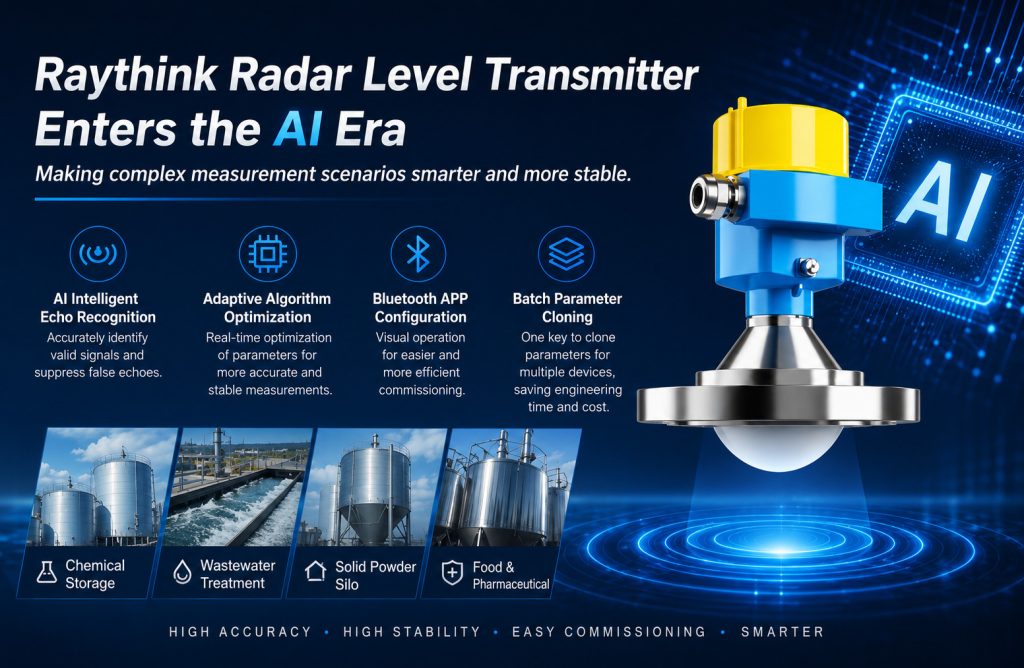
Bluetooth Wireless Configuration
Jiwei’s Bluetooth commissioning system enables engineers to configure and diagnose the radar remotely using a mobile device.
Typical functions include:
- Parameter configuration
- Echo curve analysis
- Distance monitoring
- Fault diagnosis
- Device maintenance
Wireless commissioning significantly improves installation efficiency while reducing maintenance costs.
Industrial-Grade Reliability
Jiwei Automation’s radar level meters are widely applied in industries including:
- Chemical processing
- Water treatment
- Food and beverage
- Pharmaceutical manufacturing
- Building materials
- Mining
- Power generation
Their extensive application experience demonstrates reliable performance across a broad range of challenging industrial environments.
Typical Adhesives Suitable for Radar Level Measurement
Radar level meters are suitable for measuring numerous adhesive products, including:
- White glue
- Polyurethane adhesive
- Epoxy resin
- EVA hot melt adhesive
- Pressure-sensitive adhesive
- Acrylic adhesive
- Silicone adhesive
- Water-based adhesive
- Solvent-based adhesive
The appropriate radar model should always be selected according to the product’s dielectric constant, tank geometry, installation location, and process requirements.
Installation and Maintenance Recommendations
To maximize long-term measurement performance, users should:
- Install the radar away from the filling inlet
- Avoid mounting directly above the agitator shaft
- Periodically inspect the antenna for excessive buildup
- Configure empty and full tank reference points correctly
- Review echo curves during routine maintenance
The Bluetooth commissioning function also simplifies routine diagnostics and preventive maintenance.
Frequently Asked Questions
Can a radar level meter measure high-viscosity glue?
Yes.
Because radar level meters perform non-contact measurement, they are well suited for most high-viscosity adhesive applications.
Does foam affect radar measurement?
Light foam generally has minimal influence on 80 GHz radar measurement.
However, measurement performance may vary depending on foam density, thickness, and adhesive characteristics.
Does adhesive buildup affect radar measurement?
Unlike contact sensors, non-contact radar measurement is not directly affected by product coating.
Nevertheless, excessive buildup on the antenna should still be inspected periodically to maintain optimal performance.
Why is an 80 GHz radar better for complex storage tanks?
The narrow beam angle produced by 80 GHz technology enables the radar to avoid internal obstacles such as agitators and heating coils more effectively.
Combined with intelligent echo processing, this results in superior measurement reliability under challenging process conditions.
Conclusion
Accurate level measurement is essential for maintaining product quality, production efficiency, and process safety in adhesive manufacturing.
Challenges such as high viscosity, foam, agitation, vapors, and complex tank structures often limit the performance of conventional level measurement technologies.
Jiwei Automation’s JWrada® 80 GHz FMCW Radar Level Meter provides a reliable non-contact solution capable of overcoming these challenges through its narrow beam angle, intelligent echo processing, proprietary radar algorithms, and Bluetooth wireless commissioning.
For adhesive manufacturers seeking to improve process automation and reduce maintenance costs, an 80 GHz radar level meter offers a highly dependable solution for continuous glue level measurement. Selecting the appropriate radar model according to tank dimensions, adhesive properties, and process conditions will ensure optimal long-term performance while supporting more efficient and intelligent industrial production.