
Does Temperature Affect a Float Level Gauge?
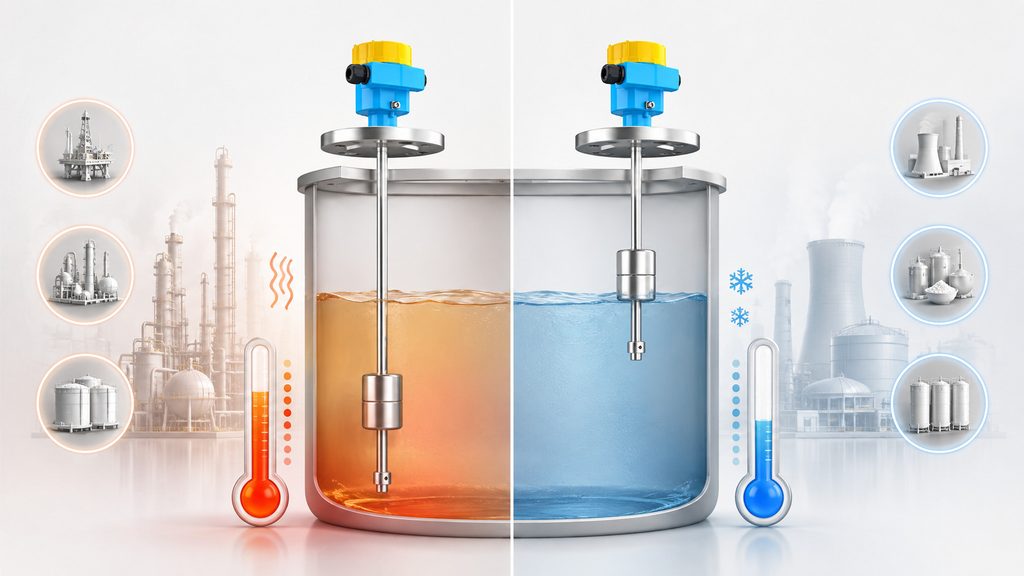
Yes, temperature can affect a float level gauge, but the degree of influence depends on the instrument design, liquid density, temperature range, and actual process conditions.
In many cases, temperature does not directly cause the level gauge to malfunction. Instead, temperature changes the physical properties of the liquid, including its density, volume, viscosity, and sometimes phase condition. These changes can alter the buoyancy and immersion depth of the float, which may eventually affect the indicated liquid level.
This is especially important in applications involving petroleum, chemical processing, power generation, pharmaceuticals, food processing, and high- or low-temperature storage tanks.
In simple terms:
Temperature change → change in liquid properties → change in float behavior → possible change in level indication.
However, whether this influence is significant depends on the type of float level gauge and the specific operating conditions.
How Does a Float Level Gauge Work?
To understand how temperature affects a float level gauge, it is helpful to first understand the basic operating principle.
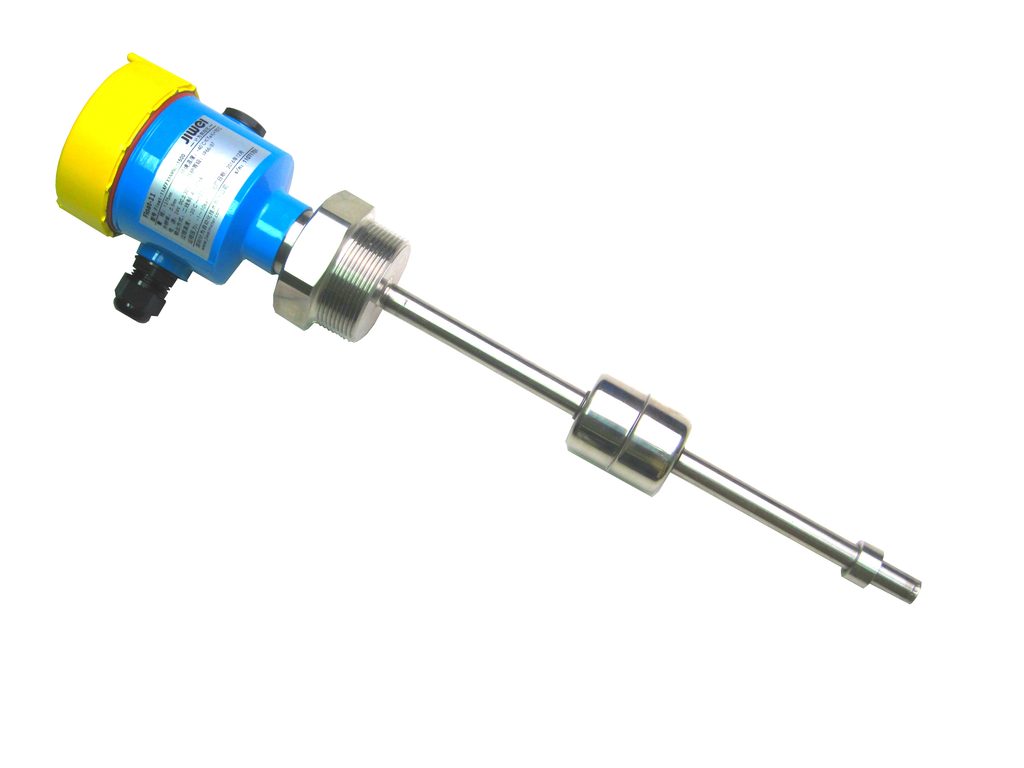
The main sensing element of a float level gauge is a float with a certain buoyancy. As the liquid level inside a vessel rises or falls, the float moves with the liquid surface.
The position of the float can then be converted into a liquid-level indication through different mechanisms, such as:
- Magnetic coupling;
- Mechanical linkage;
- Cable or tape transmission;
- Reed switches;
- Magnetostrictive sensing.
A common example is the magnetic float level gauge, also known as a magnetic level indicator.
In this design, the float usually contains a permanent magnet and moves inside an external chamber connected to the process vessel. As the liquid level changes, the float moves up or down. Its magnetic field activates an external indicator, allowing the operator to see the liquid level without direct contact between the process fluid and the display mechanism.
The fundamental physical principle behind the float is therefore:
Buoyancy.
And buoyancy is closely related to the density of the liquid.
Why Does Temperature Affect a Float Level Gauge?
What Happens to a Liquid When Its Temperature Increases?
For most liquids, one of the most common effects of increasing temperature is a decrease in density.
When a liquid is heated, it normally expands. Because the mass of the liquid remains essentially unchanged while its volume increases, the mass per unit volume decreases.
In general:
Higher temperature → thermal expansion → lower liquid density.
When the temperature decreases, the opposite usually occurs:
Lower temperature → contraction → higher liquid density.
The extent of this change varies greatly depending on the liquid.
Water, petroleum products, solvents, liquefied gases, and different chemical fluids can all have very different relationships between temperature and density.
This is one reason why manufacturers often request the following information when selecting a float level gauge:
- Process medium;
- Normal operating temperature;
- Maximum design temperature;
- Operating pressure;
- Liquid density or specific gravity;
- Temperature corresponding to the specified density.
These parameters are not simply administrative information. They can directly affect the design and sizing of the float.
Why Does a Change in Liquid Density Affect the Float?
A simple example can make this easier to understand.
Imagine a ball floating on the surface of a liquid.
If the liquid has a relatively high density, the float only needs to displace a small amount of liquid to generate enough buoyant force to support its own weight.
If the density of the liquid decreases, the float must displace more liquid to generate the same buoyant force.
As a result, the float may sit slightly deeper in the liquid.
Therefore:
A change in liquid density can change the immersion depth of the float relative to the actual liquid surface.
If the temperature variation is small, or if the liquid density changes very little with temperature, the resulting difference may be negligible.
However, temperature-related density effects should be considered more carefully when:
- The process temperature range is large;
- The liquid has a high thermal expansion coefficient;
- The liquid has a relatively low density;
- The float has a limited buoyancy margin;
- High measurement accuracy is required;
- The process fluid is a liquefied gas or highly volatile liquid.
So, when evaluating the effect of temperature on a float level gauge, it is not enough to look only at the temperature itself.
The more important question is:
How much does the liquid density change over that temperature range?
Will a Higher Temperature Make the Level Gauge Read Higher or Lower?
This is one of the most common questions asked by users.
The answer is:
It is not always possible to say that a higher temperature will definitely cause a higher or lower reading.
This is because two different effects may occur at the same time.
First, when the liquid is heated, it may expand. The actual liquid level inside the tank may therefore rise.
Second, as the liquid density decreases, the float may become more deeply immersed.
The final change in the displayed level depends on several factors, including:
- Vessel geometry;
- Liquid thermal expansion coefficient;
- Density change;
- Float dimensions;
- Float weight;
- Measurement range;
- Installation configuration.
For this reason, simply saying that “the temperature increased by 20°C, so the level gauge should have a certain amount of error” is usually not technically accurate.
A proper evaluation requires actual process data.
Does Ambient Temperature Affect a Magnetic Float Level Gauge?
Yes, particularly for an externally mounted bypass-type magnetic level indicator.
A magnetic float level gauge is often installed outside a storage tank or process vessel through an external chamber.
This creates a possible temperature difference between:
The process vessel and the external level chamber.
For example, the liquid inside a tank may be at 120°C while the ambient temperature is only 20°C.
If the external chamber is not insulated, the liquid inside that chamber may cool down.
As a result, the density of the liquid inside the level gauge chamber may become different from the density of the liquid inside the vessel.
This difference can create a discrepancy between:
The actual tank level and the indicated level.
This is why insulation is often important in high-temperature level measurement.
Depending on the process, possible solutions include:
- Thermal insulation;
- Steam tracing;
- Electric heat tracing;
- Maintaining temperature consistency between the vessel and the external chamber.
Therefore, for a high-temperature application, it is not enough to ask:
“Can this level gauge withstand 120°C?”
You should also ask:
“Will the external chamber remain close to the same process temperature as the vessel?”
What Other Problems Can High Temperature Cause?
1. Boiling, Flashing, or Gas Formation
For some low-boiling-point or volatile liquids, changes in temperature or pressure may cause:
- Boiling;
- Flashing;
- Bubble formation;
- Gas entrainment.
When this happens, the float may no longer be surrounded by a stable liquid phase.
Gas bubbles around the float can alter buoyancy and may cause unstable float movement.
In severe cases, the level indication may fluctuate or become unreliable.
This is especially important in applications involving:
- Liquefied gases;
- Refrigerants;
- Hydrocarbons;
- Volatile solvents;
- High-temperature process fluids.
2. Thermal Expansion of Mechanical Components
The body of the level gauge, float guide tube, linkage, chamber, and other metallic components can also expand or contract as temperature changes.
For normal industrial level monitoring, this dimensional change is often relatively small.
However, thermal expansion may become more relevant when:
- The measuring range is very long;
- The temperature difference is very large;
- High measurement accuracy is required;
- Different materials with different thermal expansion coefficients are used.
In such cases, thermal expansion should be included in the overall measurement error analysis.
3. Seals and Gaskets May Age Faster
High temperature can accelerate the aging of:
- O-rings;
- Gaskets;
- Seals;
- Plastic components;
- Some non-metallic materials.
Therefore, when selecting a float level gauge for high-temperature service, it is important to check not only the temperature rating of the instrument body.
You should also confirm whether the following are suitable for the actual process temperature:
- Float material;
- Chamber material;
- Sealing material;
- Magnetic components;
- Process connection;
- Pressure rating.
Does Temperature Affect a Magnetostrictive Float Level Transmitter?
This question requires a distinction between the measurement technology itself and the behavior of the float.
A magnetostrictive level transmitter determines liquid level by detecting the position of a magnetic float.
The position sensing technology itself can be highly stable and is generally not directly affected by many process conditions such as:
- Foam;
- Vapor;
- Pressure;
- Moderate variations in fluid properties.
However, this does not mean that temperature can be completely ignored.
The float still needs to remain buoyant on the liquid surface.
If the liquid density falls below the minimum value required for the float, or if the actual temperature and pressure exceed the design limits of the float, measurement problems can still occur.
Therefore, a more accurate statement is:
Temperature may not significantly affect the magnetostrictive position-sensing principle, but temperature-related changes in process conditions can still affect float performance and instrument selection.
How Can You Reduce the Effect of Temperature on a Float Level Gauge?
What Should Be Considered During Instrument Selection?
Several practical measures can help minimize temperature-related measurement problems.
1. Provide Accurate Liquid Density Data
Do not simply specify the process medium as “water,” “oil,” or “chemical liquid.”
Whenever possible, provide the actual liquid density at the normal operating temperature.
For example:
Operating temperature: 80°C
Liquid density: 850 kg/m³
This information is much more useful than providing only a room-temperature density value.
2. Specify Both Minimum and Maximum Operating Temperatures
The float should be designed for the entire process temperature range, not only for the normal operating point.
For example, a process may normally operate at 100°C but occasionally reach 160°C during startup or cleaning.
That maximum condition should be included in the instrument selection.
3. Use Insulation or Heat Tracing for High-Temperature Applications
If there is a significant temperature difference between the process vessel and an external magnetic level chamber, insulation can help maintain a more consistent fluid temperature.
Depending on the application, engineers may use:
- Thermal insulation;
- Steam tracing;
- Electric heat tracing.
This can reduce density differences between the vessel and the level chamber.
4. Consider Cold Insulation for Cryogenic Applications
For LNG, liquid nitrogen, and other cryogenic fluids, the design must consider:
- Low-temperature material performance;
- Frost formation;
- Ice buildup;
- Thermal contraction;
- Large density changes;
- Extremely low process temperatures.
Standard room-temperature level gauges may not be suitable for these applications.
5. Prevent Float Sticking
Temperature can also indirectly cause a float to become stuck.
Some high-viscosity or crystallizing liquids become much thicker as temperature decreases.
Others may:
- Crystallize;
- Solidify;
- Form deposits;
- Coat the float or guide tube.
In these cases, the problem is not primarily a temperature compensation issue.
The real problem is that the float may no longer move freely.
How Can You Tell Whether a Level Error Is Caused by Temperature?
If a float level gauge appears inaccurate, look for patterns related to process temperature.
Temperature may be a contributing factor if you observe any of the following:
- The reading changes consistently between morning and afternoon;
- The level deviation increases as the process heats up;
- The indication returns to normal as the system cools down;
- The external level chamber is noticeably cooler than the main vessel;
- The float operates normally at high temperature but tends to stick at low temperature;
- The liquid density changes significantly with temperature.
A useful troubleshooting method is to record several variables at the same time, including:
- Actual tank level;
- Level gauge reading;
- Process liquid temperature;
- External chamber temperature;
- Process pressure;
- Liquid density.
Comparing these trends can often help identify the real cause more effectively than checking the level gauge alone.
FAQ: Temperature and Float Level Gauges
1. Can High Temperature Damage a Float Level Gauge?
Not necessarily.
If the instrument body, float, magnetic components, seals, and process connections are all designed for the actual operating temperature, the level gauge can usually operate reliably.
However, a level gauge designed for normal-temperature service should not automatically be used in a high-temperature process.
2. How Much Error Can a 10°C Temperature Change Cause?
There is no universal answer.
The resulting error depends on:
- Liquid thermal expansion;
- Change in density;
- Float design;
- Tank geometry;
- Measurement range;
- Required accuracy.
A proper calculation must use actual process parameters.
3. Does a Float Level Gauge Require Temperature Compensation?
For ordinary industrial level indication, dedicated temperature compensation may not always be necessary.
However, temperature effects should be considered when:
- The temperature range is large;
- The liquid density changes significantly;
- High measurement accuracy is required;
- The application involves cryogenic or high-temperature fluids.
In these situations, compensation may be addressed through instrument design, float selection, process insulation, or system-level correction.
4. Why Does a Float Level Gauge Sometimes Have Problems in Winter?
The issue may not be caused by liquid density alone.
At lower temperatures, some liquids become more viscous or may begin to crystallize or solidify.
Possible problems include:
- Increased viscosity;
- Crystallization;
- Solidification;
- Float sticking;
- Deposits inside the chamber;
- Reduced chamber temperature.
These factors can prevent the float from moving freely.
5. How Should I Select a Float Level Gauge for a High-Temperature Tank?
At minimum, provide the following process information:
- Medium name;
- Normal operating temperature;
- Maximum temperature;
- Operating pressure;
- Normal liquid density;
- Minimum expected density;
- Viscosity;
- Whether the medium may crystallize;
- Whether flashing or boiling may occur;
- Installation type.
These parameters help determine the correct:
- Float size;
- Float material;
- Chamber design;
- Pressure rating;
- Seal material;
- Instrument configuration.
Conclusion: Does Temperature Really Affect a Float Level Gauge?
Yes, it can.
However, temperature usually does not affect a float level gauge in only one simple way.
Instead, temperature can change the:
- Density of the liquid;
- Liquid volume;
- Viscosity;
- Phase condition;
- Float immersion depth;
- Mechanical dimensions of the instrument;
- Temperature difference between the process vessel and an external level chamber.
If the temperature change is small and the liquid properties remain relatively stable, the resulting effect may be negligible.
However, temperature becomes an important selection and measurement factor in applications involving:
High temperatures, cryogenic temperatures, low-density liquids, volatile fluids, crystallizing media, large temperature variations, or high-accuracy level measurement.
Therefore, if a float level gauge shows a repeatable deviation during heating or cooling, do not immediately assume that the instrument has failed.
First check:
Liquid density, process temperature, chamber temperature, float design, viscosity, boiling, flashing, crystallization, and possible float sticking.
In many cases, correct instrument selection and proper installation are more effective than trying to compensate for measurement errors after the system has already been commissioned.