Modern dairy farms, cattle farms, pig farms and poultry facilities increasingly rely on automated feed storage and conveying systems. Bulk animal feed is commonly delivered by truck and stored in outdoor feed silos before being transferred to mixers, feeding lines or automatic feeding equipment.
Although a feed silo may appear to be a simple storage vessel, reliable material level detection plays an important role in keeping the entire feeding system running smoothly.
If the feed level falls too low without being detected, downstream equipment may run without sufficient material and animals may not receive feed on schedule. If the silo is filled beyond its safe capacity, overfilling can lead to material spillage, blocked conveying pipes and unnecessary product loss.
For these applications, a rotary paddle level switch provides a simple and reliable solution for point level detection.

Why Do Feed Silos Need High and Low Level Detection?
A typical animal feed silo usually requires two important monitoring points.
The upper detection point is used for high level or full silo detection. The lower detection point is used for low level or empty silo warning.
Together, these two switches allow the feed storage system to identify whether the silo is approaching its maximum filling level or whether the remaining feed is becoming insufficient.
Unlike continuous level transmitters, point level switches do not measure the exact distance or percentage of material inside the silo. Instead, they answer a much simpler question:
Is material present at this specific location?
For many livestock feeding systems, this is exactly the information required for automatic control.
The high level signal can stop the filling process, while the low level signal can trigger a refill alarm or start an automatic feed supply sequence.
How Does a Rotary Paddle Level Switch Work?
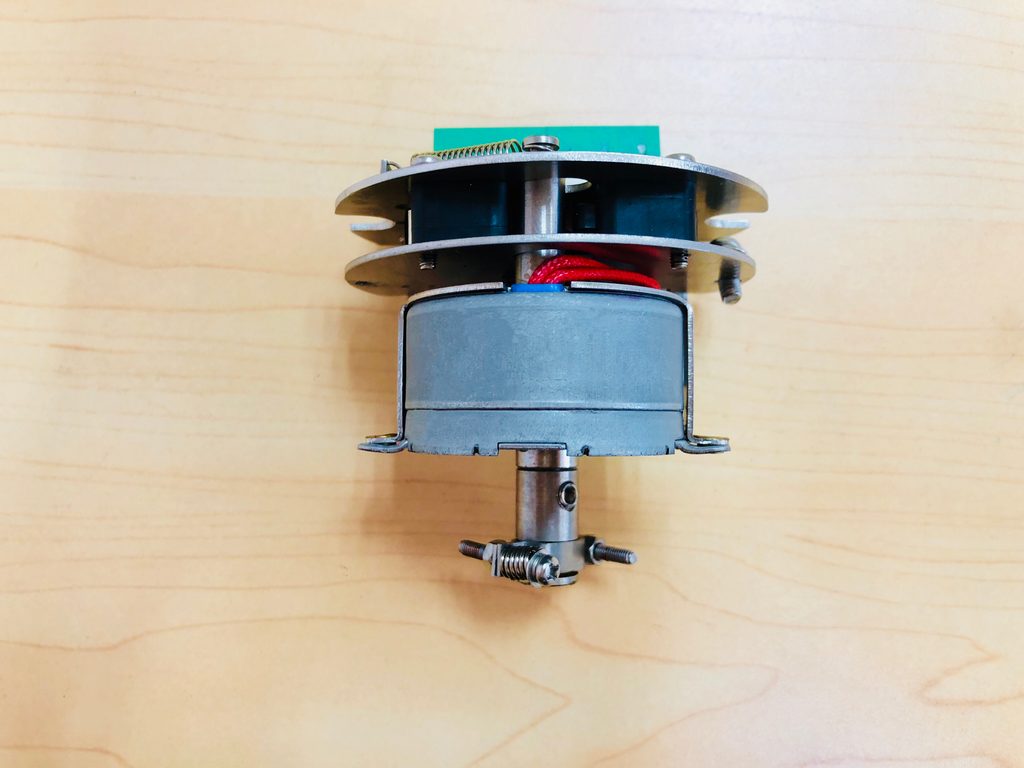
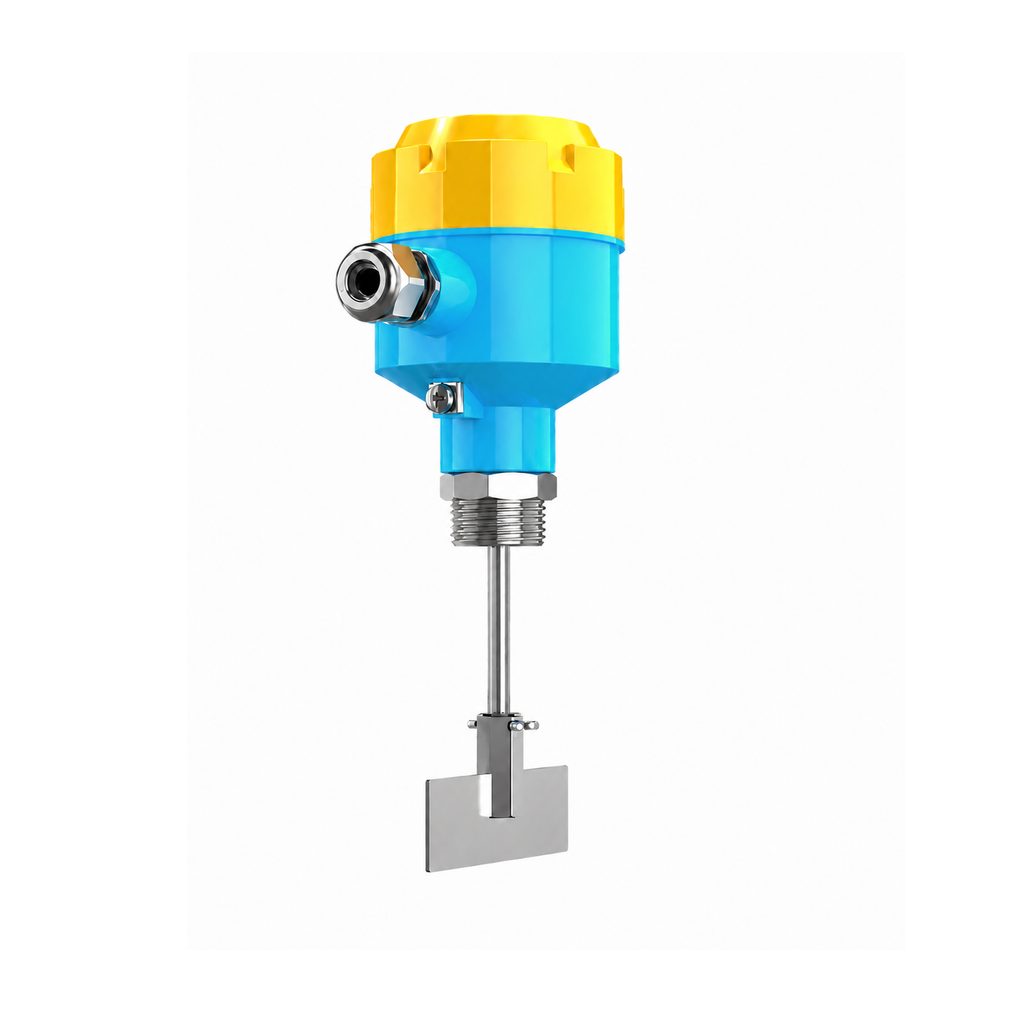
A rotary paddle level switch uses a small electric motor to rotate a paddle inside the silo.
When there is no material around the paddle, it rotates freely.
As the feed level rises and eventually covers the paddle, the surrounding material prevents it from rotating. The internal mechanism detects the increased resistance and changes the electrical output state.
This signal can then be transmitted to a PLC, control cabinet, alarm system or conveyor interlock circuit.
Once the material level falls below the paddle and the resistance disappears, the paddle begins rotating again and the output returns to its normal state.
Because the measurement principle is based on mechanical resistance rather than dielectric properties, rotary paddle switches are suitable for many granular and powdered bulk solids.
Typical materials include pellet feed, grains, corn, soybean meal and various mixed animal feeds.
High Level Detection Helps Prevent Feed Silo Overfilling
One of the most common applications is installing a rotary paddle level switch near the top of the feed silo.
During filling, feed enters the silo and gradually builds up.
When the material reaches the paddle, its rotation is blocked. The level switch immediately sends a high level signal to the control system.
This signal can be used to stop a screw conveyor, shut down a pneumatic conveying system or activate an audible and visual alarm.
The result is a simple overfill protection system.
This is especially valuable on large farms with multiple feed silos. Operators may not be able to visually inspect every silo during filling. Connecting each high level switch to a central PLC allows operators to monitor the filling status of several silos from one location.
Automatic high level detection also reduces dependence on manual observation, silo tapping or climbing to the top of the vessel.
Low Level Detection Provides Early Feed Shortage Warning
A second rotary paddle level switch can be installed in the lower section of the silo.
During normal feeding operations, material gradually leaves the vessel.
As long as the feed remains above the low level switch, the paddle stays surrounded by material.
When the level drops below the switch, the paddle is released and begins rotating again. The change in output can then be interpreted as a low level condition.
This signal can be used to notify farm staff that a feed delivery should be arranged.
In an automated system, the low level alarm may also be integrated with feed conveying equipment or inventory management systems.
For large livestock operations that consume significant quantities of feed every day, early low level detection helps prevent unexpected interruptions to the feeding process.
Selecting a Rotary Paddle Level Switch for Animal Feed
Proper selection depends on the physical characteristics of the stored material.
Important factors include bulk density, particle size, flowability and the amount of mechanical force generated by the material.
A standard rotary paddle level switch is suitable for many common powders and granules. However, applications involving heavier material or stronger impact from falling feed may require a more robust design or additional protection around the shaft.
The size and shape of the paddle should also match the bulk density of the material.
Higher-density materials usually generate sufficient resistance even with a relatively small paddle. Low-density materials may require a larger paddle or a more sensitive torque setting.
Therefore, the selection process should consider whether the silo stores pellet feed, grain, soybean meal, powdered feed or another type of bulk solid.
The silo height alone is not enough to determine the correct level switch configuration.
Installation Location Is Critical for Reliable Operation
Correct installation is just as important as product selection.
Feed normally enters the silo from the top and creates a concentrated falling stream.
A rotary paddle switch should not be installed directly underneath the filling inlet.
Continuous impact from falling feed may place excessive mechanical force on the paddle and shaft. It can also cause false switching during filling.
Whenever possible, the level switch should be positioned away from the main filling stream.
If installation space is limited, a protective plate or deflector can be installed above the sensor. The plate absorbs the direct impact of falling material and redirects the feed around the sensing area.
For side-mounted installations, the sensor orientation should also allow material to fall away from the paddle easily when the silo empties.
This helps prevent material from accumulating around the sensing mechanism.
Outdoor Feed Silos Require Proper Weather Protection
Many livestock feed silos are installed outdoors.
As a result, level switches may be exposed to rain, dust, sunlight, condensation and significant temperature changes.
Cable glands should be properly sealed, and cable entries are normally arranged to reduce the possibility of water entering the housing.
The enclosure protection rating should also be suitable for the environmental conditions.
Good installation practice can significantly improve long-term reliability, particularly on farms where maintenance access to the top of the silo may be difficult.
Why Point Level Detection Often Makes More Sense Than Continuous Measurement
Not every feed silo needs a continuous level transmitter.
In many applications, the operator does not need to know whether the silo is exactly 47% or 52% full.
The two most important questions are usually much simpler:
Is the silo almost full?
Is the silo almost empty?
If these are the main control requirements, two point level switches can provide an efficient and cost-effective solution.
A high level switch protects against overfilling, while a low level switch provides an early warning before feed runs out.
These signals can easily be integrated into automatic filling and feeding systems.
For applications where inventory management is also required, a continuous radar level transmitter may be installed together with independent high and low level switches to provide additional protection.
The High Level Switch Should Not Be Installed Too Close to the Silo Roof
A common installation mistake is positioning the high level switch as close to the top of the silo as possible.
In reality, some free space should remain above the maximum working level.
When a conveying system receives a stop command, material may still remain inside the conveying pipe or screw conveyor. This residual feed will continue entering the silo for a short period.
If the high level switch is installed too close to the roof, this additional material can still cause overfilling.
The correct high level position should therefore consider the silo capacity, required freeboard and the amount of feed that continues to enter after the conveyor stops.
The low level switch also requires careful positioning.
If it is installed too low, the alarm may not activate until the silo is almost completely empty.
If it is installed too high, low level alarms may occur too frequently.
A properly selected detection point provides enough time for operators to arrange refilling without creating unnecessary alarms.
Improving Feed Management Through Simple Level Control
Automatic feeding systems depend on reliable information from the storage silos.
A rotary paddle level switch converts the physical presence or absence of feed into a clear electrical signal.
This signal can be used for silo full alarms, low feed warnings, conveyor shutdown, refill control and equipment interlocking.
Because the technology is simple and well established, rotary paddle level switches remain widely used for point level detection in bulk solid storage.
Conclusion
Reliable feed silo level monitoring is an important part of modern livestock farm automation.
For pellet feed, grain and many other free-flowing bulk solids, a rotary paddle level switch provides a practical solution for detecting critical high and low material levels.
By selecting the correct paddle configuration, positioning the switch away from direct filling impact and leaving sufficient safety space above the high level point, farms can reduce feed spillage, prevent unexpected shortages and improve the reliability of automatic feeding systems.
For applications that only require full and empty detection rather than continuous inventory measurement, rotary paddle level switches offer a simple and effective way to automate feed silo management.