How Should You Select a Vacuum Residue Level Sensor?
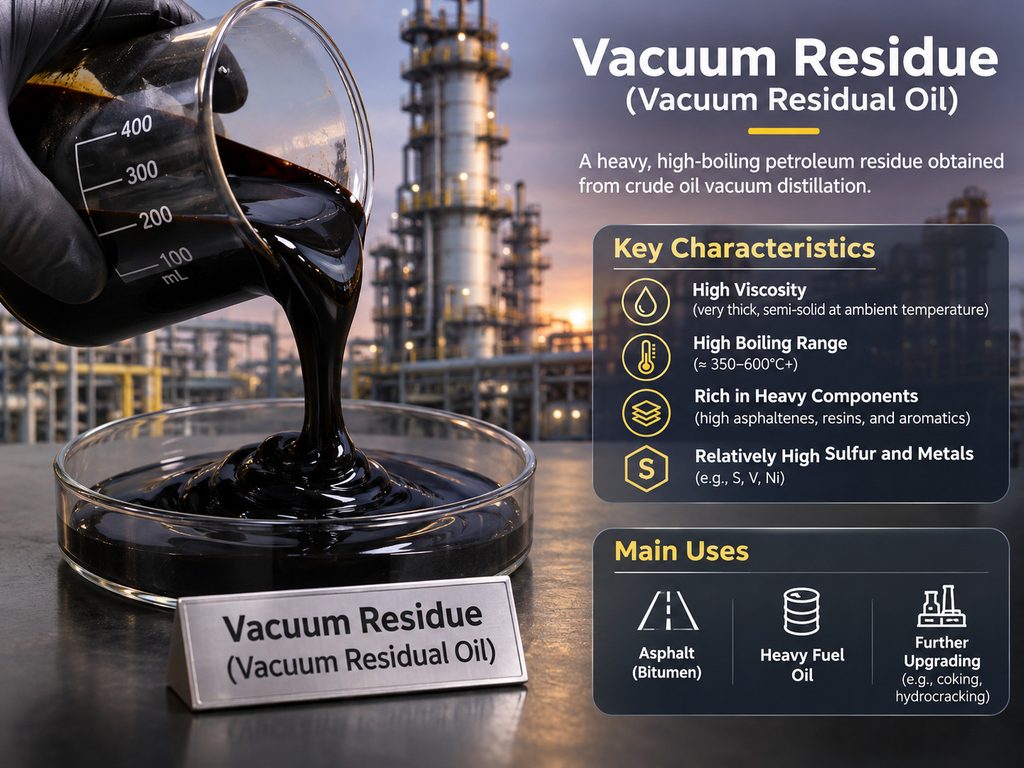
A vacuum residue level sensor must cope with high viscosity, heat and deposits over its service life. Vacuum residue is a heavy petroleum fraction characterized by high viscosity, temperature-dependent flow behavior, and a tendency to adhere to equipment surfaces.
In refinery storage tanks and process vessels, level measurement may be required for inventory monitoring, material transfer, process control, and alarm functions.
Several level measurement technologies are available, including non-contact radar, guided wave radar, float-operated instruments, magnetic level gauges, and vibrating fork switches.
Each technology has advantages and limitations.
For vacuum residue, the most appropriate choice depends on the actual process conditions, particularly viscosity, temperature, fouling tendency, tank geometry, and maintenance requirements.
1. Non-Contact Radar Level Transmitters
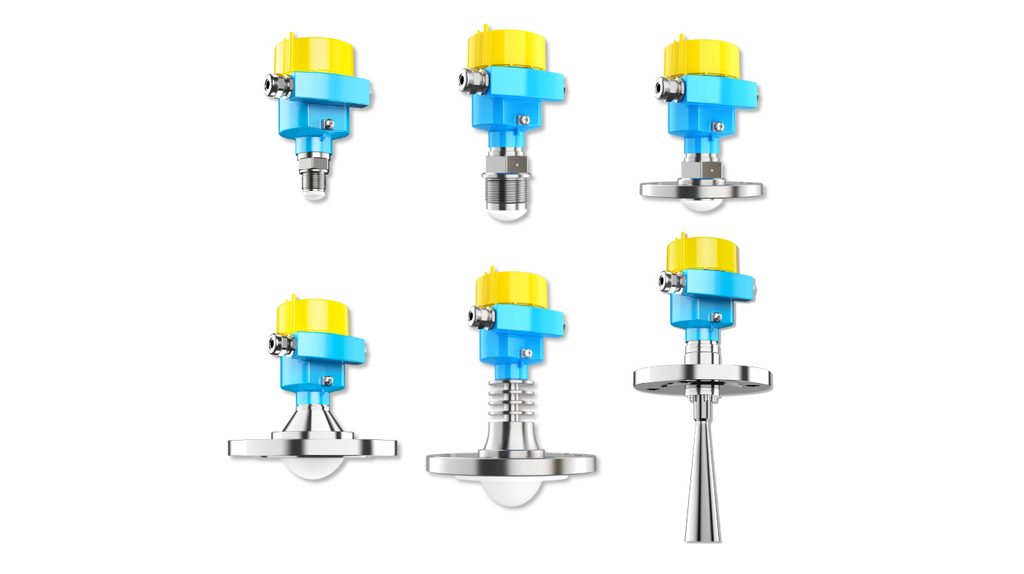
Non-contact radar transmitters measure the distance to the liquid surface using electromagnetic waves.
The antenna is normally installed above the liquid and does not require an immersed measuring probe.
This arrangement reduces direct contact between the measuring structure and sticky vacuum residue.
For larger storage tanks, non-contact radar can provide practical advantages in installation and maintenance.
However, radar measurement may still be affected by antenna contamination, foam, internal obstructions, and unsuitable mounting nozzles.
Engineers should verify antenna construction, measuring distance, temperature and pressure ratings, and installation conditions.
2. Guided Wave Radar Level Transmitters
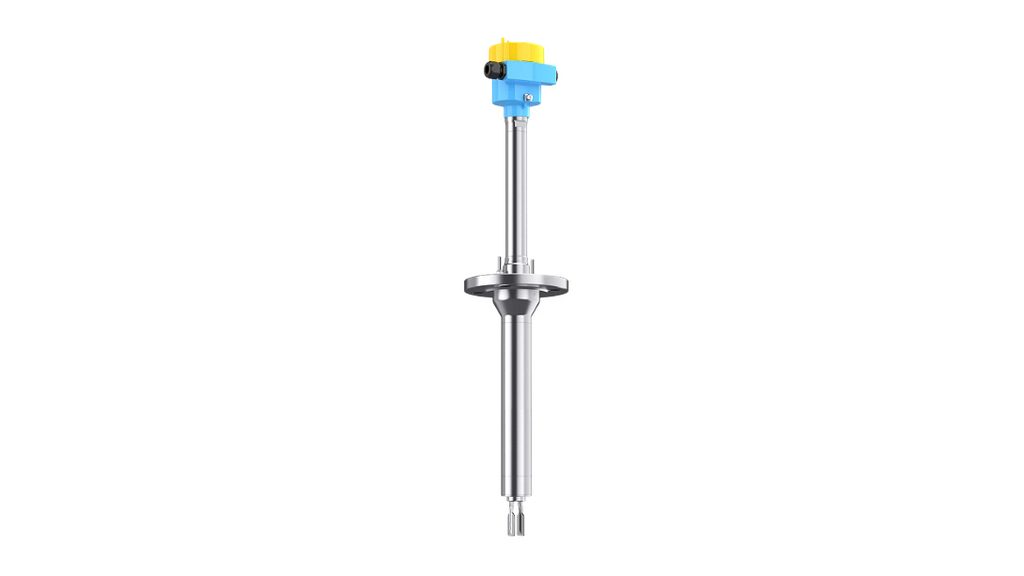
Guided wave radar uses a probe or cable to guide electromagnetic waves.
The technology can be useful in certain compact vessels or applications where free-space radar encounters substantial interference.
However, the probe remains in contact with the process liquid.
High-viscosity vacuum residue may accumulate on the probe, potentially affecting signal propagation and increasing cleaning requirements.
If the product becomes difficult to flow during shutdown, probe maintenance may become more challenging.
Guided wave radar should therefore be selected only after evaluating the actual fouling and mechanical conditions.
3. Float Level Instruments
Float-operated instruments detect level changes through buoyancy.
Their operating principle is straightforward, and different designs can provide continuous indication or point level detection.
However, high-viscosity products may increase resistance to float movement.
Deposits around the float or guiding mechanism may cause delayed response or mechanical sticking.
For vacuum residue applications, engineers should evaluate product flowability at the minimum operating temperature and the potential for deposit accumulation.
4. Magnetic Level Gauges
Magnetic level gauges use a float inside a measuring chamber to drive an external magnetic indication system.
They provide direct local level indication without requiring an electronic display.
However, the measuring chamber must remain properly connected to the process and allow the liquid to move freely.
Highly viscous vacuum residue may restrict flow through the chamber or connecting pipes.
Cooling may also cause the product to become more viscous or form deposits.
Where magnetic level gauges are considered, chamber design, insulation, heat tracing, and maintenance accessibility require careful evaluation.
5. Vibrating Fork Level Switches
Vibrating fork switches detect liquid presence through changes in the vibration characteristics of a sensing fork.
They are primarily used for point level detection rather than continuous measurement.
In suitable liquid applications, vibrating fork switches can provide high-level or low-level indication.
However, highly viscous vacuum residue may dampen fork vibration.
Residual material remaining on the fork may also affect switching behavior after the liquid level falls.
The specific switch model must therefore be evaluated for viscosity, density, temperature, and buildup limitations.
A general suitability claim for liquids is not sufficient to establish compatibility with vacuum residue.
6. Ultrasonic Level Transmitters
Ultrasonic level transmitters use acoustic waves to measure the distance to the liquid surface.
Like non-contact radar, ultrasonic instruments can operate without immersing a probe in the liquid.
However, ultrasonic measurement depends on the propagation of sound through the gas above the liquid.
Gas temperature, composition, vapor conditions, and temperature gradients can affect sound propagation.
In heated vacuum residue tanks, these conditions may be challenging.
Radar measurement is often worth evaluating first where the vapor environment makes ultrasonic measurement difficult.
7. Comparison of Level Measurement Technologies
| Technology | Measurement Function | Main Advantage | Main Limitation in Vacuum Residue |
|---|---|---|---|
| Non-contact radar | Continuous level | Reduces direct contact with sticky liquid | Antenna fouling, foam, false echoes |
| Guided wave radar | Continuous level | Guided signal propagation | Probe buildup and cleaning |
| Float instruments | Continuous or point level, depending on design | Straightforward operating principle | Viscosity-related movement resistance |
| Magnetic level gauge | Local continuous indication | Direct visual indication | Chamber blockage and float sticking |
| Vibrating fork switch | Point level detection | Detects a defined liquid level | Viscous damping and buildup |
| Ultrasonic transmitter | Continuous level | Non-contact measurement | Vapor and gas-temperature effects |
8. Which Technology Should Be Considered First?
For continuous measurement in high-viscosity vacuum residue storage tanks, non-contact radar is often a suitable starting point for evaluation.
The main advantage is that the measuring system does not require a long probe immersed in the product.
This reduces some of the fouling risks associated with contact-type instruments.
For smaller process vessels with complex internal structures, guided wave radar may also be considered, provided probe fouling is acceptable.
Where local visual indication is required, magnetic level gauges may be evaluated based on product flowability and temperature conditions.
For high-level and low-level alarms, the selected point level switch must be suitable for the actual product and process conditions.
9. What Information Should Be Provided Before Purchasing?
Accurate instrument selection requires complete process information.
Important parameters include:
- Tank height and required measuring range.
- Normal, maximum, and minimum process temperatures.
- Operating and design pressures.
- Product viscosity and density.
- Fouling, coking, and solidification tendencies.
- Presence of foam, vapor, or condensation.
- Mounting nozzle dimensions.
- Internal heating coils and other obstructions.
- Required output signals and communication protocols.
- Hazardous-area classification.
- Maintenance accessibility.
- Continuous measurement or point level detection requirements.
For contact-type instruments, the product’s behavior at the lowest expected operating temperature is particularly important.
For radar transmitters, antenna compatibility and the available measurement path should also be confirmed.
10. Consider Total Maintenance Costs
The initial purchase price is only one part of the total cost of a level measurement system.
In vacuum residue applications, maintenance can be a significant consideration.
An instrument that requires frequent cleaning, removal, or recalibration may increase maintenance labor and operational interruptions.
Therefore, selection should consider long-term reliability, installation accessibility, cleaning requirements, and the likelihood of fouling.
Where technically suitable, reducing unnecessary contact between the measuring structure and the product may help lower maintenance demands.
Conclusion
There is no single level measurement technology suitable for every vacuum residue application.
Non-contact radar, guided wave radar, float instruments, magnetic level gauges, and point level switches have different operating characteristics.
For high-temperature, high-viscosity vacuum residue storage tanks, non-contact radar is often worth evaluating first because it reduces direct exposure to sticky material.
However, antenna contamination, mounting geometry, process temperature, and pressure must still be considered.
The final choice should always be based on actual process conditions and the verified technical specifications of the selected instrument.
Explore more Oil & Gas level measurement solutions from JIWEI.