
In industries such as oil and gas, chemical processing, pharmaceuticals, and bulk material handling, electrical safety is essential, especially in hazardous environments where flammable gases, vapors, or combustible dust may be present.
Industrial instruments, including radar level transmitters, level switches, and continuous level sensors, often operate in these challenging conditions. While selecting explosion-protected instruments is important, choosing suitable electrical connections is equally critical.
Explosion proof flexible conduit is a specialized electrical conduit component used in certain hazardous-area installations. It provides flexible cable routing, mechanical protection, and reliable connections between electrical equipment and conduit systems.
This guide explains what explosion proof flexible conduit is, how it works, its main benefits, and how to select the right type for industrial level measurement applications.
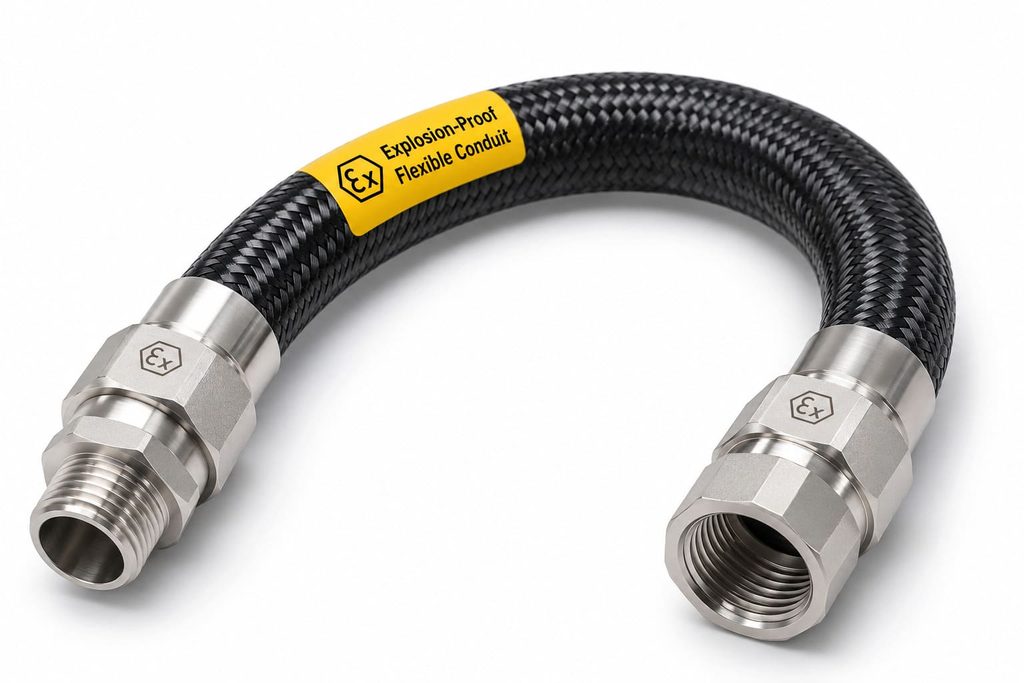
What Is Explosion Proof Flexible Conduit?
Explosion proof flexible conduit is a flexible electrical conduit assembly designed for use in specified hazardous locations, subject to its certification, construction, and installation requirements.
It typically consists of a flexible conduit body, metallic end fittings, and protective or sealing components, depending on the product design.
Unlike ordinary flexible metal conduit, a certified hazardous-location conduit assembly must meet applicable electrical and explosion-protection requirements.
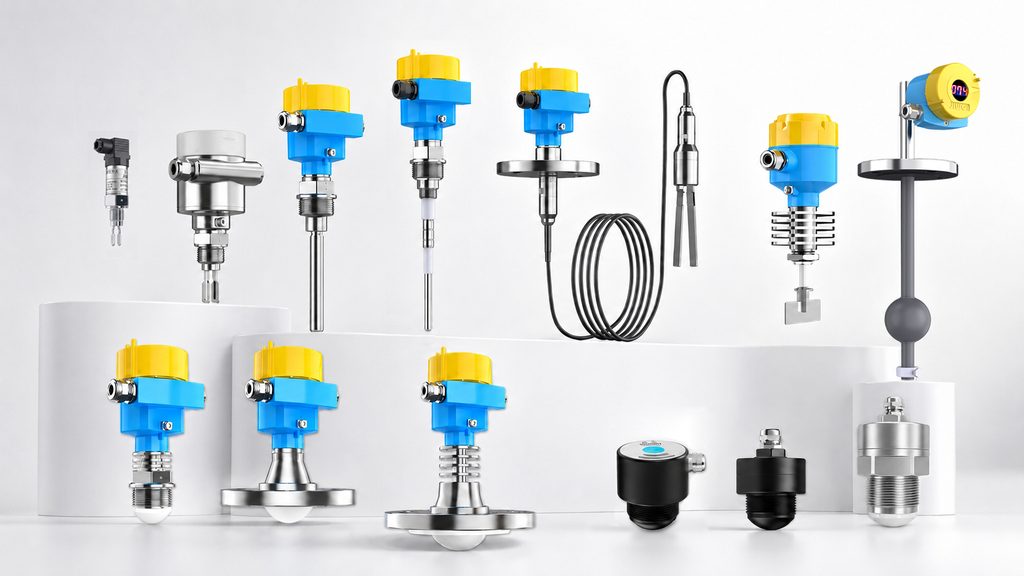
In industrial instrumentation systems, these assemblies may be used to connect:
- Radar level transmitters
- Ultrasonic level sensors
- Vibrating fork level switches
- Explosion-protected junction boxes
- Electrical conduit systems
- Other industrial field instruments
The primary purpose is to accommodate installation movement or alignment differences while providing appropriate cable protection.
Important: Not every product marketed as explosion proof flexible conduit is suitable for every hazardous location. Its suitability must be verified against the applicable certification, protection concept, gas or dust group, temperature classification, and installation requirements.
Key Benefits of Explosion Proof Flexible Conduit
1. Flexibility in Complex Installations
Industrial tanks, silos, reactors, and processing equipment often have limited installation space.
Rigid electrical conduit can be difficult to install around structural components, pipelines, and valves.
Flexible conduit allows installers to accommodate changes in direction and minor alignment differences without extensive modifications to the electrical routing.
2. Protection Against Vibration and Mechanical Stress
Industrial equipment such as pumps, mixers, and mechanical processing systems can generate continuous vibration.
When rigid electrical connections are exposed to movement, mechanical stress may develop at connection points.
Properly selected flexible conduit can accommodate limited movement and help reduce stress on conduit connections.
However, the assembly must not be subjected to movement beyond its manufacturer’s specified limits.
3. Mechanical Protection for Instrument Cables
Radar level transmitters and other industrial level instruments rely on electrical cables for power supply and signal transmission.
Flexible conduit provides a protective pathway that helps reduce the risk of cable damage caused by external contact, abrasion, and mechanical impact.
Resistance to moisture, chemicals, dust, and corrosion depends on the specific conduit construction, fittings, and environmental protection rating.
4. Compatibility With Hazardous-Area Electrical Systems
Electrical installations in hazardous locations must comply with applicable safety standards and local regulations.
Appropriately certified flexible conduit assemblies can form part of a compliant hazardous-area wiring system when installed according to their certification and the applicable installation rules.
They do not automatically replace required explosion-proof sealing fittings, cable glands, or protective grounding arrangements.
Applications in Industrial Level Measurement
Explosion proof flexible conduit is commonly considered for instrumentation installations in hazardous industrial environments.
Radar Level Transmitters
Radar level transmitters are widely used for continuous level measurement in chemical tanks, petroleum storage facilities, and industrial process vessels.
In hazardous locations, suitable flexible conduit assemblies may be installed between a radar level transmitter and an electrical conduit system.
This arrangement can provide mechanical protection for instrument cables while improving installation flexibility and maintenance access.
The conduit assembly must be compatible with the transmitter’s certified cable-entry arrangement.
Liquid Level Sensors and Level Switches
Liquid level instruments are frequently installed in chemical processing plants, solvent storage facilities, and other demanding environments.
Depending on the application, flexible conduit may help protect electrical connections against mechanical damage and accommodate installation constraints.
Material compatibility, corrosion resistance, ingress protection, and hazardous-area certification should all be considered during selection.
Silo and Bulk Solid Level Measurement
Level sensors used in grain processing, powder handling, and bulk material storage may operate in areas containing combustible dust.
These installations require special attention to dust ignition protection.
A conduit assembly approved only for certain explosive gas atmospheres must not automatically be assumed suitable for combustible dust environments.
Always verify that the selected product is appropriate for the hazardous-area classification and applicable dust protection requirements.
How to Select the Right Explosion Proof Flexible Conduit
Selecting the correct conduit assembly requires more than choosing a suitable diameter or length.
The following factors should be evaluated before purchasing or installation.
1. Hazardous-Area Certification
The first step is to identify the hazardous-area classification of the installation.
Depending on the region and application, relevant requirements may include IECEx, ATEX, or North American hazardous-location approval systems.
Check the product’s certification documents, marking, permitted installation conditions, and compatibility with the overall electrical protection concept.
2. Thread Type and Connection Size
Common industrial connection threads include:
- Metric threads, such as M20 × 1.5
- NPT threads, such as 1/2-inch NPT and 3/4-inch NPT
- Other manufacturer-specific connection options
Thread dimensions and connection types must match the equipment and installation requirements.
Incorrect thread engagement can compromise mechanical integrity and, in some protection concepts, explosion-protection performance.
3. Conduit Length and Bend Radius
Flexible conduit assemblies are available in different lengths to accommodate various installation configurations.
Choose a length that allows appropriate routing without excessive tension, compression, or twisting.
Always follow the manufacturer’s minimum bend radius and installation instructions.
4. Material and Environmental Resistance
Different industrial environments require different conduit materials and protective constructions.
Depending on the product, options may include stainless steel components, galvanized steel, and various protective outer jackets.
For outdoor or corrosive environments, consider:
- Corrosion resistance
- Ambient operating temperature
- Moisture and dust protection
- Chemical exposure
- Mechanical durability
The actual performance should be verified using the manufacturer’s technical documentation.
5. Cable Routing and Grounding
The conduit assembly must provide sufficient internal space for the intended cables and be compatible with the selected cable-entry arrangement.
Protective earthing and equipotential bonding requirements must also be addressed.
Do not assume that a flexible metallic conduit assembly can replace a dedicated protective conductor unless the applicable electrical rules and product approval explicitly permit that arrangement.
Installation Best Practices
Proper installation is essential for the safety and long-term performance of explosion proof flexible conduit.
Before installation, inspect the assembly for physical damage and verify its certification and technical specifications.
Ensure that threaded connections are compatible and tightened according to the manufacturer’s instructions.
Avoid excessive bending, stretching, or twisting of the flexible conduit body.
Where required, install appropriate sealing fittings, certified cable-entry devices, and grounding connections.
During routine maintenance, inspect the conduit and fittings for corrosion, loose connections, damaged protective jackets, and other signs of deterioration.
Installation and inspection should be performed by qualified personnel in accordance with the applicable hazardous-area electrical standards.
Explosion Proof Flexible Conduit vs. Standard Flexible Metal Conduit
Although the two products may appear similar, they are not necessarily interchangeable.
Standard flexible metal conduit is generally used for cable routing and mechanical protection in conventional electrical installations.
Explosion proof flexible conduit assemblies, by contrast, are designed or certified for specified hazardous-location applications under defined installation conditions.
The main difference is not simply the material or appearance. It is the verified suitability of the complete assembly for its intended electrical installation and hazardous environment.
For this reason, standard flexible metal conduit should never be substituted for a required certified hazardous-location assembly without confirming compliance with the applicable installation rules.
Frequently Asked Questions
Is explosion proof flexible conduit required for every radar level transmitter?
No. The appropriate wiring method depends on the hazardous-area classification, the transmitter’s protection concept, local electrical regulations, and the installation design. Flexible conduit is one possible solution, not a universal requirement.
Can explosion proof flexible conduit be used outdoors?
Yes, provided the selected assembly is approved or rated for the relevant outdoor conditions. Verify its environmental protection, temperature limits, corrosion resistance, and installation requirements.
Can ordinary flexible metal conduit be used in hazardous areas?
Only when the specific conduit and installation method are permitted by the applicable hazardous-location electrical rules. Ordinary flexible metal conduit should not be assumed suitable without verification.
How do I choose the correct conduit size for a level transmitter?
Check the transmitter’s cable-entry thread, cable dimensions, required wiring method, conduit length, and applicable hazardous-area requirements. Consult the equipment and conduit manufacturers’ technical documentation before final selection.
Conclusion
Explosion proof flexible conduit plays an important role in certain hazardous-area instrumentation installations by providing flexible cable routing, mechanical protection, and adaptable electrical connections.
For radar level transmitters, liquid level sensors, and bulk solid level measurement systems, choosing the appropriate conduit assembly can improve installation flexibility and support reliable long-term operation.
When selecting explosion proof flexible conduit, always consider hazardous-area certification, thread compatibility, material construction, conduit length, environmental conditions, and grounding requirements.
A properly selected and installed flexible conduit assembly helps support the safety, reliability, and maintainability of industrial level measurement systems.