1. Application Background: Falling Rock Conditions Require More Reliable Level Measurement
In mining, quarries, aggregate production lines and the cement building materials industry, large rocks are usually separated from solid rock formations through blasting, mechanical stripping, excavation or loading. They are then transported, crushed, screened, transferred and stored before being processed into crushed stone, manufactured sand, gravel, aggregates or other basic construction materials.
Crushing is a key process in stone processing. Before large rocks enter jaw crushers, impact crushers, cone crushers or roller crushers, they usually pass through feed hoppers, buffer bins or transfer silos. To ensure economical, stable and efficient crusher operation, the plant needs to monitor the material height in the hopper or silo in real time and control upstream feeders, belt conveyors and downstream crushing and screening systems according to level changes.
Falling rock applications are very different from ordinary liquid tanks or powder silos. The rocks are large in particle size, the falling impact is strong, the dust concentration is high, the equipment noise is intense, mechanical vibration is obvious, and the material surface changes constantly due to feeding, collapsing and crusher intake. If level measurement is unstable, the production line may suffer from crusher idling, overload, blockage, material overflow, frequent start-stop cycles and abnormal equipment wear.
Therefore, in falling rock, crushing and stone storage applications, selecting a stable and reliable radar level meter is essential for improving production efficiency, reducing maintenance costs and ensuring site safety. Jiwei JWrada® radar level meters use non-contact radar measurement and are suitable for complex industrial environments with heavy dust, high noise, strong vibration and irregular material surfaces. They provide mining and building materials companies with a continuous, stable and low-maintenance level measurement solution.
2. Typical Measurement Challenges in Falling Rock Applications
2.1 Strong Impact from Large Rocks Can Damage Contact-Type Instruments
The most obvious feature of falling rock applications is strong material impact. When large stones fall into a hopper from a conveyor belt, chute or mining truck, they exert heavy impact on the silo wall and internal structures. If contact-type level instruments are used, such as plumb-bob level meters, cable level meters or mechanical limit switches, their internal parts may be directly struck by rocks, causing bending, breakage, jamming or wear. This results in frequent maintenance and a shorter service life.
Radar level meters use non-contact measurement and are installed on the top of the hopper or silo. No probe, cable or mechanical component needs to extend into the material. This effectively prevents instrument damage caused by large falling rocks, making radar level meters more suitable for crusher hoppers, ore buffer bins and stone silos with strong impact.
2.2 High Dust Concentration Can Interfere with Traditional Measurement Methods
Stone crushing, screening and transfer processes generate large amounts of dust. This is especially common in limestone, granite, basalt, ore and manufactured sand production lines, where dust can form a suspended layer above the hopper. Ordinary ultrasonic level meters rely on sound wave transmission and are easily affected by dust, airflow, temperature gradients and noise, resulting in echo attenuation, signal fluctuation or unstable measurement.
Jiwei JWrada® radar level meters use radar waves for measurement and do not rely on sound propagation, so they are less affected by site noise. Combined with high-frequency radar signals and intelligent echo processing technology, they can maintain stable measurement in dusty crushing environments and provide reliable level data for automatic control systems.
2.3 High Noise and Strong Vibration Create Harsh Site Conditions
When crushers, vibrating feeders, vibrating screens, belt conveyors, dust collectors and motors operate at the same time, they generate continuous high noise and strong vibration. Level instruments installed near crushers must not only have strong anti-interference performance, but also remain stable under long-term vibration.
Radar level meters contain no mechanical transmission structure, and their measurement is not affected by acoustic noise. This makes them suitable for high-noise areas. Jiwei radar level meters are compact and easy to install. Suitable mounting accessories and protection methods can be selected according to actual site conditions to meet the requirements of harsh environments in mines, quarries and building materials plants.
2.4 Irregular Material Surfaces Make True Echo Identification Difficult
After falling into the hopper, stones do not form a flat surface. Instead, the material surface often appears as conical piles, uneven loading, collapses, sliding layers, voids and local high points. When the crusher is operating continuously, the material at the bottom is constantly consumed, causing the level surface to fall and change. If the beam angle of the instrument is too wide, it may receive mixed echoes from the silo wall, supports, beams, grizzlies, chutes and irregular material surfaces, affecting measurement accuracy.
Jiwei JWrada® radar level meters use 80GHz high-frequency radar technology. With a small beam angle and strong focusing ability, they can aim more accurately at the target material surface and reduce interference from silo walls and internal structures. At the same time, the intelligent echo algorithm can identify false echoes, multi-layer echoes and dynamic material surfaces, improving measurement stability in complex silos.
3. Jiwei Radar Level Measurement Solution
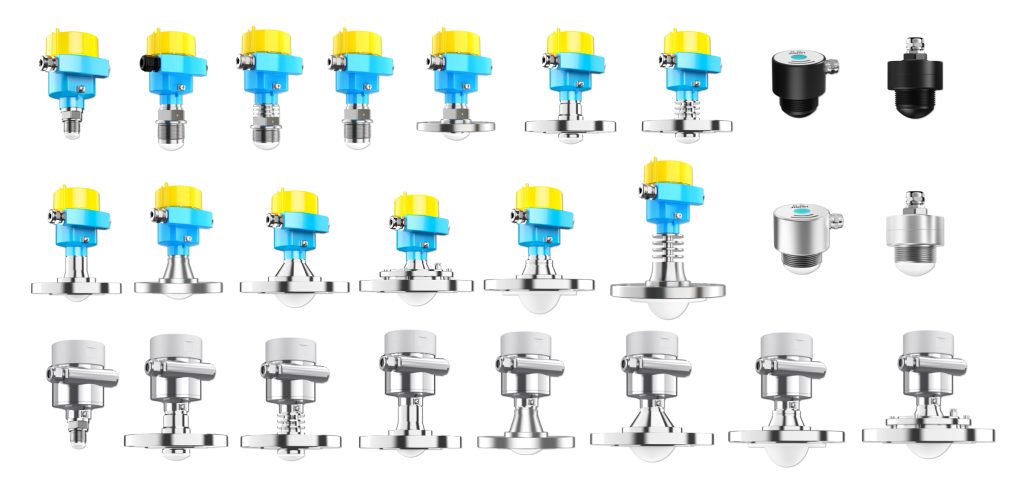
For falling rock applications, Jiwei recommends the JWrada® series radar level meters for continuous level measurement. The series uses non-contact measurement and is suitable for crusher feed hoppers, primary crushing buffer bins, transfer silos, aggregate silos, ore bins, limestone silos and finished stone storage bins.
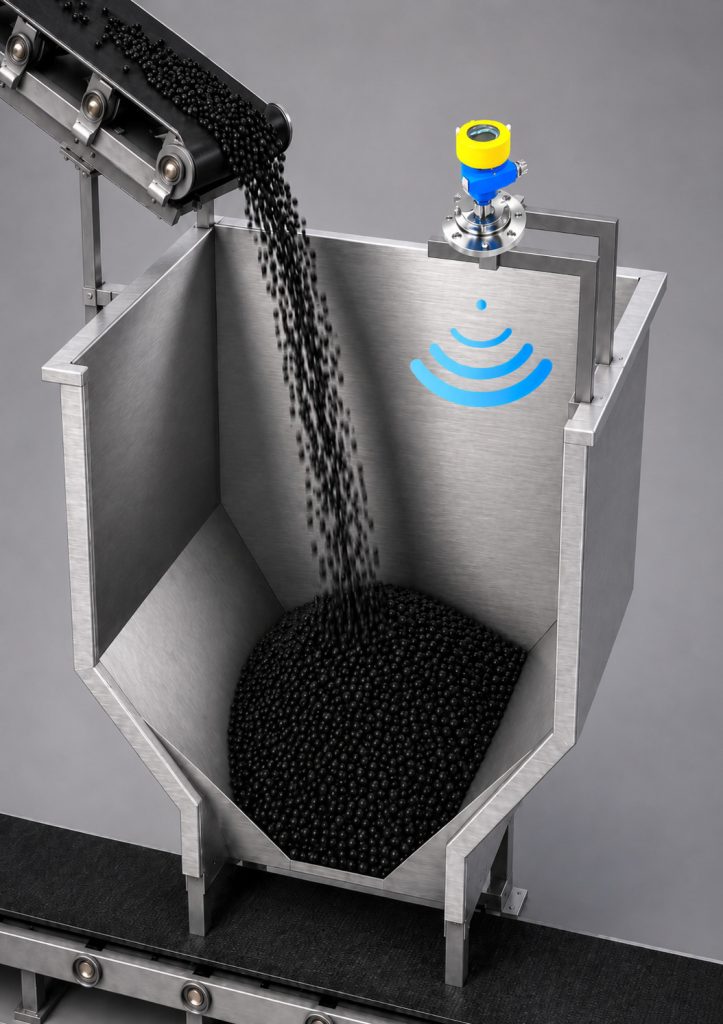
In crusher feed hoppers, the radar level meter monitors the height of stone material in real time and transmits the level signal to the PLC, DCS or upper-level control system. The control system can automatically adjust the vibrating feeder, belt conveyor or discharge valve according to level changes, keeping the crusher in a stable feeding condition. When the level is too low, the system can increase feeding to avoid crusher idling. When the level is too high, the system can reduce the feeding speed or stop upstream conveying to prevent blockage and overflow.
In buffer bins after primary crushing, radar level meters help balance the production rhythm between upstream and downstream processes. When the upstream crushing rate is high and downstream screening or conveying capacity is insufficient, the buffer bin level rises. When upstream feeding is insufficient, the level drops. With continuous level data, the production line can adjust its operating status in time and reduce material shortage, full-bin conditions and unplanned shutdowns.
In finished stone silos and aggregate silos, radar level meters can be used for inventory monitoring, truck loading decisions and silo switching. After crushed stone, manufactured sand and aggregates of different particle sizes enter their corresponding silos, operators can monitor real-time inventory through level data and arrange production and delivery more efficiently.
4. Product Advantages of Jiwei JWrada® Radar Level Meters
4.1 Non-Contact Measurement Prevents Falling Rock Impact
Jiwei radar level meters are installed on the top of the silo and measure level through radar waves without direct contact with stone materials. For large falling rocks, strong impact and high-wear applications, the non-contact structure effectively reduces the risk of instrument damage, lowers maintenance frequency and extends service life.
Compared with contact-type instruments, radar level meters do not require probes, cables or mechanical transmission parts to be inserted into the silo. They are not easily bent, broken, jammed or worn by falling stones, making them particularly suitable for crusher hoppers and mining stone silos in harsh environments.
4.2 80GHz High-Frequency Radar with Narrow Beam for Complex Silos
Jiwei JWrada® radar level meters use 80GHz high-frequency radar technology, providing a narrower beam, more concentrated energy and stronger directivity. For crusher hoppers with complex internal structures and limited installation space, the narrow beam can better avoid interference from silo walls, support beams, chutes, grizzlies and inspection platforms, while accurately targeting the material surface.
The narrow-beam advantage is also significant in stone silos and aggregate silos. Even when the material surface is irregular, the silo is tall or the installation position is off-center, the instrument can achieve stable measurement through proper installation angle adjustment and reduce the influence of false echoes.
4.3 Strong Resistance to Dust and Noise
Falling rock and crushing sites are typically dusty and noisy. Radar level meters use electromagnetic waves for measurement and do not rely on sound transmission, so they are not easily affected by noise from crushers, vibrating screens or dust collection fans. In dusty applications such as limestone crushing, ore crushing and manufactured sand production, radar level meters can still maintain continuous measurement capability.
In extremely dusty conditions, suitable installation methods, purging structures or protective measures can be selected according to site conditions to reduce the impact of dust accumulation on the radar antenna and ensure long-term stable operation.
4.4 Intelligent Echo Algorithm for Dynamic Material Surfaces
In falling rock applications, the material surface is often dynamic. When large rocks fall, they may cause splashing, instant piling and local collapse. During crusher operation, material at the bottom of the hopper is continuously consumed, causing the surface to change constantly. Jiwei JWrada® radar level meters use intelligent echo processing technology to identify false echoes, separate multi-layer echoes and track dynamic targets, allowing the instrument to identify the true material surface from complex echoes.
This advantage is especially important for crusher hoppers. The instrument must not only detect the level, but also reduce data fluctuation caused by flying rocks, falling material streams, dust clouds or fixed obstacles, providing a stable and reliable continuous signal to the automatic control system.
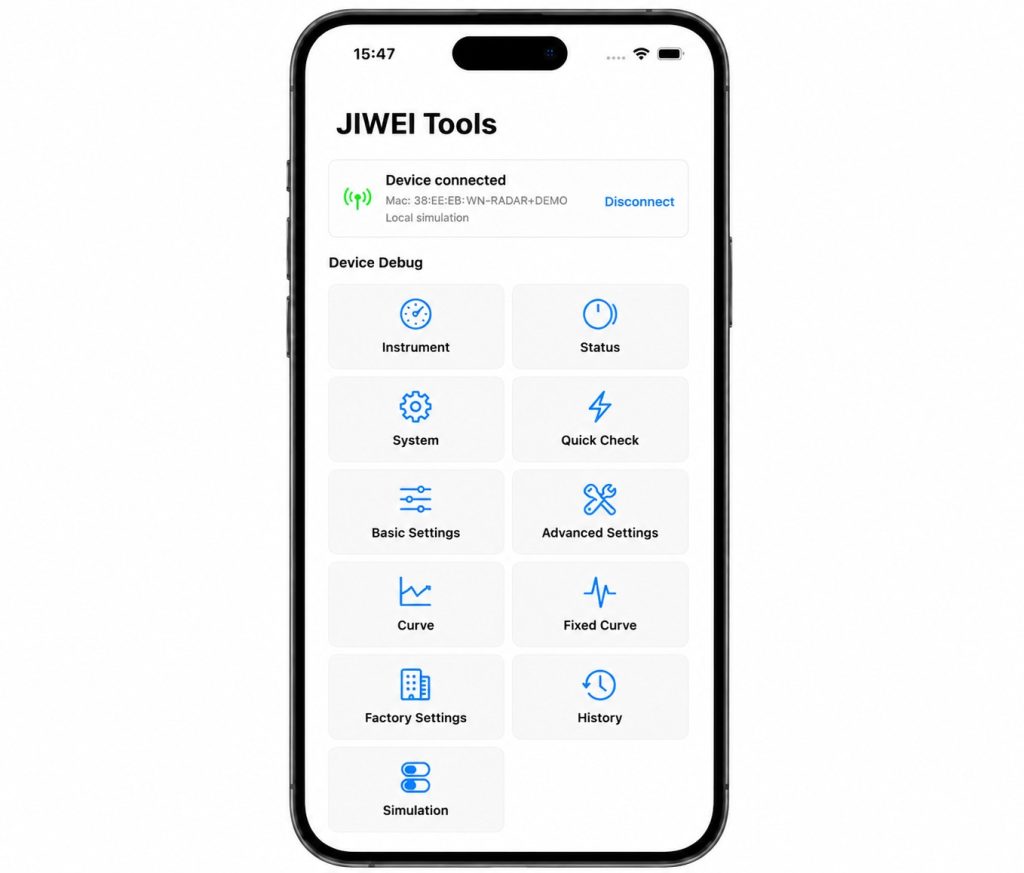
4.5 Bluetooth Wireless Commissioning for Safer and Easier Maintenance
Mining and quarry sites usually involve high-altitude work, dust, noise and operating equipment risks. Jiwei JWrada® radar level meters support Bluetooth wireless commissioning. Site personnel can use a mobile app or mini program to set parameters, view echoes, diagnose status and monitor real-time data, reducing the need to open the instrument housing or approach equipment closely.
For crusher-top hoppers, silos inside enclosed dust covers or high aggregate silos, Bluetooth wireless commissioning can greatly improve commissioning efficiency and maintenance safety. When multiple instruments are installed, it also helps shorten commissioning time and reduce labor costs.
4.6 Multiple Signal Outputs for Easy Integration into Automation Systems
Jiwei radar level meters can be connected to PLC, DCS, upper-level control systems or silo management systems according to site requirements, enabling continuous level display, trend recording, high and low level alarms and interlock control. For crushing production lines, level data is not only used for display but also serves as an important basis for automatic feeding and equipment protection.
Through linkage with the control system, radar level meters help users achieve stable crusher feeding, belt conveyor interlocking, full-bin warning, low-level alarm and truck loading management, improving the automation level of the entire production line.
4.7 Wide Measuring Range for Various Applications
Different mining and building materials sites vary in silo height, material particle size, dust concentration and installation environment. Jiwei JWrada® radar level meters provide multiple model options and can be selected according to crusher hoppers, transfer bins, high-level silos, large aggregate silos and complex dusty applications.
For standard crusher hoppers, a radar level meter suitable for medium and small ranges can be selected. For high silos, large ore bins, finished aggregate silos or long-distance measurement applications, models with a larger measuring range and stronger anti-interference capability can be selected. The specific model should be determined according to silo dimensions, installation position, process conditions and control requirements.
5. Typical Installation Locations and Application Methods
5.1 Crusher Feed Hopper
The crusher feed hopper is one of the most critical measurement points in falling rock applications. If the level is too low, the crusher may idle, wasting energy and increasing equipment wear. If the level is too high, blockage, overflow and overload may occur. After installing a radar level meter, the system can monitor the material height in real time and automatically adjust the feeding speed to keep the crusher running under a stable load.
5.2 Primary Crushing Buffer Bin
The primary crushing buffer bin balances the production rhythm between upstream mining and conveying and downstream secondary crushing and screening. The radar level meter continuously monitors the buffer bin level, helping the control system decide whether to speed up or slow down subsequent processing and reduce production fluctuations.
5.3 Belt Transfer Bins and Intermediate Silos
In multi-stage crushing and screening systems, belt transfer bins and intermediate silos serve as temporary storage and distribution points. Radar level meters can determine the material height in the bin, preventing blockage, overflow or downstream material shortage at transfer points and improving conveying system stability.
5.4 Finished Stone Silos and Aggregate Silos
Finished silos store crushed stone, manufactured sand and aggregates of different particle sizes. By installing radar level meters, companies can monitor the real-time inventory of each material specification and arrange production, truck loading and delivery more efficiently. Level data can also be integrated into management systems to support smart silos and digital factory construction.
6. Installation and Commissioning Recommendations
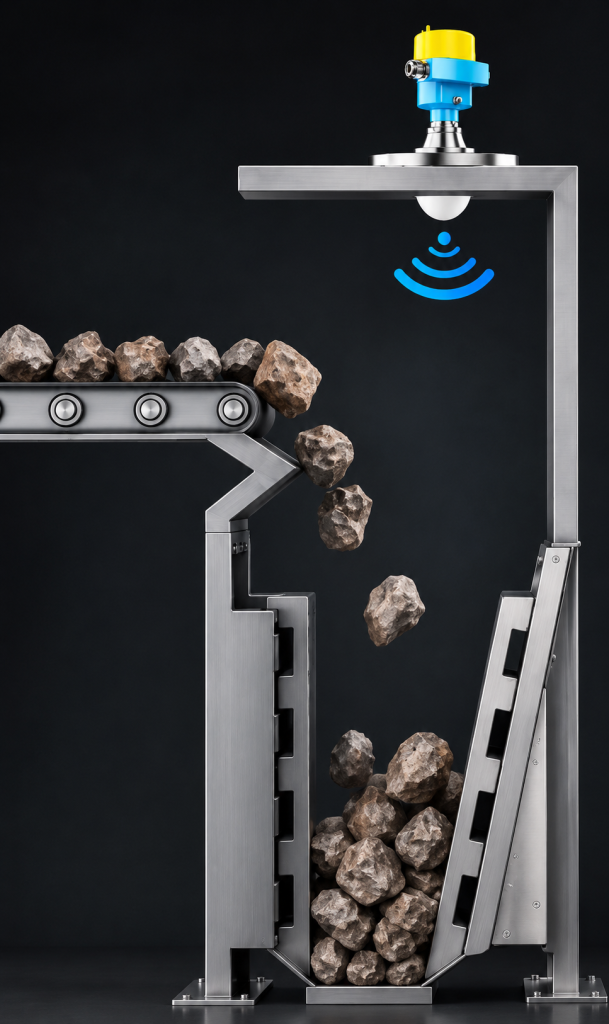
In falling rock applications, the installation position of the radar level meter has a significant impact on measurement performance. The instrument should not be installed directly above the main falling material stream, because falling rocks can cause intense splashing and instant reflections, leading to measurement fluctuation. It is recommended to install the instrument away from the main falling point and adjust the angle so that the radar beam points to a representative material surface area.
During installation, fixed structures such as silo walls, reinforcing ribs, beams, chutes, grizzlies and inspection platforms should be avoided as much as possible to reduce false echoes. For hoppers with complex internal structures, adjustable flanges or universal mounting brackets can be used to align the radar beam more accurately with the target material surface.
During commissioning, the empty distance, full level height, output range and alarm points should be set accurately. For crusher hoppers, low level, high level and high-high level alarms can be configured according to process requirements. Appropriate delay or filtering logic should also be added in the PLC to avoid false actions caused by a single falling rock impact.
In dusty sites, the mounting opening and antenna surface should be checked regularly. Purging or dust protection measures may be added when necessary. With correct installation, proper commissioning and regular inspection, radar level meters can achieve long-term stable operation in falling rock applications.
7. Application Results and User Benefits
7.1 Reliable Measurement in Harsh Environments
Jiwei radar level meters feature non-contact measurement, dust resistance, noise resistance and strong anti-interference performance. They can work stably in complex environments such as falling rock, crushing, screening and transfer. Even with strong mechanical noise, dust and irregular material surfaces, they can provide continuous level signals for the control system.
7.2 Stable Feeding, Less Crusher Idling and Blockage
By monitoring crusher hopper level in real time, the control system can adjust upstream feeding speed according to level changes and keep the crusher under a reasonable load. This reduces energy waste caused by idling and lowers the risk of blockage, full-bin conditions and equipment overload.
7.3 Reduced Wear and Less Shutdown Maintenance
Frequent crusher idling, heavy-load starts, blockage clearing and abnormal shutdowns increase wear on jaw plates, hammers, liners, bearings and transmission systems. With continuous level data from radar level meters, operators can detect abnormal conditions in advance and reduce unexpected shutdowns and manual blockage clearing, thereby lowering maintenance costs.
7.4 Improved Production Line Efficiency
Aggregate production lines usually include feeding, crushing, screening, conveying, storage and truck loading. Unstable levels in key silos can affect the rhythm of the entire line. By installing radar level meters in crusher hoppers, buffer bins and finished silos, upstream and downstream equipment can be linked more effectively, reducing material shortage, blockage and overflow while improving production continuity.
7.5 Improved Site Safety
Manual observation near crusher hoppers exposes operators to dust, noise, high-altitude work and falling rock risks. With radar level meters, level data can be transmitted to the control room or upper-level system, allowing operators to remotely monitor silo status, reduce site inspections and minimize time spent in hazardous areas.
7.6 Support for Smart and Digital Management
Continuous level data can be used for inventory statistics, truck loading scheduling, trend analysis and production reports. For companies building smart mines, digital aggregate plants or automated building materials production lines, radar level meters are not only measuring instruments but also important field sensing devices for data-driven management.
8. Selection Recommendations
When selecting radar level meters for falling rock applications, users should consider silo height, measuring range, material particle size, dust concentration, installation space, internal silo structures, output signal and control system interface. For crusher feed hoppers and small to medium buffer bins, 80GHz radar level meters suitable for solid particles and bulk materials are recommended. For high-level silos, large aggregate silos, heavy dust or complex internal structures, models with a larger measuring range, narrower beam and stronger anti-interference performance should be prioritized.
For strong-impact falling rock applications, attention should be paid to non-contact measurement advantages and installation protection. For high-dust applications, antenna structure, dust protection and echo processing capability should be considered. For automation control applications, output signals, communication methods and system compatibility are important. For high or hazardous installation locations, products supporting Bluetooth wireless commissioning and remote maintenance are preferred.
Jiwei can provide radar level meter selection, installation and commissioning recommendations for mines, quarries, aggregate plants, cement plants and building materials companies according to actual site conditions, helping users achieve stable, reliable and low-maintenance level measurement.
9. Conclusion
Falling rock applications are typical high-impact, high-dust, high-noise and high-vibration scenarios in the mining and building materials industries. During rock extraction, conveying and crushing, level changes are fast, the material surface is irregular and the site environment is harsh, placing high demands on the reliability and anti-interference capability of level instruments.
Jiwei JWrada® radar level meters use non-contact measurement and 80GHz high-frequency radar technology. With narrow beam, dust resistance, noise resistance, intelligent echo processing, Bluetooth wireless commissioning and multiple signal outputs, they can be widely used in crusher hoppers, primary crushing buffer bins, transfer silos, aggregate silos and finished stone silos.
Through stable and reliable continuous level measurement, companies can better control crusher feeding, reduce idling, blockage and overflow, lower equipment wear, improve production efficiency and provide basic data support for automation control and digital management.
For mines, quarries, aggregate plants and cement building materials companies, selecting the right Jiwei radar level meter can solve the problems of unstable measurement, difficult maintenance and high site risk in falling rock applications. It also helps production lines operate safely, continuously and efficiently.
10. Recommended Industries and Applications
Jiwei JWrada® radar level meters are suitable for the following industries and scenarios:
Mining, quarries, aggregate production lines, manufactured sand production lines, cement plants, limestone crushing, granite crushing, basalt crushing, ore crushing, recycled construction aggregate, concrete batching plants, stone silos, crusher hoppers, primary crushing buffer bins, transfer silos, finished aggregate silos and large bulk solid storage systems.
11. Product Recommendation
For falling rock and crushing applications, Jiwei recommends the JWrada® series radar level meters. This series is suitable for solid particles, bulk materials and complex silo measurement applications. Models can be selected according to measuring range, dust concentration, installation conditions and automation interface requirements.
For detailed model selection, installation methods and application recommendations, please contact the Jiwei technical team. Based on your silo dimensions, material characteristics, process flow and control system requirements, Jiwei can provide a more suitable radar level measurement solution.