What Is an Explosion Proof Vibrating Fork Level Switch?
An explosion proof vibrating fork level switch is a point level detection instrument designed for liquid level monitoring in hazardous industrial environments. It is commonly used in tanks, vessels, pipelines, reactors, storage terminals, and process containers where flammable gases, vapors, or combustible dust may be present.
Unlike continuous level transmitters, a vibrating fork level switch does not measure the full height of a liquid. Instead, it detects whether the liquid has reached a specific point. When installed at a high-level position, it can be used for overfill protection. When installed at a low-level position, it can prevent pump dry running or protect process equipment from operating without enough liquid.
The explosion proof design makes this type of level switch suitable for industries where safety and reliability are critical. These include petrochemical plants, oil depots, LNG stations, solvent storage areas, chemical reactors, coal chemical facilities, pharmaceutical production lines, and other classified hazardous areas.
In many industrial systems, a level switch is not just a simple alarm device. It may be connected to a PLC, DCS, or safety interlock system to trigger shutdown actions, activate pumps, stop filling operations, or send emergency warnings. For this reason, choosing the correct explosion proof vibrating fork level switch is an important part of process safety management.
How Does a Vibrating Fork Level Switch Work?
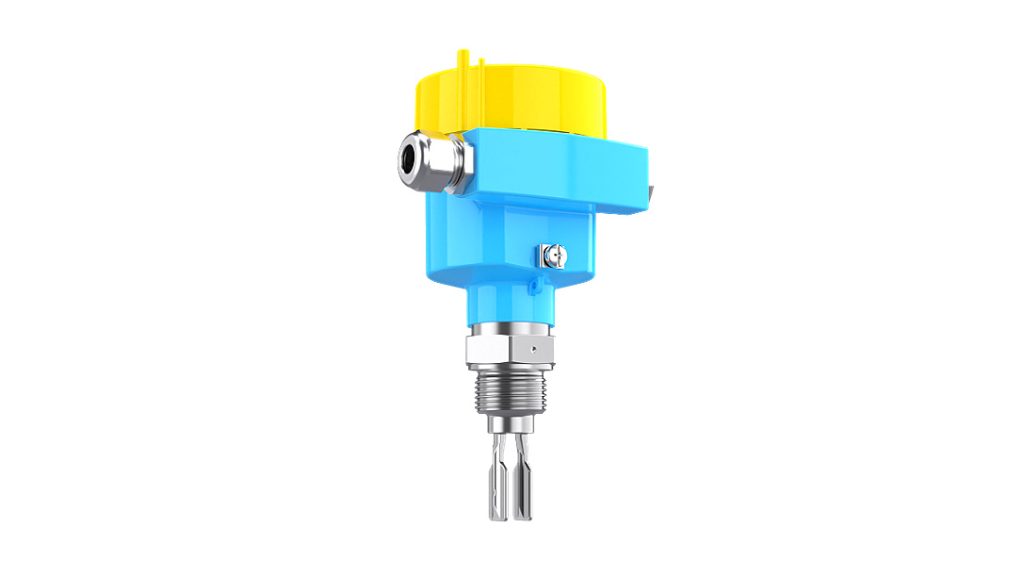
The working principle of a vibrating fork level switch is based on mechanical vibration. The sensor probe has a fork-shaped element that is driven by an electronic circuit to vibrate at a specific frequency. When the fork is in air or gas, it vibrates freely. When liquid covers the fork, the vibration is dampened by the liquid medium.
The electronic module continuously monitors the vibration frequency, amplitude, or phase change. Once the change reaches a preset threshold, the instrument determines that liquid is present and outputs a switching signal.
This signal can be used to indicate high level, low level, empty tank, full tank, pump protection, or process control status. Depending on the model, the output may be relay output, transistor output, two-wire output, NAMUR output, or another industrial signal type.
One of the main advantages of vibrating fork technology is that it does not depend heavily on the electrical properties of the liquid. Conductivity, dielectric constant, color, transparency, and mild foaming usually have limited influence on detection performance. This makes the vibrating fork level switch suitable for many different liquid media.
Compared with float level switches, vibrating fork level switches have no moving float mechanism, which reduces mechanical wear and improves long-term reliability. Compared with capacitive level switches, they are generally easier to commission because they do not require complex calibration for every medium. Compared with optical sensors, they are more suitable for opaque liquids, dirty liquids, and industrial process conditions.
Why Explosion Proof Design Is Necessary
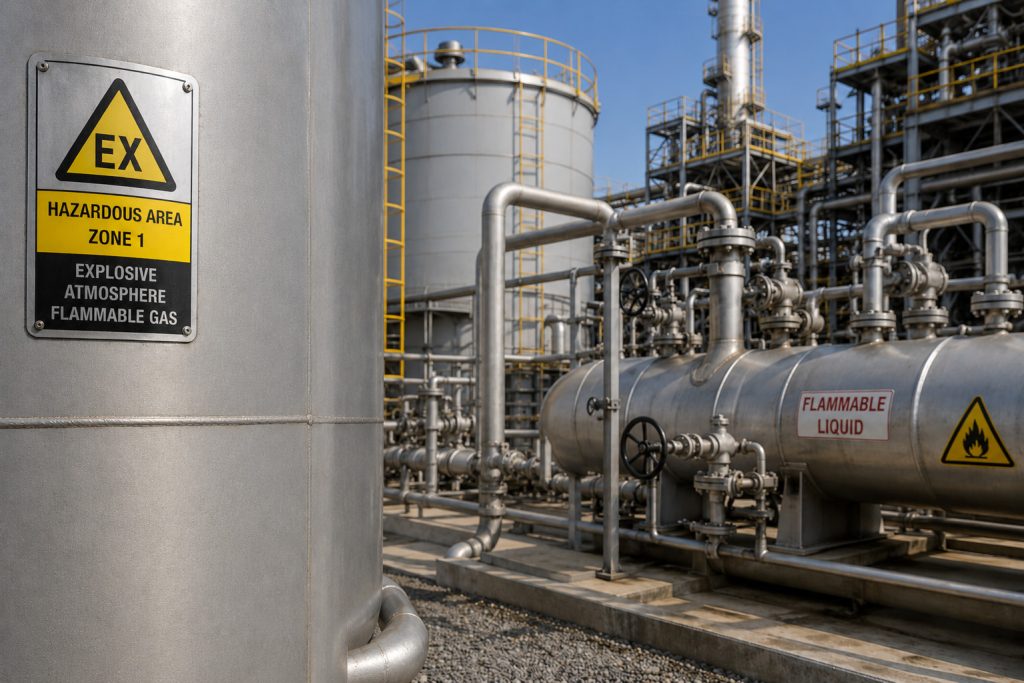
In hazardous areas, ordinary electrical instruments may create ignition risks. A spark, arc, hot surface, static discharge, or electrical fault can ignite flammable gas, vapor, or dust if the surrounding atmosphere contains explosive mixtures.
This is why instruments used in classified areas must comply with explosion protection requirements. An explosion proof vibrating fork level switch is designed to reduce the risk of ignition under normal operating conditions and specified fault conditions.
Hazardous environments are common in many industrial processes. Storage tanks containing gasoline, diesel, alcohol, acetone, toluene, methanol, solvents, liquefied hydrocarbons, or chemical intermediates may release flammable vapors. Coal chemical plants and powder processing systems may produce combustible dust. Oil and gas facilities may contain explosive gas mixtures around tanks, separators, loading stations, and pipelines.
In these applications, the level switch must not become an ignition source. Explosion proof design helps ensure that the instrument can be safely installed and operated in the required hazardous zone, provided that installation, wiring, grounding, sealing, and maintenance are performed correctly.
Main Explosion Protection Types
Explosion proof vibrating fork level switches are available in different protection types. The correct choice depends on the hazardous area classification, medium properties, system design, and local safety regulations.
Intrinsically Safe Type
An intrinsically safe level switch limits the electrical energy in the circuit so that sparks or thermal effects cannot ignite an explosive atmosphere under specified conditions. This protection concept is commonly identified by markings such as Ex ia or Ex ib, depending on the certification system and equipment design.
Intrinsic safety is widely used in process instrumentation because it provides a high level of protection. However, intrinsically safe devices usually need to be installed together with suitable safety barriers, isolated barriers, or intrinsically safe power supplies. The complete loop must be designed as an intrinsically safe system, not just the field instrument alone.
For high-risk tanks, chemical vessels, solvent storage systems, and safety interlock applications, an intrinsically safe vibrating fork level switch is often a strong option. It is especially useful when low-energy field wiring and safe maintenance access are important.
Flameproof or Explosion Proof Type
A flameproof or explosion proof level switch uses a robust enclosure to contain any internal ignition or explosion. If an ignition occurs inside the housing, the enclosure prevents flames, hot gases, or sparks from spreading into the external hazardous atmosphere.
This type of protection is often identified by markings such as Ex d or Ex db, depending on the applicable standard. The housing, cable entry, threaded joints, sealing structure, and flame paths must be designed and maintained carefully.
A flameproof vibrating fork level switch is suitable for tough industrial environments where strong mechanical protection is needed. It is often selected for petrochemical plants, tank farms, oil storage areas, and heavy-duty process installations. During installation and maintenance, users must avoid damaging flameproof joints, cable glands, covers, and sealing surfaces.
Dust Explosion Protection
Some industrial sites contain combustible dust rather than flammable gas. In these environments, dust ignition prevention is just as important as gas explosion protection. Dust may accumulate on instrument surfaces, enter enclosures, or form explosive clouds during process operation.
A vibrating fork level switch with dust explosion protection may be required in coal chemical plants, powder handling systems, grain processing, certain chemical powder storage areas, and solid-liquid process facilities. For sites where both gas and dust hazards exist, dual protection certification may be preferred.
Key Benefits of Explosion Proof Vibrating Fork Level Switches
The explosion proof vibrating fork level switch offers several important advantages for industrial level detection.
First, it provides reliable point level detection in demanding environments. Because the detection principle is based on vibration damping, the instrument can work with many liquid media without complicated calibration.
Second, it supports process safety functions. It can be used for high-level alarm, low-level alarm, overfill prevention, pump dry-run protection, and emergency shutdown signals. These functions are essential in hazardous chemical and energy facilities.
Third, it has a simple and robust structure. With no moving float and no optical window, the instrument is less affected by mechanical wear, liquid color, or contamination. This helps reduce maintenance requirements.
Fourth, it can be integrated into automation systems. The switching output can be connected to PLC, DCS, alarm panels, pump control systems, or safety interlock systems, depending on the process design.
Fifth, explosion proof construction makes it suitable for classified hazardous areas where ordinary level switches cannot be used safely.
Common Industrial Applications
Petrochemical Storage Tanks
Petrochemical storage tanks often contain flammable or volatile liquids. Overfilling such tanks can cause leakage, vapor release, fire hazards, environmental pollution, and production losses. Installing an explosion proof vibrating fork level switch at a high-level point provides an independent alarm or shutdown signal.
The switch can also be installed at a low-level point to protect pumps and prevent air from entering the process system. In tank farms and oil depots, this type of instrument is widely used because of its compact structure and reliable switching performance.
Chemical Reactors and Process Vessels
Chemical reactors often handle solvents, intermediates, acids, alkalis, or other process liquids. In many cases, the atmosphere around the reactor may be classified as hazardous due to flammable vapors.
A vibrating fork level switch can detect whether the liquid has reached a required process level. It can help control filling, draining, batching, or mixing operations. Explosion proof design is especially important when the medium contains alcohols, ketones, aromatic solvents, or other volatile substances.
Solvent Storage and Transfer Systems
Solvent storage systems require careful level monitoring because many solvents are highly flammable. An explosion proof level switch can be used to prevent overfilling during transfer, protect pumps during unloading, and provide an emergency signal if the liquid reaches an unsafe level.
Common solvent-related applications include paint production, adhesive manufacturing, pharmaceutical production, fine chemical processing, and coating material storage.
Oil and Gas Facilities
Oil and gas facilities often include separators, knock-out drums, storage vessels, skids, pipelines, and loading systems. These areas may contain explosive gas atmospheres. A rugged explosion proof vibrating fork level switch can provide dependable point level detection for liquids such as crude oil, condensate, diesel, lubricants, and hydrocarbon mixtures.
LNG and Energy Storage Systems
Energy storage and transfer applications require highly reliable instrumentation. In LNG, liquefied gas, and energy terminal systems, level switches are often used as part of alarm or interlock protection. The explosion proof design helps meet safety requirements in areas where flammable gas may be present.
Coal Chemical and Dust Hazard Areas
Coal chemical plants may involve both gas and dust explosion risks. A properly certified explosion proof vibrating fork level switch can be used in tanks, vessels, slurry systems, and auxiliary process units where safe point level detection is required.
High-Level Alarm and Overfill Protection
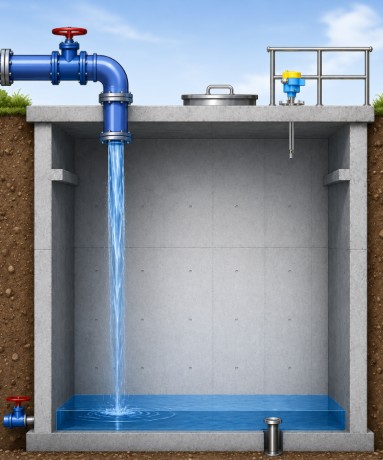
One of the most important uses of an explosion proof vibrating fork level switch is high-level alarm. When a tank is being filled, the level switch detects when the liquid reaches the maximum permitted height. The signal can activate a warning light, sound an alarm, stop a pump, close a valve, or trigger an interlock system.
Overfill protection is especially important when the liquid is flammable, toxic, corrosive, or environmentally hazardous. In hazardous areas, overfilling can cause vapor release and increase the risk of fire or explosion.
A vibrating fork level switch is often selected for this function because it provides a clear on/off signal and can work independently from the main continuous level measurement system. This independence improves overall safety by adding a separate protection layer.
Low-Level Alarm and Pump Dry-Run Protection
Another common application is low-level detection. When a tank or vessel level drops below the safe operating point, the switch can send a signal to stop a pump or alert operators.
Pump dry running can damage mechanical seals, impellers, bearings, and motor components. In hazardous processes, dry running may also create heat, friction, or abnormal operating conditions that increase safety risks. By installing an explosion proof vibrating fork level switch at the low-level point, users can protect equipment and reduce unplanned downtime.
Low-level detection is also used in process control, batching systems, storage tanks, buffer vessels, and chemical dosing units.
How to Select the Right Explosion Proof Vibrating Fork Level Switch
Selecting the right level switch requires more than matching the process connection size. A reliable selection should consider hazardous area classification, medium properties, process conditions, output requirements, installation method, and certification.
1. Confirm the Hazardous Area Classification
Before selecting any explosion proof instrument, confirm the hazardous area zone, gas group, dust group, temperature class, and protection level required by the project. The instrument’s certification must match the actual installation environment.
Using a device with an unsuitable explosion protection rating may create compliance problems and safety risks. For engineering projects, the final selection should follow the design documents, safety standards, and local approval requirements.
2. Check the Medium Properties
The vibrating fork level switch must be compatible with the process liquid. Important medium parameters include density, viscosity, corrosiveness, temperature, pressure, coating tendency, crystallization tendency, and solid content.
Although vibrating fork switches are versatile, very sticky liquids, heavy coatings, crystallizing media, or extremely corrosive liquids may require special probe designs or materials. Stainless steel is common, but special alloys or coatings may be needed for aggressive chemicals.
3. Verify Process Temperature and Pressure
The selected model must withstand the actual process temperature and pressure. High-temperature or high-pressure applications may require extended probes, special seals, flanged connections, or reinforced structures.
Temperature also affects explosion protection because surface temperature must remain within the allowed temperature class. Always verify both process temperature limits and ambient temperature limits.
4. Choose the Correct Process Connection
Common process connections include threaded connection, flange connection, sanitary clamp, and customized installation fittings. The right connection depends on tank design, pressure rating, medium compatibility, and maintenance requirements.
For pressurized vessels or hazardous liquids, sealing reliability is extremely important. Incorrect installation may cause leakage, safety hazards, or inaccurate detection.
5. Select the Output Signal
Different automation systems require different signal types. Common outputs include relay contact, PNP, NPN, two-wire current output, or NAMUR signal. The output should be compatible with the PLC, DCS, alarm system, or safety barrier.
For intrinsically safe installations, the signal type and electrical parameters must match the safety barrier and system loop design.
6. Consider Installation Position
The level switch should be installed at a point where it can detect the required liquid level without being affected by strong turbulence, direct inlet flow, heavy sediment, or mechanical impact. In tanks with agitators, the probe should be positioned away from blades and strong vortex zones when possible.
For side-mounted installation, the fork orientation may need to follow the manufacturer’s instructions to reduce material buildup and ensure accurate switching.
7. Review Certification and Documentation
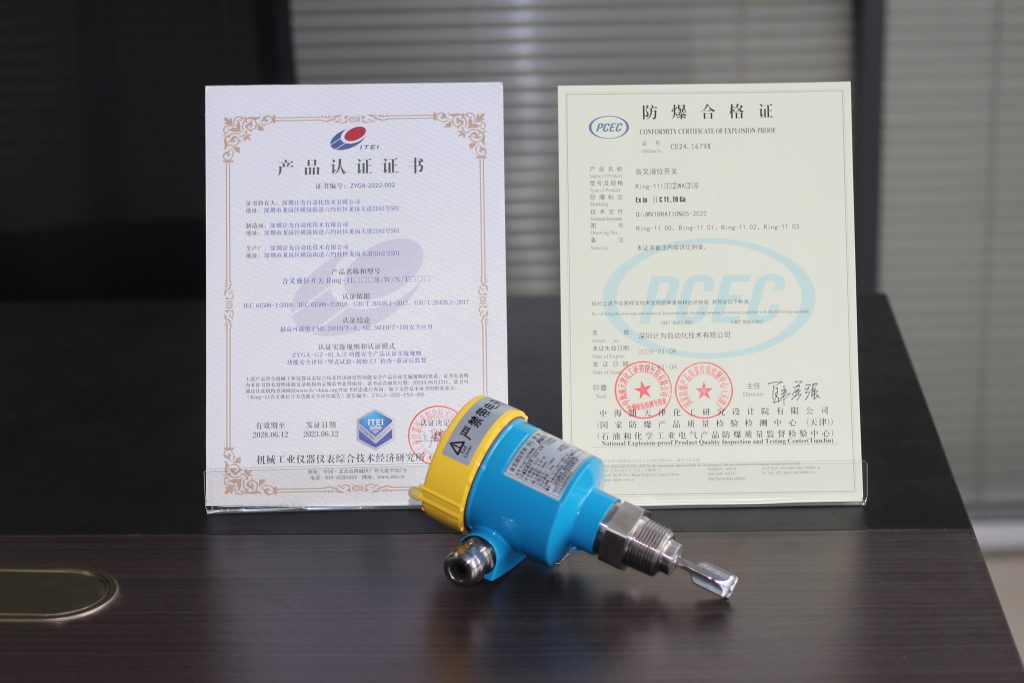
For hazardous area projects, documentation is essential. The product should have proper explosion proof certification, technical datasheet, wiring diagram, installation manual, and nameplate marking. These documents help with project approval, installation inspection, and maintenance management.
Installation and Maintenance Considerations
Correct installation is critical for reliable operation. The probe should not be bent, hit, or used as a mechanical support. The cable entry must be sealed correctly, especially in hazardous areas. Grounding, wiring, and barrier installation should follow the approved system design.
For flameproof instruments, the enclosure cover, threaded joints, flame paths, and cable glands must be installed and maintained according to the manufacturer’s instructions. Opening the housing in a hazardous atmosphere should only be done when permitted by safety procedures.
For intrinsically safe instruments, the entire circuit must remain compliant with intrinsic safety requirements. Users should not replace barriers, cables, or power supplies without checking system parameters.
Routine maintenance usually includes checking the probe for buildup, corrosion, deformation, or mechanical damage. Wiring terminals and seals should also be inspected periodically. In applications with sticky or crystallizing liquids, scheduled cleaning may be necessary.
Why Choose a Vibrating Fork Level Switch for Hazardous Areas?
For hazardous liquid level detection, reliability and safety are more important than unnecessary complexity. A vibrating fork level switch provides a simple, stable, and proven solution for point level detection. When combined with explosion proof design, it becomes suitable for demanding industrial environments where ignition prevention is essential.
Compared with many other level technologies, vibrating fork sensors are easy to install, easy to integrate, and relatively low maintenance. They are widely used because they provide a clear switching signal and perform well in many liquid applications.
For plants that need high-level alarms, low-level alarms, overfill protection, or pump dry-run protection, an explosion proof vibrating fork level switch can be an effective and economical choice.
Conclusion
An explosion proof vibrating fork level switch is an essential instrument for safe liquid level detection in hazardous industrial environments. It uses vibration damping technology to detect whether liquid has reached a specific point, then outputs a switching signal for alarm, control, or interlock functions.
Its main strengths include reliable point level detection, simple commissioning, low maintenance, wide liquid compatibility, and suitability for hazardous areas when properly certified. It is commonly used in petrochemical tanks, chemical reactors, solvent storage systems, oil and gas facilities, LNG systems, coal chemical plants, and other industrial processes where flammable gas, vapor, or combustible dust may exist.
To select the right model, users should carefully evaluate hazardous area classification, explosion protection type, liquid properties, process temperature, pressure, installation method, output signal, and certification requirements. Proper installation and regular inspection are also necessary to maintain long-term safety and performance.
For industrial plants that require dependable high-level alarm, low-level alarm, overfill protection, or pump dry-run protection in explosive atmospheres, an explosion proof vibrating fork level switch offers a practical, safe, and reliable solution.