1. What Is a Transistor?
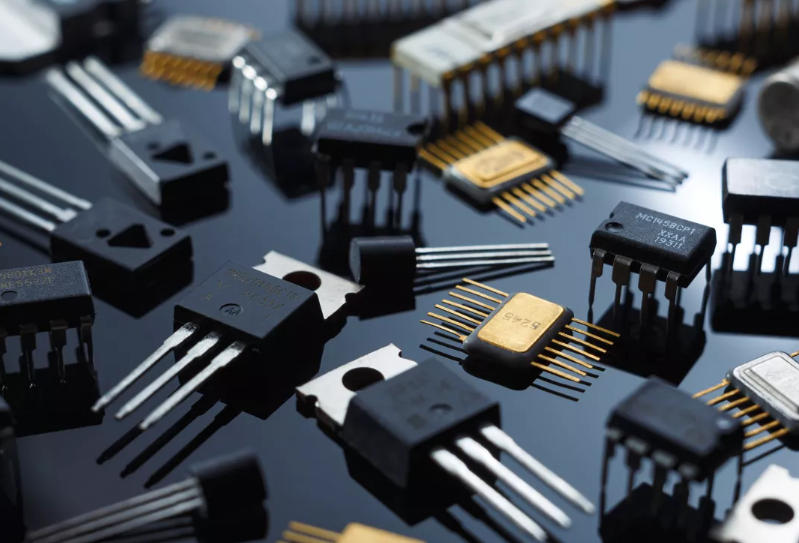
A transistor is a common and extremely important semiconductor electronic component that is widely used in electronic devices and industrial instruments. In simple terms, a transistor can be regarded as an “electronic switch” or a “signal amplifier” that controls current. It can use a small current or voltage to control a larger current, enabling functions such as signal amplification, switching control, voltage regulation, oscillation, and logic operation.
In modern electronics, transistors are almost everywhere. From mobile phones, computers, and household appliances to sensors, transmitters, PLC control systems, level meters, and flow meters used in factories, transistors play an essential role. It can be said that transistors are one of the fundamental components of modern electronics and industrial automation equipment.
The reason transistors are so important is that they are compact, low-power, fast in response, highly reliable, and easy to integrate. Compared with early vacuum tubes, transistors are more stable and better suited for complex circuits and precision instruments. Therefore, in the field of industrial measurement, transistors are crucial for improving instrument performance, enhancing signal processing capability, and increasing equipment reliability.
2. Basic Working Principle of a Transistor
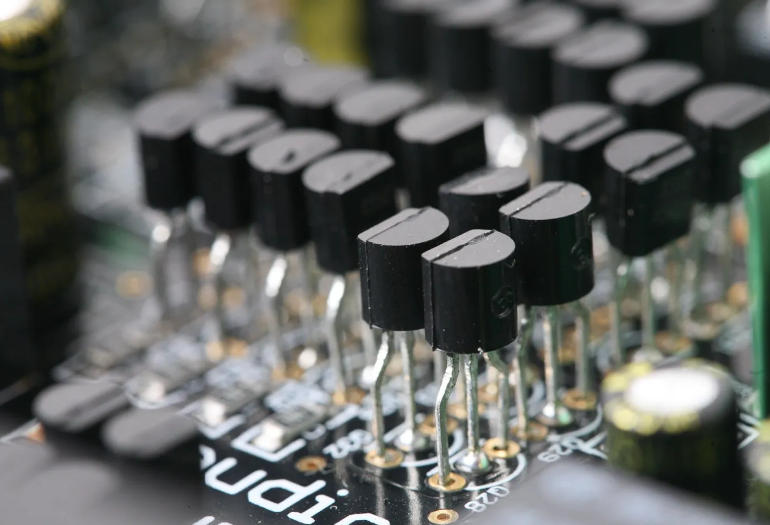
Transistors are mainly made from semiconductor materials. Common materials include silicon and germanium, with silicon being the most widely used. A transistor uses the conductive properties of semiconductor materials to control current by regulating the movement of charge carriers.
Taking the common bipolar junction transistor as an example, it usually has three terminals: the base, collector, and emitter. When a small control current is applied to the base, a larger current can flow between the collector and emitter. In other words, a transistor can use a small signal to control a larger signal, which is why it can function as an amplifier.
Another common type is the field-effect transistor, also known as FET. A field-effect transistor generally controls the current between the source and drain through the voltage applied to the gate. Because of its high input impedance, low power consumption, and low noise, it is widely used in precision measurement, signal acquisition, and sensor circuits.
In practical circuits, transistors usually operate in two typical states: amplification and switching. When used as an amplifier, a transistor can amplify weak signals collected by sensors for further processing. When used as a switch, a transistor can control the on/off state of relays, alarms, displays, power modules, or communication circuits.
3. Main Types of Transistors
There are many types of transistors, and different types are suitable for different circuit applications. Common transistors mainly include the following categories.
3.1 Bipolar Junction Transistor
A bipolar junction transistor, or BJT, is mainly divided into NPN and PNP types. It controls current with current and is known for strong amplification capability, low cost, and mature application technology. BJTs are commonly used in analog amplification circuits, switching control circuits, and power management circuits.
In industrial instruments, bipolar junction transistors can be used for signal amplification, output driving, and alarm control. For example, in the output circuit of some level meters, a transistor can serve as a switching component to drive a relay or control an external load.
3.2 Field-Effect Transistor
A field-effect transistor, or FET, includes common types such as JFET and MOSFET. Among them, MOSFETs are especially widely used in modern electronic equipment. A MOSFET controls current with voltage and offers high input impedance, fast switching speed, and low power consumption.
In intelligent instruments such as level meters, MOSFETs are often used for power control, signal conditioning, communication interface protection, and output driving. For battery-powered level meters that require low-power design, MOSFETs are particularly advantageous.
3.3 Insulated-Gate Bipolar Transistor
An insulated-gate bipolar transistor, or IGBT, combines some advantages of MOSFETs and BJTs. It is suitable for high-voltage and high-current control applications. Although IGBTs are not as commonly used in ordinary level meters as MOSFETs, they play an important role in large industrial control systems, motor drives, power modules, and automation equipment.
4. What Is a Level Meter?
A level meter is an industrial measuring instrument used to measure the height of materials inside containers, storage tanks, silos, reactors, or pipelines. Depending on the medium being measured, a level meter can be used for liquid level, solid material level, or interface level measurement. Therefore, it is also commonly referred to as a liquid level meter, material level meter, or level measurement instrument.
In industries such as chemical processing, petroleum, food, pharmaceuticals, water treatment, power generation, metallurgy, and building materials, level meters are critical field instruments. They help companies monitor the height of liquids or solids in storage tanks in real time, preventing overflow, empty tanks, material blockage, and production interruptions. As a result, they improve production safety and automation efficiency.
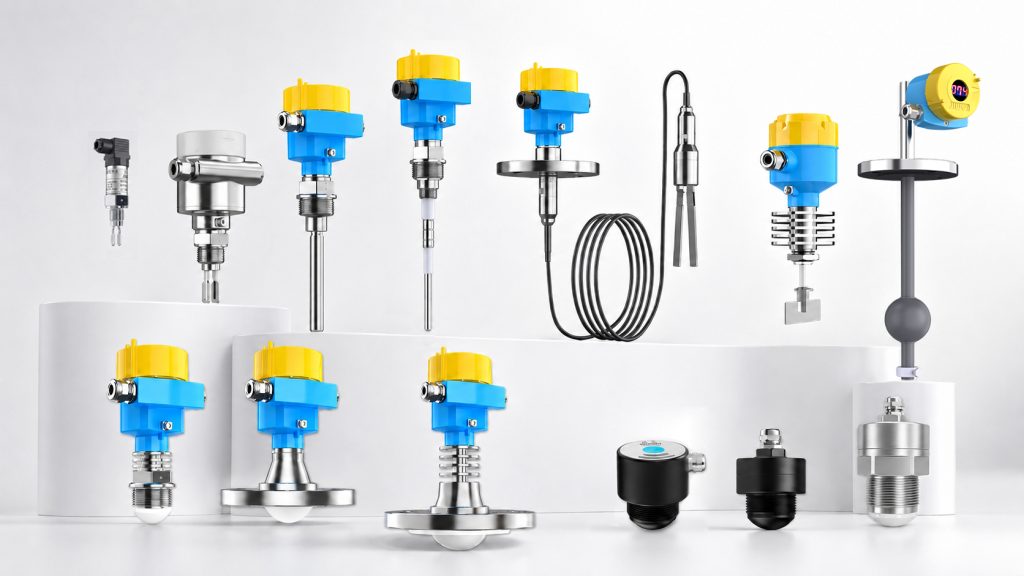
Common types of level meters include radar level meters, ultrasonic level meters, capacitive level meters, magnetic flap level gauges, pressure level meters, float level meters, and RF admittance level meters. Although different types of level meters use different measurement principles, most modern electronic level meters rely on transistors, resistors, capacitors, operational amplifiers, microprocessors, communication chips, and other electronic components.
5. Core Functions of Transistors in Level Meters
Although a transistor is only a basic electronic component, it plays a very important role inside level meters. To achieve stable measurement, signal conversion, data display, alarm output, and remote communication, a level meter must rely on electronic circuits. Transistors are key components in these circuits.
5.1 Sensor Signal Amplification
The core task of a level meter is to detect the height of the material. Whether a radar level meter receives echo signals or an ultrasonic level meter receives reflected sound waves, the original signals collected by the sensor are often very weak. Without amplification and processing, these signals are difficult for the control chip to identify accurately.
Transistors can be used in signal amplification circuits to amplify weak sensor signals to a suitable level. The amplified signal is then sent to filtering circuits, analog-to-digital conversion circuits, and microprocessors for analysis, allowing the instrument to calculate accurate liquid level or material level data.
For example, a radar level meter needs to transmit and receive high-frequency electromagnetic waves. The received echo signal may be extremely weak, especially in long-distance measurement, dusty environments, or applications involving materials with a low dielectric constant. In such cases, the performance of the front-end signal processing circuit directly affects measurement stability, and transistors play an important role in signal amplification and high-frequency processing.
5.2 Switching Control and Output Driving
Many level meters not only display measurement values but also output switching signals. For example, when the liquid level reaches a high or low limit, the level meter can output an alarm signal to start a pump, close a valve, trigger an audible and visual alarm, or send a status signal to a PLC.
Transistors are often used as switching components to control the on/off state of these output signals. In liquid level alarms, material level control, relay driving, and switching output circuits, transistors can use a small control signal to drive a larger external load.
For example, in a high-low liquid level alarm system, when the liquid level exceeds the upper set point, the internal circuit of the level meter outputs a control signal that turns on the transistor. The transistor then drives the relay, which ultimately activates an alarm or closes the inlet valve. This application clearly demonstrates the value of transistors as electronic switches.
5.3 Power Management and Low-Power Design
Modern level meters increasingly emphasize low power consumption, stability, and long-term operation. This is especially true for wireless level meters, battery-powered liquid level meters, and remote monitoring devices, which must operate for long periods with limited power.
Transistors, especially MOSFETs, are commonly used in power management circuits. They can control the power supply status of different modules, shutting down certain circuits during standby mode and quickly turning them on during measurement or communication. This helps reduce overall power consumption.
For example, a wireless radar level meter may not need to continuously transmit measurement signals. Instead, it can measure and upload data according to a preset cycle. During non-working periods, the circuit can enter low-power mode. Transistors play an important role in power switching and module control, helping extend battery life.
5.4 Communication Interface Protection and Signal Conversion
Industrial level meters usually need to connect with PLCs, DCS systems, host computers, or IoT platforms. Common output methods include 4-20mA, RS485, HART, switching output, Modbus, and wireless communication. To ensure stable communication, the internal circuits of the instrument must perform signal conversion, level matching, and interface protection.
Transistors can be used for level conversion and enhanced signal driving in communication interfaces. For example, in RS485 communication circuits, transistors or related semiconductor devices can help improve signal driving capability and communication stability. In some output protection circuits, transistors can also work together with diodes, resistors, and capacitors to prevent damage caused by surges, abnormal voltage, or reverse connection.
For level meters operating in complex industrial environments, anti-interference capability is very important. Field sites may have issues such as motor startup interference, electromagnetic interference, lightning surges, and voltage drops caused by long-distance wiring. Proper use of transistors and protection circuits can improve the reliability and service life of level meters.
6. Applications of Transistors in Different Types of Level Meters
6.1 Transistors in Radar Level Meters
Radar level meters measure level by transmitting electromagnetic waves and receiving reflected echoes. They offer non-contact measurement, strong adaptability, high accuracy, and low maintenance. They are commonly used in storage tanks, reactors, powder silos, and corrosive media measurement.
In radar level meters, transistors can be used for high-frequency signal processing, power control, echo amplification, power management, and communication output. Since radar level meters involve high-frequency circuits, they have high requirements for component stability and response speed. Therefore, transistor performance can affect the overall measurement performance of the instrument.
6.2 Transistors in Ultrasonic Level Meters
Ultrasonic level meters calculate level height by transmitting ultrasonic waves and receiving echoes based on sound wave travel time. They are commonly used in water treatment, sewage tanks, storage tanks, and open containers.
In ultrasonic level meters, transistors are often used in transmitting drive circuits and receiving amplification circuits. The ultrasonic probe requires sufficient driving capability when transmitting sound waves, while the received echo signal is usually weak and needs to be amplified and filtered. Transistors may play a role in both stages.
6.3 Transistors in Capacitive Level Meters
Capacitive level meters measure level based on capacitance changes caused by variations in the medium. They are suitable for continuous measurement or limit detection of liquids, powders, and granular materials.
In capacitive level meters, the sensor signal usually appears as a tiny capacitance change, which must be converted into a recognizable voltage or current signal by electronic circuits. Transistors can be used in oscillation circuits, signal amplification, and output control, helping the instrument achieve sensitive and stable detection.
6.4 Transistors in RF Admittance Level Meters
RF admittance level meters are developed based on capacitive measurement technology and offer strong material adhesion compensation capability. They are commonly used for measuring powders, granules, slurries, and sticky media.
These level meters usually include RF signal generation, detection, compensation, and output circuits. Transistors can participate in RF signal generation, signal conditioning, and switching output, enabling the instrument to maintain good measurement stability in complex material environments.
7. How Transistors Affect Level Meter Performance
The quality of transistors and the level of circuit design directly affect the overall performance of a level meter. High-quality transistors and well-designed circuits can provide higher measurement accuracy, faster response speed, better anti-interference capability, and longer service life.
First, transistors affect signal processing capability. If the amplification circuit has excessive noise or poor stability, the level meter may experience unstable readings, false alarms, or measurement fluctuations.
Second, transistors affect output driving capability. If the switching output circuit is poorly designed, it may cause unreliable relay operation, abnormal output signals, or failure to link with external equipment.
Third, transistors affect power consumption and heat generation. Industrial field instruments often need to operate continuously for long periods. Low-power and low-heat designs help improve instrument reliability and reduce failure rates.
Finally, transistors also affect the anti-interference capability of the instrument. In complex industrial environments, proper transistor selection combined with protective circuit design can reduce the impact of electromagnetic interference, voltage fluctuations, and surge shocks on the level meter.
8. Why Pay Attention to Electronic Component Quality When Choosing a Level Meter?
When choosing a level meter, many users focus on range, accuracy, installation method, output signal, and price, but often overlook the quality of internal electronic components. In fact, a level meter is a precision electronic instrument that must operate for long periods in industrial field environments, so the stability of its internal circuits is very important.
Although a transistor is small, it participates in many core functions, including signal amplification, switching control, power management, and communication protection. If the component quality is unstable, the instrument may experience drift, slow response, false alarms, communication interruption, or even complete failure.
Therefore, when purchasing a radar level meter, ultrasonic level meter, capacitive level meter, or RF admittance level meter, users should not only consider housing material, protection rating, explosion-proof rating, and measurement parameters, but also pay attention to whether the manufacturer has mature circuit design capability, a stable component supply chain, and strict factory testing processes.
9. Transistors and the Development Trend of Intelligent Level Meters
With the development of industrial automation and the Industrial Internet of Things, level meters are evolving from traditional measuring instruments toward intelligent, digital, low-power, and networked devices. Intelligent level meters can not only measure level but also provide self-diagnosis, remote parameter setting, data uploading, fault alarms, and cloud platform management.
Under this trend, transistors remain fundamental and essential electronic components. Whether for higher-frequency radar measurement, lower-power wireless communication, or more stable sensor signal processing, the development of semiconductor components is indispensable.
In the future, as semiconductor technology continues to advance, the internal circuits of level meters will become more integrated, compact, and intelligent. The application of high-performance transistors, integrated chips, and low-power components will further improve the measurement accuracy, stability, and environmental adaptability of level meters.
10. Conclusion
A transistor is a semiconductor electronic component capable of controlling current. It can function both as a signal amplifier and as an electronic switch. It is an important basic component in modern electronic devices and industrial instruments, and it is widely used in level meters.
In radar level meters, ultrasonic level meters, capacitive level meters, and RF admittance level meters, transistors are commonly used for sensor signal amplification, output driving, power management, communication interface protection, and signal conversion. Although users cannot see transistors from the outside, they have a significant impact on measurement accuracy, response speed, anti-interference capability, and long-term stable operation.
For industrial users, understanding what a transistor is and how it functions in level meters helps provide a more complete understanding of level measurement instruments. It also helps users pay more attention to internal design quality and long-term reliability during product selection. When choosing a high-quality level meter, users should not only consider measurement parameters, but also evaluate the core electronic circuits, component quality, and technical strength of the manufacturer. Only in this way can stable, accurate, and safe level measurement be achieved in complex industrial environments.