1. What Is a Radar Level Meter?
A radar level meter is an automatic measuring instrument that uses radar waves to measure material levels. It is mainly used to measure the height of materials inside silos, storage tanks, reactors, bins, hoppers, and other containers. A radar level meter can measure solid powders, granular materials, bulk solids, and it can also be used for liquid, slurry, and corrosive media level measurement. In industrial production, radar level meters are widely used in cement, chemical, metallurgy, power generation, grain, food, environmental protection, pharmaceutical, new energy, and other industries.
Simply put, a radar level meter is like installing an invisible pair of “eyes” on a silo or tank. It does not need to directly contact the material. Instead, it emits high-frequency electromagnetic waves and receives the echo signals reflected from the material surface. By calculating the distance between the instrument and the material surface, and combining it with the container height, the actual material level can be obtained. Because the measurement process does not require contact with the medium, the radar level meter is especially suitable for high-temperature, high-pressure, dusty, corrosive, sticky, or difficult-to-observe working conditions.
In modern industrial automation systems, stable and accurate level data is very important. If the material level is too high, it may cause overflow, blockage, or safety risks. If the material level is too low, it may lead to material interruption, empty silos, or production shutdown. A radar level meter can continuously output level signals, helping enterprises achieve automatic feeding, inventory management, alarm interlocking, and production process control.
2. Working Principle of a Radar Level Meter
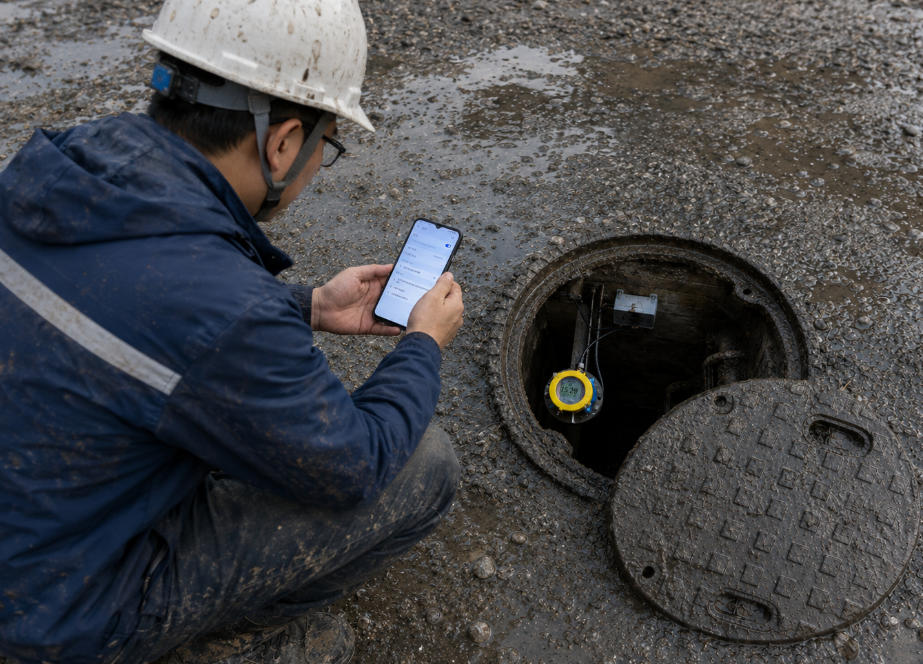
The core principle of a radar level meter is the “time-of-flight method” or the “frequency difference ranging method.” The instrument emits radar waves through an antenna toward the material surface. When the radar waves reach the material surface, they are reflected back and received by the antenna. The electronic unit inside the instrument analyzes the time difference or frequency difference between the transmitted signal and the received signal, then calculates the distance.
Taking a common non-contact radar level meter as an example, the measurement logic can be understood as follows:
The radar level meter is installed on the top of the container and emits radar waves downward. The radar waves reach the material surface and return. The instrument calculates the empty distance between itself and the material surface. The total height of the container minus the empty distance equals the actual material level height.
Radar waves travel at a speed close to the speed of light, so the instrument can complete the measurement very quickly. Compared with traditional mechanical, plumb-bob, and ultrasonic instruments, a radar level meter is less affected by temperature, pressure, steam, dust, and gas composition. It is especially suitable for complex industrial sites.
Common radar level meter frequencies on the market include 6GHz, 26GHz, and 80GHz. Generally speaking, the higher the frequency, the smaller the beam angle, and the more concentrated the signal energy. This makes high-frequency radar level meters more suitable for narrow spaces, complex tank structures, heavy dust, and vessels with internal obstacles. In recent years, 80GHz high-frequency radar level meters have been increasingly used, especially in powder silos, granular material bins, small storage tanks, and applications requiring high-precision measurement.
3. Main Types of Radar Level Meters
According to the measurement method, radar level meters can usually be divided into non-contact radar level meters and guided wave radar level meters.
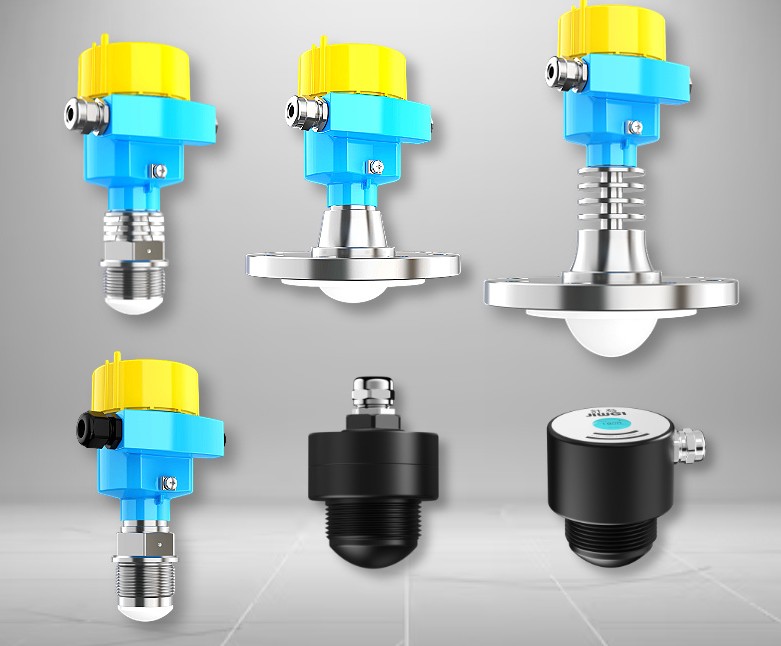
A non-contact radar level meter is installed on the top of the container. Radar waves travel through the air to the material surface without directly contacting the material. This type of instrument requires little maintenance, is easy to install, and is suitable for dusty, high-temperature, corrosive, and sticky material conditions. It is currently one of the most widely used types of level measurement instruments.
A guided wave radar level meter uses a probe rod or cable to guide the transmission of radar waves. The radar waves travel downward along the probe and are reflected when they reach the material surface. Guided wave radar level meters are suitable for short-range measurement, low dielectric constant media, foam, or complex liquid level conditions. However, because the probe directly contacts the material, this type of instrument should be selected carefully in environments with heavy material buildup, strong impact, or easy entanglement.
From the perspective of application media, radar level meters can also be divided into solid radar level meters and liquid radar level meters. Solid measurement focuses more on dust, material pile angle, feeding impact, and echo stability. Liquid measurement focuses more on steam, foam, agitation, corrosion, and sealing requirements. Therefore, when selecting a radar level meter, users should not only consider the measuring range and price, but also comprehensively evaluate the actual working conditions.
4. Main Advantages of Radar Level Meters
Radar level meters are widely welcomed by industrial users because they offer many advantages.
First, a radar level meter adopts non-contact measurement. The instrument does not directly contact the material, so it is less affected by adhesion, corrosion, and wear. For materials such as cement powder, coal powder, lime powder, plastic particles, grain, and mineral powder, traditional contact-type instruments are prone to jamming, contamination, and damage. A radar level meter can effectively reduce maintenance frequency.
Second, a radar level meter provides excellent measurement stability. Radar waves do not rely on sound propagation, so radar level meters are not as easily affected by temperature gradients, steam, airflow, and dust concentration as ultrasonic level meters. In high-dust silos, sealed storage tanks, and strong steam environments, radar level meters usually maintain more stable echo signals.
Third, radar level meters have a wide range of applications. Whether the application involves high-temperature silos, high-pressure storage tanks, corrosive liquids, or solid materials that generate dust and buildup, reliable measurement can be achieved through proper model selection. For continuous production enterprises, stable level measurement can reduce manual inspection and improve automation control.
Fourth, radar level meters respond quickly and provide continuous output signals. They can be connected to PLC, DCS, or host computer systems through 4-20mA, HART, RS485, Modbus, and other communication signals, enabling automatic control, remote monitoring, data recording, and alarm management.
Fifth, radar level meters help reduce overall costs. Although the initial purchase cost of a radar level meter may be higher than that of some traditional instruments, in long-term use it can reduce shutdown cleaning, manual inspection, spare parts replacement, and losses caused by measurement errors. Therefore, the overall cost performance is relatively high.
5. Application Scenarios of Radar Level Meters
Radar level meters are used in a wide range of applications. In the cement industry, they are commonly used for level measurement in cement silos, fly ash silos, limestone silos, and clinker silos. They can solve problems such as heavy dust, uneven material surfaces, and feeding impact.
In the chemical industry, radar level meters can be used in acid and alkali storage tanks, solvent tanks, reactors, and powder raw material silos. They are suitable for corrosive, steamy, and sealed environments.
In the power industry, radar level meters are often used in coal bunkers, ash silos, limestone powder silos, and desulfurization systems. Accurate level data helps prevent empty bins, material blockage, and silo overflow.
In the grain and food industries, radar level meters can be used in flour silos, starch silos, sugar silos, grain silos, jam tanks, sauce tanks, and similar applications. The non-contact measurement method helps reduce contamination risks and meet hygiene management requirements.
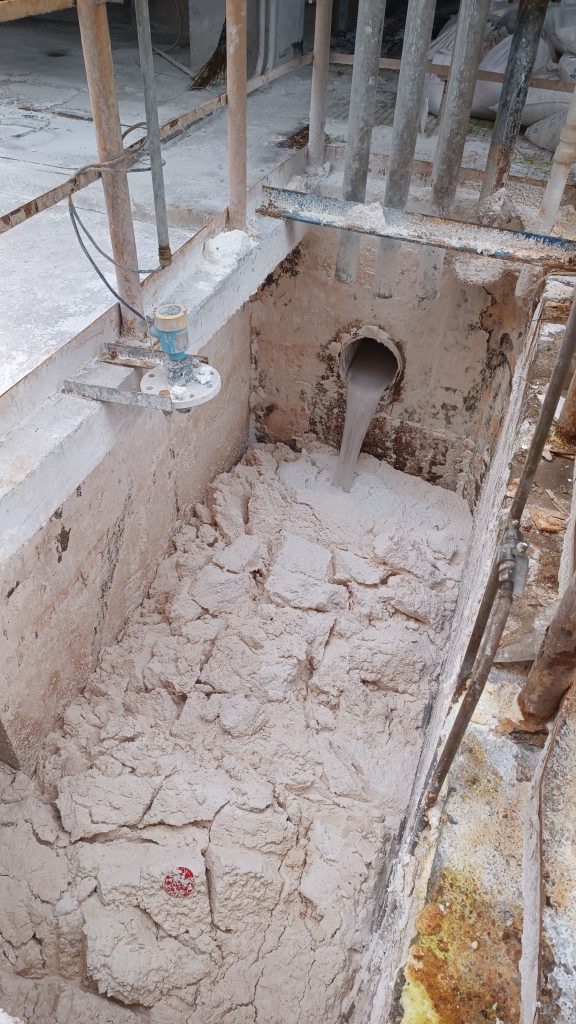
In the environmental protection industry, radar level meters can be used in sludge silos, chemical tanks, garbage bins, and wastewater treatment tanks. For working conditions involving foam, odor, corrosion, or difficulty in manual observation, radar measurement has obvious advantages.
In the new energy industry, radar level meters can also be used in lithium battery materials, powder raw materials, slurry storage tanks, and other production processes. They provide data support for automatic batching and inventory management.
6. How to Choose the Right Radar Level Meter
When selecting a radar level meter, users should not only focus on price. The actual working conditions are the most important factor.
First, the measured medium should be confirmed. Is it liquid, powder, granules, or bulk solid material? Second, users should understand the container height, installation position, temperature, pressure, dust, steam, corrosion, and agitation conditions.
For solid materials with heavy dust, high silos, and obvious material surface changes, it is recommended to choose a high-frequency radar level meter with a suitable antenna structure. If there are agitators, heating coils, support beams, or other internal obstacles inside the container, a model with a smaller beam angle and stronger anti-interference capability should be selected.
If the medium is corrosive, corrosion-resistant antenna and sealing materials are required. If the site temperature is high, a high-temperature process connection and heat dissipation structure should be considered.
The measuring range is also an important selection parameter. The actual measurement range of the radar level meter should cover the container height and leave a certain margin. At the same time, the output signal, power supply, explosion-proof rating, protection grade, installation flange, or thread specification should also match the field system.
7. Installation Precautions for Radar Level Meters
Correct installation of a radar level meter directly affects the measurement performance. In general, the instrument should be installed at a suitable position on the top of the container, avoiding the inlet, feeding impact area, agitator, and tank wall as much as possible.
If the installation position is too close to the tank wall, it may be affected by buildup, weld seams, brackets, and other interference. If it is installed near the feed inlet, the echo may become unstable due to material impact.
For cone-bottom silos, the installation direction of the radar level meter should be aimed as much as possible toward the discharge outlet or the main material surface area. For powder silos with extremely heavy dust, products with purge devices or dust-proof antennas can be selected.
For environments with strong condensation, dew formation, or material adhesion, the antenna surface should be checked regularly. If necessary, anti-condensation structures or proper mounting nozzles should be used.
During commissioning, parameters should be set according to the empty silo height, full silo height, medium characteristics, and site interference conditions. Modern radar level meters usually have false echo suppression functions, which can shield fixed obstacles inside the tank and improve measurement stability.
8. Differences Between Radar Level Meters and Other Level Meters
Compared with ultrasonic level meters, radar level meters do not rely on sound wave propagation. Therefore, they are more suitable for high temperature, steam, dust, and pressure-changing environments.
Compared with plumb-bob level meters, radar level meters have no mechanical moving parts, require less maintenance, and respond faster.
Compared with capacitance level meters, radar level meters are less affected by changes in the dielectric constant of the medium, adhesion, and material buildup.
Compared with manual measurement, radar level meters can achieve continuous online monitoring. The data is more timely and more suitable for automated production.
Of course, a radar level meter is not suitable for every working condition without limitation. For extremely low dielectric constant media, heavy foam, complex multilayer interfaces, or special container structures, professional selection and commissioning should be carried out according to actual site conditions.
9. The Value of Using Radar Level Meters
For enterprises, a radar level meter is not only a measuring instrument, but also an important data source for production management.
Stable level data can help enterprises monitor inventory changes and avoid material shortage and overflow. It can work with PLC systems to realize automatic feeding, automatic shutdown, upper and lower limit alarms, and other control functions. It can also provide basic data for production reports, energy consumption analysis, and quality traceability.
Under the trend of continuous and intelligent production, radar level meters are becoming increasingly important. Especially in industrial sites with heavy dust, complex environments, and difficult manual inspection, radar level meters can improve measurement reliability, reduce maintenance costs, and enhance safety management.
10. Conclusion
A radar level meter is a non-contact level measurement instrument based on the principle of radar wave ranging. It features stable measurement, strong adaptability, low maintenance, and a high level of automation.
Radar level meters are widely used for level measurement of powders, granular materials, liquids, slurries, and corrosive media. They are especially suitable for complex working conditions involving heavy dust, high temperature, high pressure, steam, agitation, and material buildup.
For enterprises that need to improve production efficiency, reduce manual maintenance, and achieve automatic control, choosing the right radar level meter is very important.
In practical applications, users should comprehensively select the instrument according to medium characteristics, container structure, measuring range, working conditions, and control system requirements. Standardized installation and commissioning should also be emphasized.
Only when the model selection is correct, the installation is reasonable, and the parameter settings are accurate can the radar level meter deliver stable and reliable measurement performance and provide continuous, accurate data support for enterprise production management.