1. What Is Modbus?
Modbus is a widely used communication protocol in the field of industrial automation. It is mainly used for data exchange between PLCs, DCS systems, host computers, SCADA systems, configuration software, sensors, transmitters, measuring instruments, and actuators. In simple terms, Modbus is like a common “language” used by industrial devices. A PLC can use Modbus to read measurement data from a level meter, a host computer can use it to collect field instrument data, and a remote monitoring system can use it to obtain key parameters such as liquid level, material level, water level, and alarm status.
In industrial sites, equipment often comes from different manufacturers and has different models and functions. Without a unified communication rule, these devices may have difficulty communicating with each other. This is exactly where Modbus plays an important role. It is simple, open, widely supported, and allows industrial devices from different manufacturers to exchange data in a standardized format. For this reason, Modbus is still commonly used today in industrial automation, process control, water monitoring, environmental treatment, energy management, and smart factories.
For the level measurement industry, Modbus is especially important. Traditional level meters and level switches often output 4–20 mA analog signals, which can meet basic measurement needs. However, intelligent level meters with Modbus communication can transmit not only real-time measurement values, but also device status, alarm information, echo quality, parameter settings, and other data. This makes it easier for PLCs, SCADA systems, and remote operation platforms to manage field instruments in a centralized way.
2. Basic Working Principle of the Modbus Protocol
Modbus works through a request-and-response communication mechanism. In most industrial systems, a PLC, industrial computer, host computer, or gateway acts as the master station, also known as the client. Field devices such as level meters, temperature transmitters, pressure transmitters, flow meters, and power meters act as slave stations, also known as servers. The master sends a read or write command to a specific slave device according to its device address, and the slave responds by returning the requested data.
For example, in a wastewater treatment plant, a PLC may need to read the liquid level of an equalization tank. The PLC sends a Modbus command to access the register address of the level meter. After receiving the command, the level meter returns the current level value to the PLC. The PLC then controls pump start-stop, valve switching, or alarm output according to the level value. This entire process is usually completed very quickly, making Modbus suitable for continuous monitoring and automatic control.
Common Modbus data types include coils, discrete inputs, input registers, and holding registers. For level meters, register data is most commonly used. Typical data may include liquid level height, water level value, material level distance, percentage value, temperature compensation value, alarm status, and fault codes. Engineers only need to refer to the register address table in the product manual to read data through a PLC or configuration software.
3. What Are the Differences Between Modbus RTU, Modbus TCP, and RS485?
Many users confuse “Modbus” with “RS485” when selecting industrial instruments. In fact, they are not the same thing. RS485 is a physical communication interface or electrical standard. It defines how signals are transmitted through cables. Modbus, on the other hand, is a communication protocol. It defines how data is organized, requested, responded to, and checked. Simply put, RS485 is like the “road,” while Modbus is like the “traffic rule.”
In field instruments, the most common form is RS485/Modbus RTU. In this combination, RS485 is responsible for long-distance, interference-resistant serial communication, while Modbus RTU defines the data format and communication rules. This combination is particularly suitable for level meters, flow meters, temperature transmitters, power meters, and other industrial field devices because it features simple wiring, relatively low cost, long transmission distance, and the ability to connect multiple devices on the same bus.
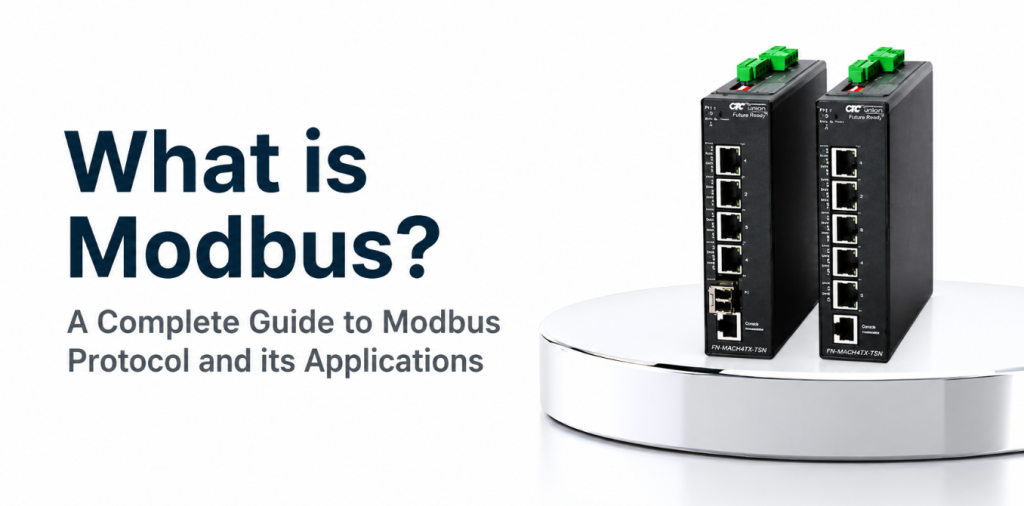
Modbus TCP is mainly based on Ethernet communication. It is commonly used for data transmission between industrial switches, PLCs, edge gateways, industrial computers, and SCADA servers. Compared with Modbus RTU, Modbus TCP is more suitable for systems with higher levels of networking and informatization, such as smart water platforms, energy management systems, and industrial IoT platforms. However, for field-level instruments, RS485/Modbus RTU remains one of the most common communication methods.
4. Why Do Level Meters Need Modbus Communication?
A level meter is an industrial instrument used to measure liquid level, solid material level, water level, or interface position. Common types include radar level meters, radar water level meters, ultrasonic level meters, magnetic level gauges, float level meters, tuning fork level switches, and rotary paddle level switches. In industries such as chemical processing, environmental protection, water treatment, food, pharmaceuticals, power generation, building materials, and mining, level data is directly related to production safety, inventory management, pump and valve interlocking, and environmental compliance.
If a level meter only outputs a 4–20 mA signal, the system usually obtains only one measurement value. However, if the level meter supports Modbus communication, the system can obtain much more digital information. For example, a PLC can read not only the liquid level height, but also the measured distance, percentage value, alarm status, device fault information, echo status, temperature information, and parameter settings. This is very important for intelligent operation and maintenance.
In large projects, a plant may have dozens or even hundreds of level meters. If every instrument uses separate analog signal wiring, the construction cost will be high and later maintenance will become more complicated. With RS485/Modbus bus communication, multiple instruments can be connected to the same communication line and then centrally read by a PLC, data collector, or gateway. This greatly improves system integration efficiency.
5. Application of Modbus in Radar Level Meters
Radar level meters are widely used continuous level measurement instruments in modern industrial sites. They emit electromagnetic waves and receive echoes reflected from the material surface. The instrument calculates the distance between the sensor and the material surface, and then converts this distance into liquid level or material level. Radar level meters are known for non-contact measurement, high accuracy, strong anti-interference performance, and low maintenance requirements. They are suitable for storage tanks, reactors, silos, water tanks, rivers, open channels, and many other applications.
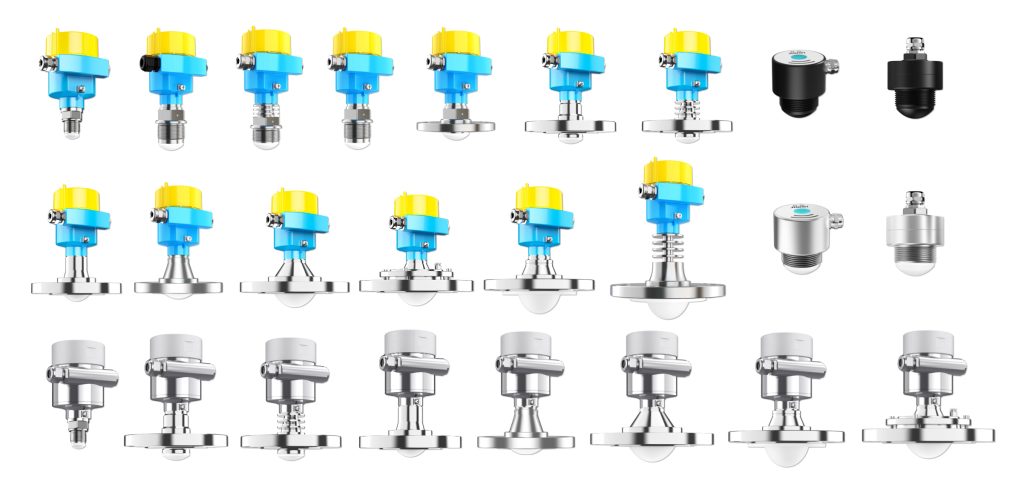
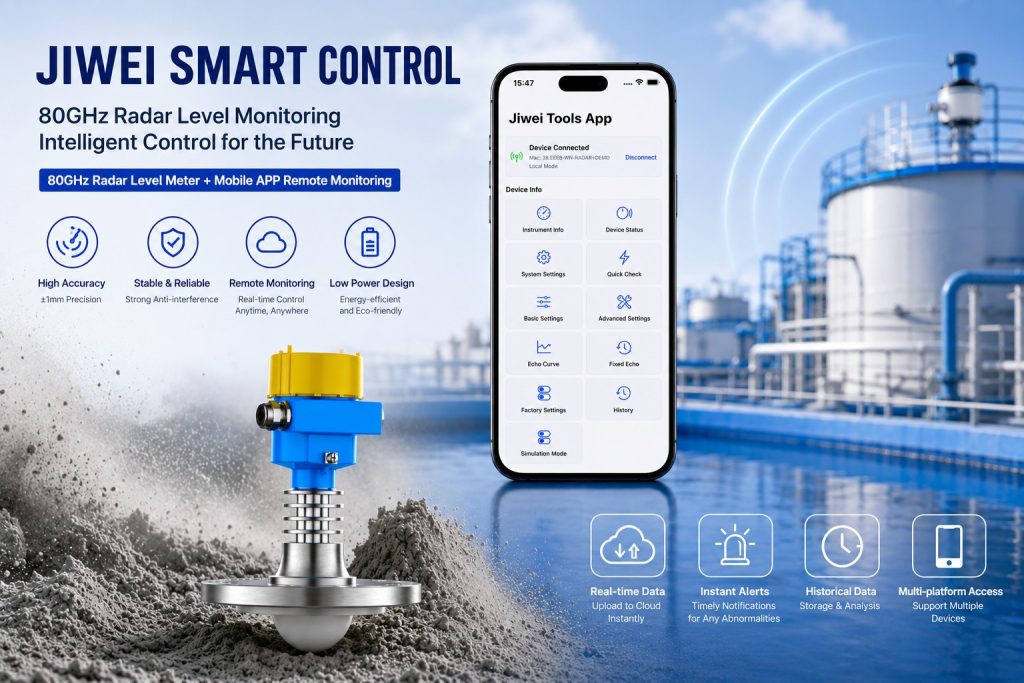
The JWrada® series radar level meters use 80 GHz high-frequency radar technology, and several products provide communication methods such as HART and RS485/Modbus. For example, compact radar water level meters are suitable for hydrological and water level measurement, simple liquid level measurement, and short-range material level monitoring. General-purpose radar level meters can be used for liquid and bulk solid level measurement, and are suitable for complex working conditions in industries such as chemicals, petroleum, and mining.
In radar level measurement applications, Modbus communication allows the system to read water level, liquid level, material level, and device status in real time. For example, in smart water management projects, radar water level meters can be installed in rivers, lakes, reservoirs, pump stations, drainage outlets, and urban flood monitoring points. Through RS485/Modbus, water level data can be transmitted to data acquisition terminals and then uploaded to a monitoring platform. When the water level exceeds a preset threshold, the system can trigger an alarm and link with drainage pumps or gates.
In chemical storage tank applications, radar level meters can be used for continuous level measurement of raw material tanks, finished product tanks, reactors, mixing tanks, and solvent tanks. Through Modbus, the control system can read real-time level data and participate in interlock control, helping prevent tank overflow, empty tank operation, and incorrect feeding. In applications involving agitation, steam, dust, or high temperature, intelligent radar level meters can also improve measurement stability through advanced echo processing algorithms.
6. Application of Modbus in Ultrasonic Level Meters
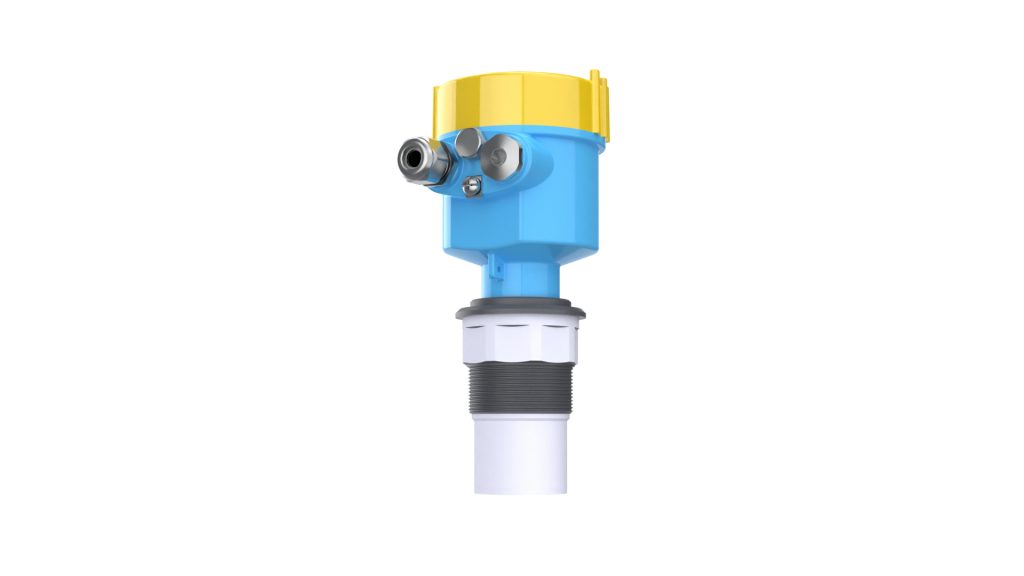
Ultrasonic level meters are another common type of non-contact liquid level measuring instrument. The probe emits ultrasonic pulses, which are reflected back after reaching the liquid surface. The instrument calculates the distance based on the propagation time of the sound wave and then converts it into liquid level height. Ultrasonic level meters are suitable for wastewater tanks, sewage tanks, sedimentation tanks, open channels, reservoirs, storage tanks, and general corrosive liquid applications. They are easy to install, low in maintenance cost, and cost-effective.
Jiwei’s Uson-11 standard ultrasonic level meter is designed for continuous level measurement in various tanks and pools without flammable or explosive gases. It can be used in wastewater treatment, chemical processing, thermal power plants, ships, and other applications. The product adopts non-contact measurement, supports multiple measuring ranges, and provides an RS-485 communication interface. For wastewater treatment plants, ultrasonic level meters can be connected to PLCs or data acquisition terminals through RS485 to transmit real-time level changes, providing data support for pump start-stop control, aeration control, and overflow alarm.
Compared with a single analog output, ultrasonic level meters with RS485/Modbus communication are more suitable for multi-point monitoring. For example, a wastewater treatment plant may need to monitor the levels of an equalization tank, sedimentation tank, sludge tank, clean water tank, and dosing tank at the same time. Through a Modbus bus, multiple level meters can be connected to one control system, reducing wiring complexity and improving data acquisition efficiency.
7. Typical Application Scenarios of Modbus Level Meters
In the environmental protection and water treatment industry, Modbus level meters are often used for sewage tanks, wastewater tanks, sedimentation tanks, dosing tanks, sludge tanks, and open-channel water level monitoring. After reading the level data through Modbus, the PLC can automatically control lift pumps, drainage pumps, dosing pumps, and valves to ensure stable system operation.
In the chemical industry, Modbus radar level meters can be used in raw material storage tanks, reactors, solvent tanks, acid and alkali tanks, and intermediate tanks. Chemical sites often have high requirements for safety, stability, and explosion-proof performance. Digital communication helps the control room monitor tank levels and abnormal device status in time, reducing the risks associated with manual inspection.
In the food and pharmaceutical industries, non-contact radar level meters are suitable for liquid preparation tanks, fermentation tanks, mixing tanks, and clean containers. Through Modbus communication, level data can be connected with batch production systems, CIP cleaning systems, and automatic dosing systems to achieve more precise process control.
In hydrology and water management, radar water level meters can be used in rivers, lakes, reservoirs, sluices, pump stations, and urban drainage systems. After data is uploaded through Modbus or a gateway, the platform can perform water level trend analysis, over-limit alarm, remote monitoring, and flood control scheduling.
In powder and granular material silo applications, radar level meters can be used to measure coal powder, mineral powder, cement, plastic pellets, grain, and other solid materials. Modbus communication can transmit material level height, inventory percentage, and alarm status to DCS or MES systems, helping enterprises realize digital inventory management.
8. What Parameters Should Be Considered When Selecting a Modbus Level Meter?
When selecting a level meter with Modbus communication, users should not focus only on the communication interface. The working conditions must also be considered. First, it is necessary to confirm whether the measured medium is liquid, solid particles, or powder. Then users should confirm the measuring range, accuracy, blind zone, process temperature, process pressure, medium corrosiveness, protection rating, and explosion-proof requirements. For complex liquid level applications, radar level meters are often preferred. For open tanks, wastewater pools, and conventional applications, ultrasonic level meters may be a suitable choice. For hydrological, water management, and outdoor monitoring applications, radar water level meters with high protection ratings and strong environmental adaptability are recommended.
In terms of communication, users should confirm whether the instrument supports RS485/Modbus RTU, Modbus TCP, or a combination of HART and Modbus outputs. It is also important to confirm the default slave address, baud rate, parity, data bits, stop bits, register addresses, and data format. During engineering commissioning, the PLC program, configuration software, and instrument parameters must be consistent. Otherwise, problems such as communication failure, data offset, or abnormal readings may occur.
Field wiring is also important. RS485 bus communication should generally use shielded twisted-pair cables. Attention should be paid to A/B polarity, and strong electrical interference should be avoided. When multiple devices are networked, each slave address must be unique. For long-distance communication, terminal resistors, grounding methods, and repeaters should be considered according to site conditions. For projects requiring remote monitoring, a data collector or industrial gateway can be used to convert RS485/Modbus RTU data into Ethernet, 4G, NB-IoT, or cloud platform interfaces.
9. Modbus Helps Level Measurement Move from Single-Point Display to Intelligent Networking
In the past, many level meters were only responsible for local display or outputting one analog signal, and the value of the data was limited. With the development of industrial automation and industrial IoT, users are no longer satisfied with simply “seeing a level value.” They now expect real-time data acquisition, remote viewing, automatic alarm, trend analysis, and predictive maintenance. Modbus is an important bridge between field instruments and upper-level systems.
For enterprises, using level meters that support Modbus can improve data transparency, reduce manual meter reading and inspection, and enhance the interlocking capability of control systems. For engineering integrators, Modbus is mature, well documented, and highly compatible, making it easy to integrate with PLCs, HMIs, configuration software, and SCADA systems. For operation and maintenance personnel, digital communication helps them quickly judge instrument status, locate fault causes, and optimize maintenance plans.
10. Conclusion: Understanding Modbus Helps You Choose the Right Intelligent Level Meter
In summary, Modbus is a mature, open, and practical industrial communication protocol widely used for data exchange among PLCs, instruments, sensors, and monitoring systems. It is not RS485 itself, but a data communication rule that can run on serial ports, Ethernet, and other communication media. For liquid level, material level, and water level measurement applications, Modbus enables level meters to evolve from traditional measuring instruments into intelligent data nodes, supporting more efficient automatic control and remote operation.
Based on related product information from Jiwei’s official website, radar level meters, radar water level meters, ultrasonic level meters, and other level measurement products are developing toward higher accuracy, non-contact measurement, intelligent algorithms, wireless debugging, and digital communication. For users in chemical processing, water management, environmental protection, food, pharmaceuticals, power generation, building materials, and other industries, selecting level meters that support RS485/Modbus can meet field measurement requirements while also laying a solid foundation for PLC control, SCADA monitoring, and industrial IoT construction.
If your project requires centralized data acquisition from multiple liquid level meters, material level meters, or water level meters, or if you want to connect field level data to PLCs, DCS systems, host computers, and remote platforms, Modbus level meters are a solution worth serious consideration.