Accurate condensate tank level measurement plays an important role in the safety, energy efficiency, and automation of a sugar processing plant.
During the sugar boiling and crystallization process, steam is used to heat sugar liquor inside vacuum pans or boiling vessels. As the steam transfers heat to the process, it condenses and must be collected, balanced, and returned through the condensate system. Stable control of this condensate is essential for maintaining steam pressure, preventing tank overfilling, protecting pumps, and reducing energy loss.
However, condensate tanks connected to sugar boiling equipment are not easy measurement applications. High temperatures, dense water vapor, rapid condensation, pressure fluctuations, turbulent liquid surfaces, and limited installation space can all interfere with conventional level instruments.
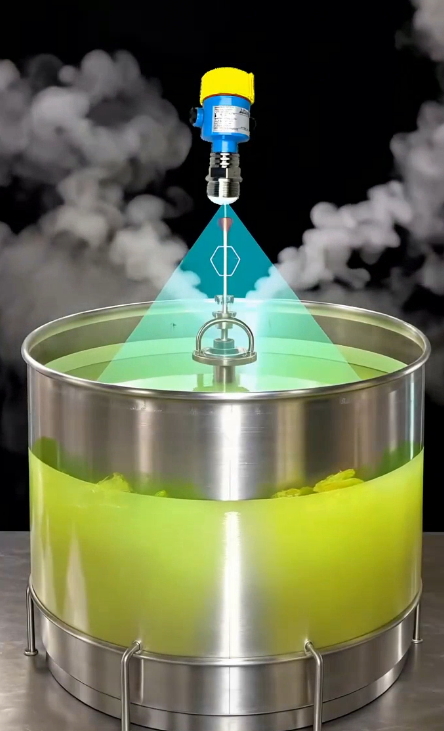
To improve measurement stability, a sugar processing plant selected a JWrada® 80 GHz radar level meter for continuous, non-contact level measurement in a pressurized condensate equalization tank.
The radar instrument provided a stable level signal under changing steam and temperature conditions while supporting automatic pump and valve control through the plant’s distributed control system.
This application demonstrates how high-frequency radar technology can help sugar mills and other food-processing facilities achieve more reliable condensate management with less maintenance.
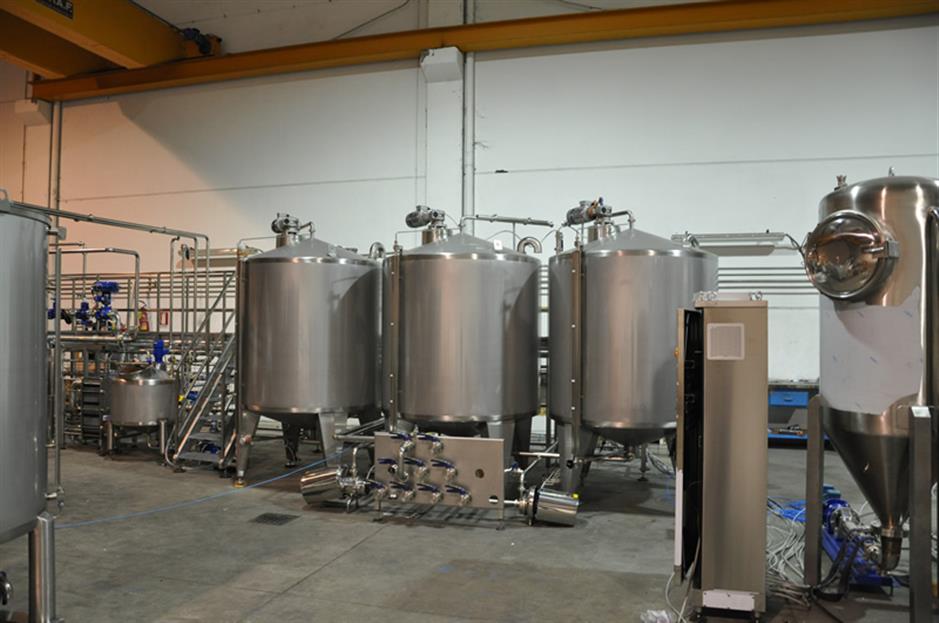
The Role of the Condensate Tank in Sugar Production
Sugar production involves several heating, evaporation, concentration, and crystallization stages. In the boiling section, sugar liquor is heated inside vacuum pans until it reaches the required concentration and crystal condition.
Steam is commonly supplied to the heating jacket or calandria of the boiling equipment. After transferring thermal energy, the steam becomes condensate. This hot condensate still contains valuable heat and should be recovered efficiently rather than discharged or allowed to accumulate unpredictably.
A condensate equalization tank collects the returning condensate and helps stabilize pressure and flow within the steam heating system. Depending on the process design, the measured level may be used to control:
- Condensate discharge pumps
- Drain or return valves
- Steam control valves
- High- and low-level alarms
- Pump dry-running protection
- Tank overflow protection
- Condensate recovery sequences
- Interlocks between heating and drainage equipment
An unreliable level signal can disrupt these control functions. A falsely high reading may activate a pump unnecessarily, while a falsely low reading may delay condensate discharge and increase the risk of tank overfilling or unstable steam-system pressure.
For this reason, continuous condensate tank level measurement must remain dependable even when process conditions change rapidly.
Application Conditions at the Sugar Mill
The condensate equalization tank in this project received hot condensate from the jackets of sugar boiling vessels.
The tank had an approximate diameter of 1,206 mm and an overall height of 2,162 mm. It was a compact, enclosed vessel with limited space for instrument installation at the top.
Typical operating conditions included:
- Condensate temperature between approximately 90°C and 130°C
- Operating pressure of approximately 0.2 to 0.4 MPa
- A humid vapor space containing hot steam
- Frequent condensation on internal surfaces
- Rapid level changes during draining and condensate return
- A relatively small vessel diameter
- Restricted top-entry installation space
- Continuous connection to the plant control system
The measurement range was configured from 0 to 2,000 mm, leaving a suitable margin below the total vessel height.
Although the measured liquid was primarily condensate, the environment above the liquid surface was highly dynamic. Steam concentration, vapor density, internal reflections, droplets, and temperature gradients could change throughout the production cycle.
These conditions had previously made stable level measurement difficult.
Why Condensate Tank Level Measurement Is Challenging
High Temperature and Pressure
Level instruments installed on condensate tanks must tolerate elevated process temperatures and pressure without signal instability or premature seal failure.
Temperature changes may occur during startup, full production, cleaning, shutdown, or changes in steam demand. Instrument materials, process seals, antenna construction, and housing protection must therefore be selected for the actual process conditions.
The transmitter must also remain reliable during repeated heating and cooling cycles.
Steam Above the Liquid Surface
The vapor space of a hot condensate tank may contain a dense layer of steam. This can be problematic for measurement technologies that depend heavily on sound propagation or direct contact with the process.
For example, changes in vapor composition and temperature can influence the propagation of an ultrasonic signal. Heavy steam may weaken the return signal or cause unstable readings.
Mechanical technologies may also be affected by turbulence, pressure changes, deposits, or moving components.
A suitable radar level meter uses electromagnetic waves rather than acoustic energy, making it better suited to vapor-filled process vessels when correctly selected and installed.
Condensation on the Antenna and Vessel Roof
As hot vapor contacts cooler surfaces, droplets form on the tank roof, nozzle, and exposed instrument components.
Condensation may create additional reflections or attenuate the measurement signal. If the instrument cannot distinguish the true product surface from internal interference, the indicated level may jump, drift, or become temporarily unavailable.
The antenna design, operating frequency, signal-processing capability, and installation position all influence performance under these conditions.
Rapidly Changing Liquid Levels
Condensate may enter the tank intermittently and be discharged quickly when a pump or control valve starts.
The level transmitter must follow these changes without losing the true echo. Excessive damping can delay the control response, while insufficient filtering may cause the output to react to turbulence or false echoes.
A reliable instrument must balance fast response with stable signal processing.
Small Vessel Diameter
The tank in this project was only about 1.2 meters in diameter. Internal pipes, inlet streams, tank walls, welds, and nozzles could all produce unwanted reflections.
A wide measurement beam would increase the possibility of detecting these structures. The installation therefore required a compact radar instrument with a focused beam and a carefully selected mounting position.
Hygiene and Maintenance Requirements
Although the condensate does not have the same properties as concentrated sugar liquor, the system is part of a food-production process. Equipment should therefore be designed with suitable process materials and a construction that minimizes contamination and maintenance risks.
A non-contact transmitter offers an important advantage because there is no probe extending deeply into the liquid and no moving measuring element inside the tank.
Why 80 GHz Radar Is Suitable for This Application
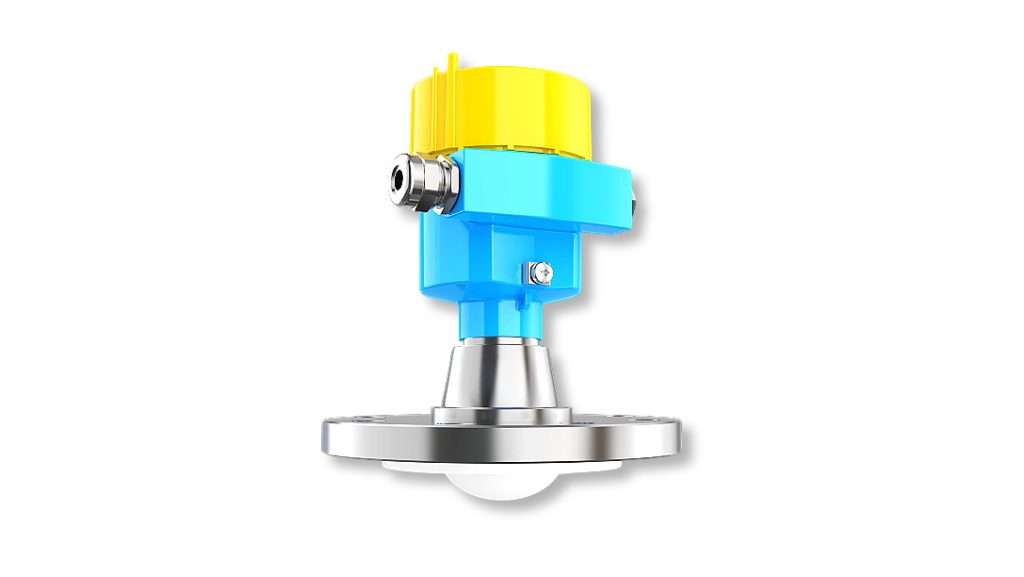
The JWrada® radar level meter uses frequency-modulated continuous-wave technology at an operating frequency of 80 GHz.
The transmitter sends a high-frequency microwave signal toward the liquid surface. The surface reflects part of the signal back to the antenna. By evaluating the frequency difference between the transmitted and returned signals, the instrument calculates the distance between the antenna and the liquid.
The level is then determined using the configured tank reference points.
For condensate tank applications, 80 GHz radar provides several practical benefits.
Focused Measurement Beam
A high operating frequency allows the radar to use a relatively narrow, focused beam.
This is beneficial in compact tanks because the instrument can be aimed at a clear area of the liquid surface while avoiding walls, pipes, inlet structures, heating elements, and other internal obstructions.
A focused beam also helps reduce false reflections in narrow vessels.
Strong Echo Resolution
Condensation, tank nozzles, and internal structures may produce several echoes at different distances.
Advanced echo processing enables the transmitter to evaluate these reflections and identify the most likely liquid-surface signal. The ability to separate closely positioned echoes is especially valuable in a short measurement range where several reflective surfaces may be located near one another.
Non-Contact Operation
The radar antenna measures from above the liquid without requiring a float, displacer, pressure tube, or long probe in the process.
This reduces the risk of mechanical wear, blockage, coating, and damage caused by turbulent flow. It also minimizes direct exposure of measuring components to the hot condensate.
Stable Performance Under Changing Vapor Conditions
Radar signals are less dependent on air or vapor properties than ultrasonic signals. Temperature gradients and steam can still influence the overall application, but a properly configured radar transmitter is generally well suited to hot vapor spaces.
This makes radar an effective choice for condensate tanks, boiler return systems, flash tanks, and similar thermal processes.
Compatibility with Process Automation
The selected radar level meter can provide standard industrial signals such as 4–20 mA with HART communication. Depending on the selected configuration, Modbus communication may also be available.
These outputs allow the instrument to be integrated with a PLC, DCS, remote terminal unit, or local control panel.
Digital communication also supports commissioning, diagnostics, parameter adjustment, and echo-curve analysis.
The JWrada® Radar Level Measurement Solution
For the sugar mill application, Jiwei Automations recommended an 80 GHz JWrada® radar level meter configured for the vessel’s temperature, pressure, process connection, and measurement range.
The solution was selected around several application requirements:
- Continuous non-contact measurement
- Stable operation in a steam-filled vessel
- Suitability for high-temperature condensate
- Compact top-mounted construction
- Focused measurement in a narrow tank
- Fast response to changing levels
- 4–20 mA output for process control
- HART communication for commissioning and diagnostics
- Low routine maintenance requirements
The measuring range was programmed from 0 to 2,000 mm. This range covered the required operating level while leaving a margin below the physical tank height of 2,162 mm.
The transmitter output was connected to the plant’s DCS, where the level signal was used for condensate pump and valve control.
Because radar level meter specifications can vary by model and process connection, the final antenna material, pressure rating, temperature rating, connection size, and certification should always be confirmed during instrument selection.
Installation Strategy
Correct installation is just as important as selecting the right measurement technology.
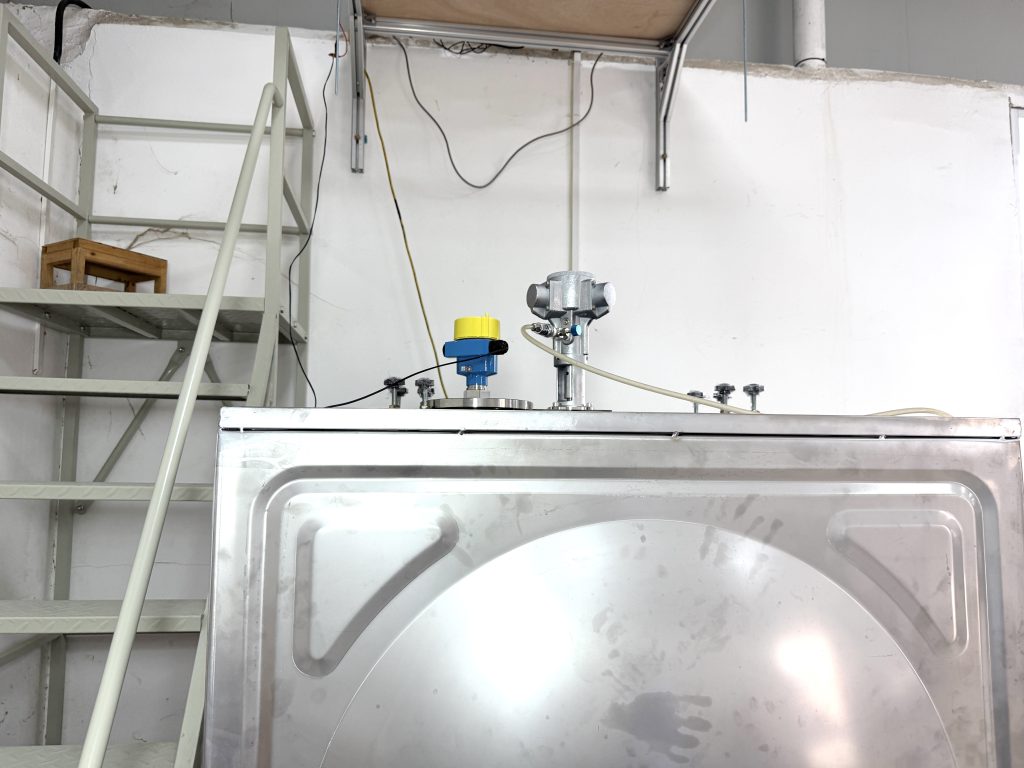
The radar level meter was mounted vertically on the top of the condensate tank. The installation point was chosen to provide a clear path between the antenna and the liquid surface.
Several installation principles were followed.
Avoiding the Condensate Inlet
The transmitter was positioned away from the direct condensate return stream.
Installing directly above an inlet can expose the radar to splashing, turbulence, and rapidly moving liquid. The instrument may then detect the inlet flow rather than the average liquid surface.
A calmer measurement area normally provides a more stable echo.
Avoiding Steam and Return Pipes
The antenna beam was directed away from internal pipes and other reflective structures.
Even with a focused radar beam, nearby metal objects can create false echoes. Their locations should therefore be considered before selecting the nozzle position.
Maintaining Vertical Alignment
The transmitter was installed vertically so that the radar beam was directed toward the liquid surface rather than toward the tank wall.
A tilted installation may weaken the true reflection and increase interference from internal surfaces.
Selecting a Suitable Nozzle
The process nozzle was kept compatible with the selected antenna and installation design.
A nozzle that is too narrow, too long, or internally obstructed can interfere with the radar signal. During selection, the nozzle diameter, nozzle height, weld quality, and antenna position should be checked against the manufacturer’s recommendations.
Protecting the Electronics
The housing and cable entry were installed to prevent moisture ingress. Cables were routed with suitable sealing and strain relief, and the instrument was grounded according to the site’s electrical practices.
These details are particularly important in humid areas where steam and washdown water may be present.
Commissioning and Echo Optimization
After installation, the radar level meter was configured using the required empty and full reference points.
The engineering team then reviewed the echo curve through HART communication. Echo-curve analysis made it possible to confirm that the instrument was detecting the actual condensate surface and not a fixed reflection from the nozzle, tank wall, or internal pipework.
Commissioning included:
- Entering the vessel height and measurement range
- Setting the empty and full calibration points
- Checking the 4–20 mA output direction
- Confirming the response time and damping value
- Reviewing the echo curve at different liquid levels
- Identifying fixed interference signals
- Testing high- and low-level control points
- Verifying pump and valve interlocks through the DCS
- Comparing the radar reading with the actual process condition
- Saving the final parameters for maintenance records
The damping and response settings were adjusted to follow real condensate level changes without transmitting unnecessary fluctuations caused by surface turbulence.
Commissioning under several operating conditions was important. A signal that appears stable when the tank is cold and stationary may behave differently after steam enters the vessel and condensation begins.
The final tests therefore included normal filling, rapid draining, pump startup, and high-steam operating conditions.
Operating Results
Following commissioning, the radar level signal remained smooth during normal production. The transmitter continued tracking the liquid surface during rapid filling and draining, and the DCS received a stable signal for automatic condensate control.
According to the project record, the system operated continuously for six months without reported signal drift or false level alarms.
The improved level signal allowed the plant to control the condensate discharge pump more precisely. Operators no longer needed to depend as heavily on frequent manual level checks, and the pump starting and stopping sequence became more consistent.
The sugar mill also reported:
- More stable automatic condensate discharge
- Fewer unnecessary manual inspections
- Reduced false level fluctuations
- Improved pump and valve control
- Longer intervals between routine maintenance
- Better utilization of steam and recovered condensate
- An estimated steam energy reduction of approximately 8% in this specific application
The previous maintenance interval was approximately once per month. After the radar installation, the reported interval was extended to approximately once per quarter.
These results are specific to the project and should not be treated as guaranteed performance for every plant. Actual energy savings and maintenance reductions depend on the original control system, operating practices, tank design, steam balance, and instrument configuration.
Operational Benefits for Sugar Mills
Greater Process Reliability
A stable condensate level signal helps the automation system make better control decisions.
Reliable measurement reduces the possibility of unnecessary pump cycling, delayed discharge, overflow conditions, or interruptions caused by false alarms.
Lower Maintenance Requirements
Because radar measurement is non-contact, there are no floats, linkages, displacers, or moving measuring parts inside the condensate.
The instrument is therefore less vulnerable to mechanical sticking, wear, and buildup than many contact-based technologies.
Better Energy Management
Hot condensate contains recoverable thermal energy. Maintaining effective condensate collection and return can help reduce steam and water losses.
Accurate level measurement does not create energy savings by itself, but it provides the control system with the information needed to operate pumps and valves more efficiently.
Improved Equipment Protection
Correct level control can help protect condensate pumps against dry running and prevent the tank from reaching an unsafe high level.
Alarm points can also be configured to alert operators before the process reaches a critical condition.
Easier Integration
Standard 4–20 mA, HART, and optional digital communication simplify connection to modern control systems.
Maintenance teams can use diagnostic information to investigate signal conditions without immediately removing the instrument from service.
How to Select a Radar Level Meter for a Condensate Tank
Selecting a radar transmitter should begin with the process conditions rather than the measuring range alone.
Provide the instrument supplier with the following information:
- Tank height and diameter
- Maximum and minimum liquid level
- Normal and maximum process temperature
- Normal and maximum process pressure
- Condensate composition
- Amount and density of steam
- Presence of foam, turbulence, or splashing
- Nozzle diameter and height
- Locations of inlets, outlets, and internal pipes
- Required process connection
- Wetted-material requirements
- Required electrical output
- Hazardous-area classification
- Housing material and ingress-protection requirement
- Required local display or wireless configuration
- Applicable food, sanitary, or plant standards
Photographs and vessel drawings are also extremely useful. They allow the supplier to review possible mounting positions and identify interference risks before shipment.
The selected model should have a suitable temperature and pressure rating with an appropriate engineering margin. Materials should be compatible with the condensate and any chemicals used during cleaning.
Other Applications for 80 GHz Radar Level Measurement
The same measurement approach can be considered for other hot-water and condensate applications, including:
- Boiler condensate tanks
- Steam return vessels
- Flash tanks
- Deaerator-related vessels
- Hot-water storage tanks
- Heat-exchanger condensate receivers
- Food-processing condensate return systems
- Beverage production vessels
- CIP return tanks
- Chemical condensate tanks
- Pharmaceutical process vessels
- Energy recovery systems
Every application should still be evaluated individually, particularly when pressure, temperature, corrosion, hazardous-area certification, or sanitary construction is involved.
Frequently Asked Questions
Can a radar level meter measure through steam?
A radar level meter can operate effectively in many steam-filled vessels because it uses electromagnetic waves rather than sound waves. However, performance depends on the radar frequency, antenna design, signal processing, process temperature, steam density, condensation, installation position, and vessel geometry.
The instrument should be selected specifically for the application rather than chosen only by its maximum measuring range.
Is radar better than ultrasonic measurement for hot condensate?
Radar is often more suitable for hot condensate tanks because changes in temperature and vapor composition can affect ultrasonic signal propagation.
Ultrasonic instruments may work in moderate conditions, but dense steam, rapid temperature changes, and heavy condensation can make measurement more difficult. Radar is normally less dependent on these vapor-space conditions.
Does condensation on the antenna cause measurement errors?
Heavy condensation may reduce signal strength or produce interference, particularly when the antenna, nozzle, and installation position are not suitable.
An 80 GHz radar with strong echo processing can help distinguish the liquid-surface echo from unwanted reflections. Correct mounting, a compatible antenna material, and proper commissioning remain essential.
Can radar be installed on a small tank?
Yes. A focused 80 GHz radar beam is especially useful in small tanks and vessels with restricted installation space.
The transmitter should be mounted where the beam can reach the liquid surface without intersecting the wall, inlet stream, ladder, pipe, agitator, or other obstruction.
How much maintenance does a radar level meter require?
Routine maintenance is generally low because the measurement is non-contact and there are no moving parts inside the vessel.
Periodic inspection may still be required to check the housing, cable entries, process seal, antenna condition, buildup, and diagnostic history. Maintenance frequency should be based on the actual process and plant procedures.
Can the radar signal control the condensate pump directly?
The radar transmitter normally sends its continuous measurement signal to a PLC, DCS, controller, or relay system. The control system then starts or stops the pump according to programmed level setpoints.
High-level and low-level switches may also be installed as independent protection where required by the plant’s safety philosophy.
What output signals are available?
JWrada® radar level meters can be configured with common industrial outputs such as two-wire 4–20 mA with HART. Selected configurations may also support RS485 and Modbus communication.
Available outputs depend on the specific model and electrical design.
Conclusion
Hot condensate tanks in sugar processing plants combine several difficult measurement conditions: high temperature, steam, condensation, rapid level changes, pressure variation, and limited installation space.
An 80 GHz radar level meter provides a practical solution by measuring continuously from above the liquid without moving parts or direct contact with the condensate.
In this sugar mill application, the JWrada® radar level meter delivered a stable signal for DCS-based pump and valve control. The plant reported fewer false fluctuations, reduced inspection requirements, improved condensate management, and longer maintenance intervals.
For sugar mills seeking to modernize steam and condensate control, properly selected and installed radar level measurement can improve process visibility while supporting safer, more efficient operation.