1. What Are Radar and Ultrasonic Level Transmitters?
Level measurement is an essential part of process control, inventory management, and operational safety in industries such as chemicals, petroleum, water treatment, food and beverage, pharmaceuticals, power generation, building materials, metallurgy, mining, and bulk storage.
Radar level transmitters and ultrasonic level transmitters are two widely used non-contact level measurement instruments. Both can be used to measure the level of liquids or bulk solids in storage tanks, silos, wastewater basins, reactors, vessels, and other industrial containers.
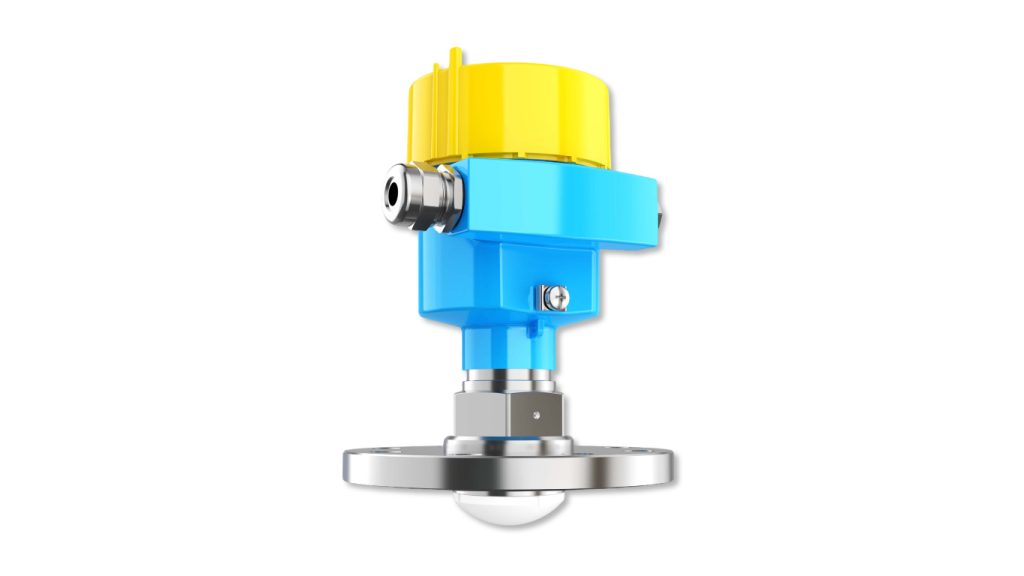
Although the two technologies may look similar in terms of appearance, installation position, and basic application, they use completely different types of signals.
A radar level transmitter uses electromagnetic waves, while an ultrasonic level transmitter uses mechanical sound waves. This fundamental difference determines how each technology performs under changing temperature, pressure, vapor, dust, foam, vacuum, and other demanding process conditions.
In general, ultrasonic level transmitters are cost-effective, simple in construction, and easy to install. They are suitable for ambient-temperature, atmospheric-pressure, and relatively stable environments.
Radar level transmitters generally provide higher accuracy, stronger resistance to interference, and broader process compatibility. They are often preferred for high-temperature, high-pressure, vaporous, dusty, corrosive, or otherwise challenging industrial applications.
2. How Does a Radar Level Transmitter Work?
A radar level transmitter is normally mounted at the top of a tank, vessel, or silo. During operation, its antenna emits high-frequency electromagnetic waves toward the surface of the measured material.
When the radar signal reaches the liquid or solid surface, part of the energy is reflected back toward the antenna. The instrument receives the reflected signal and calculates the distance between the antenna and the material surface based on signal travel time or frequency variation.
Once the total reference height of the vessel is known, the material level can be calculated as follows:
Level height = Reference vessel height − Distance from the transmitter to the material surface
Industrial radar level transmitters commonly operate at frequencies such as 6 GHz, 26 GHz, and 80 GHz.
A higher radar frequency usually produces a narrower beam angle and more concentrated signal energy. This makes high-frequency radar especially useful for small tanks, narrow vessels, complex internal structures, and applications where the instrument must avoid obstacles such as pipes, ladders, heating coils, and agitators.
Today, 80 GHz radar level transmitters are widely used in chemical storage tanks, wastewater facilities, raw-material silos, process vessels, and precision measurement applications.
Radar level instruments can also be divided into non-contact radar level transmitters and guided-wave radar transmitters.
A non-contact radar transmitter sends electromagnetic waves through the open space above the material without physically touching the process medium. A guided-wave radar transmitter sends electromagnetic pulses along a probe, rod, cable, or coaxial structure.
This article focuses primarily on the comparison between non-contact radar level transmitters and ultrasonic level transmitters.
3. How Does an Ultrasonic Level Transmitter Work?
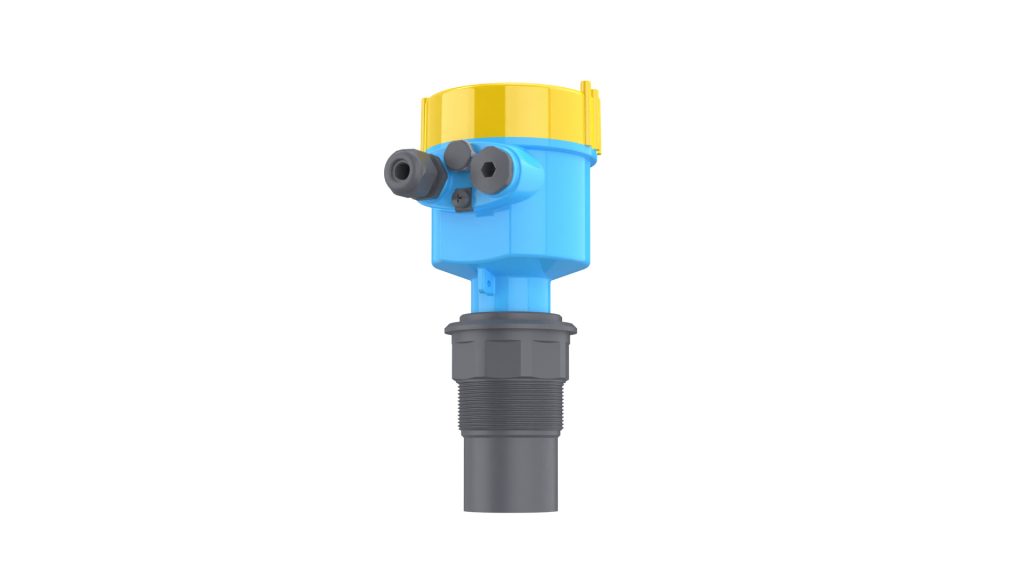
An ultrasonic level transmitter is also normally installed at the top of a tank, basin, or vessel.
The transmitter sends high-frequency ultrasonic pulses toward the surface of the measured material. When the sound wave reaches the liquid or solid surface, it is reflected back to the sensor.
The instrument measures the round-trip travel time of the ultrasonic pulse and calculates the distance between the sensor and the material surface using the speed of sound. The measured distance is then converted into a liquid level or solid material level.
Ultrasonic waves are mechanical waves. Unlike electromagnetic radar signals, they require air, gas, liquid, or another physical medium through which to travel.
As a result, ultrasonic measurement can be affected by air temperature, gas composition, pressure, vapor, turbulence, and air movement.
The speed of sound changes with temperature. For this reason, most ultrasonic level transmitters include built-in temperature compensation. However, when there are significant temperature gradients, heavy vapor, strong air currents, or changing gas compositions inside a vessel, temperature compensation alone may not completely eliminate measurement errors.
4. Key Differences Between Radar and Ultrasonic Level Transmitters
| Comparison Item | Radar Level Transmitter | Ultrasonic Level Transmitter |
|---|---|---|
| Measurement signal | Electromagnetic wave | Mechanical sound wave |
| Requires a propagation medium | No | Yes, normally air or gas |
| Suitable for vacuum | Generally yes | No |
| Sensitivity to temperature | Relatively low | Relatively high |
| Sensitivity to pressure | Relatively low | More significant |
| Resistance to vapor | Generally good | Often poor in heavy vapor |
| Performance in dust | High-frequency radar generally performs well | Sound attenuation and false echoes may occur |
| Performance with foam | Depends on foam properties | Thick foam may absorb sound waves |
| Typical accuracy | Generally higher | Generally lower than radar |
| Beam angle | Narrow, especially with high-frequency radar | Usually wider |
| Installation space | More flexible in narrow or complex vessels | Requires a larger unobstructed sound path |
| Purchase price | Usually higher | Usually lower |
| Typical applications | Chemical tanks, pressure vessels, silos, vaporous processes | Water tanks, wastewater wells, open channels, atmospheric tanks |
The values in this table represent general industry tendencies.
Actual measurement range, accuracy, blind zone, environmental resistance, and reliability depend on the manufacturer, operating frequency, antenna or transducer design, signal-processing algorithm, installation quality, and process conditions.
Final instrument selection should always be based on the technical specifications of the specific product.
5. Measurement Accuracy Comparison
In most industrial applications, radar level transmitters provide higher accuracy and better long-term stability than ultrasonic level transmitters.
Radar instruments use electromagnetic waves, whose propagation is generally not significantly affected by changes in air temperature, humidity, or pressure. This enables radar transmitters to maintain stable measurement performance under changing process conditions.
High-performance radar level transmitters can achieve millimeter-level accuracy. They are suitable for applications involving precise process control, inventory monitoring, custody-related measurements, small vessels, or strict operational requirements.
Ultrasonic level transmitters are more likely to be affected by measurement distance, ambient temperature, internal temperature gradients, gas composition, vapor, echo strength, and installation position.
They are therefore commonly used for general process monitoring, pump control, overflow protection, and level alarms rather than high-precision inventory measurement.
However, accuracy should not be the only selection criterion.
For an open wastewater basin, rainwater collection tank, fire-water tank, or atmospheric clean-water vessel, an ultrasonic level transmitter may provide more than enough accuracy at a lower total cost.
Choosing a more expensive technology is not always necessary when the application conditions are simple and stable.
6. Temperature and Pressure Resistance
Radar level transmitters generally offer much better adaptability to high-temperature and high-pressure processes than ultrasonic level transmitters.
Electromagnetic waves are only minimally affected by changes in the temperature and pressure of the gas space above the measured material.
By selecting the appropriate antenna, process connection, sealing material, cooling arrangement, and pressure rating, radar level transmitters can be used on high-temperature reactors, pressure vessels, steam-related equipment, heated tanks, and chemical processing systems.
Ultrasonic level transmitters calculate distance based on the speed of sound. Because the speed of sound changes with temperature and gas conditions, measurement errors can increase when process temperatures fluctuate significantly.
Conventional ultrasonic instruments are normally intended for atmospheric-pressure or low-pressure applications. If the tank contains high pressure, strong vapor, changing gas composition, or substantial temperature gradients, the returning echo may become weak, unstable, or completely lost.
For high-temperature, high-pressure, vacuum, or complex gas-phase applications, radar level measurement is usually the preferred option.
7. Effects of Vapor, Mist, Condensation, and Airflow
When steam, vapor, mist, condensation, or strong airflow is present near the top of a vessel, ultrasonic level transmitters may experience substantial interference.
Vapor can absorb or scatter sound energy. Temperature gradients can change the path and velocity of the ultrasonic wave. Strong air currents can also deflect the sound pulse or make the returning echo unstable.
Radar signals generally penetrate ordinary vapor and mist more effectively. Radar level transmitters therefore tend to provide more stable measurements in steam-generating or vaporous applications.
However, radar technology is not completely immune to process buildup.
If heavy condensation, crystallization, coating, or corrosive deposits accumulate on the radar antenna, both signal transmission and echo reception may be weakened.
For heated tanks, reactors, or steam-rich vessels, the radar transmitter should be selected with appropriate temperature resistance, condensation protection, sealing materials, antenna design, and anti-buildup features.
Where severe condensation is expected, purge systems, protective covers, isolation devices, or specially designed antennas may be required.
8. Dusty Environments and Solid Level Measurement
Silos used in the cement, mining, grain, plastics, coal, power, and building-material industries often contain large amounts of airborne dust.
Dust can absorb, scatter, or weaken ultrasonic signals. This may reduce the effective measuring range of an ultrasonic level transmitter and lead to unstable readings, false echoes, or loss of signal.
High-frequency radar level transmitters use narrow, concentrated beams and generally perform better in dusty environments.
They are widely used to measure fly ash, cement, lime, ore, coal, plastic pellets, grain, sand, and other bulk solids.
Radar technology offers particular advantages in tall silos, narrow storage vessels, dusty filling operations, vessels containing internal structures, and applications with strong material impact during loading.
Bulk-solid surfaces are rarely flat. They may form peaks, slopes, cones, funnels, or irregular profiles.
The transmitter should therefore be positioned away from the filling stream and aimed at a representative area of the material surface.
Even a high-performance 80 GHz radar level transmitter can produce inaccurate readings if it is installed directly above the inlet or aimed at an unrepresentative material slope.
For short-range applications involving clean pellets or low-dust solids, an ultrasonic level transmitter may still be suitable, particularly when the available budget is limited.
9. Choosing a Level Transmitter for Foaming Applications
Foam is one of the most difficult conditions in non-contact level measurement.
When an ultrasonic signal encounters thick, soft, or low-density foam, much of the sound energy may be absorbed before it reaches the liquid surface. The transmitter may then receive no reliable echo.
Radar performance in foam depends on the foam thickness, density, moisture content, bubble structure, conductivity, and dielectric characteristics.
Dense or wet foam may reflect the radar signal. In such cases, the instrument may measure the top surface of the foam rather than the actual liquid level below it.
Dry, loose, or low-density foam may allow part of the radar signal to pass through.
It is therefore inaccurate to assume that radar will always measure through foam.
Before selecting an instrument, the user must determine the actual measurement objective:
- Is the required value the foam height?
- Is the required value the liquid level below the foam?
- Is the interface between foam and liquid the main measurement target?
For severe or highly variable foam, a field test may be necessary.
Guided-wave radar, differential-pressure transmitters, hydrostatic level instruments, or other measurement technologies may also need to be considered.
10. Influence of Dielectric Constant and Medium Properties
The strength of a radar echo is related to the dielectric properties of the measured medium.
In general, a material with a higher dielectric constant reflects more radar energy and produces a stronger return signal.
Water and many water-based solutions usually generate strong radar echoes. Some hydrocarbons, oils, solvents, liquefied gases, dry powders, and low-density materials have lower dielectric constants and may produce weaker reflections.
Modern high-frequency radar transmitters use sensitive electronics and advanced signal-processing algorithms, enabling them to measure many low-dielectric materials successfully.
Nevertheless, the dielectric constant, measurement range, surface condition, process temperature, and vessel geometry should still be evaluated during instrument selection.
Ultrasonic level measurement is not directly affected by the electrical dielectric constant of the liquid.
However, volatile liquids may release gases or vapors that interfere with ultrasonic propagation. Changing vapor composition can alter sound velocity and weaken the returning signal.
For sealed chemical tanks containing volatile solvents, radar level measurement is generally more reliable.
11. Measurement Range and Blind Zone Comparison
Both radar and ultrasonic level transmitters have a blind zone, also called a blocking distance or dead zone.
This is the area immediately below the sensor or antenna where reliable measurement cannot be guaranteed.
If the liquid or material level enters this region, the reading may become unstable, jump to full scale, freeze, or disappear.
An ultrasonic transducer continues to vibrate briefly after transmitting a sound pulse. It must stop vibrating before it can reliably receive the returning echo.
This creates a relatively noticeable near-field blind zone. Ultrasonic transmitters with longer measuring ranges often have larger blind zones.
High-frequency radar transmitters generally have smaller near-field blind zones. This makes them particularly useful for small vessels, short measuring distances, and applications where the level may approach the top of the tank.
Radar instruments also offer strong long-distance measurement capability and are commonly used on large storage tanks and tall silos.
When selecting an instrument, users should not consider only the manufacturer’s maximum stated range.
The following factors must also be evaluated:
- Near-field blind zone
- Beam angle
- Reflectivity of the medium
- Dust or vapor conditions
- Vessel internals
- Surface turbulence
- Required safety margin
The actual operating range should include sufficient margin. An instrument should not be expected to operate continuously at the absolute limit of its stated performance.
12. Installation Requirements
12.1 Radar Level Transmitter Installation
A radar level transmitter should be installed away from filling inlets, tank walls, ladders, reinforcing structures, heating coils, pipes, agitators, and other internal obstacles.
The mounting nozzle should not be unnecessarily long. Its internal surface should be smooth and free from weld protrusions or sharp edges.
Depending on the antenna design, the antenna may need to extend beyond the mounting nozzle, or the nozzle dimensions must comply with the manufacturer’s installation requirements.
For conical-bottom vessels and bulk-solid silos, the transmitter should be aimed toward the main measurement area.
If obstacles are located within the radar beam, measurement performance may be improved by:
- Changing the installation position
- Using an adjustable flange or aiming device
- Selecting a radar with a narrower beam angle
- Applying false-echo mapping
- Adjusting signal-processing parameters
The radar antenna should be kept clean.
For applications involving crystallization, coating, sticky materials, condensation, or buildup, an anti-adhesion antenna, purge connection, protective shield, or isolation arrangement may be required.
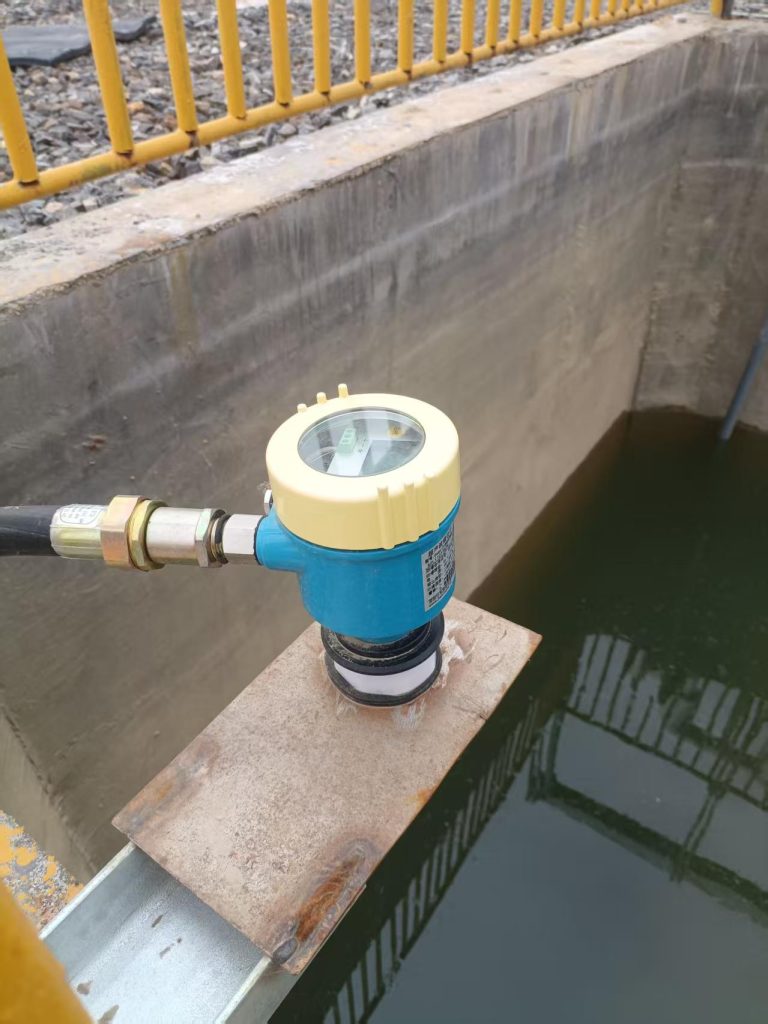
12.2 Ultrasonic Level Transmitter Installation
An ultrasonic level transmitter requires a relatively open and unobstructed sound path.
The transducer must normally be installed perpendicular to the liquid or material surface. If it is tilted, the returning echo may be reflected away from the sensor.
Pipes, brackets, ladders, agitators, beams, and tank walls should not enter the sound beam.
The sensor should not be installed directly above a filling inlet because falling material or incoming liquid can generate false echoes.
For outdoor installations, the transmitter should be protected from direct sunlight, rain, and condensation.
Direct sunlight can significantly heat the sensor housing and create a temperature difference between the internal sensor and the actual air inside the measuring path. This may reduce the effectiveness of temperature compensation.
Outdoor ultrasonic instruments should therefore be installed with an appropriate weather shield.
Ultrasonic level transmitters should also be positioned away from strong airflow, steam outlets, vacuum conditions, and rapidly changing gas environments.
13. Maintenance Costs and Service Life
Radar and ultrasonic level transmitters are both non-contact measurement instruments. They have no moving mechanical parts and generally require less routine maintenance than float, displacer, or mechanical level devices.
Ultrasonic level transmitters have relatively simple structures and lower purchase costs. They are well suited for projects containing many conventional water-level measurement points.
Routine maintenance mainly involves checking whether the transducer surface is affected by condensation, dirt, dust, scaling, or physical obstruction.
The mounting bracket, cable, electrical connection, and weather protection should also be inspected periodically.
Radar level transmitters are usually more expensive, but they often provide better stability in difficult process conditions.
Reliable radar measurement can reduce false alarms, process interruptions, emergency maintenance, repeated calibration, and production losses. These indirect savings may outweigh the higher initial purchase cost.
In high-temperature, high-pressure, corrosive, dusty, or vaporous applications, a properly selected radar transmitter may deliver a lower total lifecycle cost.
Instrument service life depends not only on the measurement principle but also on:
- Enclosure material
- Ingress protection rating
- Process seal design
- Antenna or transducer material
- Ambient temperature
- Process temperature
- Chemical corrosion
- Electrical power quality
- Lightning and surge protection
- Installation quality
It is therefore not possible to determine service life based only on whether an instrument uses radar or ultrasonic technology.
14. Price Difference and Economic Evaluation
In general, ultrasonic level transmitters cost less than radar level transmitters.
For simple applications involving atmospheric pressure, moderate temperature, no heavy vapor, no significant foam, and little dust, ultrasonic measurement can offer excellent value.
The price of a radar level transmitter depends on many factors, including:
- Operating frequency
- Measurement range
- Accuracy
- Antenna type
- Housing material
- Process connection
- Explosion-proof certification
- Temperature rating
- Pressure rating
- Corrosion resistance
- Communication protocol
- Display and configuration options
High-frequency, explosion-proof, corrosion-resistant, or high-temperature and high-pressure radar transmitters normally cost more than standard models.
Instrument selection should not be based only on initial purchase price.
Installation expenses, commissioning time, maintenance frequency, process downtime, replacement costs, false alarms, and operational risk should also be considered.
A low-cost instrument that frequently loses its signal or requires repeated maintenance may ultimately be more expensive than a higher-quality radar transmitter.
15. Recommended Applications
15.1 Applications Suitable for Ultrasonic Level Transmitters
Ultrasonic level transmitters are commonly used for:
- Clean-water tanks
- Wastewater wells
- Rainwater collection basins
- Fire-water tanks
- Atmospheric storage tanks
- Open channels
- Rivers and reservoirs
- Pump stations
- Sewage treatment facilities
- Low-dust bulk-solid storage
These applications normally involve moderate temperature, atmospheric pressure, limited vapor, and acceptable measurement accuracy requirements.
Ultrasonic level measurement is widely used in municipal water treatment, building water systems, environmental engineering, irrigation systems, drainage networks, and utility projects.
15.2 Applications Suitable for Radar Level Transmitters
Radar level transmitters are commonly used for:
- Chemical raw-material tanks
- Finished-product tanks
- Crude oil and fuel tanks
- Solvent storage tanks
- Reactors
- High-temperature water tanks
- Pressure vessels
- Liquefied-gas tanks
- Fly-ash silos
- Cement silos
- Coal bunkers
- Ore silos
- Grain storage silos
- Plastic pellet storage
- Corrosive-liquid tanks
Radar technology is usually preferred when the process involves vapor, dust, changing temperature, pressure, vacuum, agitation, corrosion, narrow installation space, or long measurement distances.
16. How to Choose Between Radar and Ultrasonic Level Measurement
A practical selection process should include the following steps.
Step 1: Identify the Measured Medium
Determine whether the material is a liquid, slurry, powder, granule, or other bulk solid.
Collect information about:
- Process temperature
- Process pressure
- Corrosiveness
- Viscosity
- Volatility
- Conductivity
- Dielectric constant
- Foam tendency
- Dust generation
- Surface turbulence
Step 2: Evaluate the Vessel Environment
Check whether the vessel contains:
- Vapor or steam
- Condensation
- Dust
- Foam
- Agitators
- Heating coils
- Internal pipes
- Ladders
- Structural supports
- Filling streams
- Strong airflow
Step 3: Define the Measurement Requirements
Confirm the required:
- Measuring range
- Accuracy
- Repeatability
- Blind zone
- Output signal
- Communication protocol
- Explosion-proof certification
- Ingress protection rating
- Response speed
- Alarm functions
Step 4: Review the Installation Conditions
For narrow tanks, complex internal structures, long mounting nozzles, and limited installation space, high-frequency radar generally provides a significant advantage.
Ultrasonic transmitters require a wider, unobstructed sound path and should be mounted perpendicular to the measured surface.
Step 5: Compare Initial and Long-Term Costs
For simple water-level applications, ultrasonic technology may be the most economical option.
For complex industrial processes, measurement stability and operational reliability should take priority over the lowest purchase price.
The selection principle can be summarized as follows:
For simple conditions, prioritize cost-effectiveness. For demanding conditions, prioritize reliability.
For atmospheric-pressure and moderate-temperature applications, ultrasonic measurement may be suitable. For high-temperature and high-pressure applications, radar is generally preferred.
For clean water and open basins, ultrasonic instruments are often sufficient. For vaporous, dusty, volatile, or complex processes, radar is usually the better choice.
17. Frequently Asked Questions
17.1 Which Is More Accurate: Radar or Ultrasonic Level Measurement?
Radar level transmitters generally provide higher accuracy and better stability, especially when temperature, pressure, or gas-phase conditions change.
However, in a stable clean-water basin, a properly installed ultrasonic transmitter can easily meet ordinary monitoring and control requirements.
17.2 Can an Ultrasonic Level Transmitter Be Used on a High-Temperature Tank?
This depends on the instrument’s temperature rating and the actual gas-space conditions.
High temperature changes the speed of sound and may generate steam, vapor, or temperature gradients. Standard ultrasonic level transmitters are therefore not normally recommended for high-temperature tanks with strong vapor.
17.3 Can Radar Measure Through Foam?
Not always.
Whether a radar signal can penetrate foam depends on the foam’s thickness, density, moisture content, and dielectric properties.
Some types of foam strongly reflect radar energy, causing the transmitter to measure the top of the foam instead of the liquid surface below it.
17.4 Why Does an Ultrasonic Level Transmitter Show Different Readings in Summer and Winter?
The speed of sound changes with air temperature.
Although most ultrasonic instruments use temperature compensation, seasonal errors may still occur when the vessel contains temperature stratification, steam, vapor, or changing gas composition.
17.5 Can a Radar Level Transmitter Work in a Vacuum?
Yes, in most cases.
Radar uses electromagnetic waves, which do not require air or gas as a propagation medium. Ultrasonic waves require a physical medium and therefore cannot operate properly in a vacuum.
17.6 Should a Wastewater Basin Use Radar or Ultrasonic Measurement?
For an open wastewater basin with limited foam, moderate temperature, and a restricted budget, an ultrasonic level transmitter may be suitable.
If the wastewater basin contains heavy foam, vapor, biogas, condensation, significant temperature changes, or demanding reliability requirements, radar measurement is generally the better choice.
17.7 Why Is Radar More Commonly Used for Solid Material Silos?
Bulk-solid silos frequently contain dust, sloping material surfaces, filling interference, and long measuring distances.
High-frequency radar offers a narrow beam angle and strong performance in dusty environments, making it more suitable for complex silo applications than ultrasonic measurement.
18. Conclusion
Radar level transmitters and ultrasonic level transmitters are both mature non-contact level measurement technologies.
Neither technology is universally better in every application. The best choice is the instrument that matches the actual process conditions and measurement requirements.
Ultrasonic level transmitters offer relatively low cost, simple installation, and good performance in atmospheric-pressure, moderate-temperature environments without significant vapor, dust, or foam. They are especially suitable for water, wastewater, open basins, and general-purpose liquid-level monitoring.
Radar level transmitters provide higher accuracy, stronger environmental adaptability, and more reliable performance in high-temperature, high-pressure, vacuum, vaporous, dusty, volatile, corrosive, and structurally complex applications.
In practical projects, users should evaluate the measured medium, vessel structure, measurement range, blind zone, required accuracy, explosion-proof requirements, process connection, installation limitations, and total budget.
Only when the correct measurement technology is selected, installed properly, and configured according to the process conditions can a level transmitter provide accurate, stable, and reliable long-term operation.