1. Why Do Underground Diesel Tanks Require More Reliable Level Measurement?
In industrial parks, data centers, hospitals, mines, power stations, and large manufacturing facilities, diesel generator sets are often used as an important part of emergency power supply systems. To save ground space and improve fuel storage safety, many sites choose underground diesel tanks as diesel storage units. Compared with above-ground tanks, underground diesel tanks offer advantages such as space saving, better protection, and strong environmental adaptability. However, they also bring more challenges to level measurement.
Diesel tanks are usually buried underground, with the tank opening located inside a narrow manhole. The site environment is often humid, subject to temperature differences, and inconvenient for maintenance. Traditional mechanical level gauges, float level switches, or contact-type instruments are prone to jamming, buildup, corrosion, and unstable readings in such applications. Once the level data becomes inaccurate, it may lead to frequent manual inspections and higher maintenance costs. In more serious cases, it may cause tank overflow, pump dry running, interrupted diesel supply, or even safety incidents.
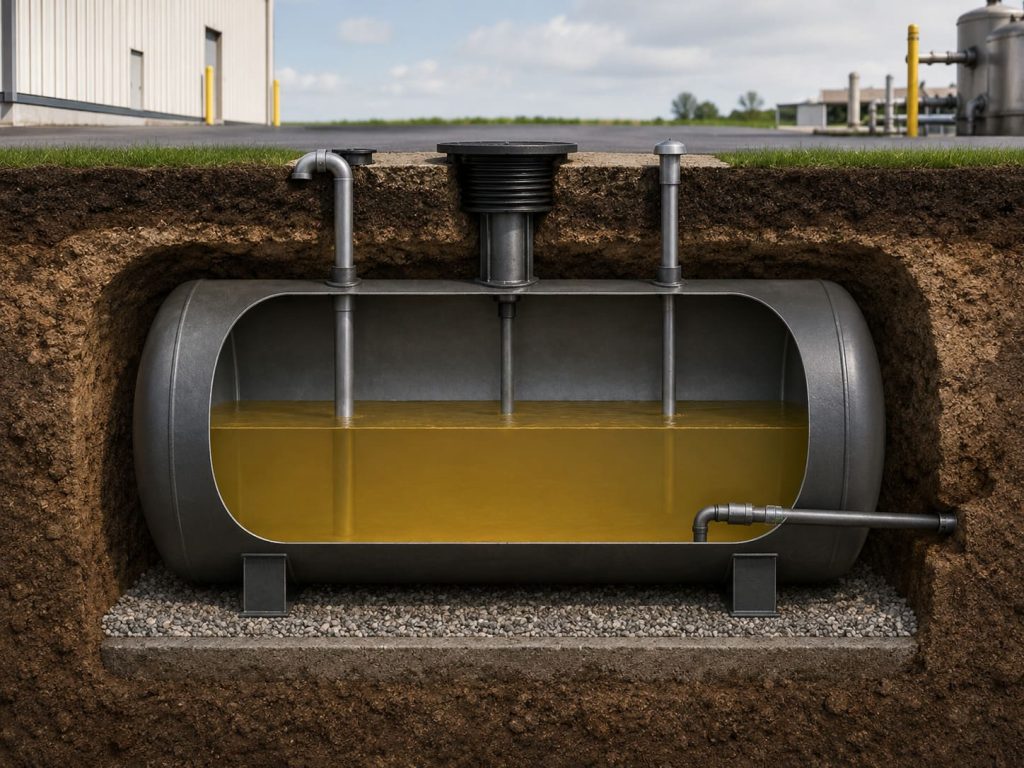
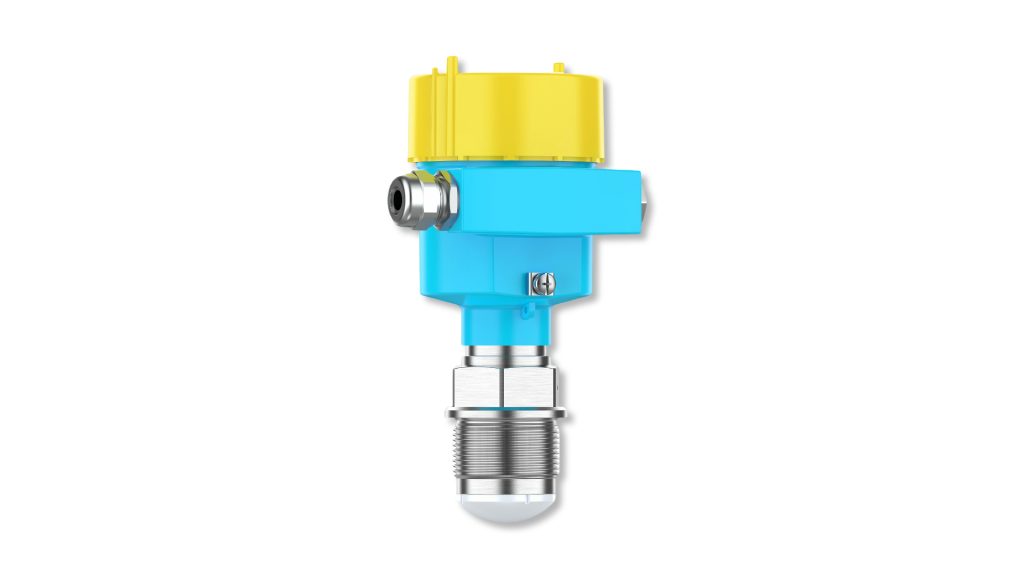
Therefore, level measurement for underground diesel tanks should not only be possible, but also stable over the long term. The instrument must adapt to low-dielectric media, humid and condensing environments, limited installation space, and the safety requirements of flammable and explosive areas. To address these challenges, the JIWEI JWrada®-32 radar level meter provides a stable and reliable solution for underground diesel tank level monitoring with its 80GHz FMCW radar technology, non-contact measurement, intelligent echo processing algorithm, and explosion-proof design.
2. Main Challenges in Underground Diesel Tank Level Measurement
2.1 Diesel Has a Low Dielectric Constant and Weak Echo Signal
Diesel is a low-dielectric liquid with relatively weak reflection capability. For some low-frequency radar meters or traditional measuring instruments, the liquid surface echo may not be strong enough, which can lead to signal loss, level jumping, or unstable readings. This is especially critical in shallow tanks, calm liquid surfaces, and limited tank spaces, where the instrument’s ability to identify weak echoes becomes particularly important.
The JWrada®-32 Radar Level Meter adopts 80GHz high-frequency radar technology, which provides a concentrated beam and high resolution, allowing it to capture liquid surface echoes more clearly. Meanwhile, JIWEI’s self-developed intelligent echo algorithm can identify false echoes and dynamically track the target echo, making level measurement of low-dielectric liquids such as diesel more continuous and stable.
2.2 Underground Manholes Are Humid and Prone to Condensation and Corrosion
Underground tanks remain in a buried environment for a long time. The manhole area is often highly humid, rainwater may accumulate during rainy seasons, and temperature differences inside and outside the tank may cause condensation. Contact-type instruments exposed to this environment for long periods are easily affected by moisture, oil vapor, dust, and corrosion, resulting in probe contamination, mechanical failure, or reduced measurement accuracy.
Radar level meters use non-contact measurement, meaning the antenna does not need to touch the diesel surface. This reduces the risk of medium buildup and mechanical wear. The JWrada®-32 can be equipped with an encapsulated antenna structure, providing better adaptability to humid, condensing, vaporous, and complex environments. This makes it particularly suitable for underground diesel tanks where maintenance is inconvenient.
2.3 Small Manholes and Limited Installation Height
Many underground diesel tanks have limited manhole height. On-site structures often include pipelines, valves, cables, and manhole covers, making the installation space very compact. If the level instrument has a large blind zone, bulky structure, or complicated installation method, tank opening modification may be required, increasing construction costs and safety risks.
The JIWEI JWrada®-32 features a compact design and supports multiple process connections, including threaded and flange connections. It can be flexibly selected according to the tank opening conditions. For common underground diesel tanks, a standard threaded connection can be used to reduce flange modification and hot work requirements, enabling quick installation, quick commissioning, and fast startup.
2.4 Diesel Is Flammable and Requires High Explosion-Proof Safety
Diesel storage tanks are typical safety-sensitive applications. Level measurement equipment must not only be accurate, but also meet safety requirements for hazardous areas. Once overflow, leakage, or fuel vapor accumulation occurs in an underground diesel tank, the consequences can be serious. Therefore, the explosion-proof performance, alarm linkage capability, and long-term reliability of the level meter are all crucial.
The JWrada®-32 is available with multiple explosion-proof designs and can be used in flammable and explosive applications such as petroleum, chemical, and refined oil storage tanks. The instrument can output 4–20mA/HART signals and can be connected to PLC, DCS, or remote monitoring platforms according to system requirements. This enables continuous level display, high and low level alarms, and centralized management, providing a solid data foundation for diesel storage safety.
3. Overview of the JIWEI JWrada®-32 Radar Level Meter Solution
The JIWEI JWrada®-32 radar level meter is a high-frequency radar measuring instrument based on 80GHz FMCW technology. It is suitable for conventional liquid level measurement and certain solid material level applications. In underground diesel tank applications, it measures the tank level through non-contact radar waves emitted from the tank top, avoiding maintenance issues caused by long-term contact between traditional mechanical structures and diesel.
Its typical advantages include 80GHz high-frequency radar, a maximum measuring range of up to 60m, accuracy up to ±1mm, zero-blind-zone or short-blind-zone design, intelligent echo algorithm, strong anti-interference capability, Bluetooth wireless commissioning, 4–20mA/HART output, multiple process connection options, and various explosion-proof certifications such as flameproof, intrinsically safe, and dust explosion-proof types. For underground diesel tanks with low dielectric constant, humidity, narrow installation space, and flammable media, the JWrada®-32 offers clear advantages in measurement stability, installation convenience, and maintenance efficiency.
4. Core Advantages of JWrada®-32 for Underground Diesel Tanks
4.1 80GHz High-Frequency Radar for Stable Weak Echo Detection
Compared with traditional low-frequency radar, 80GHz radar provides a smaller beam angle and higher resolution. The radar energy is more concentrated, reducing interference from tank walls, nozzles, support structures, and other obstacles. For diesel, a medium with weak reflection, 80GHz high-frequency radar is more capable of capturing clear and continuous liquid surface signals.
In underground diesel tanks, the liquid surface is usually calm and the echo may not be strong. The JWrada®-32 combines high-frequency radar technology with an intelligent echo algorithm to maintain stable measurement in low-dielectric liquid environments, reducing the risk of signal jumping and false alarms.
4.2 Non-Contact Measurement Reduces Maintenance and Failures
One of the biggest concerns in diesel tank level measurement is that instruments may become less accurate over time. Traditional float or mechanical level gauges must contact the medium. After long-term operation, they may suffer from float jamming, guide rod contamination, mechanical wear, and other problems. Since underground tanks are difficult to access, instrument failures can result in high maintenance costs.
The JWrada®-32 uses non-contact measurement. Radar waves are emitted from the tank top to the liquid surface and then reflected back, without direct contact with diesel. This reduces buildup, corrosion, and mechanical jamming, while also lowering the frequency of cleaning, disassembly, and calibration. It is especially suitable for underground oil tanks requiring long-term continuous operation.
4.3 Intelligent Echo Algorithm Improves Adaptability to Complex Conditions
Underground tanks are not always ideal empty vessels. There may be tank nozzles, internal wall reflections, support structures, oil vapor disturbance, and other interference factors. The JWrada®-32 is equipped with an intelligent echo processing algorithm that can identify false echoes, separate multiple echoes, and dynamically track the target echo. It can automatically optimize the measurement state according to the actual site conditions.
This means that even in applications with narrow manholes, complex tank reflections, and weak diesel echoes, the instrument can still identify the true liquid surface echo and maintain continuous and reliable level data.
4.4 Short-Blind-Zone or Zero-Blind-Zone Design for Shallow Tanks and Small Manholes
Underground diesel tanks are usually not very tall, and many projects have an actual measuring range of only a few meters. If the level meter has a large blind zone, the high-level area may become a measurement dead zone, affecting overflow protection and full-tank monitoring.
The JWrada®-32 provides short-blind-zone or zero-blind-zone measurement advantages, making it suitable for shallow tanks, horizontal tanks, and underground storage tanks with limited space. With proper installation and parameter settings, continuous monitoring from low level to high level can be achieved, which is particularly important for diesel storage systems requiring accurate high and low level alarms.
4.5 Bluetooth Wireless Commissioning Makes Manhole Operation Easier
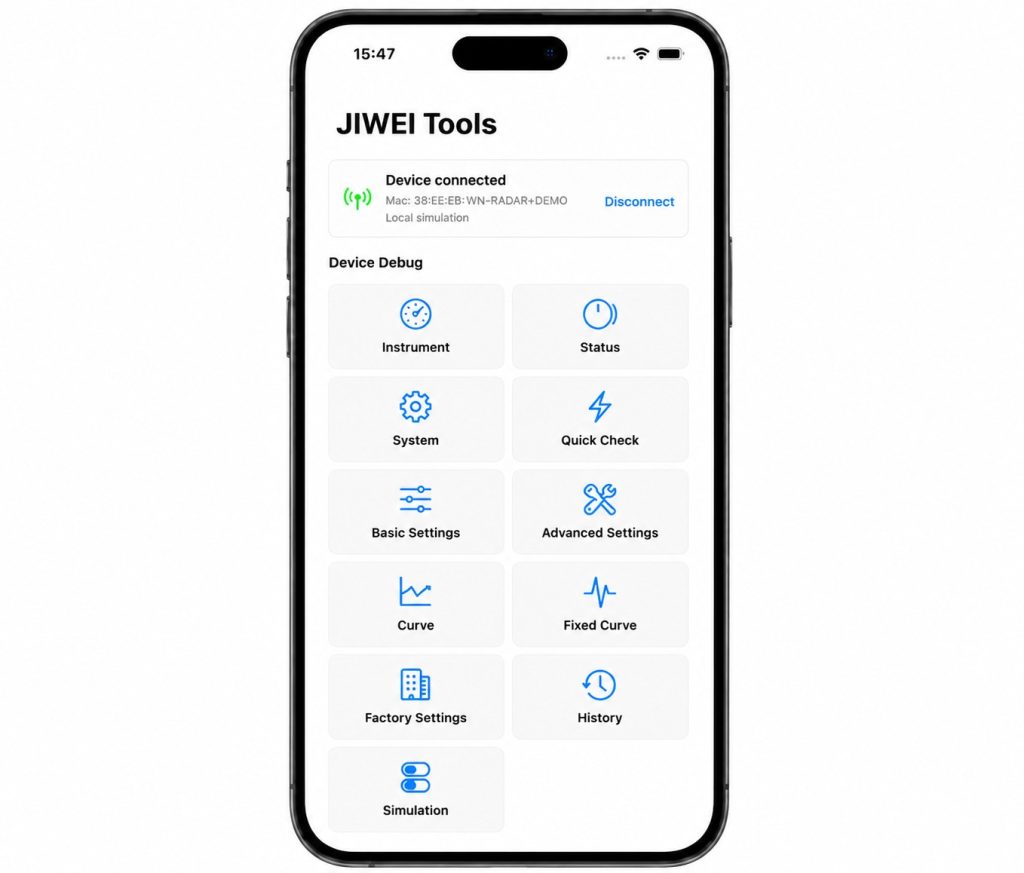
Underground tank sites are narrow and inconvenient for on-site commissioning. Repeatedly entering or working near the manhole may also create safety risks. The JWrada®-32 features a built-in Bluetooth module and can work with the “JIWEI Smart Control” WeChat mini program or mobile app for wireless commissioning, parameter configuration, and real-time monitoring. Engineers do not need to frequently open the instrument cover or stay in the narrow manhole area for a long time. They can complete range setting, echo curve viewing, output verification, and other operations more conveniently.
For sites that need to manage multiple diesel tanks, Bluetooth commissioning and remote maintenance capabilities can significantly improve commissioning efficiency and reduce on-site operation time.
4.6 Multiple Output Options for Easy Integration with Monitoring Systems
The value of diesel tank level measurement is not limited to local readings. More importantly, the data should be connected to a control room, PLC, DCS, or remote monitoring platform to achieve real-time level display, inventory management, and high and low level alarms. The JWrada®-32 supports common industrial signal outputs such as 4–20mA/HART. Certain configurations can also support RS485/Modbus, making it easy to integrate with existing control systems.
With continuous level data, companies can monitor diesel inventory changes in real time, arrange refueling plans more reasonably, avoid insufficient fuel supply for emergency generator sets due to low levels, and prevent overflow during refueling.
4.7 Explosion-Proof Design Meets Oil Storage Tank Safety Requirements
Underground diesel tanks involve flammable media, so safety is a key consideration in instrument selection. The JWrada®-32 is available with flameproof, intrinsically safe, and dust explosion-proof designs, meeting the requirements of hazardous-area level measurement. For diesel, refined oil, crude oil, coal tar, crude benzene, and other flammable and explosive media, choosing a radar level meter with explosion-proof certification is an important prerequisite for ensuring site safety.
4.8 High Protection Rating for Outdoor and Underground Humid Environments
Underground tank areas are often affected by rainwater, humidity, dust, and temperature variations. The instrument housing and sealing performance must be reliable. The JWrada®-32 features a high protection rating and can adapt to outdoor and underground manhole environments. With proper cable sealing, grounding, and installation, the risk of moisture entering the instrument can be reduced, ensuring long-term stable operation.
5. Typical Application: Continuous Level Monitoring of Underground Diesel Tanks
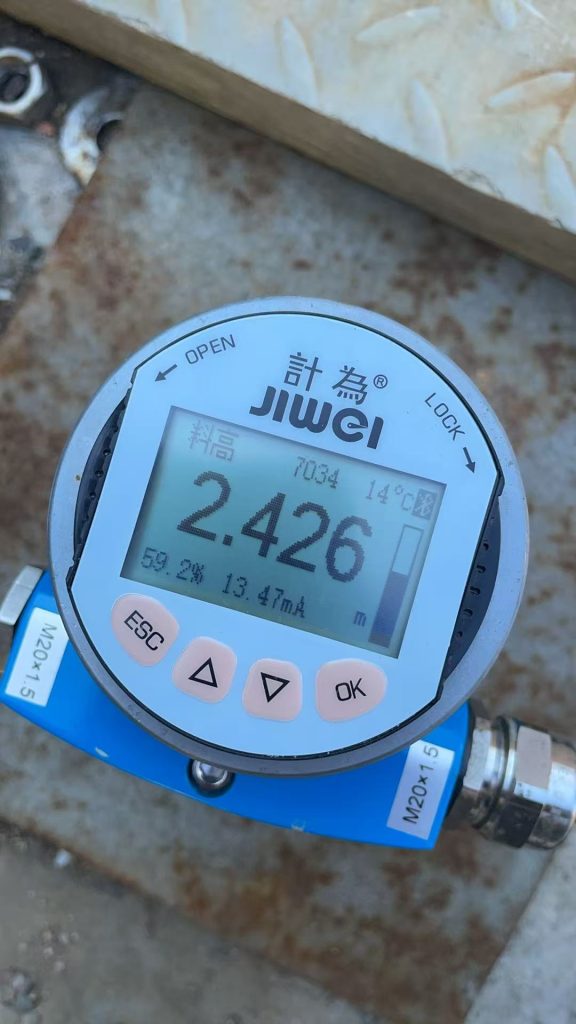
An industrial park used two 15m³ underground diesel storage tanks to supply emergency fuel for diesel generator sets. The original mechanical level gauges had problems such as inconvenient maintenance, unstable readings, and frequent manual inspections. Since the tanks were buried underground, the manhole space was limited. In addition, diesel vapor and humid conditions placed high requirements on instrument stability. The site finally adopted the JIWEI JWrada®-32 radar level meter for continuous level measurement.
In this solution, the radar level meter was installed vertically on the tank top. After setting parameters such as tank height, empty tank distance, full tank distance, and output configuration, the 4–20mA signal was connected to the monitoring system. During installation, no large-scale tank modification was required, and no complicated mechanical structure was involved. The entire installation process was simple and efficient. After commissioning, the echo curve was clear and the level data remained continuous and stable, meeting the requirements for daily diesel inventory monitoring, high and low level alarms, and remote monitoring.
Compared with manual inspection, the radar level meter allows operators to view level changes in real time from the control room, reducing the need to open manhole covers or enter humid and narrow spaces. For emergency fuel supply systems that require long-term reliable operation, this non-contact, low-maintenance, remotely monitored measurement method offers obvious advantages.
6. Selection Suggestions for Underground Diesel Tank Level Meters
When selecting a radar level meter for underground diesel tanks, the following parameters should be carefully considered.
First, confirm the medium characteristics. Diesel is a low-dielectric liquid, so an 80GHz radar level meter with strong weak-echo recognition capability should be selected. The tank type should also be considered for echo optimization.
Second, confirm the tank height and installation space. Underground tanks are often shallow or horizontal tanks with limited manhole height. The instrument should have a short blind zone, compact structure, and flexible installation options.
Third, confirm the explosion-proof requirements. Diesel tanks are safety-sensitive applications. Flameproof, intrinsically safe, or other suitable explosion-proof configurations should be selected according to the hazardous area classification.
Fourth, confirm the output signal. If the instrument needs to be connected to PLC, DCS, or a remote platform, products supporting industrial communication methods such as 4–20mA/HART and RS485/Modbus should be prioritized.
Fifth, confirm the commissioning and maintenance method. Since underground manhole operation is inconvenient, radar level meters with Bluetooth wireless commissioning, echo curve viewing, and remote maintenance functions are more beneficial for long-term management.
Sixth, confirm the manufacturer’s service capability. Level measurement equipment is not just a single instrument. It also involves site installation, parameter setting, alarm linkage, and long-term operation. Choosing a manufacturer focused on level measurement with strong R&D and production capability can reduce project risks.
7. Why Choose JIWEI JWrada®-32?
JIWEI Automation has long focused on the R&D, production, and sales of level measurement instruments. Its product portfolio includes radar level meters, tuning fork level switches, vibrating rod level switches, RF admittance level switches, rotary paddle level switches, magnetic level gauges, ultrasonic level meters, and other series. For underground diesel tank level measurement, the advantage of the JWrada®-32 is not just one single parameter, but a complete solution formed around real site challenges.
It uses 80GHz high-frequency radar to solve the weak echo problem of low-dielectric diesel. It uses non-contact measurement to reduce mechanical wear and maintenance. It uses an intelligent echo algorithm to handle interference from tank nozzles, tank walls, and complex reflections. It uses a short-blind-zone design to adapt to shallow tanks and small manholes. It uses Bluetooth wireless commissioning to improve on-site efficiency. It uses 4–20mA/HART and other output methods to connect with monitoring systems. It uses explosion-proof certification to meet oil storage tank safety requirements. It uses a high protection rating to adapt to underground humid environments.
For industrial parks, backup power systems, petrochemical storage and transportation, gas stations, data centers, hospitals, mines, and power industries, underground diesel tank level monitoring should not rely only on manual experience and mechanical readings. Using the JWrada®-32 radar level meter can make diesel storage tank level data more accurate, continuous, and visible, thereby improving fuel management efficiency and site safety.
8. Conclusion
Level measurement for underground diesel tanks may seem simple, but in practice it is affected by many factors, including low-dielectric media, humidity and condensation, narrow manholes, explosion-proof safety, and remote monitoring requirements. Traditional mechanical level gauges are prone to high maintenance workload, unstable readings, and increased inspection costs during long-term operation. They are no longer sufficient for modern industrial sites that require safer, more automated, and smarter management.
The JIWEI JWrada®-32 80GHz radar level meter is based on non-contact measurement and integrates high-frequency radar, intelligent echo algorithms, Bluetooth wireless commissioning, explosion-proof design, and multiple signal outputs. It provides a stable, reliable, and easy-to-maintain continuous level measurement solution for underground diesel tanks. Whether for new diesel tank projects or upgrades from traditional mechanical level gauges, the JWrada®-32 can help users reduce manual inspection frequency, improve level monitoring accuracy, reduce overflow and fuel shortage risks, and achieve safer, more efficient, and smarter underground diesel tank management.
If your site faces problems such as unstable diesel tank level readings, frequent manual inspections, limited manhole space, high explosion-proof requirements, or the need for remote monitoring, the JIWEI JWrada®-32 radar level meter is a solution worth prioritizing.