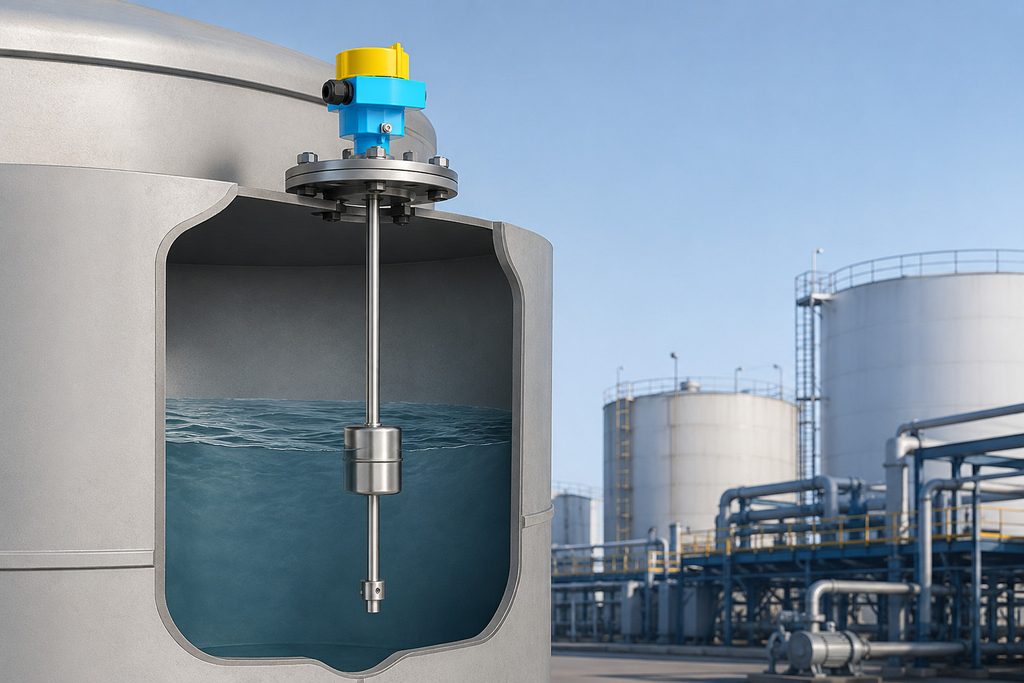
In storage tanks, water tanks, oil tanks, and various industrial vessels, float level gauges are widely used for liquid level measurement. Unlike some level instruments that rely on electromagnetic waves, ultrasonic signals, or pressure changes, float level gauges mainly work according to the principle of buoyancy. As the liquid level rises or falls, the float moves accordingly, and this movement is converted into a local indication, switching signal, or continuous level signal through a mechanical structure, magnetic coupling system, or sensing element.
Because of their relatively simple structure, convenient operation, and suitability for a wide range of liquid media, float level gauges are commonly used in water treatment, petrochemical processing, machinery manufacturing, food processing, cooling circulation systems, and various liquid storage applications.
However, float level gauges are not suitable for every liquid level measurement application. Factors such as liquid density, viscosity, corrosiveness, temperature, pressure, agitation, foam, and suspended solids can affect whether the float moves freely and whether the measurement remains reliable.
Therefore, proper level instrument selection should take into account the physical properties of the medium, tank structure, installation conditions, required measurement accuracy, and overall process environment.
So, what operating conditions are suitable for float level gauges? When should they not be used? And what parameters should be considered during selection? This article explains these questions in detail.
1. How Does a Float Level Gauge Measure Liquid Level?
To understand where a float level gauge is suitable, it is first necessary to understand its basic operating principle.
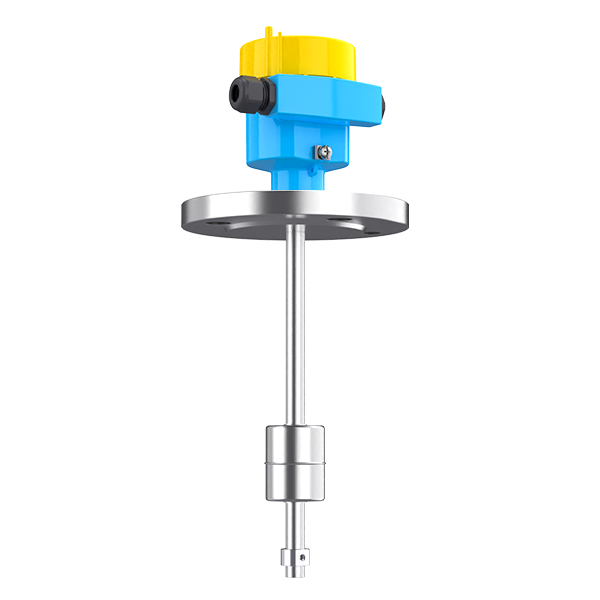
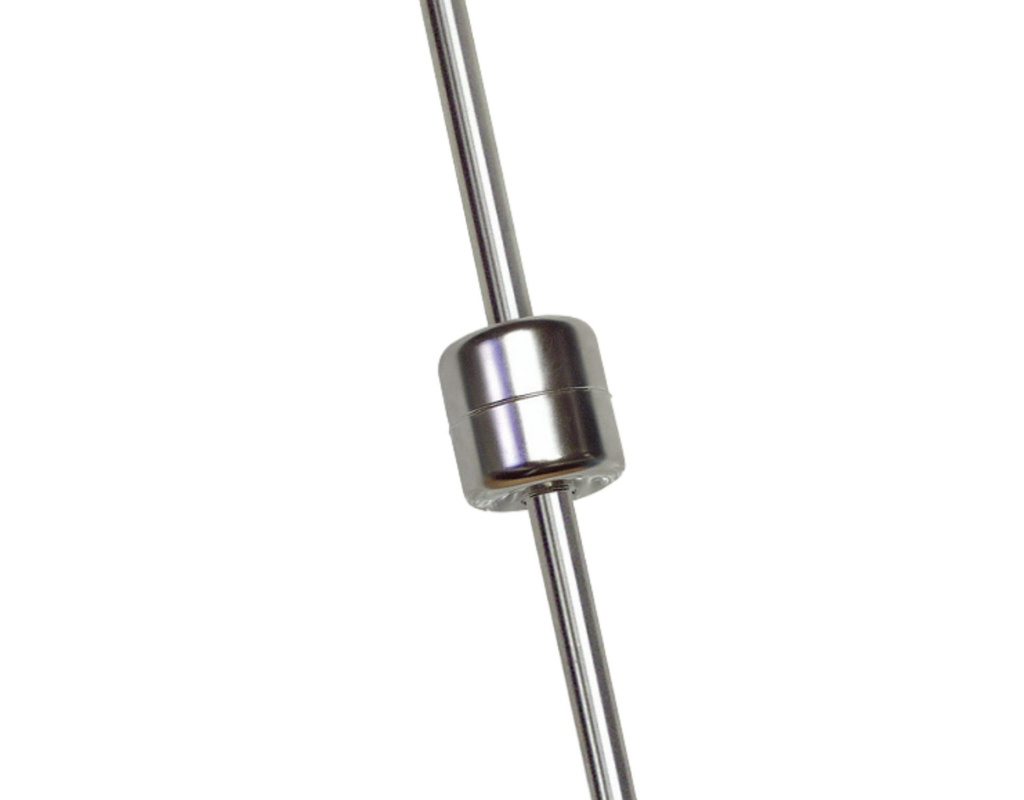
The main sensing component of a float level gauge is a float that rests on the surface of a liquid or at the interface between two liquids. When the liquid level rises, the float moves upward due to buoyancy. When the liquid level falls, the float moves downward.
The instrument detects the position of the float and converts this movement into level information.
Some float level devices use a magnetic float together with reed switches or other magnetic sensing elements. When the float reaches a specific position, the magnetic element activates the corresponding switch, producing a high-level, low-level, or other control signal.
For this reason, float-type level instruments can be used not only for liquid level monitoring but also for pump start-stop control, valve control, and high- or low-level alarms.
The basic operating sequence can be summarized as:
Liquid level changes → Float moves up or down → Float position is detected → Level information or control signal is generated
Because the float must remain in direct contact with the process medium and move freely, the ability of the liquid to support stable float movement is one of the most important factors when determining whether a float level gauge is suitable.
2. What Operating Conditions Are Suitable for Float Level Gauges?
2.1 Water Tanks and Conventional Water Level Measurement
Clean water, circulating water, cooling water, fire protection water, and general industrial water are among the most common applications for float level gauges.
These liquids usually have good fluidity, relatively low viscosity, and fairly stable density. As a result, the float can move freely with changes in liquid level, making stable level detection easier to achieve.
Typical applications include:
- Domestic water tanks
- Fire water tanks
- Industrial circulating water tanks
- Cooling water storage tanks
- Make-up water tanks
- Condensate tanks
- Underground collection pits
- Rainwater collection tanks
If the main purpose is to prevent tank overflow, protect pumps from dry running, or provide automatic water replenishment, high- and low-level signals can also be connected to pumps, valves, PLCs, or other control systems.
Therefore, for clean liquid applications with relatively stable surfaces, float level gauges are generally a practical and reliable option.
2.2 Atmospheric and Relatively Stable Pressure Storage Tanks
Float level gauges are also suitable for many atmospheric storage tanks and closed vessels operating under relatively stable pressure conditions.
Typical examples include intermediate storage tanks, buffer tanks, raw material tanks, finished product tanks, and auxiliary liquid storage vessels.
If the liquid has good fluidity and does not contain large amounts of solids or heavy deposits, a float level gauge can often be considered.
However, the fact that some float level gauges can be used in pressurized vessels does not mean that every design is suitable for high-pressure service.
The allowable pressure varies according to:
- Float construction
- Process connection
- Seal design
- Stem or guide tube material
- Instrument structure
For pressurized vessels, the selected instrument should satisfy the following basic requirement:
Instrument design pressure ≥ Maximum possible process pressure
Temperature effects on seals, floats, and wetted components should also be evaluated.
2.3 Oils and Other Low-Viscosity Liquids
In addition to water, float level gauges can also be used with certain lubricating oils, hydraulic oils, fuels, and other liquids with good fluidity.
However, liquid density is especially important in oil applications.
The ability of a float to remain on the liquid surface depends directly on buoyancy. If the liquid density changes significantly, the immersion depth and operating position of the float may also change.
Therefore, selection should not be based only on a general description such as “oil” or “water.” The actual liquid density or specific gravity should be provided whenever possible.
For low-density liquids, it is particularly important to confirm that the float can generate sufficient buoyancy.
If the float is not properly matched to the liquid density, problems may include:
- Incomplete float movement
- Incorrect switching point
- Increased measurement error
- Failure of the float to rise properly
2.4 Applications Requiring High- and Low-Level Alarms
In many industrial applications, continuous level measurement is not necessary.
The operator may simply need to know:
“Has the liquid level become too high?”
or
“Has the liquid level dropped too low?”
In such cases, float-type level devices are especially useful.
Multiple level alarm points can be configured, such as:
- Low-low level alarm
- Low level alarm
- High level alarm
- High-high level alarm
When the liquid reaches a predefined position, the instrument sends a switching signal to the control system.
The system can then perform functions such as:
- Activating an alarm
- Starting a pump
- Stopping a pump
- Opening a valve
- Closing a valve
- Protecting downstream equipment
Therefore, float level devices are particularly suitable for high- and low-level control, dry-run protection, overflow prevention, and automatic liquid replenishment.
2.5 Automatic Pump Start and Stop Control
Pump control is one of the most common applications of float level gauges and float level switches.
For example, in a collection tank, the water level gradually rises. When it reaches the high-level set point, the drainage pump starts.
As the water level decreases and reaches the low-level set point, the pump stops.
In a water supply system, the control logic may work in the opposite way:
Low level → Start filling pump
High level → Stop filling pump
This type of control is simple and practical and is commonly used in:
- Water tanks
- Drainage pits
- Wastewater lifting stations
- Small automatic water supply systems
- Cooling circulation systems
In actual design, a reasonable difference between the pump start and stop levels should be maintained.
If the switching points are too close together, small liquid level fluctuations may cause the pump to start and stop too frequently, which can reduce equipment life.
3. What Liquid Properties Are Best Suited for Float Level Gauges?
From the perspective of process medium characteristics, ideal applications for float level gauges generally have the following features.
3.1 Good Fluidity
The float must be able to move freely with the liquid surface.
For this reason, clean water, low-viscosity oils, and other free-flowing liquids are particularly suitable.
If the liquid is extremely viscous, resistance to float movement increases.
This may result in:
- Slow response
- Delayed measurement
- Float sticking
- Incorrect alarm activation
3.2 Relatively Stable Liquid Density
Float level gauges operate based on buoyancy, and buoyancy is directly related to liquid density.
Therefore, when the liquid density remains relatively stable during the process, float movement is generally more predictable and measurement performance is easier to maintain.
If liquid density changes significantly because of temperature, concentration, or process conditions, the float should be checked across the entire possible density range.
It is necessary to confirm that the float can still operate reliably under both minimum and maximum density conditions.
3.3 Low Tendency to Crystallize or Form Deposits
Clean liquids that do not easily crystallize, scale, or produce deposits are generally more suitable for float level gauges.
The float and guide components remain in direct contact with the process medium.
If crystals, scale, or sticky deposits gradually build up on these components, the movement of the float can become restricted.
Over time, this may lead to inaccurate level detection or complete float blockage.
3.4 Low Solid Content
Liquids containing small amounts of ordinary impurities are not always unsuitable for float level measurement.
However, applications containing large quantities of:
- Suspended solids
- Fibers
- Metal particles
- Sediment
- Sludge
should be evaluated carefully.
These materials can enter the float movement area and cause mechanical blockage.
Therefore, highly viscous liquids, sludge, and heavily contaminated media are generally not ideal applications for standard float level gauges.
4. Which Industries Commonly Use Float Level Gauges?
Water Treatment
Water treatment systems are one of the most common application areas for float level gauges.
They can be used in:
- Raw water tanks
- Clean water tanks
- Intermediate process tanks
- Circulation water tanks
- Collection pits
- Certain wastewater treatment systems
Typical functions include:
- Liquid level indication
- Low-level alarm
- High-level alarm
- Pump interlock
- Automatic water filling
- Overflow protection
Petrochemical and Chemical Processing
Float level gauges may also be used for certain oils, solvents, chemical raw materials, and intermediate process liquids.
However, the wetted materials must be compatible with the process medium.
Chemical applications require particular attention to material compatibility.
Different liquids may attack metals, engineering plastics, seals, or other wetted components in different ways.
Before selecting an instrument, it is therefore important to confirm:
- Medium name
- Concentration
- Operating temperature
- Corrosiveness
- Liquid density
- Process pressure
Machinery and Hydraulic Systems
Hydraulic power units, lubrication systems, cooling systems, and machine tool auxiliary systems often contain oil reservoirs or coolant tanks.
These vessels may not be very large, but reliable low-level detection is often critical.
A float-type level device can provide low-level alarms and help prevent problems such as:
- Pump dry running
- Insufficient lubrication
- Loss of coolant
- Equipment overheating
Food and Beverage Processing
Float level gauges can also be used for certain food liquids, drinking water, and process water applications.
However, sanitary applications require more than just a suitable measurement principle.
Additional factors may include:
- Wetted material
- Surface finish
- Cleaning method
- Hygienic connection
- Sanitary design
- Applicable industry standards
Therefore, hygienic process requirements should always be reviewed separately.
HVAC and Cooling Circulation Systems
Cooling tower make-up tanks, condensate tanks, circulation water systems, and HVAC equipment often require relatively simple and reliable liquid level control.
Common control functions include:
Low level → Start water supply
High level → Stop water supply
Because float devices are well suited to this type of straightforward level control, they are widely used in cooling and circulation systems.
5. What Operating Conditions Are Not Ideal for Float Level Gauges?
Understanding where a float level gauge should not be used is just as important as knowing where it performs well.
5.1 High-Viscosity Liquids
Very viscous media such as thick resins, heavy oils, pastes, and certain process slurries can restrict float movement.
The medium may stick to the float surface or guide components.
As a result, the float may fail to follow the true liquid level accurately.
Possible problems include:
- Slow response
- Measurement lag
- False alarms
- Float blockage
5.2 Liquids Containing Large Amounts of Solids
Liquids containing large amounts of particles, fibers, sludge, or sediment may obstruct the movement of the float.
In these applications, another liquid level measurement technology may provide better long-term reliability.
5.3 Media That Easily Crystallize or Scale
Some chemical liquids form crystals when temperature decreases, concentration changes, or the process remains idle for extended periods.
If crystals accumulate around the float or guide structure, mechanical movement can be severely restricted.
Therefore, media with a strong tendency to crystallize or scale are generally not ideal for conventional float level gauges.
5.4 Strong Agitation or Severe Surface Turbulence
In tanks equipped with high-speed agitators, the liquid surface may continuously fluctuate, splash, or form vortices.
The float may move up and down repeatedly even when the actual average liquid level remains relatively stable.
This can cause:
- Unstable readings
- Repeated alarm activation
- Mechanical wear
- Reduced measurement reliability
For moderate turbulence, the effect may sometimes be reduced by selecting a more suitable installation point or installing a stilling tube.
For severe turbulence, other level measurement methods should be evaluated.
5.5 Sticky or Coating Liquids
Certain adhesives, coatings, additives, and sticky process liquids can gradually build up on the float surface.
Even if the float initially provides sufficient buoyancy, long-term deposits may change its effective weight and restrict movement.
Therefore, liquids with a strong tendency to stick or coat surfaces are generally not preferred applications for float level gauges.
6. What Parameters Are Required When Selecting a Float Level Gauge?
Once it has been confirmed that a float level gauge is suitable for the application, the next step is proper instrument selection.
The following parameters should normally be provided.
1. Process Medium
Specify whether the liquid is water, oil, acid, alkaline solution, solvent, or another process liquid.
For chemical applications, the exact medium and concentration should be provided.
2. Liquid Density
Density or specific gravity is an important parameter when selecting the float.
It is particularly important for low-density liquids.
3. Operating Temperature
Both the normal operating temperature and the maximum possible temperature should be considered.
4. Operating Pressure
For closed or pressurized vessels, both normal pressure and maximum possible pressure should be specified.
5. Measurement Range
This may include:
- Tank height
- Normal operating level range
- Alarm positions
- Required measuring length
6. Liquid Viscosity
High viscosity can restrict float movement, so this information should be provided in advance.
7. Corrosiveness
The chemical compatibility of floats, guide tubes, stems, flanges, seals, and other wetted components should be checked.
8. Installation Method
Confirm whether the instrument will be:
- Top mounted
- Side mounted
- Bottom mounted
- Externally mounted
9. Output Signal
Determine whether the application requires:
- Local indication
- Switching output
- High- and low-level alarms
- Continuous level signal
- Connection to a PLC or DCS
10. Special Process Conditions
Important conditions may include:
- Agitation
- Foam
- Vibration
- Crystallization
- Suspended solids
- Sediment
- Severe surface fluctuation
- Internal tank structures
Proper level instrument selection should not be based on measurement range alone.
The characteristics of the process medium, temperature, pressure, tank structure, installation position, and measurement objective should all be considered.
7. What Should Be Considered During Float Level Gauge Installation?
Even if the correct instrument is selected, an unsuitable installation location can still reduce measurement performance.
Avoid the Liquid Inlet
The area near the inlet pipe often experiences strong liquid impact and turbulence.
If the float is installed directly below the inlet, incoming liquid may continuously push or disturb the float, resulting in unstable readings.
Avoid Strong Agitation Areas
For tanks equipped with agitators, the float should be installed in a relatively calm area of the vessel whenever possible.
This reduces the influence of vortices and surface turbulence.
Provide Enough Space for Float Movement
The float should have sufficient clearance from:
- Tank walls
- Internal pipes
- Heating coils
- Agitator components
- Structural supports
Nothing should interfere with the full movement of the float.
Allow Sufficient Maintenance Space
Because float level gauges are contact-type instruments, inspection and cleaning may be required after long-term operation.
Sufficient space should therefore be reserved for removal, inspection, and maintenance.
8. How to Choose Between a Float Level Gauge, Radar Level Gauge, and Ultrasonic Level Gauge
There is no single liquid level measurement technology that is best for every application.
The correct choice depends on the process conditions.
If the liquid is relatively clean, has stable density, has a calm surface, and the application requires a straightforward and practical measurement method, a float level gauge may be a suitable choice.
If the medium is highly adhesive or highly corrosive, or if the process requires the sensing element to avoid direct contact with the liquid, a non-contact level measurement method may be more appropriate.
If the tank contains:
- Large amounts of foam
- Heavy vapor
- Severe agitation
- Crystallization
- Complex internal structures
different liquid level measurement technologies should be compared carefully before selection.
Therefore, level instrument selection should not be based only on purchase price.
More important factors include:
Process compatibility, long-term stability, installation conditions, maintenance requirements, and total operating cost.
9. How Can You Determine Whether Your Application Is Suitable for a Float Level Gauge?
For an actual project, the suitability of a float level gauge can initially be assessed by asking several basic questions:
- Is the measured medium a liquid?
- Can the liquid provide enough buoyancy for the float?
- Is the liquid viscosity relatively low?
- Does the liquid contain large amounts of solids, fibers, or sludge?
- Does the medium easily crystallize, scale, or stick to surfaces?
- Is the liquid surface relatively stable?
- Is there strong agitation inside the vessel?
- Are the wetted materials compatible with the process medium?
- Is the operating temperature within the instrument’s allowable range?
- Is the operating pressure within the instrument’s design range?
- Is continuous measurement required, or only high- and low-level alarm detection?
- Is there enough installation space for the float to move freely?
If the medium has characteristics such as good fluidity, stable density, low solid content, low tendency to stick, and a relatively stable liquid surface, a float level gauge is generally a suitable option.
In contrast, if the application involves high viscosity, crystallization, heavy scaling, large quantities of solids, or severe agitation, a float level gauge should not be selected based only on price or previous usage habits.
A more detailed process evaluation is recommended.
10. Conclusion: What Operating Conditions Are Best Suited for Float Level Gauges?
In general, float level gauges are well suited for water, low-viscosity oils, and other free-flowing liquid media.
They are especially suitable for:
- Storage tanks
- Water tanks
- Collection pits
- Oil reservoirs
- Circulating water systems
- Cooling equipment
- High- and low-level alarms
- Pump automatic start and stop control
- Automatic liquid replenishment
- Overflow prevention
Their main advantages include a straightforward operating principle, mature technology, flexible control functions, and the ability to use different materials and installation configurations for different applications.
However, float level gauges are contact-type instruments and depend on the free mechanical movement of the float.
For this reason, extra caution is required in applications involving:
- High-viscosity liquids
- Crystallizing liquids
- Scaling media
- Sticky liquids
- Large amounts of suspended solids
- Fibers or sludge
- Severe liquid surface turbulence
- Strong agitation
During selection, it is not sufficient to provide only the tank height or the general name of the liquid.
A proper float level gauge selection should consider:
Medium name, density, viscosity, corrosiveness, operating temperature, pressure, measuring range, tank structure, installation method, output signal, agitation conditions, and the presence of solids or deposits.
Only after the actual process conditions have been evaluated should the appropriate float structure, wetted material, installation method, and signal type be selected.
This helps improve long-term measurement stability and reduces problems such as float sticking, false alarms, abnormal level readings, and frequent maintenance.
For applications where the suitability of a float level gauge is uncertain, it is advisable to first collect complete process and vessel information and then compare float, radar, ultrasonic, hydrostatic, and other liquid level measurement technologies according to the actual operating conditions rather than selecting an instrument based solely on price.