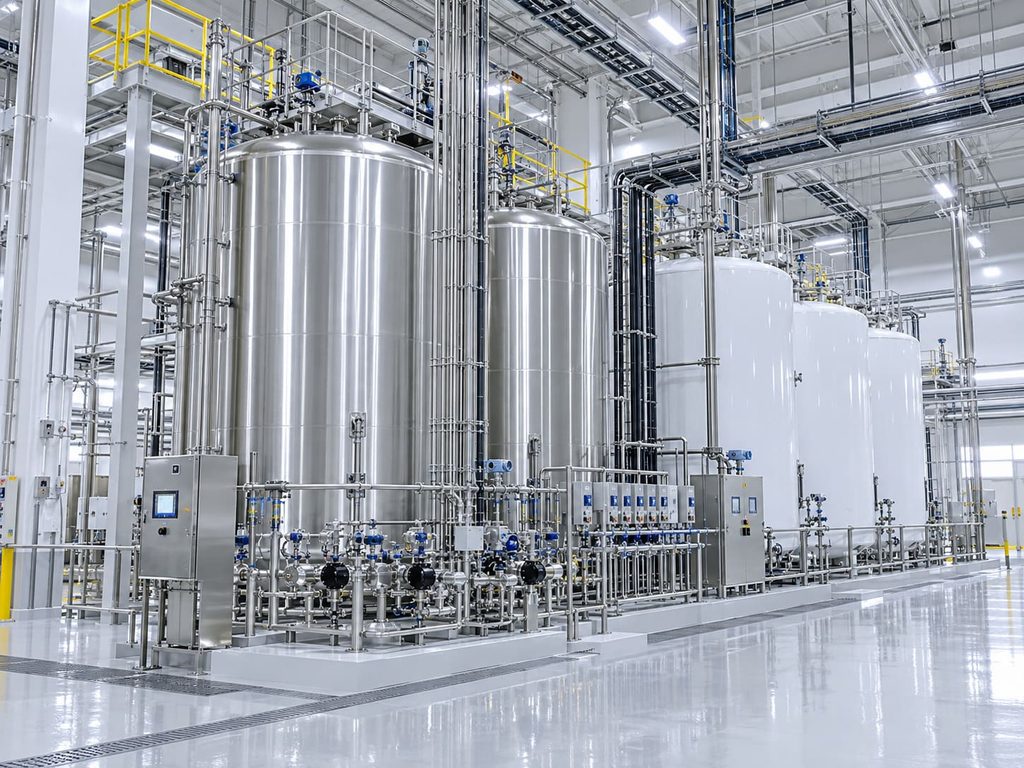
Semiconductor and advanced-material facilities use a wide range of liquid chemicals for cleaning, etching, surface preparation, deposition support, neutralization, utilities, and waste treatment. Chemical Tank
These chemicals can include acids, alkalis, solvents, blended formulations, and high-purity specialty liquids.
Level measurement is required not only in bulk chemical storage but also in day tanks, distribution systems, neutralization tanks, waste collection, and support utilities.
The challenge is that a level instrument must satisfy several requirements at the same time: reliable measurement, chemical compatibility, safe handling, limited contamination risk, and practical maintenance.
Different Tanks Have Different Priorities
A bulk chemical storage tank may prioritize inventory and overfill prevention.
A day tank may prioritize compact installation and reliable automatic replenishment.
A process-support tank may need fast response during dosing.
A high-purity chemical vessel may place greater emphasis on materials, cleanliness, dead volume, and contamination control.
A waste-neutralization tank may expose the instrument to mixed chemistry and corrosive vapor.
The measurement solution should be selected for the specific tank function.
Continuous Level Measurement
Continuous level is useful when operators need to know the actual amount of chemical available.
The signal can support inventory management, automatic refill, transfer control, consumption tracking, low-level warning, and process trend analysis.
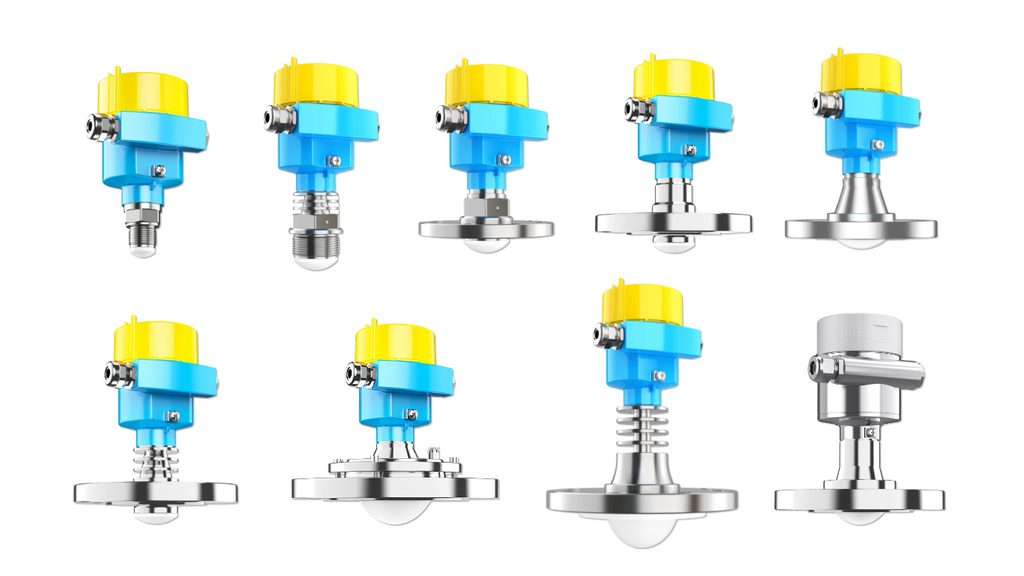
For many chemical tanks, non-contact radar is attractive because the sensing principle does not require a long immersed probe.
This can reduce direct chemical exposure and can eliminate moving mechanical parts inside the tank.
Why Radar Works Well in Many Chemical Tanks
A radar transmitter sends electromagnetic energy toward the liquid surface and determines the distance from the reflected signal.
The measurement is not based on liquid density or conductivity.
High-frequency radar can use a narrow beam, which is useful in small tanks and vessels with limited space.
It can also help avoid internal structures.
Nevertheless, radar is not automatically immune to every process condition.
Foam, severe buildup, condensation, poor nozzle geometry, and very weak reflection can affect performance. Correct installation remains essential.
Chemical Compatibility
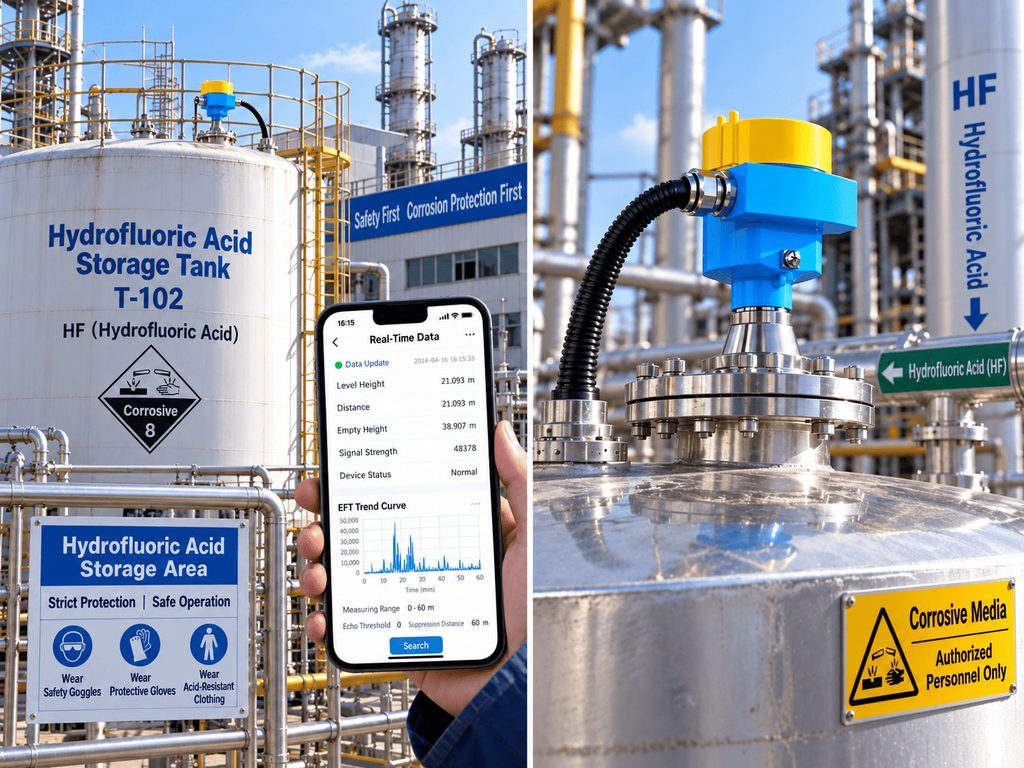
High-purity and corrosive chemical applications require careful material review.
Do not evaluate only the external housing.
The process-facing materials can include antenna or protective face, process connection, flange, gasket, seal, coating, and exposed fasteners or metal parts.
Compatibility depends on concentration and temperature.
For blended chemicals, the most aggressive component may not be obvious from the commercial product name.
Whenever possible, use the actual chemical composition and plant materials standard during selection.
Corrosive Vapor
Chemical vapor can attack components located above the normal liquid level.
Condensation can bring the chemical into contact with the antenna area and process connection.
This is especially important in day tanks and storage tanks where the instrument remains in service continuously.
A good installation avoids unnecessary cavities where condensate can collect.
The housing should also be protected from external chemical exposure if the surrounding area contains corrosive fumes.
High-Purity Requirements
In high-purity chemical distribution, a sensor should be reviewed for contamination risk.
Questions include whether all process-facing materials are approved, whether the process connection can be cleaned, whether the design creates a liquid trap, whether particles can be generated by coating damage, whether maintenance can be performed without exposing the tank, whether the surface finish is appropriate for the process, and whether seals are compatible with the chemical and cleaning procedure.
A non-contact radar can reduce immersed hardware, but it should not be described as automatically “high purity” without verifying the exact design.
Point Level Detection
Many chemical tanks also use point level switches.
A high-level switch can provide overfill alarm or filling interlock.
A low-level switch can protect a pump or indicate that the day tank needs replenishment.
A corrosion-resistant tuning fork is one option for liquid point level detection.
Jiwei Ring-11 corrosion-resistant configurations can be considered where their process-facing materials and process limits match the chemical service.
The exact coating or alloy should be selected from the actual compatibility requirement.
Bulk Storage and Day Tank Architecture
A typical chemical distribution system may have a bulk tank feeding a smaller day tank.
The bulk tank uses continuous radar for inventory and a separate high-level switch for overfill protection.
The day tank uses a compact radar for automatic refill control and a high-level or low-level switch for additional protection.
The control system starts transfer when the day tank reaches a defined low operating point and stops transfer at the normal high point.
A separate high-high switch can be used to stop transfer if the normal control signal fails, depending on the plant’s protection philosophy.
Plastic Tanks and Non-Metallic Vessels
Many electronic chemicals are stored in plastic tanks.
Tank material, reinforcement ribs, roof shape, and nozzle design can influence installation.
Radar can sometimes measure through certain plastic surfaces, but the result depends on the material, wall thickness, geometry, and process.
Do not assume through-wall measurement is suitable without an application test.
A conventional nozzle-mounted radar is often easier to engineer because the measurement path is defined.
Small Tanks and Narrow Nozzles
Day tanks can be physically small, and the available process connection may be limited.
A compact radar such as Jiwei JWrada-31 can be considered for small liquid vessels where the process conditions are within its limits.
The nozzle diameter and length should still be checked.
A small threaded connection does not guarantee that a long, narrow nozzle is suitable.
The sensor must have a clear measurement path over the required level range.
Foam and Surface Disturbance
Some neutralization and waste-treatment tanks generate foam.
Others receive liquid at high velocity and have an unstable surface.
The radar should be mounted away from the inlet.
If foam is persistent, determine whether the process needs the liquid surface or the top of the foam.
For waste treatment, changing chemistry may also change foam behavior, which is another reason to review the full operating range.
Safety and Manual Exposure
One benefit of reliable continuous level measurement is reducing the need for manual tank checks.
Manual dipping, opening tank covers, or visually inspecting corrosive chemical levels can expose personnel to unnecessary risk.
A remote level signal allows operators to monitor tank status from the control system.
This does not remove the need for safe maintenance procedures, but it can reduce routine exposure.
Commissioning
Commission the sensor using verified tank geometry.
Check the empty distance, full distance, and reference point.
Compare the radar value with a known fill level.
Test the automatic refill sequence and verify that valve or pump response provides enough margin.
Test high-high and low-low interlocks as complete loops.
If the tank is part of a critical chemical distribution system, document the test results as part of the commissioning record.
Maintenance
Inspect the antenna area for deposits or condensation when the system is safely available.
Check seals, cable entries, grounding, and housing condition.
For coated point level switches, inspect the protective layer for mechanical damage.
If a probe coating is scratched or worn, chemical compatibility may be compromised even if the instrument still switches correctly.
Technical Credibility: Avoid Absolute Claims
For technical content in semiconductor applications, credibility matters.
Avoid statements such as “suitable for all semiconductor chemicals,” “zero contamination for every process,” “completely unaffected by vapor,” or “maintenance-free in all applications.”
A better statement explains the engineering boundary and tells the reader which process data must be checked.
That approach is more useful to engineers and creates a stronger technical page.
Conclusion
Level measurement in semiconductor and advanced-material chemical systems is not only about measuring distance.
The complete application includes chemical compatibility, contamination control, vapor exposure, hazardous-area design, tank geometry, alarm philosophy, and safe maintenance.
Non-contact radar is a strong option for continuous level measurement in many storage and day tanks.
A corrosion-resistant tuning fork can provide dedicated high- or low-level switching.
The best system is the one that matches the exact chemical, vessel, control function, and plant materials standard.
FAQ
Can radar be used on semiconductor chemical tanks?
Yes, non-contact radar is used in many chemical storage applications. The exact sensor must still be checked for materials, process conditions, tank geometry, and purity requirements.
Does non-contact radar eliminate contamination risk?
It reduces immersed hardware, but the antenna face and process connection remain part of the process boundary. The complete design must be reviewed.
Why use a separate point level switch?
It can provide a dedicated high-high or low-low signal for alarms and interlocks, separate from normal continuous measurement.
What information is required for selecting a level sensor?
Provide chemical composition and concentration, temperature, pressure, tank dimensions, nozzle details, material restrictions, hazardous-area classification, required measuring range, and the intended control function.