Introduction
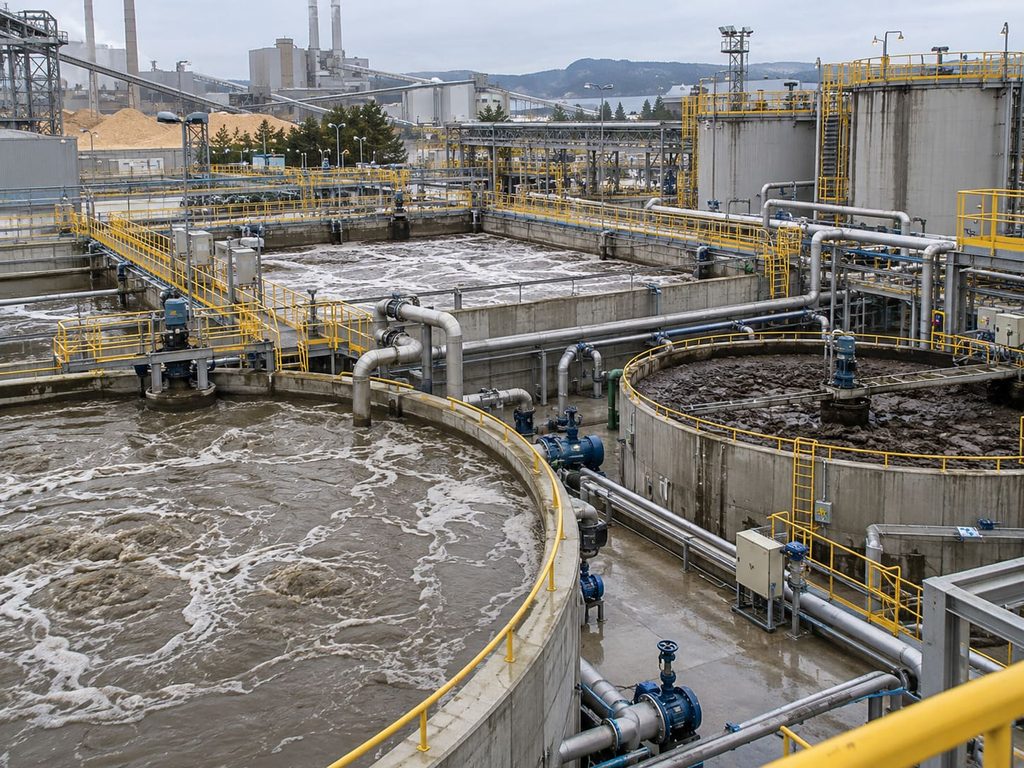
Wastewater treatment is an essential part of pulp and paper production. Water used in pulping, washing, stock preparation, paper-machine operation, cleaning, and chemical systems can carry fibers, fillers, suspended solids, dissolved organic material, and process chemicals.
Before wastewater is reused, treated further, or discharged, it may pass through collection pits, equalization tanks, pump stations, treatment basins, sludge handling systems, and chemical dosing tanks.
Reliable paper mill wastewater level measurement helps these systems operate continuously and reduces the risk of overflow, pump dry running, and unstable transfer control.
These applications are more difficult than clean-water measurement. Fibers, foam, aeration, turbulence, deposits, and changing chemistry can all influence instrument performance.
This article explains the main wastewater measurement points in paper mills and how radar, ultrasonic, and point level instruments can be selected for different conditions.
Why Wastewater Level Control Matters
Wastewater flow in a paper mill is rarely constant.
Production changes, washing operations, cleaning cycles, and process disturbances can create changing hydraulic loads. Equalization tanks and intermediate storage systems are therefore commonly used to balance these variations before downstream treatment.
Level measurement provides the process information required to manage these changes.
A continuous level signal may be used for:
- Transfer-pump control
- Pump-speed control
- Valve operation
- Equalization volume management
- Overflow prevention
- Pump dry-run protection
- Sludge storage monitoring
- PLC or DCS level indication
For important tanks or pump stations, continuous measurement can also be combined with an independent high- or low-level switch.
This separates normal process control from additional alarm or protection functions.
Common Wastewater Measurement Points in a Paper Mill
1. Wastewater Collection Pits and Sumps
Wastewater from different production areas is often collected in pits or sumps before being pumped to the treatment plant.
These locations may contain:
- Fibers
- Suspended solids
- Process debris
- Floating material
- Chemical residues
- Surface contamination
Contact sensors can gradually become dirty or coated.
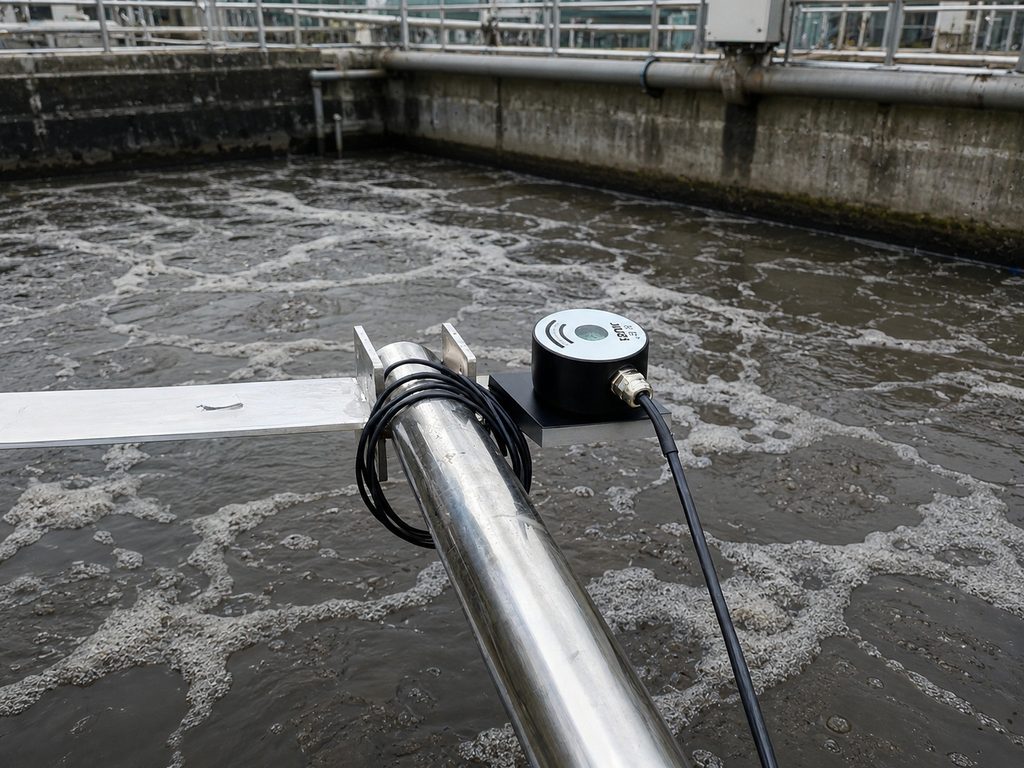
For this reason, non-contact measurement is attractive where the instrument can be mounted above the wastewater with a clear view of the surface.
The measured level can then be used to start or stop transfer pumps and prevent the collection pit from overflowing.
2. Equalization Tank
Equalization tanks help buffer changes in wastewater flow and composition before downstream treatment.
The tank level may rise during periods of high wastewater generation and fall as wastewater is transferred to the next process stage.
Stable continuous level measurement helps maintain available buffer capacity and coordinate transfer pumps.
However, an equalization tank can be a challenging measurement environment.
Typical conditions include:
- Foam
- Aeration
- Surface turbulence
- Floating fibers
- Suspended solids
- Multiple inlet streams
- Mixers
- Internal pipes and structures
A focused radar beam can be particularly useful when the available measuring path is limited by internal equipment.
3. Wastewater Pump Stations
Pump-station level measurement directly affects pump operation.
When wastewater enters a sump or wet well, the level rises until the control system starts a transfer pump. As wastewater is removed, the level falls and the pump can be stopped at the defined operating point.
If the level becomes too high, there may be a risk of overflow.
If it becomes too low, a pump may lose suction or operate under unsuitable conditions.
A continuous transmitter can provide the normal process signal, while separate high-high and low-low level switches can provide additional alarm or interlock functions where required.
4. Effluent and Intermediate Treatment Tanks
Wastewater treatment systems may include:
- Feed tanks
- Filtrate tanks
- Intermediate storage tanks
- Treated-water tanks
- Recovered-water tanks
- Buffer vessels
The appropriate measurement technology depends strongly on the condition of the liquid.
For relatively clean treated water and simple open tanks, ultrasonic measurement can provide an economical solution.
For dirtier wastewater, stronger turbulence, vapor, foam, or tanks containing multiple internal structures, radar may provide greater measurement flexibility.
5. Sludge Storage Tanks
Primary and secondary wastewater treatment processes generate sludge that must eventually be thickened, stored, dewatered, transferred, or disposed of.
From a level measurement perspective, sludge can be considerably more difficult than clean water.
The material may contain:
- Fibers
- Suspended solids
- Biological material
- High solids concentration
- Foam
- Uneven surfaces
- Sticky deposits
Contact probes can become contaminated by sludge and fibrous material.
For measuring the top surface level of sludge in a storage tank, non-contact radar can therefore be attractive because no long sensing probe needs to remain continuously immersed in the material.
However, an important distinction should be made.
Sludge Level Is Not the Same as Sludge Interface Measurement
A top-mounted radar normally measures the upper surface of the material.
If a clarifier or thickener requires measurement of the submerged boundary between settled sludge and clearer water, this is a sludge blanket or interface measurement application.
A standard top-mounted radar level meter does not automatically measure this submerged interface.
Where sludge blanket depth is required, a dedicated interface or sludge-blanket measurement technology should be evaluated.
This distinction is important when specifying instrumentation for wastewater treatment.
6. Wastewater Chemical Dosing Tanks
Wastewater treatment may use chemicals for:
- pH adjustment
- Coagulation
- Flocculation
- Cleaning
- Nutrient control
- Foam control
- Other treatment functions
Depending on the process, these systems may contain acids, alkalis, coagulants, polymers, or other treatment chemicals.
The exact chemical, concentration, viscosity, temperature, and material compatibility should be confirmed before selecting the level instrument.
This is especially important where a point level switch, float, or other sensing element is directly exposed to the chemical.
Main Measurement Challenges in Paper Mill Wastewater
Fibers and Suspended Solids
Paper mill wastewater can contain fiber fines, fillers, coating particles, and other suspended material.
These solids can accumulate around submerged probes or moving mechanical components.
Over time, contamination can increase maintenance requirements or affect instrument performance.
Non-contact radar and ultrasonic instruments reduce direct contact with the wastewater and can therefore simplify measurement in dirty applications.
Foam and Aeration
Foam can occur in equalization tanks, aerated wastewater systems, collection pits, and chemically treated process streams.
It is not technically correct to assume that every non-contact level sensor is completely unaffected by foam.
Different foam conditions behave differently.
A wet, dense foam layer may create a measurable reflection, while very thick or dry foam can weaken the useful return signal.
The measurement objective should also be defined clearly.
Does the process need to measure:
- The true liquid surface?
- The top of the foam?
- A stable operational level for pump control?
Understanding this requirement helps determine the appropriate instrument and configuration.
Surface Turbulence
Incoming flow, recirculation, mixers, aeration, and pump operation can create waves and rapidly changing surfaces.
A level transmitter should follow the overall change in tank inventory without responding excessively to every short-term disturbance.
Correct mounting position, suitable damping, and appropriate signal processing can help produce a more stable process signal.
Contamination and Buildup
Non-contact measurement reduces direct immersion in wastewater, but it does not mean that the instrument requires no maintenance.
Splashing, condensation, and airborne deposits can still contaminate the radar antenna or ultrasonic transducer.
The installation position should therefore minimize direct spray whenever possible.
Corrosion and Changing Wastewater Chemistry
Wastewater composition may change according to paper grade, production process, cleaning operations, chemical dosing, and treatment stage.
Instrument materials should therefore be checked against the actual environment.
For aggressive wastewater or chemical dosing service, process-facing materials and protective coatings may require particular attention.
Hazardous-area classification should also be confirmed where combustible gases or vapors may be present.
Why Use Non-Contact Radar for Wastewater Level Measurement?
A radar level meter determines level by measuring the distance between the instrument and the process surface using electromagnetic waves.
For difficult wastewater applications, this provides several advantages.
Reduced Direct Fouling
The radar transmitter is normally mounted above the wastewater.
There is no requirement for a long measuring probe to remain continuously submerged in fibers, sludge, or suspended solids.
This can reduce direct fouling and simplify maintenance.
Focused Measurement Path
Modern 80 GHz radar can provide a narrow and focused measuring beam.
This is useful in pump stations, wastewater tanks, and pits containing:
- Pipes
- Ladders
- Mixer shafts
- Structural supports
- Nearby walls
- Other internal obstacles
A narrow beam makes it easier to direct the radar toward a relatively clear area of the surface.
Less Dependence on Gas-Space Conditions
Radar uses electromagnetic waves rather than acoustic waves.
As a result, it does not depend on sound velocity in the air or vapor space above the wastewater.
This can provide an advantage in applications involving changing temperature, humidity, or vapor conditions.
Continuous Signal for Automation
A radar transmitter provides a continuous level value.
The signal can be used by the PLC or DCS for:
- Pump control
- Valve control
- High- and low-level alarms
- Level trending
- Remote monitoring
- Process optimization
For wastewater systems with rapidly changing inflow, continuous measurement can be considerably more useful than a simple point alarm alone.
Radar vs. Ultrasonic Level Measurement for Paper Mill Wastewater
Radar and ultrasonic instruments are both non-contact technologies, but their operating principles are different.
An ultrasonic transmitter uses sound waves and calculates distance from the travel time of the returned acoustic signal.
Ultrasonic measurement can provide a practical and cost-effective solution for:
- Open tanks
- Water basins
- Trenches
- Relatively clean wastewater
- Mild operating conditions
Radar uses electromagnetic waves.
It may provide advantages where the application contains:
- Vapor
- Significant temperature variation
- Complex internal structures
- Strong surface movement
- Limited installation space
- Difficult atmospheric conditions
For example, a simple treated-water basin may be measured effectively using ultrasonic technology.
A foamy equalization tank containing multiple pipes and continuously changing operating conditions may be better suited to radar.
The correct choice should depend on the process rather than automatically specifying the highest-performance technology.
Hazardous-area requirements must also be checked.
An ultrasonic instrument intended for a normal non-hazardous water application should not automatically be installed in an area requiring certified explosion protection.
Continuous Measurement vs. Point Level Protection
A continuous transmitter and a point level switch perform different functions.
The continuous transmitter shows how the wastewater level changes across the operating range.
A point level switch detects whether liquid has reached one specific position.
Typical point-level functions include:
- High-level alarm
- High-high overflow protection
- Low-level alarm
- Low-low pump protection
- Transfer interlock
- Refill control
In important wastewater systems, the two measurement functions can complement each other.
Pump Dry-Run Protection
A low wastewater level can expose the pump suction or cause the pump to operate under unsuitable conditions.
The continuous level transmitter can be used to stop or reduce pump operation before the liquid falls below the normal operating limit.
Where an independent protection signal is required, a separate low-level switch can be installed at the defined trip point.
The exact shutdown logic should always follow the plant’s process and safety design.
Overflow Protection
Overflow from wastewater tanks, pits, or pump stations can create operational and environmental problems.
A continuous transmitter can generate a high-level warning as the wastewater approaches the upper operating range.
A separate high-high level switch can provide an additional independent signal.
Depending on the control strategy, this signal may be used to:
- Stop an inlet pump
- Close an inlet valve
- Activate an alarm
- Start an emergency transfer pump
- Initiate another protective action
The final response should be determined by the mill’s process design.
Installation Recommendations
Avoid the Main Inlet
Do not install the radar or ultrasonic sensor directly above the wastewater inlet when another suitable location is available.
Incoming flow can create splashing, foam, turbulence, and unstable reflections.
Check the Complete Measurement Path
The measuring path should be evaluated from the sensor down to the lowest expected operating level.
A tank may appear clear near the top, while a pipe, ladder, support, or mixer component enters the measurement beam farther down.
Minimize Direct Splashing
Select a mounting position where direct spray onto the antenna or transducer is less likely.
Heavy contamination can weaken the measurement signal.
Consider Maximum Foam Height
Expected foam height should be considered when defining the operating range.
Severe or highly variable foam conditions should be discussed during instrument selection.
Review Mounting Geometry
For closed tanks, confirm nozzle diameter, nozzle length, flange or threaded connection, and available headroom.
For open pits and basins, verify bracket position, wall clearance, and sensor alignment.
Commission Under Real Process Conditions
After installation, check measurement performance over the normal operating range.
Fixed reflections can be identified during commissioning, and suitable damping or false-echo suppression can be configured where necessary.
Good signal processing should support correct installation rather than compensate for a poor mounting position.
Information Needed Before Selecting a Wastewater Level Sensor
For reliable instrument selection, provide:
- Measurement point and process medium
- Tank, basin, or pit dimensions
- Minimum and maximum operating level
- Foam conditions
- Aeration or agitation
- Fiber and suspended-solids content
- Temperature
- Pressure for closed vessels
- Internal structures
- Inlet position
- Existing mounting connection
- Required output signal
- Hazardous-area classification
- Required measurement function
- Existing measurement problem
It is also important to specify whether the requirement is continuous surface level, point level, or submerged interface measurement.
Photographs and vessel drawings can help determine the best installation position.
Jiwei Level Measurement Options for Paper Mill Wastewater
Different sections of a wastewater treatment system may require different measurement principles.
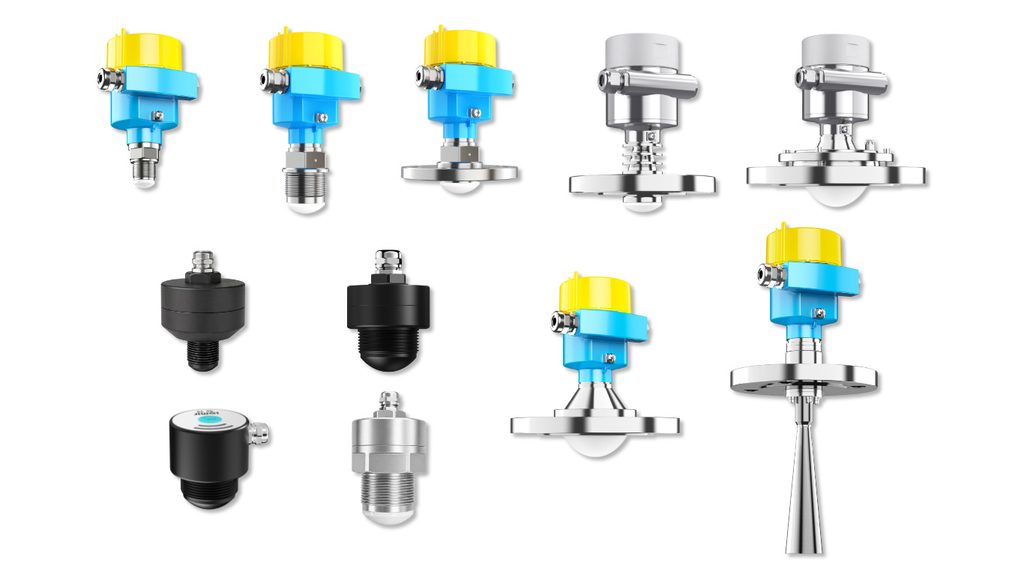
For more difficult continuous applications, the Jiwei JWrada-32 Radar Level Meter uses 80 GHz FMCW radar technology and a focused measurement beam.
It can be considered for applications such as:
- Wastewater storage tanks
- Equalization tanks
- Pump stations
- Collection pits
- Sludge storage tanks
Non-contact operation helps reduce direct contamination by fibers and solids, while the focused beam is useful where pipes and other structures limit the available measuring path.
For simpler open tanks, pools, trenches, and suitable non-hazardous wastewater applications, the Uson-11 Ultrasonic Level Transmitter can provide another non-contact measurement option.
For independent high- or low-level detection, the Ring-11 Tuning Fork Level Switch can be considered where the liquid properties, installation arrangement, wetted materials, and area classification are suitable.
For more aggressive wastewater or chemical service, corrosion-resistant configurations can be evaluated according to the actual medium and operating conditions.
The objective should not be to install the same technology at every wastewater measurement point.
The better approach is to match the measurement principle to the actual process.
Conclusion
Paper mill wastewater level measurement covers a wide range of applications, from dirty collection pits and equalization tanks to pump stations, sludge storage, treated-water vessels, and chemical dosing systems.
Fibers, suspended solids, foam, aeration, turbulence, deposits, and changing chemistry can make these applications more demanding than ordinary clean-water measurement.
Non-contact radar is attractive for many difficult services because it reduces direct fouling and can use a focused beam to avoid surrounding structures.
Ultrasonic measurement remains a practical option for simpler open-water applications where operating conditions are relatively mild.
Independent point level switches can complement continuous transmitters by providing dedicated overflow and pump-protection signals.
For sludge applications, engineers should also distinguish between measuring the upper surface of a sludge tank and measuring a submerged sludge blanket or interface. These are different measurement tasks and may require different technologies.
Reliable performance ultimately depends on correct sensor selection, mounting position, material compatibility, commissioning, and control strategy.
Before selecting an instrument, provide the wastewater characteristics, vessel dimensions, foam and aeration conditions, internal structures, hazardous-area classification, and required measurement function.
Frequently Asked Questions
What is the best level sensor for paper mill wastewater?
There is no single best sensor for every wastewater measurement point. Non-contact radar is a strong option for difficult tanks involving fibers, foam, turbulence, or internal structures. Ultrasonic measurement can be suitable for simpler open-water applications.
Can radar measure wastewater with foam?
Radar can work in many foamy wastewater applications, but foam thickness, moisture, density, and stability can influence the returned signal. Severe foam conditions should be evaluated before final selection.
Can radar measure sludge?
Radar can measure the upper surface of sludge in many storage tanks. It does not automatically measure the submerged sludge blanket or sludge-water interface inside a clarifier.
Is ultrasonic suitable for wastewater tanks?
Yes. Ultrasonic measurement can be suitable for relatively simple open tanks, pools, and trenches. Heavy foam, condensation, vapor, or difficult installation geometry may make radar more suitable.
What level sensor should be used in a wastewater pump station?
A continuous radar or ultrasonic transmitter can provide the normal pump-control signal. Independent point level switches may also be installed for high-high overflow protection or low-low pump protection where required.
Does non-contact measurement require no maintenance?
No. Although the sensor is not continuously immersed in the wastewater, splashing, condensation, deposits, and poor mounting conditions can still affect measurement performance.
Can the same instrument measure wastewater level and sludge interface?
Normally not. Surface level measurement and submerged sludge-interface measurement are different applications and should be evaluated separately.