
1. Why Cable Entry Selection Matters for Industrial Instruments
In industrial automation systems, users often pay close attention to measurement accuracy, output signals, protection ratings, explosion-proof certifications, and process connection types when selecting radar level meters, level switches, pressure transmitters, temperature sensors, and other field instruments. However, one important structural detail is often overlooked: the cable entry. M20×1.5
A cable entry, also known as a cable inlet, cable gland interface, or electrical entry port, is the connection point between the instrument housing and the field cable. Although it may appear to be only a small threaded opening, it plays a critical role in sealing performance, waterproof and dustproof protection, vibration resistance, explosion-proof safety, and long-term operational reliability.
In harsh industrial environments with humidity, dust, corrosive gases, strong vibration, or hazardous areas, an improperly selected cable entry may allow moisture to enter the terminal chamber, causing signal drift, terminal corrosion, insulation failure, or even damage to the explosion-proof integrity of the instrument housing.
Therefore, during industrial instrument selection and project engineering, the cable entry standard must match the site conditions, installation practices, regional standards, and project specifications.
At present, two of the most common cable entry standards used in industrial instruments worldwide are M20×1.5 metric thread and 1/2” NPT tapered pipe thread. Both are widely used, but their structures, sealing principles, and application scenarios are different.
2. Key Differences Between M20×1.5 and 1/2” NPT
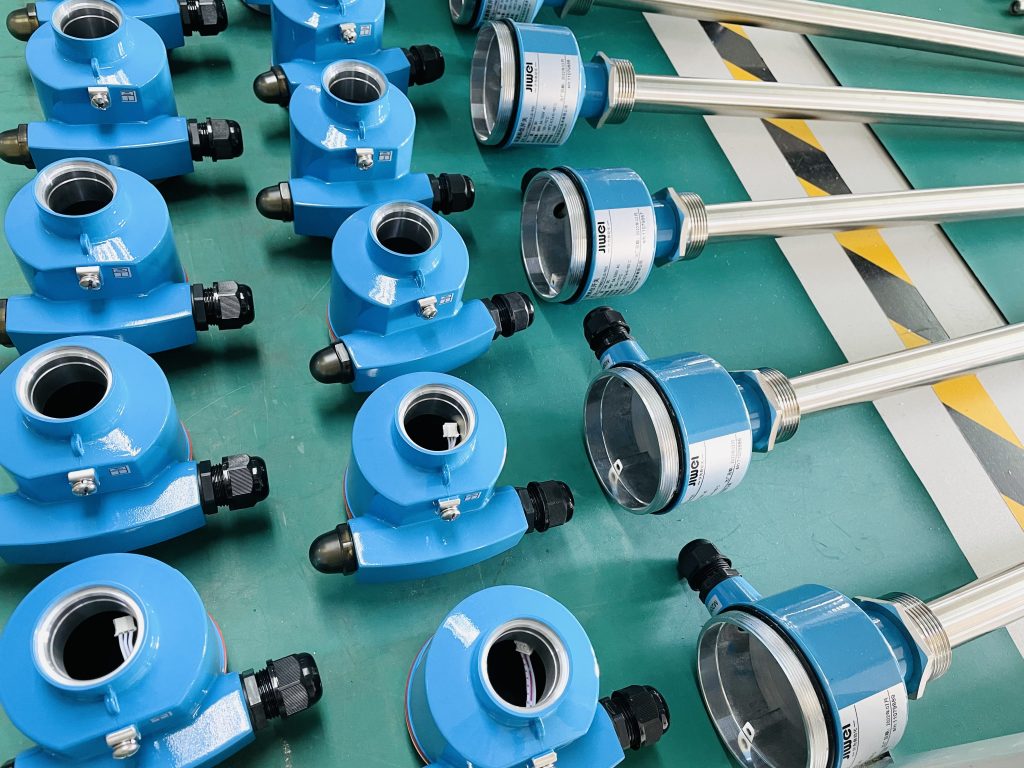
M20×1.5 belongs to the metric thread system. “M20” indicates that the nominal thread diameter is approximately 20 mm, while “1.5” means the thread pitch is 1.5 mm. It is usually designed as a straight thread and achieves sealing through an O-ring, gasket, sealing washer, or the compression structure inside the cable gland.
In other words, the sealing performance of M20×1.5 does not mainly depend on the thread itself. Instead, it relies on the matching sealing components and the compression mechanism. This design is highly suitable for industrial instrument housings because it offers standardized installation, good repeatability, and convenient maintenance.
1/2” NPT, on the other hand, belongs to the American National Pipe Thread system. It is a tapered thread. During installation, the thread gradually tightens as it is screwed in, creating an interference fit between the male and female threads. In many applications, 1/2” NPT also needs to be used with PTFE tape, thread sealant, or sealing compound to improve airtightness and waterproof performance.
In simple terms, M20×1.5 relies more on “structural sealing,” while 1/2” NPT relies more on “thread interference sealing.” Because their sealing principles are different, these two standards cannot be freely interchanged. If they are mixed incorrectly during design, procurement, or installation, problems such as loose fitting, poor sealing, thread damage, or reduced protection rating may occur.
3. Why M20×1.5 Is Commonly Used in Industrial Instruments
In China, Europe, and most Asian industrial markets, M20×1.5 has become a very common cable entry standard for level instruments, level switches, automation sensors, and transmitters. There are several reasons for this.
First, M20×1.5 has excellent compatibility with industrial cable glands. Whether the application requires stainless steel explosion-proof cable glands or standard waterproof cable glands, M20 accessories are widely available. This makes selection easier and simplifies spare parts management.
Second, M20 cable entries provide more consistent installation results. Since the sealing depends on an O-ring, gasket, or compression component, the sealing performance is generally stable as long as the cable gland is installed according to the specified torque. For instruments that are installed in large quantities, such as radar level meters, tuning fork level switches, vibrating rod level switches, and smart transmitters, this consistency helps improve system reliability.
Third, M20×1.5 is suitable for modular instrument design. Modern industrial instruments are becoming more compact, intelligent, and modular. Inside the instrument housing, manufacturers often integrate power modules, communication modules, display modules, and wiring terminals. A standardized M20 interface helps unify housing design, machining, cable installation, and field wiring.
For industries such as food and beverage, chemical processing, water treatment, pharmaceuticals, environmental protection, building materials, metallurgy, and general manufacturing, M20×1.5 offers a good balance of sealing performance, protection, installation efficiency, and maintenance convenience. As a result, it is widely used in many types of industrial measuring instruments.
4. When Is 1/2” NPT More Suitable? M20×1.5
Although M20×1.5 is widely used in industrial instruments, 1/2” NPT still has a strong market position. It is especially common in North America, certain Middle East oil and gas projects, offshore platforms, refinery systems, petrochemical pipelines, and engineering projects that follow API or American standards.
One major advantage of NPT threads is their strong mechanical connection. They are suitable for piping systems, heavy-duty equipment, conduit connections, and high-vibration environments. Because NPT belongs to a pipe thread system, it is highly compatible with conduits, junction boxes, cable routing systems, and other mechanical connections.
In oil and gas production, refining, petrochemical plants, and marine engineering, many users have already standardized their systems around NPT connections. In these projects, selecting 1/2” NPT cable entries can help ensure compatibility with existing field installations and engineering standards.
However, the sealing performance of NPT threads depends heavily on installation quality. Installers must correctly apply PTFE tape or thread sealant and control both the insertion depth and tightening force. If the installation is not done properly, issues such as inconsistent sealing, thread seizure, difficult disassembly, or leakage may occur.
Therefore, in instrument systems that require frequent maintenance or large-scale repeated installation, NPT connections usually require more installation experience and stricter quality control.
5. How to Select Cable Entries for Explosion-Proof Instruments
Cable entry selection is particularly important for explosion-proof instruments. Whether the instrument is flameproof Ex d, intrinsically safe Ex ia, or designed for another hazardous-area protection method, users must consider more than just whether the thread size matches. The explosion-proof certification, sealing structure, cable outer diameter range, material grade, and installation method must all be verified.
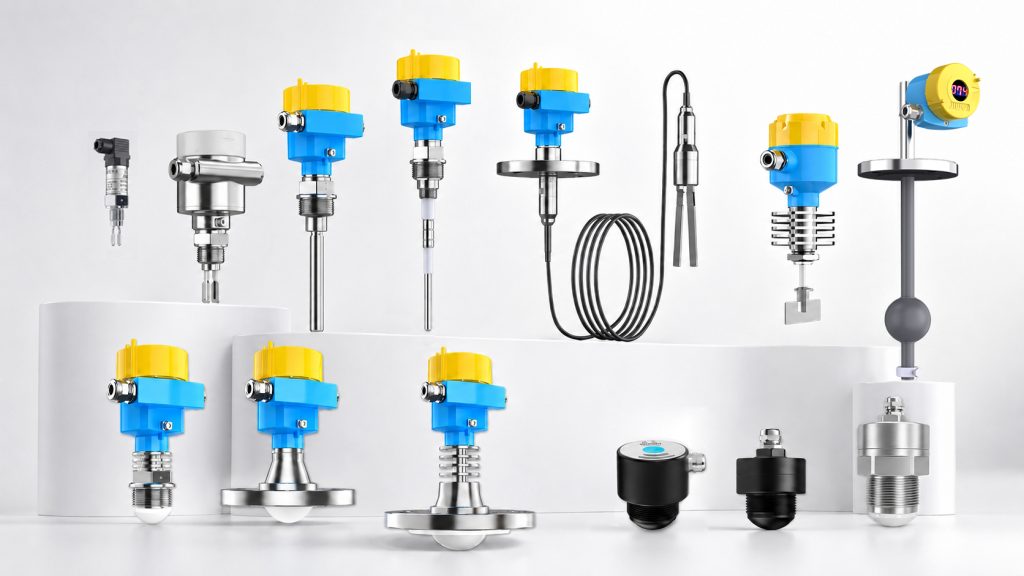
For radar level meters, radar level transmitters, tuning fork level switches, and other instruments installed in hazardous areas, metal explosion-proof cable glands are commonly used. The explosion-proof rating of the cable gland should match the certification requirements of the complete instrument.
M20×1.5 cable entries are often preferred in modern explosion-proof instruments because compatible certified cable glands are widely available and the sealing structure is stable and easy to control.
NPT cable entries can also be used in explosion-proof applications, but they must strictly follow the project specifications and installation requirements. After disassembly or maintenance, the thread sealing must be handled again properly to avoid reduced protection caused by aging sealing materials, incorrect tape wrapping, or repeated installation.
For this reason, cable entry selection in hazardous areas should not be based only on habit or experience. A safer approach is to confirm the instrument explosion-proof certificate, cable entry specification, cable gland certification, cable outer diameter, site wiring method, and regional project standards at the ordering stage.

6. How to Decide Between M20×1.5 and 1/2” NPT in Engineering Projects
In real engineering projects, M20×1.5 and 1/2” NPT should not be judged simply as “better” or “worse.” The correct choice depends on system compatibility and project requirements.
If the project is located in China, Europe, Southeast Asia, or other regions where metric standards are commonly used, and the instruments include radar level meters, level switches, pressure sensors, temperature transmitters, or other electronic field instruments, M20×1.5 is usually the better choice. It can reduce spare parts complexity, improve installation efficiency, and lower maintenance costs.
If the project is located in North America, or if it belongs to oil and gas, refinery, offshore, or petrochemical applications that rely heavily on American pipe thread standards, 1/2” NPT should often be considered first. This helps ensure compatibility with field junction boxes, conduits, and engineering specifications.
For automation systems that use multiple instruments, it is recommended to keep the cable entry standard as consistent as possible. Mixing M20 and NPT across different devices may not seem like a major issue at first, but it can increase complexity in installation, spare parts procurement, maintenance, and troubleshooting.
If the project involves hazardous areas, the cable entry type should be confirmed before ordering. Relying on adapters or conversion fittings at the installation site is not ideal. Although adapters can solve dimensional connection problems, they also add extra sealing points and potential failure points, which may reduce long-term safety and reliability.
7. Practical Selection Guidelines for Industrial Instrument Cable Entries
From the perspective of long-term reliability, cable entry selection for industrial instruments can follow several practical principles.
First, follow the project specification. If the design institute, end user, EPC contractor, or project standard has already specified M20×1.5 or 1/2” NPT, the selected instruments should comply with that requirement.
Second, consider regional practices. M20×1.5 is more common in China, Europe, and many Asian markets, while 1/2” NPT is more common in North America and certain oil and gas projects.
Third, consider the instrument type. Electronic instruments such as radar level meters, level switches, and smart sensors are often well suited for M20 cable entries. Devices that are strongly connected to conduit or piping systems may be selected according to the site standard.
Fourth, pay attention to protection and explosion-proof requirements. A cable entry is not only used for wiring. It must also maintain waterproof, dustproof, anti-vibration, and explosion-proof performance.
Fifth, avoid unnecessary adapters. If the cable entry standard can be determined before the instrument leaves the factory, it is better not to rely on on-site conversion. This helps protect sealing performance and simplifies future maintenance.
8. Conclusion: Choosing the Right Cable Entry Improves System Reliability
Both M20×1.5 and 1/2” NPT are mature industrial connection standards. M20×1.5 focuses more on standardized instrument design, stable sealing, and convenient maintenance. 1/2” NPT is more suitable for American-standard engineering projects, conduit systems, and certain oil and gas applications.
For industrial users, the key is not to decide which thread is universally better, but to determine which cable entry is more suitable for the specific engineering system. Only when the thread standard, sealing structure, explosion-proof requirement, regional standard, and maintenance practice are aligned can the long-term reliability of the measuring system be ensured.
When selecting radar level meters, radar level transmitters, tuning fork level switches, vibrating rod level switches, pressure transmitters, and other industrial automation instruments, users should confirm the cable entry specification at the procurement stage. A small interface detail can have a significant impact on installation quality, operational safety, and maintenance cost.