
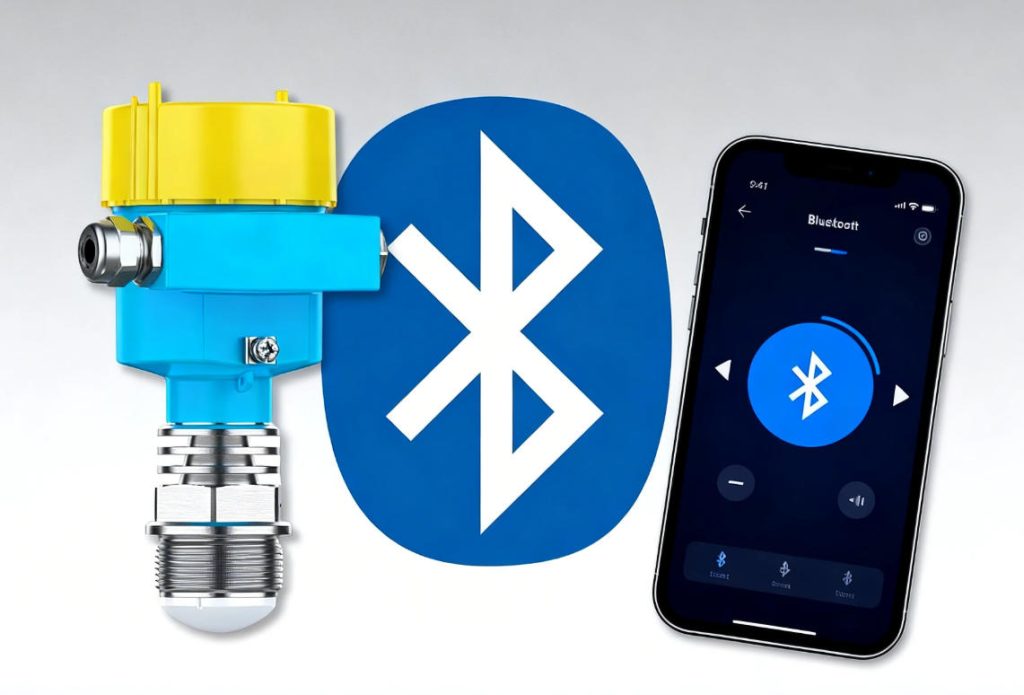
As industrial instrumentation moves toward digitalization and intelligent maintenance, an increasing number of radar level meters are being equipped with Bluetooth connectivity.
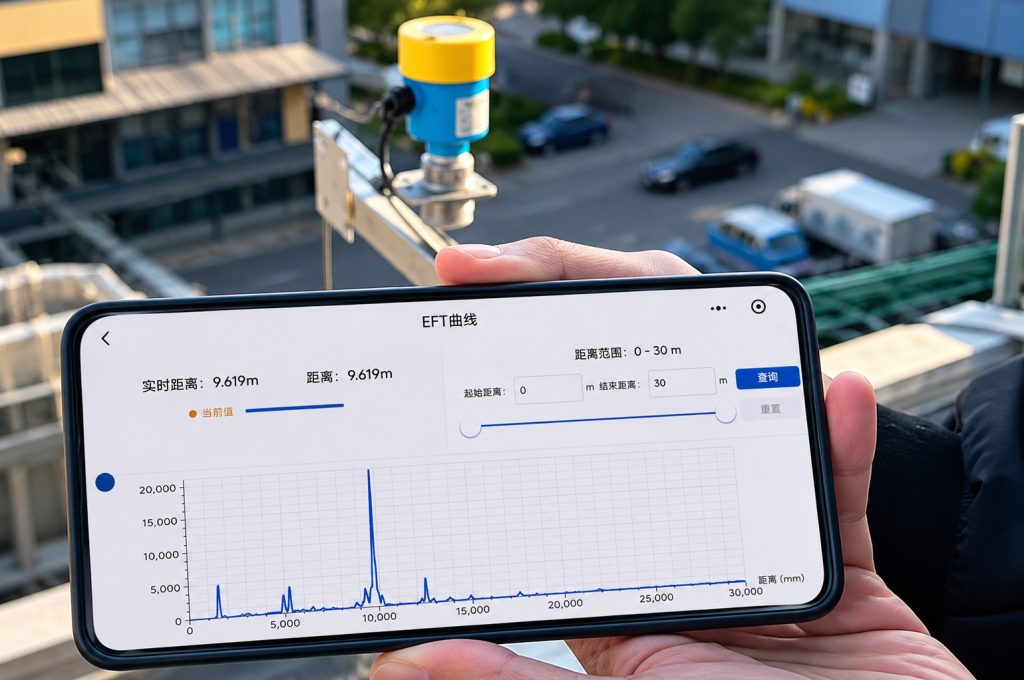
Using a smartphone or other mobile device, engineers can configure parameters, view echo curves, and perform device diagnostics without repeatedly opening the instrument housing or connecting a configuration cable.
However, users working with battery-powered, solar-powered, or two-wire instruments often ask an important question:
Does adding Bluetooth significantly increase the power consumption of a radar level meter?
The answer is that Bluetooth communication always consumes some electrical energy. However, when Bluetooth Low Energy technology and effective power-management strategies are used, its impact on the long-term power consumption of a radar level meter is generally limited.
The actual impact depends not only on whether the instrument has Bluetooth, but also on the module’s operating mode, connection duration, communication frequency, and overall power-management design.
1. What Are the Main Sources of Power Consumption in a Radar Level Meter?
The electrical consumption of a radar level meter usually comes from several functional components:
- Radar signal transmission and reception
- Echo acquisition and digital signal processing
- Microprocessor operation and measurement algorithms
- LCD display and local operating buttons
- 4–20 mA, HART, RS485, or Modbus communication interfaces
- Bluetooth or other wireless communication modules
- Power conversion and circuit protection components
Bluetooth is only one auxiliary communication function within the complete instrument.
Whether it has a noticeable effect on total power consumption depends largely on whether the Bluetooth module operates continuously or is activated only during configuration and maintenance.
2. Why Does Bluetooth Increase Power Consumption?
A Bluetooth module consumes current when it advertises its presence, searches for devices, establishes a connection, authenticates a user, or transfers data.
Therefore, compared with an instrument that does not contain a Bluetooth module, a Bluetooth-enabled radar level meter will theoretically have some additional energy consumption.
However, the module does not consume the same amount of power in every operating state. Typical states include:
- Sleep or standby mode
- Periodic advertising mode
- Waiting for a connection
- Connected without active data transmission
- Active parameter reading or data transmission
Bluetooth Low Energy devices can enter a low-power state when they are not transmitting or receiving data. The advertising interval can also be adjusted to balance device discovery speed and power consumption.
As a result, Bluetooth power consumption depends not only on the protocol version, but also on the instrument’s hardware design and software configuration.
3. Why Is Bluetooth Low Energy Suitable for Industrial Instruments?
Modern industrial instruments generally use Bluetooth Low Energy, commonly known as BLE.
BLE is particularly suitable for intermittent communication tasks such as parameter configuration, status monitoring, and device diagnostics.
Unlike wireless applications that continuously transmit large volumes of data, Bluetooth on a radar level meter is usually used only during specific activities, including:
- Initial installation and measuring-range configuration
- Parameter adjustment after process conditions change
- Viewing real-time measurements or echo curves
- Checking alarms, faults, and instrument status
- Routine inspection and preventive maintenance
After these tasks are completed, the Bluetooth module can reduce its communication frequency, disconnect from the mobile device, or return to sleep mode.
When on-demand communication and effective power-management strategies are implemented, most Bluetooth-related energy consumption occurs during short configuration sessions rather than throughout the entire operating life of the instrument.
4. Does a Newer Bluetooth Version Always Mean Lower Power Consumption?
Not necessarily.
A Bluetooth version indicates the protocol features supported by a device, but the version number alone does not determine the actual power consumption of the complete instrument.
Even when two devices support the same Bluetooth Low Energy version, their energy consumption may differ because of factors such as:
- Bluetooth chip and peripheral circuit design
- Advertising interval
- Connection interval
- Radio transmission power
- Amount of transferred data
- Connection duration
- Automatic sleep and timeout settings
- Coordination between the main processor and Bluetooth module
For this reason, users should not compare Bluetooth-enabled radar level meters solely by Bluetooth version.
It is more useful to review the manufacturer’s specifications for total operating current, standby consumption, peak current, and wireless configuration behavior.
Selected JWrada® radar level meter models support Bluetooth® 5.4 for mobile configuration and field commissioning. Available functions and specifications depend on the selected model and product configuration.
5. How Does Bluetooth Affect Different Power Supply Methods?
5.1 Mains-Powered or Independent DC-Powered Systems
In industrial applications with a stable external power supply, the temporary additional consumption caused by Bluetooth configuration is generally not a major concern.
For these applications, users may place greater emphasis on connection stability, wireless range, data security, and ease of operation.
5.2 Two-Wire 4–20 mA Loops
Two-wire instruments operate within a limited current budget. Measurement electronics, displays, communication interfaces, and wireless modules must all function within the available loop power.
Users should therefore confirm:
- Whether the instrument still meets loop-power requirements when Bluetooth is enabled
- Whether startup or wireless communication produces a high peak current
- Whether the instrument remains stable at low supply voltage or with long cable runs
- Whether Bluetooth operation affects the 4–20 mA or HART output
5.3 Battery-Powered Systems
For battery-powered instruments, long-term average power consumption is especially important.
A single Bluetooth configuration session may consume very little energy. However, frequent device discovery, continuous connections, or very short advertising intervals can reduce battery life.
Users should estimate average operating current based on the expected Bluetooth usage frequency rather than comparing standby consumption alone.
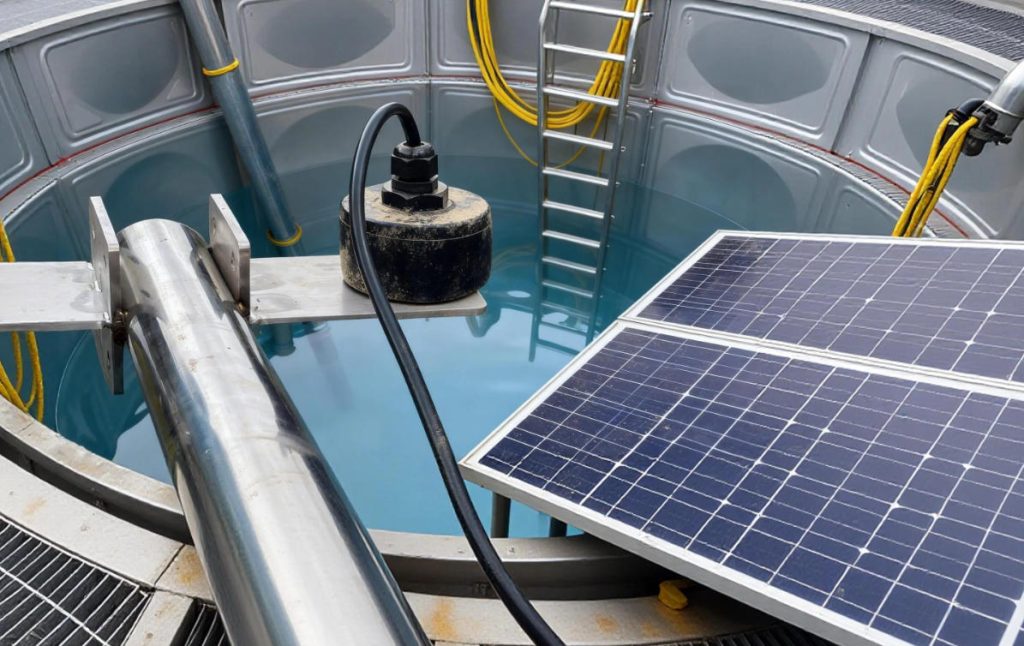
5.4 Solar-Powered and Unattended Monitoring Sites
Solar-powered systems are also affected by available sunlight, battery capacity, low-temperature performance, and prolonged periods of poor weather.
The Bluetooth module should therefore be included in the overall energy budget together with radar measurement electronics, remote communication equipment, and other electrical loads.
Automatic sleep, connection timeout, and on-demand wake-up functions are particularly important in these applications.
6. How Can You Determine Whether Bluetooth Power Consumption Is Acceptable?
Users can request the following information from the instrument manufacturer:
- Total operating current when Bluetooth is disabled
- Current consumption during Bluetooth standby or advertising
- Peak current during connection and data transmission
- Typical duration of a configuration session
- Availability of automatic sleep and connection timeout functions
- Whether Bluetooth can be disabled or its advertising behavior adjusted
- Whether stable measurement and communication are maintained at the minimum supply voltage
For battery-powered or solar-powered systems, power consumption can be estimated using the following principle:
Average daily energy consumption = basic instrument energy consumption + Bluetooth connection energy consumption + energy consumption of other communication modules
A meaningful engineering estimate requires actual connection duration and usage frequency.
7. What Practical Benefits Does Bluetooth Configuration Provide?
Compared with its limited additional power demand, Bluetooth can provide significant benefits during installation, commissioning, and maintenance.
These benefits may include:
- Reducing the need to open the instrument housing
- Eliminating frequent configuration-cable connections
- Allowing parameters to be configured from a smartphone
- Providing convenient access to real-time measurements and echo curves
- Reducing operational difficulty in elevated or confined locations
- Shortening installation, commissioning, and troubleshooting time
- Limiting unnecessary physical contact with field instruments
- Improving inspection and batch-maintenance efficiency
JWrada® radar level meters support mobile wireless configuration on selected models. Depending on the instrument model and software version, available functions may include parameter configuration, device diagnostics, operating-status monitoring, and echo information display.
8. Frequently Asked Questions
Does Bluetooth Still Consume Power When It Is Turned Off?
The Bluetooth module and its control circuits may still consume a small standby current, depending on the hardware and software design.
For low-power applications, users should request measured current values for disabled, standby, advertising, connected, and transmitting states.
Does Keeping a Smartphone Connected Increase Power Consumption?
Yes.
Maintaining an active connection and frequently transferring data generally consume more energy than sleep mode or low-frequency advertising.
Disconnecting after configuration helps reduce long-term average power consumption.
Can Bluetooth Affect Radar Level Measurement Accuracy?
Under normal design conditions, Bluetooth is used for parameter configuration and data communication. It does not directly participate in radar echo measurement.
However, the instrument should still incorporate appropriate electromagnetic compatibility, power isolation, circuit layout, and software scheduling to prevent the communication module from interfering with the measurement electronics.
Can a Battery-Powered Radar Level Meter Include Bluetooth?
Yes, but battery life should be evaluated based on total average current, Bluetooth activation frequency, battery capacity, ambient temperature, and other operating conditions.
Battery life should not be estimated solely from the term “Bluetooth Low Energy.”
9. Conclusion
Bluetooth functionality does add some power consumption to a radar level meter, but the actual increase depends on the instrument design and the way Bluetooth is used.
When Bluetooth Low Energy, on-demand connections, automatic sleep, and timeout disconnection are implemented, Bluetooth operates mainly during short parameter-configuration and data-reading sessions. Its effect on long-term average power consumption is therefore generally limited.
For mains-powered installations, the efficiency and convenience provided by Bluetooth are often more important than its additional energy demand.
For two-wire, battery-powered, and solar-powered systems, users should carefully review total operating current, peak current, connection frequency, and actual site power conditions.
A suitable Bluetooth-enabled radar level meter should therefore be selected based on complete technical specifications, measured electrical data, and application requirements—not simply on the Bluetooth version or marketing description.