
Design temperature and process temperature are often confused when selecting industrial equipment and process instruments.
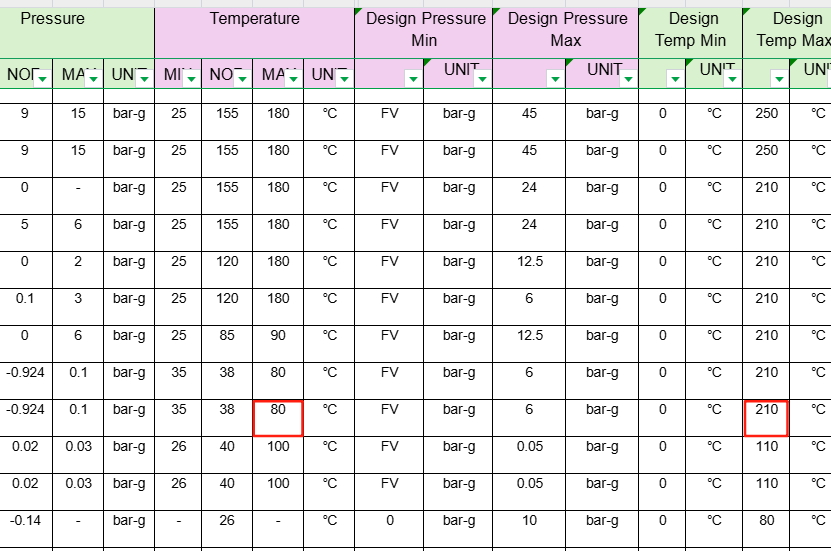
For example, if the maximum normal operating temperature is only 80°C, why might a supplier recommend a high-temperature instrument rated according to a design temperature of 210°C? Does this mean the instrument is over-specified?
The answer is no.
Process temperature represents the actual temperature of the medium during normal operation, while design temperature defines the temperature limits that the equipment must be able to withstand safely.
Industrial instrument selection should not be based only on the normal process temperature. The design temperature specified in approved engineering documents should normally be used as a key safety verification parameter. Process temperature, ambient temperature, pressure, medium characteristics, and abnormal operating conditions must also be considered.
What Is Design Temperature?
Design temperature is the temperature value established during the engineering design of equipment, piping, or industrial instruments. It is used for material selection, structural calculations, seal design, and safety verification.
Design temperature is not simply the highest temperature measured during normal production. It should also account for extreme or abnormal conditions that the equipment may encounter, including:
- Process temperature fluctuations
- Equipment startup and shutdown
- High-temperature steam purging
- Cleaning, sterilization, or disinfection
- Heat exchanger or control valve failure
- Backflow of high-temperature media
- Changes in ambient temperature
- Short-term abnormal temperature increases
For maximum-temperature conditions, the design temperature is generally higher than the normal operating temperature and includes an appropriate safety margin.
For low-temperature applications, the minimum design temperature may also be lower than the normal operating temperature.
Therefore, design temperature is an important basis for equipment material selection, manufacturing, and safe operation.
How Does Design Temperature Affect Equipment and Instrument Selection?
1. Wetted Material Selection
Temperature changes can affect the mechanical strength, corrosion resistance, and service life of both metallic and non-metallic materials.
At elevated temperatures, some materials may lose strength, expand, soften, deform, or age more quickly. If the allowable temperature of the selected material is lower than the specified design temperature, the equipment may operate temporarily but still face long-term reliability or safety risks.
2. Seal Material Selection
O-rings, gaskets, packing materials, and other sealing components all have defined temperature limits.
Excessive temperature may cause sealing materials to soften, harden, lose elasticity, or age prematurely. This can eventually result in process leakage.
Instrument selection should therefore consider both the design temperature and the chemical compatibility of the sealing material with the process medium.
3. Structural Strength and Process Connections
Design temperature affects the structural design of instrument housings, probes, rods, flanges, threaded connections, and pressure-retaining components.
In high-temperature, high-pressure, or frequently changing temperature conditions, thermal expansion, thermal stress, and repeated heating and cooling cycles must also be considered.
4. Electronic Components and Sensor Arrangement
For industrial instruments containing electronic components, the process medium temperature is not the same as the allowable temperature of the electronic housing.
Heat may be transferred from the process connection and probe into the electronic section. This can cause measurement drift, accelerated component aging, false alarms, or complete instrument failure.
High-temperature instruments may therefore require cooling extensions, thermal isolation structures, or remotely mounted electronics.
What Is Process Temperature?
Process temperature, also known as operating temperature or working temperature, is the actual temperature reached by the process medium during production.
Process temperature is mainly used for:
- Monitoring process operation
- Setting control system parameters
- Confirming the instrument’s normal measuring range
- Evaluating normal equipment operating conditions
- Analyzing process fluctuations and production efficiency
Process temperature reflects the actual operating condition of the equipment under normal production conditions. However, it does not necessarily represent the highest or lowest temperature that the equipment may experience.
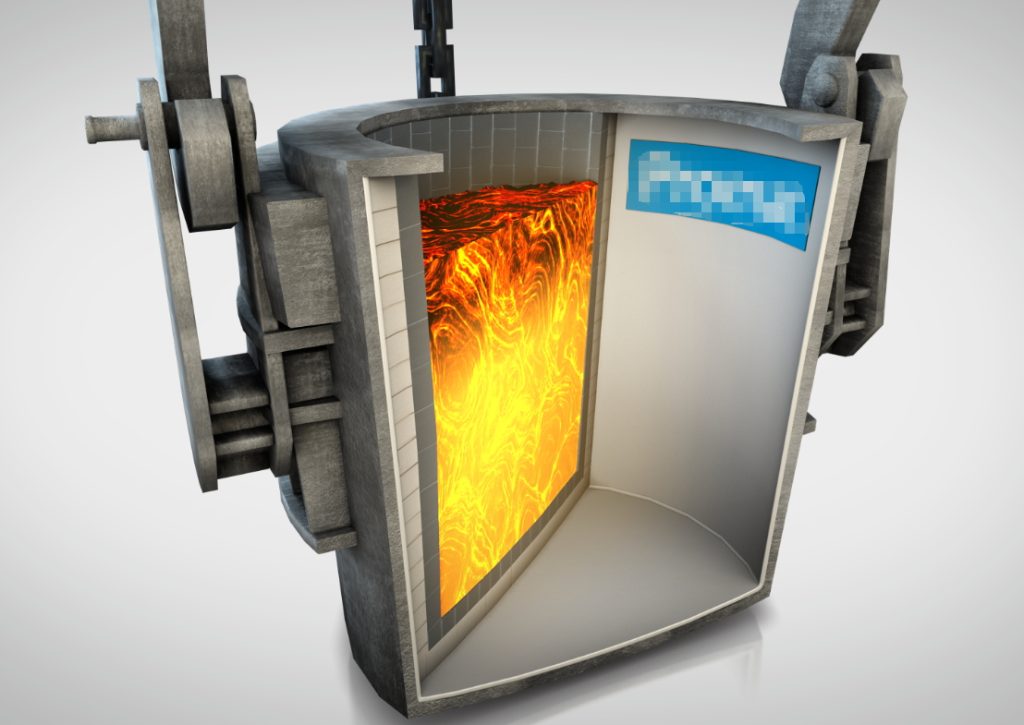
For example, a storage tank may normally operate between 60°C and 80°C. However, during steam purging or cleaning, the instrument process connection may be exposed to a much higher temperature for a short period.
If only 80°C is provided during instrument selection, the actual temperature resistance required for the instrument may be underestimated.
Design Temperature vs. Process Temperature
| Comparison Item | Design Temperature | Process Temperature |
|---|---|---|
| Definition | Temperature used for equipment design and safety verification | Actual temperature of the medium during operation |
| Main Purpose | Material selection, structural design, seal design, and safety verification | Process control, operational monitoring, and production management |
| Abnormal Conditions Considered | Normally yes | Usually represents normal operating conditions |
| Safety Margin Included | Usually includes an appropriate margin | Normally does not include a safety margin |
| Role in Instrument Selection | Determines temperature resistance, materials, seals, and configuration | Determines the normal measuring and operating range |
| Typical Data Source | Engineering documents, equipment datasheets, or technical specifications | Field measurements or process operating data |
In simple terms:
Process temperature answers the question, “At what temperature does the equipment normally operate?”
Design temperature answers the question, “What temperature must the equipment be able to withstand safely?”
Should Instrument Selection Be Based on Design Temperature or Process Temperature?
Industrial instrument selection should not be treated as a simple choice between design temperature and process temperature. Both values must be reviewed.
In general:
- Process temperature is used to determine the normal operating range of the instrument.
- Design temperature is used to verify materials, seals, structural design, and overall temperature resistance.
- Maximum abnormal temperature is used to determine whether a high-temperature configuration is required.
- Ambient temperature is used to confirm whether the electronics and display can operate reliably.
When equipment safety and temperature resistance are involved, the approved design temperature should normally be used as the main verification parameter.
The instrument configuration should not be reduced simply because the current normal process temperature is lower.
If the customer provides only the process temperature, the supplier should also confirm:
- Maximum and minimum design temperatures
- Normal, maximum, and minimum operating temperatures
- Whether steam purging or high-temperature cleaning is used
- Operating pressure and design pressure
- Medium name, density, viscosity, and corrosiveness
- Ambient temperature
- Insulation thickness
- Instrument installation position
- Whether rapid temperature changes or thermal shock may occur
- How long abnormal temperature conditions may last
Why May a High-Temperature Instrument Be Required When the Process Temperature Is Only 80°C?
A normal process temperature of 80°C does not necessarily mean that a standard instrument is suitable.
The following conditions should be evaluated before making a selection.
1. Engineering Documents Specify a Higher Design Temperature
If the equipment datasheet or instrument specification states a design temperature of 210°C, the system has been engineered to account for higher-temperature conditions.
Unless the design parameter is formally revised by the responsible engineering party, the supplier should not reduce the instrument’s temperature rating based only on the current normal operating temperature.
2. Steam Purging or High-Temperature Cleaning Is Used
The normal production temperature may be only 80°C, but the instrument may be exposed to much higher temperatures during steam purging, CIP cleaning, SIP sterilization, or equipment disinfection.
These high-temperature conditions may last only a short time, but they can still damage seals or electronic components that are not rated for the exposure.
3. Temperature May Increase Under Abnormal Conditions
Heat exchanger leakage, control valve failure, incorrect bypass operation, or the backflow of hot media may cause the system temperature to exceed its normal operating level.
One purpose of design temperature is to provide a safe boundary for reasonably foreseeable abnormal conditions.
4. Heat Can Be Conducted Through the Process Connection
Level switches, point level sensors, and other insertion-type instruments are normally installed directly on tanks or pipelines.
Even if the electronic housing does not contact the process medium, heat can still travel through the probe and process connection.
High-temperature applications may therefore require a cooling extension, thermal isolation structure, or remote electronics.
How Does High Temperature Affect a Tuning Fork Level Switch?
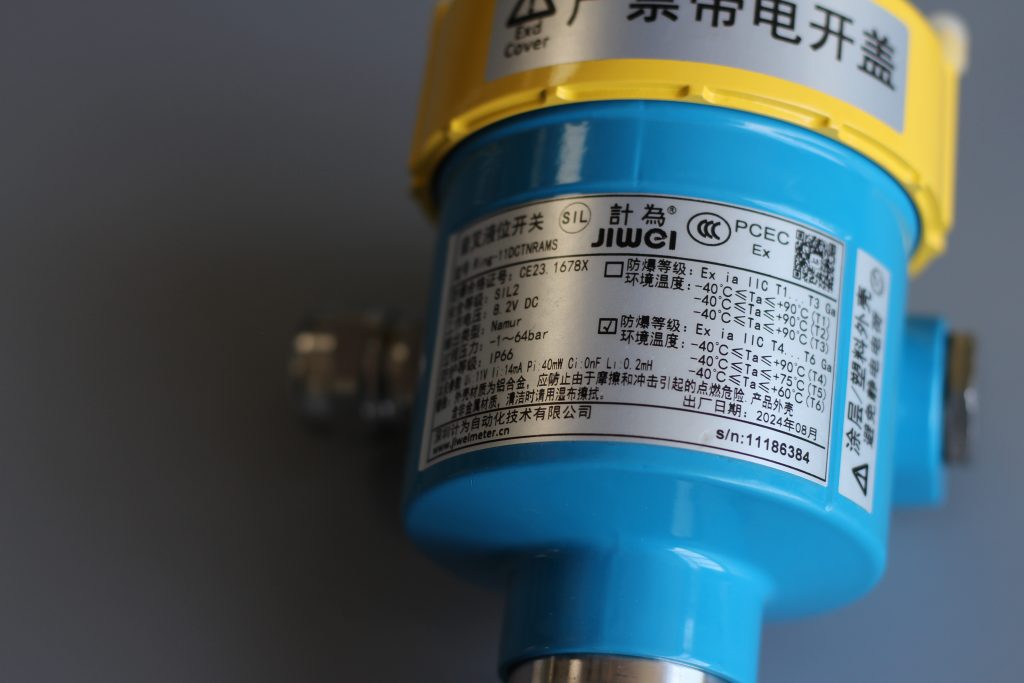
A tuning fork level switch detects the presence or absence of liquid by monitoring changes in the vibration of its fork.
High temperature can affect its mechanical structure, sealing system, sensing element, and electronics.
1. Changes in Fork Vibration Characteristics
The elastic modulus of a material changes with temperature. This may affect the natural vibration characteristics of the tuning fork.
A properly designed tuning fork level switch uses suitable materials, structural design, and temperature compensation to maintain stable detection within its specified operating range.
If the actual temperature exceeds the allowable limit, measurement instability or false switching may occur.
2. Accelerated Seal Aging
Continuous exposure to high temperature may reduce the elasticity and service life of sealing materials, increasing the risk of process leakage.
If the medium is also corrosive, both temperature resistance and chemical compatibility must be evaluated. Seal selection should never be based on temperature alone.
3. Reduced Electronic Component Reliability
Electronic components exposed to excessive heat may experience parameter drift, shortened service life, or a higher failure rate.
High-temperature tuning fork level switches often use cooling extensions, optimized heat-transfer paths, or remote electronics to reduce the temperature reaching the electronic section.
4. Increased Maintenance and Shutdown Risk
An instrument with an insufficient temperature rating may not fail immediately.
However, as seals age and electronic performance deteriorates, false alarms, unexpected shutdowns, and instrument replacement may become more frequent.
Correct high-temperature instrument selection is therefore not only about whether the instrument can operate. It also affects long-term maintenance costs, reliability, and production continuity.
How to Confirm Design Temperature and Process Temperature Correctly
To avoid instrument selection errors, complete temperature information should be provided during the inquiry or technical clarification stage.
Providing only one “maximum temperature” value is often insufficient.
A recommended format is:
- Normal process temperature: 60°C to 80°C
- Maximum operating temperature: 100°C
- Maximum design temperature: 210°C
- Ambient temperature: −20°C to 60°C
- Steam purging temperature: 180°C
- Duration of high-temperature exposure: approximately 30 minutes per cycle
- Insulation installed: Yes
- Insulation thickness: 100 mm
This information helps the supplier determine whether the application requires:
- A high-temperature instrument
- A cooling extension
- Special sealing materials
- Remote electronics
- Thermal insulation measures
- A specific process connection or installation arrangement
Recommendations for Suppliers and Purchasers
Recommendations for Instrument Suppliers
Suppliers should select instruments according to the formally approved design parameters provided by the customer.
The quotation or technical proposal should clearly state:
- Allowable process medium temperature
- Ambient temperature range
- Design pressure and allowable operating pressure
- Seal material
- Process connection
- Whether a high-temperature extension is required
- Installation requirements for special operating conditions
When only the normal process temperature is provided, the supplier should not assume that the process temperature and design temperature are the same.
Relevant engineering documents and abnormal operating conditions should be confirmed before finalizing the instrument selection.
Recommendations for Purchasers and End Users
When comparing quotations from different suppliers, the purchaser should not compare price alone.
It is also necessary to verify whether all suppliers are using the same design conditions.
Standard instruments and high-temperature instruments may differ significantly in:
- Wetted materials
- Seal materials
- Mechanical structure
- Cooling extensions
- Thermal isolation
- Electronic component configuration
If the technical conditions are different, the quoted prices are not directly comparable.
Frequently Asked Questions
Is Design Temperature Always Higher Than Process Temperature?
For maximum-temperature conditions, the design temperature is normally higher than the normal process temperature.
For minimum-temperature conditions, the minimum design temperature may be lower than the normal operating temperature.
The exact values should be determined by the process design conditions, abnormal operating scenarios, and applicable engineering documents. A fixed temperature difference should not be assumed.
Are Working Temperature and Process Temperature the Same?
In many applications, both terms are used to describe the actual operating temperature of the process.
However, “working temperature” may also refer to the allowable temperature range of the instrument body, electronic components, or surrounding environment.
To avoid misunderstanding, technical documents should use more specific terms such as:
- Process medium temperature
- Ambient temperature
- Electronics housing temperature
- Storage temperature
Is the Maximum Instrument Temperature Rating the Same as the Design Temperature?
Not necessarily.
The maximum temperature stated in an instrument datasheet may depend on:
- Process pressure
- Seal material
- Process connection
- Cooling extension
- Installation method
- Duration of high-temperature exposure
Instrument selection should not be based only on comparing two temperature values. The complete specifications and final technical selection documents should be reviewed.
What Are the Risks of Selecting an Instrument Based Only on Normal Process Temperature?
Possible risks include:
- Seal failure
- Probe deformation
- Measurement drift
- Electronic component damage
- False alarms
- Process leakage
- Unexpected shutdowns
- Reduced instrument service life
The risk is particularly high in applications involving steam purging, high-temperature cleaning, rapid temperature increases, or abnormal operating conditions.
Conclusion
Design temperature and process temperature serve different purposes, but both are essential for industrial instrument selection.
Process temperature describes the normal operating condition of the equipment.
Design temperature determines the required material, seal, structural, and temperature-resistance configuration. It is an important parameter for the safety verification of industrial equipment and instruments.
When selecting level switches, point level sensors, and other industrial instruments, users should confirm:
- Design temperature
- Process temperature
- Ambient temperature
- Operating and design pressure
- Medium properties
- Cleaning and purging conditions
- Abnormal temperature scenarios
- Installation arrangement
For applications involving high-temperature cleaning, steam purging, or abnormal temperature increases, a high-temperature structure, cooling extension, or thermal isolation design may be required.
Complete and accurate process data not only prevents under-specification, but also reduces instrument failure, unplanned shutdowns, and long-term maintenance costs.
For assistance in selecting a high-temperature tuning fork level switch, please provide the process medium, normal operating temperature, design temperature, pressure, process connection, and installation method. These details will allow the supplier to recommend a suitable instrument configuration.