Reliable level control is essential throughout coconut juice processing, storage, and filling operations. Accurate high- and low-level detection helps prevent tank overfilling, pump dry running, production interruptions, and unnecessary product waste.
However, coconut juice can present several measurement challenges. Depending on the recipe and production process, it may contain fine pulp, fibers, suspended solids, foam, air bubbles, or ingredients that change the liquid’s viscosity.
In addition, any instrument that comes into direct contact with the product must meet strict hygiene and cleanability requirements.
For this application, the Ring-11 food-grade tuning fork level switch was selected to provide dependable point-level detection in coconut juice storage tanks. Its sanitary design, compact fork, and resistance to common process disturbances make it suitable for food and beverage production environments.
Challenges in Coconut Juice Level Measurement
Strict Hygiene Requirements
Coconut juice is a beverage intended for direct consumption. Level switches installed in storage tanks, processing vessels, or pipelines must therefore use suitable wetted materials and hygienic process connections.
Rough surfaces, gaps, and difficult-to-clean structures may retain product residue and increase the risk of contamination. They can also make cleaning procedures more time-consuming.
A sanitary liquid level switch should have smooth wetted surfaces, corrosion-resistant materials, and a design that supports efficient cleaning.
Suspended Solids and Changing Viscosity
Coconut juice may contain small amounts of pulp, fibers, or other suspended particles. Its viscosity can also vary with temperature, product formulation, and processing conditions.
These characteristics may cause mechanical level switches to stick or become blocked. Product buildup can also affect instruments that are highly sensitive to coating or adhesion.
The selected level switch must therefore remain stable when exposed to changing product properties.
Foam and Air Bubbles
Foam and air bubbles may be generated during pumping, mixing, or filling. Some level measurement technologies may interpret dense foam as liquid, resulting in false alarms or unstable switching.
For reliable operation, the level switch should distinguish between actual liquid contact and common process disturbances.
Continuous Production Requirements
Food and beverage production lines often operate continuously. Frequent false alarms or instrument failures can interrupt filling, transfer, and cleaning processes.
A dependable coconut juice level switch must provide repeatable switching performance and require minimal maintenance over long-term operation.
How the Ring-11 Tuning Fork Level Switch Works
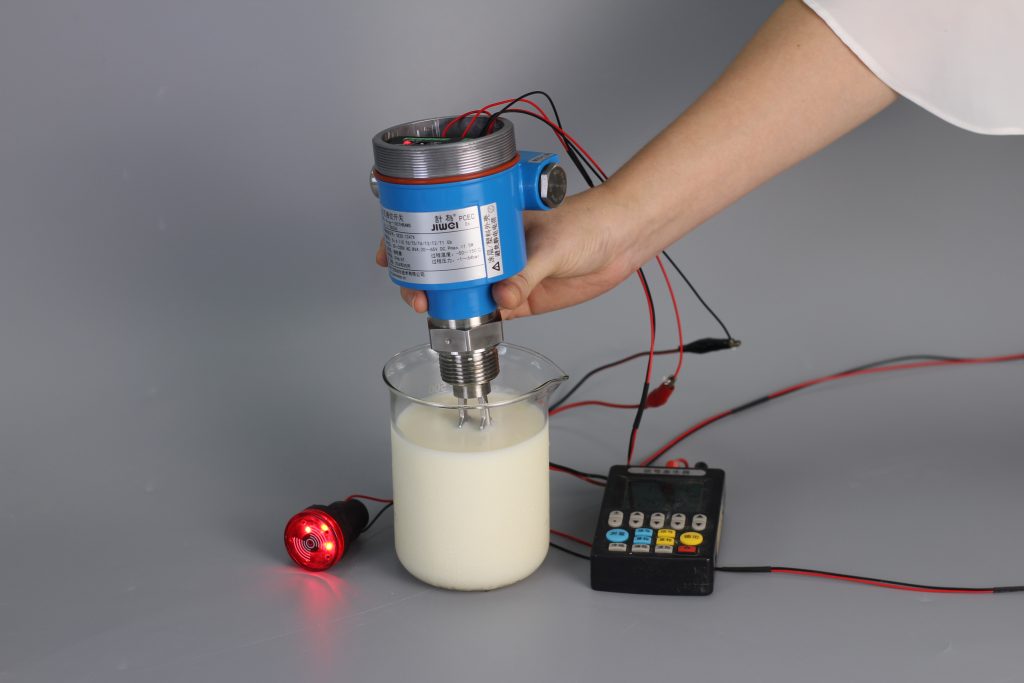
The Ring-11 tuning fork level switch uses piezoelectric elements to make the fork vibrate at its natural resonance frequency.
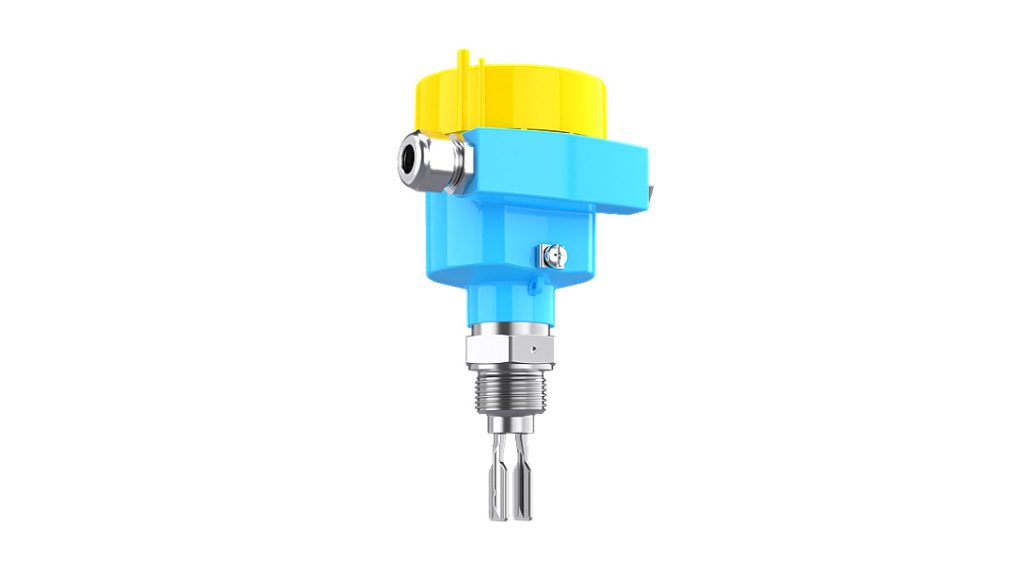
When the fork is surrounded by air, it vibrates at a defined frequency. When coconut juice covers the fork, the vibration frequency changes. The instrument’s internal electronics detect this change and activate the configured switching output.
The output signal can be connected to a PLC, relay, alarm system, pump controller, or valve control system.
Typical applications include:
- High-level alarm
- Tank overfill prevention
- Low-level alarm
- Pump dry-run protection
- Inlet and outlet control
- Filling process confirmation
- Process interlock control
Unlike float switches, the Ring-11 has no moving mechanical parts. This helps reduce the risk of sticking and makes it suitable for beverage tanks, buffer vessels, and selected process pipelines.
Why the Ring-11 Is Suitable for Coconut Juice
Food-Grade Wetted Design
The Ring-11 food-grade tuning fork level switch is available with a sanitary clamp process connection and 316L stainless steel wetted parts.
For hygienic applications, the wetted surface can have a finish of Ra below 0.5 μm.
The smooth surface helps reduce product adhesion and makes the instrument easier to clean. This design is suitable for industries with strict hygiene requirements, including:
- Food processing
- Beverage production
- Dairy processing
- Pharmaceutical manufacturing
- Brewing and fermentation
- Liquid ingredient handling
Suitable for Liquids with Suspended Solids
The Ring-11 can be used with various liquids, including products with changing viscosity and small suspended particles.
For coconut juice containing limited amounts of pulp or fine fibers, correct installation can help reduce buildup around the fork and maintain stable switching performance.
The instrument should be installed where the fork has sufficient clearance and is not exposed to heavy product accumulation.
Compact 40 mm Fork Design
The Ring-11 features a compact 40 mm fork.
This short insertion length makes the instrument suitable for:
- Small storage tanks
- Buffer vessels
- Filling machines
- Narrow process pipelines
- Installations with limited internal space
The compact fork also reduces the surface area available for product buildup.
Resistance to Foam and Air Bubbles
The Ring-11 detects liquid by monitoring changes in the fork’s vibration frequency.
Because the measurement does not depend on optical reflection, capacitance, or a moving float, the switch can provide stable performance in applications where foam, bubbles, turbulence, or changing product properties are present.
Actual performance may depend on foam density and liquid content. Application testing is recommended when the process produces unusually thick or wet foam.
Corrosion-Resistant 316L Stainless Steel
Coconut juice and related beverage formulations may be slightly acidic. Instruments in direct contact with the product must therefore use suitable corrosion-resistant materials.
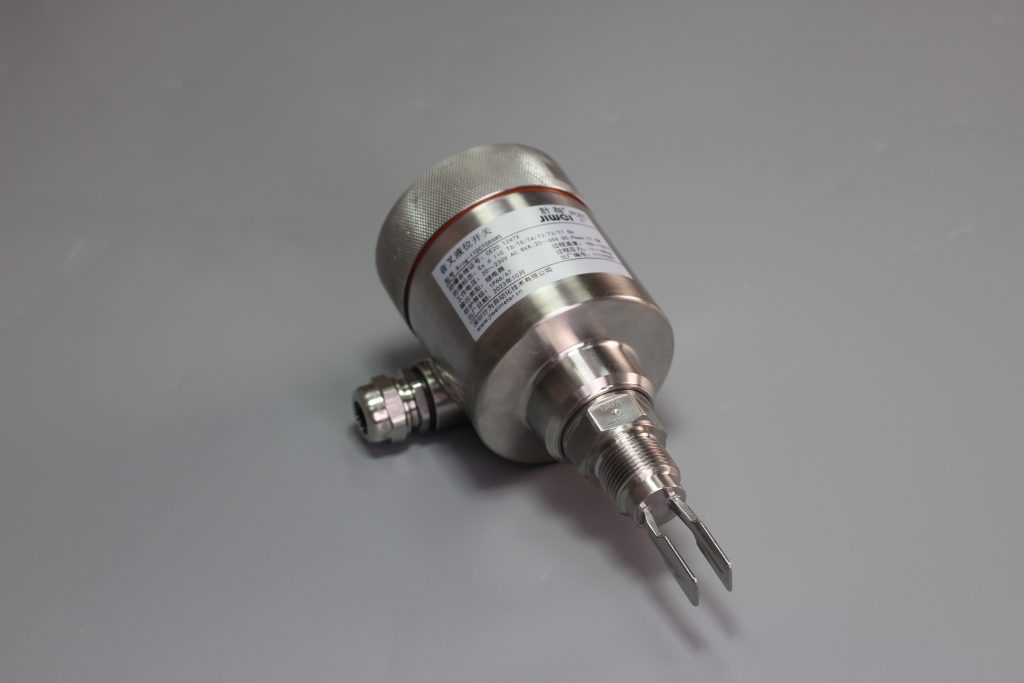
The Ring-11 food-grade version uses 316L stainless steel for its wetted components. This material is commonly used in food and beverage processing because of its corrosion resistance, durability, and cleanability.
Material compatibility should still be confirmed based on:
- Product formulation
- Process temperature
- Cleaning chemicals
- Cleaning concentration
- CIP or SIP conditions
Multiple Output Options
The Ring-11 is available with several output configurations, allowing it to connect with different automation and control systems.
Available options may include:
- Relay output
- Two-wire electronic output
- NAMUR output
- Transistor output
The appropriate output should be selected according to the PLC, control cabinet, safety system, or hazardous-area requirements of the application.
Safety and Compliance Options
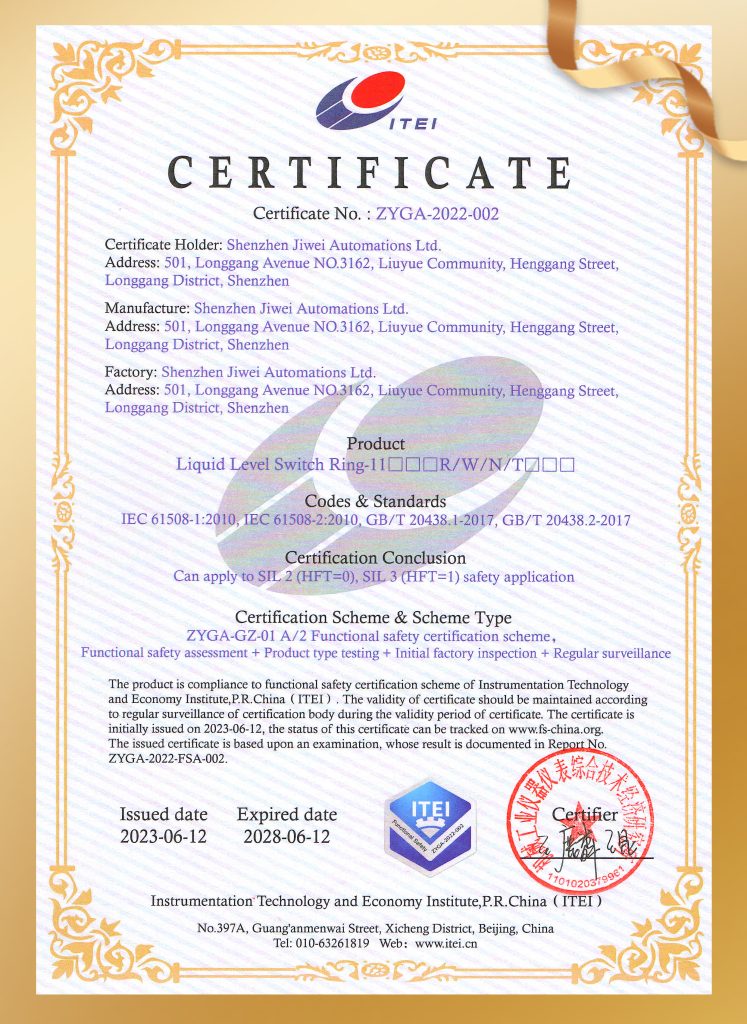
Depending on the selected model and configuration, the Ring-11 may be available with certifications or approvals for functional safety, hazardous locations, and general electrical compliance.
Functional safety configurations may support SIL-rated applications when the instrument is installed as part of a properly designed safety system.
The exact certification, model number, system architecture, and certificate scope should always be confirmed before ordering.
Coconut Juice Tank Application
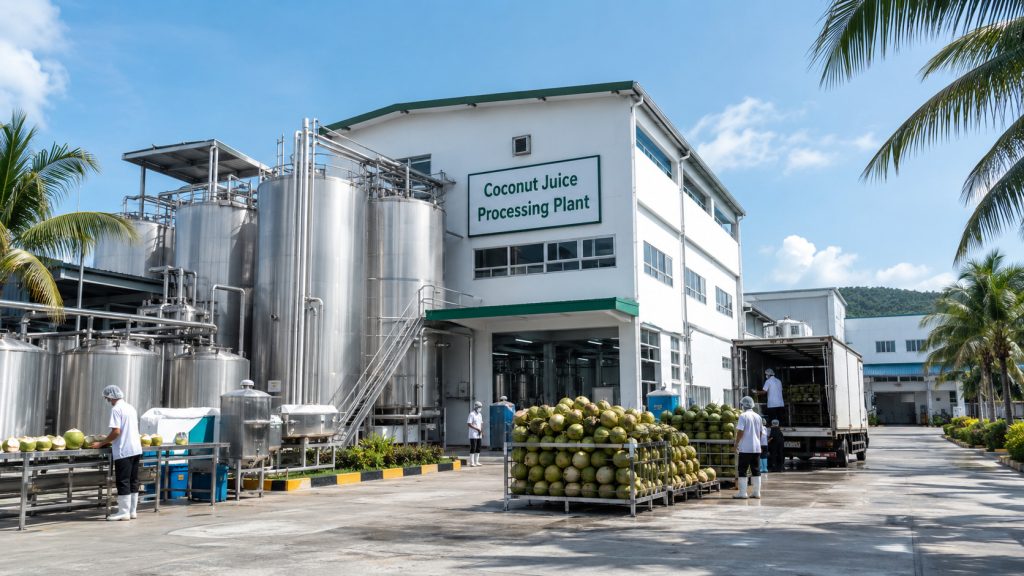
In this project, the Ring-11 food-grade tuning fork level switch was installed on a coconut juice storage tank.
The instrument was used to detect whether the product had reached a predefined high- or low-level position. Once the liquid covered or uncovered the fork, the switch transmitted a stable signal to the plant control system.
The Ring-11 performed reliably despite changes in coconut juice viscosity, suspended particles, foam, and normal process movement.
Its sanitary clamp connection and smooth stainless steel surface also helped simplify cleaning and maintenance.
After installation, the customer achieved more stable level control and reduced the need for frequent instrument inspection. The product was subsequently considered for additional coconut juice level detection points within the production process.
Typical Applications in a Coconut Juice Production Line
The Ring-11 can be used at multiple locations in a coconut beverage production facility.
Raw Material Tanks
The switch can provide high- or low-level detection in tanks containing coconut water, coconut milk, coconut juice concentrate, or liquid ingredients.
Mixing Tanks
It can be used to detect minimum or maximum levels during blending, dilution, and ingredient preparation.
Buffer Tanks
The Ring-11 can help maintain a stable product supply between processing, sterilization, and filling stages.
Filling Equipment
A compact tuning fork level switch can confirm the presence of liquid and help prevent filling equipment from operating without sufficient product.
Pump Protection
A low-level switch can stop a transfer pump before the tank becomes empty, reducing the risk of dry running and equipment damage.
Overfill Protection
A high-level switch can trigger an alarm or close an inlet valve before the tank overflows.
Installation Guidelines
Correct installation is essential for stable coconut juice level measurement.
Avoid Direct Product Impact
Do not install the tuning fork directly below a tank inlet or in an area where the product strikes the fork at high velocity.
Continuous impact may cause unstable signals and increase mechanical stress on the instrument.
Provide Sufficient Clearance
The fork should not touch the tank wall, pipeline wall, agitator, or other internal components.
Adequate clearance helps the fork vibrate freely and reduces the risk of product buildup around the sensing area.
Consider the Flow Direction
When the instrument is installed in a pipeline or a location with strong product movement, the fork surfaces should be aligned with the direction of flow whenever possible.
This can reduce resistance, mechanical loading, and product accumulation.
Select the Correct High-Level Position
A high-level switch should be installed below the maximum allowable tank level.
The installation height should provide enough time for the control system to stop a pump or close an inlet valve before the product reaches the overflow point.
Select the Correct Low-Level Position
A low-level switch should be positioned according to the pump inlet, minimum operating volume, and required product reserve.
The switch should activate before the remaining liquid level becomes too low for safe pump operation.
Confirm Cleaning Conditions
Before selecting the instrument, confirm the cleaning process and operating conditions, including:
- CIP temperature
- SIP temperature, if applicable
- Cleaning chemical type
- Chemical concentration
- Process pressure
- Seal material
- Required surface finish
Providing complete process information helps ensure that the selected level switch is compatible with both the product and the cleaning procedure.
Benefits of Using the Ring-11 for Coconut Juice
The Ring-11 food-grade tuning fork level switch provides several advantages for coconut juice processing applications:
- Compact sanitary design
- No moving mechanical parts
- 316L stainless steel wetted components
- Smooth food-grade surface finish
- Resistance to foam and air bubbles
- Suitable for changing viscosity
- Applicable to liquids with small suspended particles
- Multiple output options
- Simple installation
- Low maintenance requirements
- Reliable high- and low-level detection
Tuning Fork Level Switch vs. Continuous Level Sensor
A tuning fork level switch is a point-level instrument. It detects whether the liquid has reached a specific position.
It is commonly used for:
- High-level alarms
- Low-level alarms
- Overfill protection
- Pump protection
- Process interlocks
It does not continuously measure the total liquid height inside the tank.
When real-time tank level, volume, or percentage information is required, a continuous level transmitter such as a radar level sensor may be more appropriate.
In many coconut juice storage applications, a continuous radar level transmitter is used for inventory monitoring, while a tuning fork level switch provides an independent high-level or low-level safety alarm.
Conclusion
Coconut juice level measurement requires more than basic liquid detection. The selected instrument must also account for hygiene, foam, suspended solids, changing viscosity, product buildup, and continuous production requirements.
The Ring-11 food-grade tuning fork level switch combines a sanitary clamp connection, 316L stainless steel wetted parts, a compact fork, and reliable point-level detection.
With proper model selection and installation, it can be used for high-level alarms, low-level alarms, pump protection, overfill prevention, and process control in coconut juice tanks and beverage production equipment.
For the best results, users should provide complete process information, including liquid density, viscosity, temperature, pressure, cleaning conditions, and installation location, before selecting a model.
Frequently Asked Questions
Can a tuning fork level switch be used for coconut juice?
Yes. A tuning fork level switch can be used for high- and low-level detection in coconut juice tanks.
For coconut juice containing pulp, fibers, or suspended solids, the instrument should be selected according to the product viscosity and installed where excessive buildup is unlikely.
Can the Ring-11 measure continuous liquid level?
No. The Ring-11 is a point-level switch.
It detects whether liquid is present at a specific installation position. A radar level transmitter or another continuous level sensor should be used when real-time liquid height or tank volume is required.
Will coconut juice foam cause false alarms?
The Ring-11 is generally resistant to common foam and air-bubble interference because it detects changes in vibration frequency.
However, very dense foam with a high liquid content may affect switching behavior. Testing is recommended for applications with unusual foam conditions.
Is the Ring-11 suitable for CIP cleaning?
A food-grade Ring-11 configuration can be suitable for CIP applications when the process temperature, pressure, seal material, and cleaning chemicals are compatible with the selected model.
The full cleaning procedure should be reviewed before final product selection.
What material is recommended for coconut juice applications?
316L stainless steel is commonly recommended for wetted parts in food and beverage applications because of its corrosion resistance, durability, and cleanability.
Compatibility should still be checked against the specific coconut juice formulation and cleaning chemicals.
Can the Ring-11 protect a pump from dry running?
Yes. When installed as a low-level switch, the Ring-11 can send a signal to stop the pump before the tank becomes empty.
This helps reduce the risk of pump dry running and related equipment damage.
Where should the level switch be installed?
The switch should be installed away from direct inlet flow, heavy turbulence, and locations where product can accumulate around the fork.
The sensing fork should have sufficient clearance from the tank wall and internal structures.
Is a tuning fork switch suitable for an overfill protection system?
Yes. A tuning fork level switch can be installed near the upper section of a tank to provide an independent high-level alarm or overfill protection signal.
For safety-related applications, the complete system design and required certification level must be evaluated.