
1. What Is a Flange?
A flange is a common pipe connection component. It usually looks like a metal disc or ring with holes. It is mainly used to connect pipes, valves, pumps, pressure vessels, instruments, and various types of industrial equipment. In simple terms, a flange is a part used to “fixedly connect” two pipe ends or equipment interfaces.
In industrial sites, many devices are not permanently welded together. For example, when a pipe needs to be connected to a valve, filter, flowmeter, radar level meter, or pump inlet, a flange is often used. Two flanges are installed face to face, with a gasket placed between them, and then tightened with bolts and nuts. This forms a strong, sealed, and detachable connection.
2. Why Does a Flange Look Like a “Metal Doughnut”?
Many people think a flange looks like a thick metal doughnut when they see it for the first time. This shape is not designed randomly. It is created to meet the needs of pipe connection and sealing.
The large hole in the center of the flange allows fluid to pass through, such as water, steam, oil, gas, or chemical media. The small holes around the outer ring are used for bolts. The flange face is used to compress the gasket and form a sealing surface. In this way, the flange allows the medium to flow normally while preventing leakage through bolt tightening force.
A complete flange connection usually consists of four parts: flange body, gasket, bolts, and nuts. The flange is responsible for pressure bearing and connection, the gasket is responsible for sealing, and the bolts and nuts are responsible for clamping. As long as the specifications are matched and the installation is correct, a flange connection can operate for a long time under relatively high pressure and complex working conditions.
3. What Are the Main Functions of a Flange?
The core functions of a flange are connection and sealing. In a piping system, if all connections are made by welding, later maintenance, replacement, and inspection will become very difficult. With a flange connection, the valve, instrument, or pipe section can be removed simply by loosening the bolts.
First, a flange can connect different types of equipment. For example, pipe-to-valve connections, pipe-to-pump connections, and storage tank-to-level meter connections can all use flange interfaces.
Second, a flange makes maintenance and replacement easier. When a valve is damaged, an instrument needs calibration, or a pipeline needs cleaning, a flange connection is much easier to disassemble than a welded connection.
Third, a flange can achieve reliable sealing. With the correct gasket, sealing face, and bolt tightening force, a flange can reduce liquid or gas leakage.
Fourth, a flange makes standardized installation easier. Pipes, valves, and instruments produced by different manufacturers can usually be installed together as long as the flange standard, pressure rating, nominal diameter, and sealing face are consistent.
4. What Are the Common Types of Flanges?
There are many types of flanges. Different flange types are suitable for different pressures, temperatures, media, and installation methods. The following are several common types of flanges.
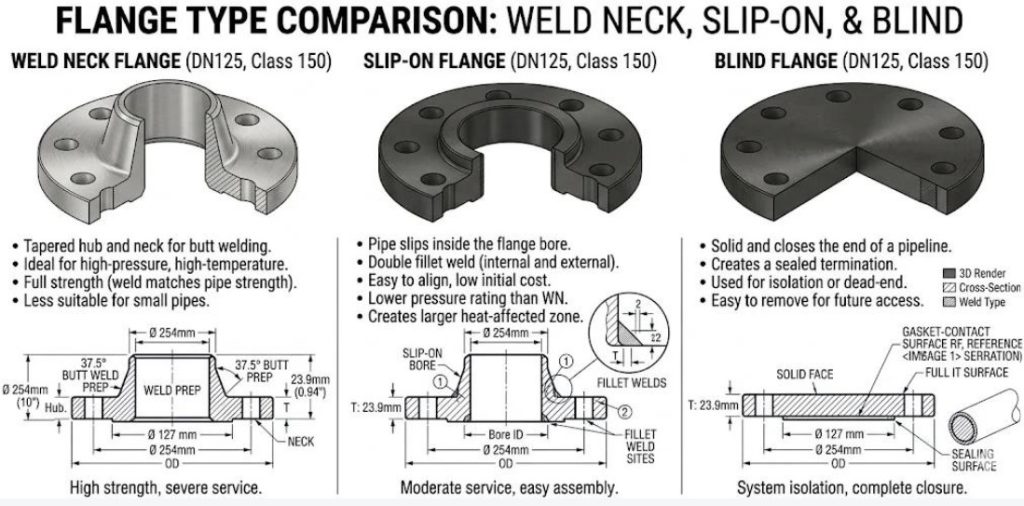
1. Slip-On Flange
A slip-on flange is also called a plate slip-on flange. It has a relatively simple structure, is easy to install, and has a lower cost. It is usually slipped over the outside of the pipe and then connected to the pipe by fillet welding. Slip-on flanges are often used in piping systems where the pressure is not very high and the working conditions are relatively stable.
2. Weld Neck Flange
A weld neck flange has an obvious “neck.” The pipe and the flange are connected by butt welding. It has higher strength and a more reasonable stress distribution, making it suitable for high-temperature, high-pressure, flammable, explosive, or important process pipelines. Compared with ordinary slip-on flanges, weld neck flanges have higher manufacturing and installation costs, but they also offer better reliability.
3. Threaded Flange
A threaded flange has threads inside the bore and can be directly screwed onto a pipe with external threads without welding. It is suitable for some applications where welding is inconvenient. However, it is usually not suitable for severe temperature changes, high pressure, or strong vibration conditions.
4. Socket Weld Flange
A socket weld flange has a socket step inside. The pipe is inserted into the socket and then welded. It is often used in small-diameter pipelines with high sealing requirements. Socket weld flanges have a compact appearance, but installation should pay attention to welding quality and internal clearance.
5. Blind Flange
A blind flange has no center hole and looks like a solid metal disc. It is mainly used to seal pipe ends, equipment openings, or reserved ports. For example, if a section of pipeline is temporarily not in use, a blind flange can be used to close it. When expansion is needed later, it can be removed.
6. Lap Joint Flange
A lap joint flange is usually used together with a stub end. The flange itself can rotate, making it convenient to align bolt holes on site. It is commonly used in applications that require frequent disassembly, pipelines that are difficult to align accurately, or certain corrosion-resistant lined piping systems.
5. What Materials Are Flanges Usually Made Of?
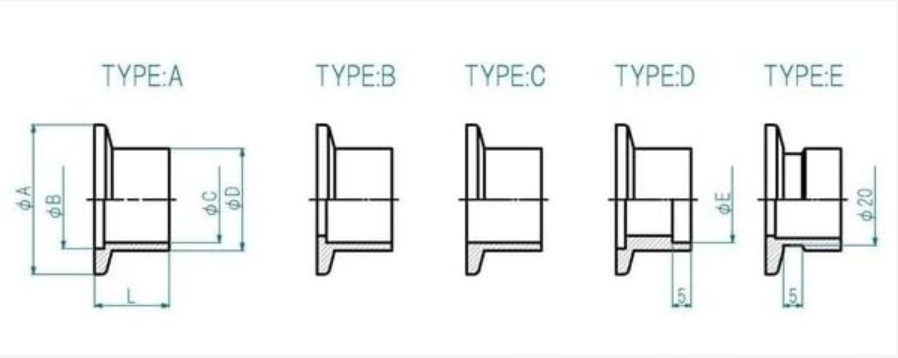
The material of a flange should be selected according to the medium, pressure, temperature, and corrosion conditions. Common flange materials include carbon steel, stainless steel, alloy steel, cast steel, forged steel, and some plastic or non-metallic materials.
Carbon steel flanges are relatively economical and are commonly used for ordinary water, steam, oil products, and general industrial pipelines. Stainless steel flanges have better corrosion resistance and are often used in food, pharmaceutical, chemical, seawater, and corrosive liquid applications. Alloy steel flanges are suitable for high-temperature, high-pressure, or special medium environments.
When selecting materials, price should not be the only consideration. It is also necessary to consider whether the medium is corrosive, whether the working temperature is high, whether the pressure is high, and whether safety production requirements are involved. For example, if an ordinary carbon steel flange is mistakenly used for a highly corrosive medium, corrosion leakage may occur, and in serious cases, it may lead to a safety accident.
6. How to Read Flange Specifications?
Understanding flange specifications is the key to selection and procurement. Common parameters include nominal diameter, pressure rating, applicable standard, sealing face type, material, and connection method.
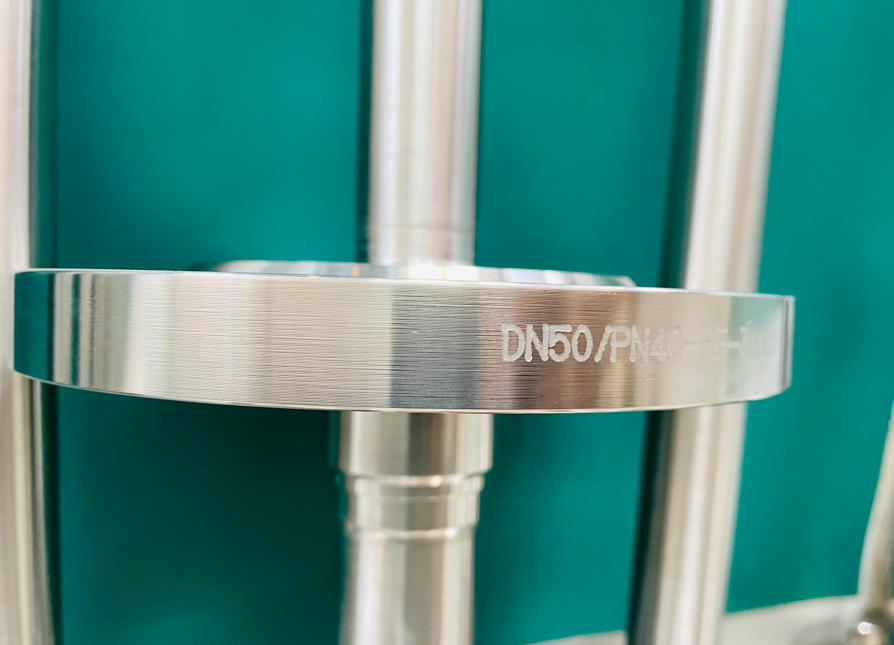
Nominal diameter is commonly expressed as DN, such as DN50, DN80, and DN100, indicating the nominal size of the pipe corresponding to the flange. Pressure rating is commonly expressed as PN or Class, such as PN16, PN25, Class 150, and Class 300. Common sealing face types include FF flat face, RF raised face, and RTJ ring-type joint face.
In international engineering projects, ASME B16.5 is commonly used for pipe flanges and flanged fittings from NPS 1/2 to NPS 24. The standard covers pressure-temperature ratings, materials, dimensions, tolerances, marking, testing, and other requirements. ASME B16.47 is used for large-diameter steel flanges from NPS 26 to NPS 60.
In domestic projects, GB/T, HG/T, JB/T, and other standards may also be used. In Japanese or European equipment, JIS, EN, DIN, and other standards may also appear. In actual flange selection, the most important thing is to confirm whether the standard, nominal diameter, pressure rating, sealing face, number of bolt holes, and bolt hole spacing of the two flanges are consistent.
7. Where Are Flanges Commonly Used?
Flanges exist in almost all industrial piping systems. In the petrochemical industry, they are used to connect reactors, storage tanks, heat exchangers, pumps, and valves. In water supply and drainage systems, they are used to connect water pumps, pipelines, filters, and valves. In the power industry, they are used to connect steam pipelines, boiler equipment, and cooling water systems. In the food and pharmaceutical industries, sanitary flanges are often used to connect equipment and pipelines.
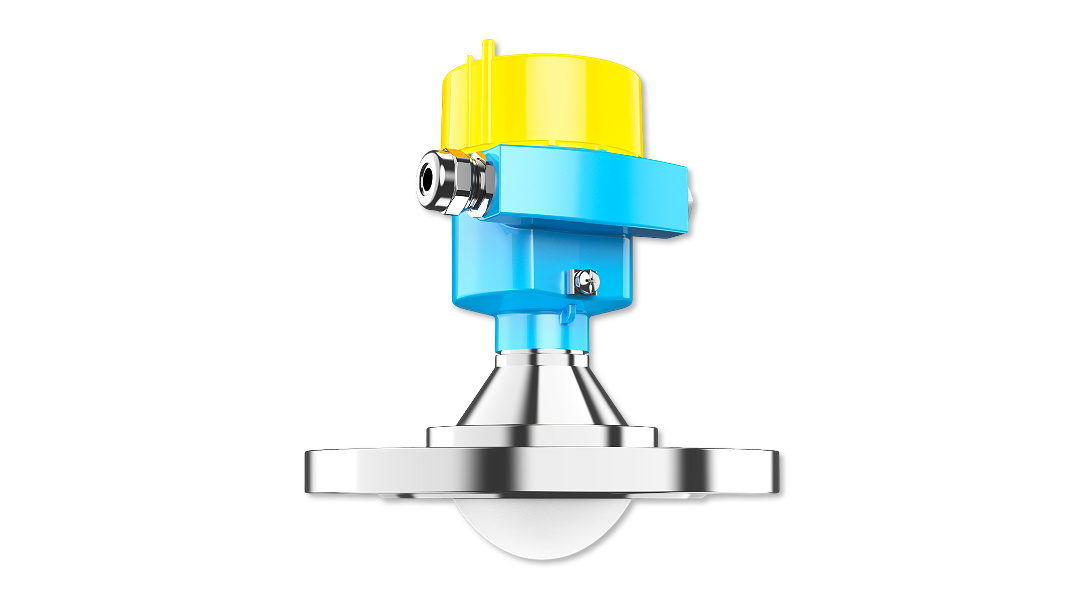
In the field of instrumentation, flanges are also very common. For example, radar level meters, pressure transmitters, differential pressure transmitters, flowmeters, and many other devices can use flange connections. Taking a radar level meter as an example, the instrument is installed on the top of the tank through a flange, and the radar wave is emitted from the center of the flange into the tank to measure the liquid level. In this case, the flange not only plays a fixing role, but also needs to meet the requirements of tank pressure, temperature, medium corrosion resistance, and explosion protection.
8. Why Does a Flange Connection Leak?
Although flange connections are reliable, leakage may occur if the selection or installation is improper. Common causes include incorrect gasket selection, insufficient bolt tightening force, damaged flange sealing face, misalignment between two flanges, mismatched pressure rating, excessive medium temperature, or excessive pipeline vibration.
During installation, it is necessary to check whether the flange sealing face is clean and flat, whether the gasket meets the requirements of the medium and temperature, and whether the bolts are tightened in a diagonal sequence in multiple steps. For high-temperature, high-pressure, toxic, flammable, or explosive media, flange installation and maintenance must strictly follow engineering specifications and cannot rely only on experience.
Image 4: Industrial piping flange connection site photo
Image ALT Tag: Industrial piping flange connection site, showing flanges used to connect pipes, valves, and equipment
9. What Should You Consider When Selecting a Flange?
When selecting a flange, you should not simply say, “I need a DN50 flange.” A complete flange selection should at least confirm the following information: what the medium is, what the working pressure is, what the working temperature is, what the pipe size is, what standard is adopted, what the pressure rating is, what type of sealing face is used, whether the material is corrosion-resistant, and whether the connection method is welding, threaded connection, or lap joint connection.
For example, even if both flanges are DN50, PN16 and PN40 have different pressure ratings; RF raised face and FF flat face have different sealing surface forms; carbon steel and 316L stainless steel also have different corrosion resistance. If these parameters are not confirmed clearly, the purchased flange may not fit, may fail to seal properly, or may even create potential safety risks.
10. Frequently Asked Questions About Flanges
1. What Is the Difference Between a Flange and a Pipe Fitting?
A flange is a standardized and detachable connection component, usually connected by bolts. General pipe fittings come in more forms, including threaded fittings, compression fittings, quick connectors, and other types. Flanges are more commonly used in piping systems with larger diameters, higher pressure, or maintenance and disassembly requirements.
2. Does Every Flange Have a Hole in the Center?
Not necessarily. Most flanges have a center hole to allow fluid to pass through. However, a blind flange does not have a center hole and is mainly used to seal the end of a pipeline or an equipment opening.
3. Why Does a Flange Connection Need a Gasket?
It is difficult for two metal flange surfaces to achieve complete sealing through direct contact. A gasket can fill the tiny uneven gaps between the sealing surfaces. After the bolts are tightened, the gasket is compressed and deformed, forming a seal.
4. Can Flanges Be Freely Interchanged?
No. Flanges must match in nominal diameter, pressure rating, standard, sealing face, bolt holes, and material. Two flanges that look similar may not necessarily be interchangeable.
Conclusion
A flange is a very basic but very important connection component in a piping system. Its function is not only to “connect pipes,” but also to affect sealing, safety, maintenance, and system reliability. Understanding the structure, types, materials, standards, and selection methods of flanges can help us identify equipment interfaces more accurately and reduce mistakes in procurement, installation, and maintenance.
In one sentence: a flange is a standardized connection interface between pipes and equipment. It can connect, seal, and also make disassembly and maintenance more convenient.
When selecting a flange, it is necessary to comprehensively consider nominal diameter, pressure, temperature, medium, material, standard, and sealing face type, instead of judging only by appearance or size. For important working conditions involving high pressure, high temperature, toxic media, flammable or explosive substances, flange selection and verification should be carried out by professionals.
As of now, ASME officially still uses B16.5 and B16.47 for the standardization ranges of regular-size pipe flanges and large-diameter steel flanges respectively. In engineering projects, these standards should be used together with local regulations and project design specifications. Manufacturers, owners, and construction contractors should also confirm before procurement and installation that the applied standard is consistent with the design documents, in order to avoid installation failure or sealing failure caused by mixed standards.
In practical applications, different working conditions have different requirements for flanges. For example, ordinary water pipelines, steam pipelines, chemical pipelines, and high-pressure equipment interfaces may require different flange types, materials, and pressure ratings. Therefore, when selecting a flange, it is important not to judge only by appearance or size. Factors such as medium characteristics, working pressure, working temperature, pipe diameter, sealing face type, and applicable standards should also be considered.
Only when the flange specifications are correctly selected, the installation method is standardized, and the gasket and bolts are properly matched can the piping system operate stably for a long time. For high-temperature, high-pressure, corrosive, toxic, flammable, or explosive media, flange selection and verification should be carried out by professionals to avoid leakage, shutdown, or safety accidents caused by improper flange connection. Overall, although a flange is a small component, it is an important basic part that ensures the safe operation of industrial piping systems.
what is a flange, flange function, pipe flange, flange connection, flange types, flange specifications, flange selection, blind flange, weld neck flange, slip-on flange