1. Project Background: Why Must Level Measurement in Compressor Separator Vessels Be Error-Free?
In petrochemical, coal chemical, fine chemical, and solvent recovery units, the reflux drum is usually installed downstream of the overhead condensation system of the distillation column. It is used to collect condensed liquid, part of which is returned to the top of the column as reflux, while the rest is discharged as product or intermediate material. The application of the JWrada Radar Level Meter in reflux drum level measurement can effectively improve the stability and reliability of liquid level detection. The liquid level of the reflux drum directly affects the reflux ratio, overhead pressure, condenser load, and product stability. Once the level measurement becomes inaccurate, it may cause reflux flow fluctuations and overhead composition deviation in minor cases, or pump cavitation, high-level alarms, material overflow, and interlock shutdowns in severe cases.
From an engineer’s perspective, level measurement in a compressor separator vessel is not ordinary storage tank level monitoring. It is a key measuring point directly related to equipment protection, interlock control, and safe operation of the entire unit. If the liquid level in the separator vessel is too high, liquid may be carried into the compressor by the gas flow, causing liquid slugging, impeller damage, bearing abnormalities, increased vibration, and, in severe cases, unplanned shutdowns. If the level measurement is unstable, the DCS or SIS system may misjudge the operating condition, resulting in frequent alarms, false interlocks, or making it difficult for operators to accurately determine the actual liquid level.
Public application materials show that the Jiwei JWrada PRO radar level meter has been used in compressor Knockout Drum level measurement applications, providing continuous level measurement solutions for operating challenges such as high vapor, oil-water mixed media, and dielectric constant fluctuations. For chemical enterprises pursuing safety, stability, and low maintenance, selecting a radar level meter suitable for complex operating conditions has become an important direction for upgrading compressor separator vessel level measurement.
2. Site Condition Analysis: Typical Challenges in Compressor Separator Vessel Level Measurement
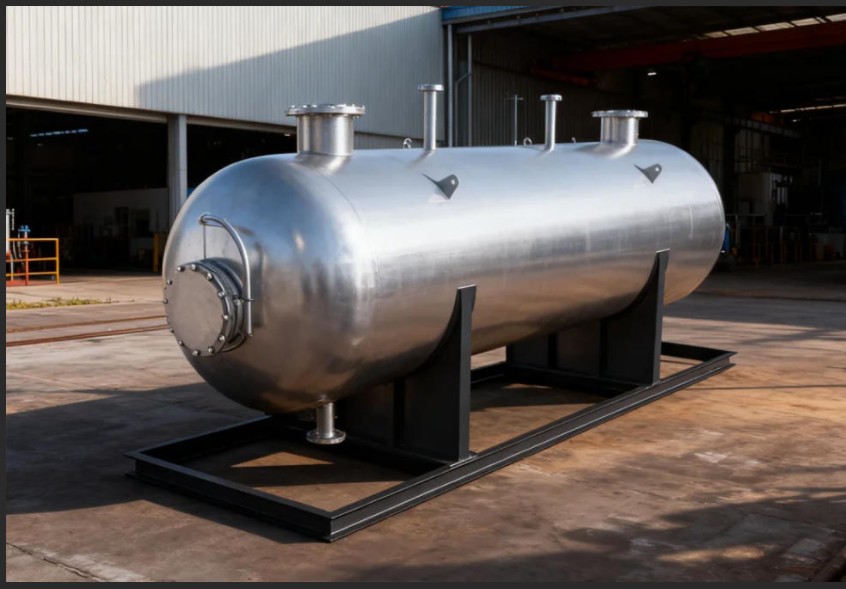
This case is based on a level measurement retrofit project for a compressor separator vessel in a coal chemical plant. The separator vessel is located upstream of the synthesis gas compressor inlet and is mainly used to separate condensate and light hydrocarbon components from the gas. The original system used traditional level instruments. Although they were basically usable during the early stage of operation, problems gradually appeared as plant load fluctuated, medium composition changed, and operating conditions became more complex. These problems included measurement drift, signal fluctuation, false alarms, and frequent maintenance.
After an on-site inspection, engineers found that this measuring point mainly faced the following challenges.
First, the medium composition was not fixed. The liquid phase inside the separator vessel could be water, hydrocarbon condensate, or an oil-water mixture. The density, dielectric constant, and surface condition of the medium changed along with process load variations. For traditional instruments that rely on density, buoyancy, or dielectric constant changes, this type of operating condition can easily cause measurement errors.
Second, vapor, volatile gases, and pressure fluctuations existed inside the vessel. Compressor inlet conditions are usually not completely static. Gas-phase disturbance, foam, mist entrainment, and local condensation can interfere with instrument signals. Public materials mention that typical compressor separator vessel operating conditions may involve temperatures of 60°C to 120°C, pressures of 3 to 10 bar, and mixed hydrocarbon and water media.
Third, the internal structure of the vessel was complex. Some separator vessels are equipped with demisters, baffles, flow-guiding structures, or extended nozzles. If the radar beam angle is too wide, it may scan the vessel wall, internal components, or mounting nozzle, forming false echoes and causing unstable level signals.
Fourth, the maintenance window was limited. The compressor is core equipment for continuous production, and frequent shutdowns for instrument removal are not allowed on site. During engineering selection, engineers paid attention not only to instrument accuracy, but also to long-term stability, remote diagnostic capability, and fault location efficiency.
3. Selection Logic: Why Choose the Jiwei JWrada PRO Radar Level Meter?
During the engineering selection stage, the project team compared magnetic level gauges, differential pressure level transmitters, displacer level transmitters, guided wave radar level meters, and non-contact radar level meters. The Jiwei JWrada PRO radar level meter was ultimately selected mainly based on the following engineering judgments.
First, non-contact measurement is more suitable for oil-water mixtures and media containing impurities. The liquid inside a compressor separator vessel may contain oil contamination, light hydrocarbons, small amounts of sediment, or foam. After long-term contact with the medium, traditional contact-type instruments may suffer from material buildup, sticking, corrosion, or mechanical wear. A non-contact radar level meter is installed on the vessel top and does not directly contact the liquid, resulting in lower maintenance risk.
Second, 80GHz high-frequency radar is more suitable for small-range and narrow-space vessels. Jiwei’s related materials show that JWrada PRO adopts 80GHz high-frequency radar technology, featuring a narrow beam and strong focusing capability. It can more accurately identify the true liquid surface echo in vessels with internal components, short measuring ranges, and complex reflections. For vessels such as compressor separator vessels, which usually have relatively small measuring ranges, a narrow beam can reduce interference from vessel walls and internal structures.
Third, radar measurement does not depend on medium density. In compressor separator vessel level measurement, the medium may change between water, hydrocarbons, and oil-water mixtures. Radar level meters measure distance based on electromagnetic wave transmission and reception. Compared with buoyancy-type or differential-pressure instruments, radar level meters are less affected by density changes, making them more suitable for operating conditions where medium properties change frequently.
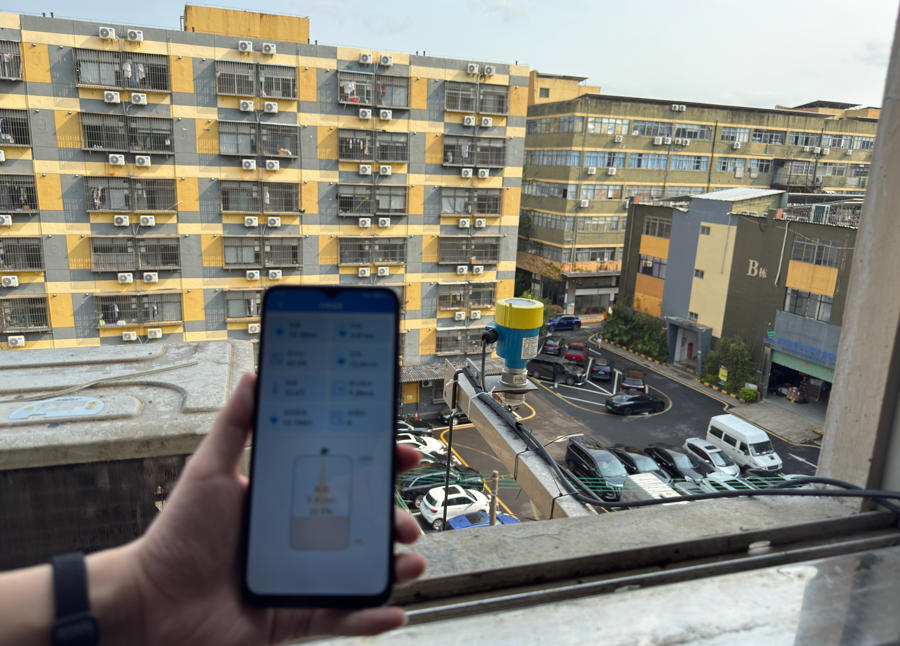
Fourth, software capability improves engineering commissioning efficiency. According to Jiwei’s official information, the JWrada series provides software functions such as echo curve visualization, EFT curve visualization, remote parameter setting, fault code viewing, and fault analysis. Bluetooth 5.0 can also be optionally configured to enable wireless commissioning and monitoring. For engineers, this means the instrument is no longer a “black box.” Instead, echo data can be used to determine the source of interference and optimize parameters according to site conditions.
4. Installation Design: What Details Should Engineers Focus On?
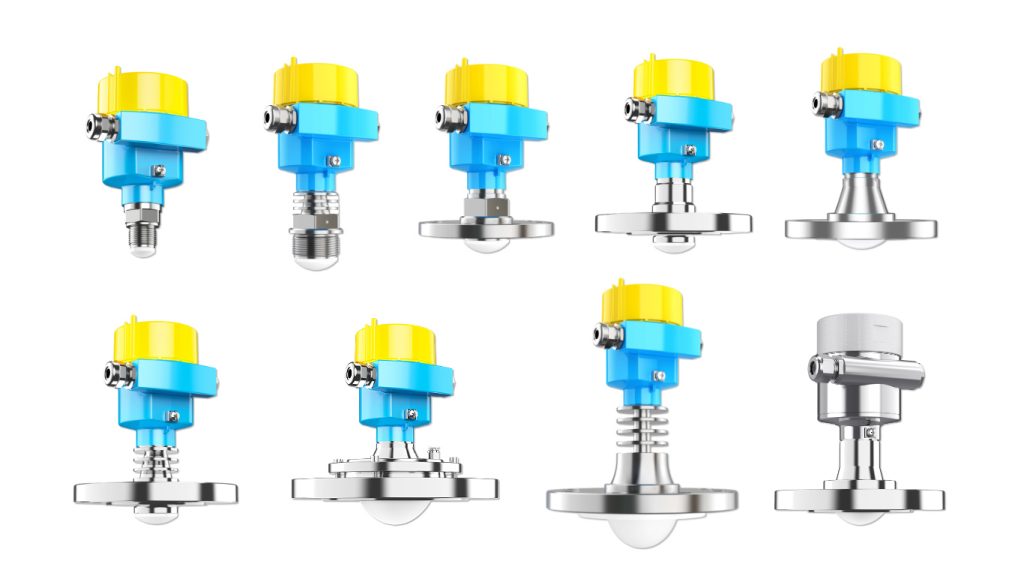
When installing the Jiwei JWrada PRO radar level meter on a compressor separator vessel, engineers must first confirm the installation position. The ideal position should avoid the inlet, exhaust disturbance area, demister edge, and the area directly above internal baffles, so that the radar beam can directly cover the liquid surface. If an existing flange must be used, the height, diameter, and internal burrs of the nozzle need to be evaluated to avoid strong reflections caused by the mounting nozzle.
Second, the measuring range and blind zone need to be checked. Compressor separator vessels usually have a small measuring range and a narrow level control zone. Therefore, the zero point, full-scale value, alarm point, and interlock point must be consistent with process control requirements. For high-level alarm points, the safety margin of the compressor inlet should be considered to avoid setting the alarm point too high and increasing the risk of liquid carryover.
Third, electrical wiring must meet the requirements of the control system. JWrada PRO can be used for continuous level output and connected to DCS, PLC, or safety interlock systems. Public materials show that JWrada PRO supports 4–20mA, HART, Modbus, and cloud protocol output methods. In engineering design, the appropriate signal type should be selected according to the site control system architecture, while grounding, explosion protection, and shielding measures should also be properly implemented.
Fourth, echo curves should be emphasized during commissioning. The liquid surface in a compressor separator vessel may involve foam, fluctuation, and bottom reflection. Engineers should not rely only on panel readings. They should also observe whether the echo curve is clear, whether false echoes are effectively suppressed, and whether signal strength is stable. When necessary, comparisons should be made under three conditions: empty vessel, low level, and normal operating level, so that a more reliable echo recognition strategy can be established.
5. Commissioning Process: From “Able to Measure” to “Stable Measurement”
After the instrument was installed, the project team first configured basic parameters, including vessel height, measuring range, medium type, output direction, damping time, fault current, and alarm points. During initial operation, the level signal could output normally. However, when compressor load changed and gas-liquid disturbance became stronger, the curve showed slight fluctuations.
Using the echo curve analysis function of the Jiwei JWrada PRO, engineers investigated the sources of on-site interference. They determined that the liquid level fluctuation mainly came from two factors: first, an unstable liquid surface caused by gas-liquid exchange inside the vessel; second, partial interference reflections caused by residual liquid at the bottom and internal structures. Afterwards, technicians optimized the interference suppression distance, echo recognition threshold, and dynamic gain parameters, allowing the instrument to prioritize locking onto the true liquid surface echo while filtering fixed interference signals.
Public case materials also mention that Jiwei engineers can perform remote commissioning through the cloud, view real-time echo curves and EFT curves, and optimize customized parameters according to on-site problems such as foam and bottom reflection. This is especially valuable for remote chemical parks, natural gas processing stations, and high-risk compressor areas, because reducing personnel entry into the site means lowering safety risks and maintenance costs.
6. Application Results: Compressor Protection and Operation Management Improved Simultaneously
After the Jiwei JWrada PRO radar level meter was put into operation, the stability of the compressor separator vessel level signal improved significantly. Common previous problems such as level signal jumps, false alarms, and measurement drift were improved. Operators could continuously observe level trends on the DCS screen and adjust the drain valve operation according to the actual liquid level.
In terms of safety protection, a stable level signal provided a reliable basis for high-level alarms and interlock control. When the liquid level approached the high limit, the system could promptly remind operators to drain the liquid, preventing liquid from entering the compressor inlet pipeline. Under low-level conditions, the instrument could also maintain continuous output, reducing misjudgment caused by abnormal signals.
In terms of maintenance, non-contact radar measurement reduced direct contact between the instrument and corrosive, adhesive, or impurity-containing liquids, thereby lowering mechanical wear and inspection frequency. For engineering maintenance personnel, JWrada PRO’s remote diagnosis, fault code viewing, and echo analysis functions changed troubleshooting from “going to the site and removing the instrument for inspection” to “checking data first and then identifying the cause,” improving maintenance efficiency.
In terms of management, continuous, stable, and traceable level data also helps enterprises optimize the separation performance upstream of the compressor. If the separator vessel level frequently rises under a certain operating condition, process engineers can analyze it together with load, temperature, pressure, and drain frequency, further optimizing process control.
7. SEO Summary: Why Is the Jiwei JWrada PRO Radar Level Meter Suitable for Compressor Separator Vessels?
From the perspective of engineering application, the core requirement of compressor separator vessel level measurement is not simply “having a level display.” Instead, the goal is to achieve long-term stable, accurate, and low-maintenance continuous level measurement under conditions involving high vapor, pressure fluctuation, medium variation, foam disturbance, and internal structure interference.
With 80GHz high-frequency radar technology, narrow-beam measurement, non-contact installation, intelligent echo algorithms, remote commissioning, and fault diagnosis capabilities, the Jiwei JWrada PRO radar level meter can effectively solve typical level measurement challenges in compressor inlet separator vessels, gas-liquid separator vessels, oil-water separator vessels, natural gas separators, and chemical Knockout Drums.
For users searching for “compressor separator vessel level meter,” “compressor inlet separator vessel level measurement,” “Knockout Drum radar level meter,” “80GHz radar level meter application case,” or “Jiwei JWrada PRO radar level meter,” this case demonstrates that in critical compressor protection applications, selecting a high-frequency radar level meter suitable for complex operating conditions can not only improve level measurement stability, but also reduce maintenance costs, minimize false alarms and unplanned shutdown risks, and ultimately enhance the safety and operational efficiency of the entire production unit.