What Is a Float Level Gauge?
A float level gauge is a contact-type instrument used for continuous liquid level measurement in tanks, vessels, and process containers. It works by using a float that moves up and down with the liquid surface. This movement is then converted into an electrical signal, typically a 4–20mA output, which can be transmitted to a PLC, DCS, display instrument, or other control system.
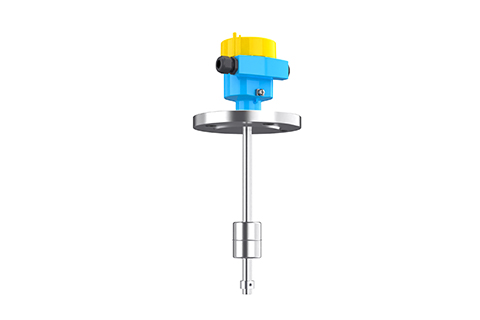
In simple terms, a float level gauge is the tank’s “level messenger.” It does not guess. It does not panic. It simply follows the liquid level and reports what is happening inside the vessel.
In industrial applications, accurate liquid level measurement is essential. If the level is too low, pumps may run dry. If the level is too high, tanks may overflow. If the level signal is unreliable, the entire control system may operate with the confidence of someone walking through a warehouse with the lights off.
That is why float level gauges are widely used in industries such as chemical processing, water treatment, petroleum storage, food processing, pharmaceutical production, and industrial wastewater management.
The Jiwei Float-11 series float level gauge is designed for continuous liquid level measurement in a wide range of industrial applications. According to the chemical properties of the measured medium, the series includes standard stainless steel models and coated acid/alkali-resistant models for corrosive liquids.
How Does a Float Level Gauge Work?
The working principle of a float level gauge is based on Archimedes’ principle of buoyancy. When an object is placed in a liquid, the liquid provides an upward buoyant force. In a float level gauge, the float is designed to rise and fall with the liquid surface.
When the liquid level rises, the float moves upward.
When the liquid level falls, the float moves downward.
So far, it sounds almost too simple: liquid goes up, float goes up; liquid goes down, float goes down. But the real engineering happens inside the guide rod.
In the Jiwei Float-11 series, the float moves along the guide rod as the liquid level changes. Because of the magnetic coupling between the float and the sensing components inside the guide rod, the reed switches are actuated as the float passes different positions. This causes the internal resistance of the sensor to change linearly. The transmitter then converts the resistance change into a 4–20mA standard DC signal for remote level indication and control.
Here is the process in a more visual way:
Liquid level changes → Float moves → Reed switches respond → Resistance changes → Converter outputs 4–20mA signal → Control system receives level data
The result is a simple, reliable, and easy-to-integrate liquid level measurement solution.
The beauty of this design is that it combines a very old physical principle with modern industrial signal transmission. Archimedes provides the science. The reed switch and transmitter do the paperwork.
Main Components of a Float Level Gauge
Although a float level gauge may look simple from the outside, it contains several important components that work together to provide stable level measurement.
1. Float
The float is the part that directly follows the liquid surface. It is usually installed around the guide rod and moves vertically as the liquid level changes.
The float must be properly matched to the medium density. If the liquid is too light and the float is not correctly selected, the float may not move as expected. In other words, the liquid must be able to “carry” the float before the float can carry your level measurement expectations.
For the Jiwei Float-11 series, the applicable medium density is ≥0.5g/cm³, making it suitable for many common industrial liquids.
2. Guide Rod
The guide rod provides the path for float movement and houses the internal sensing elements. It must remain straight, clean, and free from obstruction.
If the guide rod is bent, coated with deposits, or blocked by internal tank structures, the float may become stuck. A stuck float can produce a level signal that looks stable, but unfortunately, “stable” is not always the same as “correct.”
3. Reed Switch Assembly
Inside the guide rod, reed switches detect the position of the float through magnetic coupling. As the float moves, the corresponding reed switches are activated, producing a change in resistance.
The Jiwei Float-11 series uses imported plastic-sealed reed switches, helping improve reliability and long-term performance in industrial environments.
4. Signal Converter
The signal converter changes the internal resistance signal into a standard industrial output, usually 4–20mA. This allows the level gauge to communicate with control systems such as PLCs and DCS platforms.
The converter is essentially the interpreter between the mechanical movement of the float and the digital world of automation.
5. Display Head and Housing
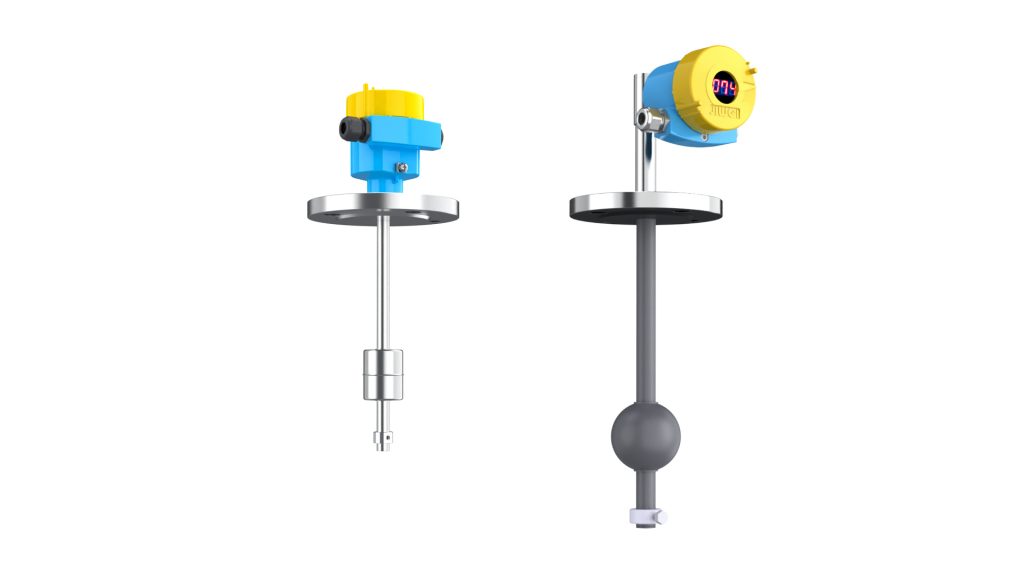
A local display allows operators to read level information directly at the site. The Jiwei Float-11 series can be equipped with a high-brightness LED display head, and the display can be configured horizontally or vertically depending on installation requirements.
The instrument housing also provides environmental protection. With an IP66/IP67 protection rating, the Float-11 series is designed for demanding industrial sites where dust, moisture, and outdoor exposure may be present.
Types of Float Level Gauges in the Jiwei Float-11 Series
Different liquids require different materials. A float level gauge used for clean water does not face the same challenges as one used in a strong acid tank. Selecting the correct model is therefore essential for stable and long-lasting performance.
The Jiwei Float-11 series includes two main product types:
Float-11A Standard Float Level Gauge
The Float-11A standard float level gauge is made of 304 or 316L stainless steel and is suitable for most common liquid level measurement applications.
It is widely used for:
- Petroleum and chemical raw material storage tanks
- Industrial wastewater level measurement
- Food processing storage tank level control
- General industrial liquid level monitoring
The stainless steel construction provides good durability for many standard industrial liquids. For applications where the medium is not strongly corrosive, the Float-11A offers a practical and cost-effective solution.
Think of it as the reliable workhorse of the float level gauge family. It may not wear a superhero cape, but it gets the job done day after day.
Float-11P Acid and Alkali Resistant Float Level Gauge
For corrosive liquids, the Float-11P acid and alkali resistant float level gauge is the more suitable choice. It uses ECTFE or PTFE coating on wetted parts to improve corrosion resistance.
This model is designed for applications involving aggressive media, including:
- Acid and alkali storage tanks
- Chemical process tanks
- Refining and storage applications
- Water treatment systems
- Biopharmaceutical reaction vessels
- Corrosive liquid level measurement and control
The Float-11P is built for tougher chemical environments where standard stainless steel may not provide sufficient resistance. The coated design helps protect the instrument from corrosive attack while maintaining smooth float movement.
In simple words, if the liquid is chemically “moody,” the coated model is usually the safer conversation partner.
Key Technical Specifications
When choosing a float level gauge, technical specifications should never be treated as small print. They are the instrument’s operating boundaries, and respecting them is the difference between reliable measurement and an avoidable maintenance headache.
The Jiwei Float-11A and Float-11P models include the following key specifications:
- Measured medium: Liquid
- Measuring range: 300–6000mm
- Medium density: ≥0.5g/cm³
- Process pressure: ≤25bar
- Process temperature: -20°C to 120°C
- Ambient temperature: -40°C to 70°C
- Accuracy: ±5mm / ±10mm
- Output signal: 4–20mA
- Power supply: 18–36V DC
- Protection rating: IP66/IP67
- Explosion-proof rating: Ex db IIC T6 Gb / Ex ia IIC T6 Ga
- Wetted material for Float-11A: 304 or 316L stainless steel
- Wetted material for Float-11P: ECTFE or PTFE coating
These parameters help determine whether the instrument is suitable for the actual operating conditions. Before selection, users should confirm the liquid type, density, temperature, pressure, corrosiveness, viscosity, installation method, and required output signal.
A float level gauge is not difficult to choose, but it does appreciate being given the correct job description.
Where Are Float Level Gauges Used?
Float level gauges are widely used in applications where continuous liquid level measurement, remote signal transmission, and process control are required.
1. Chemical Industry
Chemical plants use many storage tanks, reactors, dosing tanks, intermediate vessels, and acid/alkali tanks. Accurate level measurement helps ensure safe storage, stable feeding, and reliable process control.
For non-corrosive or mildly corrosive liquids, a stainless steel float level gauge may be suitable. For strong acids, alkalis, or aggressive chemicals, a coated float level gauge such as the Float-11P should be considered.
2. Petroleum and Storage Tanks
In petroleum and chemical storage applications, level monitoring is important for inventory control, overflow prevention, and pump protection. Float level gauges provide continuous level measurement for storage tanks and process vessels.
3. Water and Wastewater Treatment
Water treatment plants require level monitoring in equalization tanks, wastewater tanks, dosing tanks, chemical tanks, and intermediate water tanks.
Float level gauges are often selected for these applications because they are straightforward, reliable, and easy to integrate into control systems.
However, for wastewater containing sludge, suspended solids, or sticky deposits, regular inspection and cleaning may be necessary to prevent float jamming.
4. Food Processing
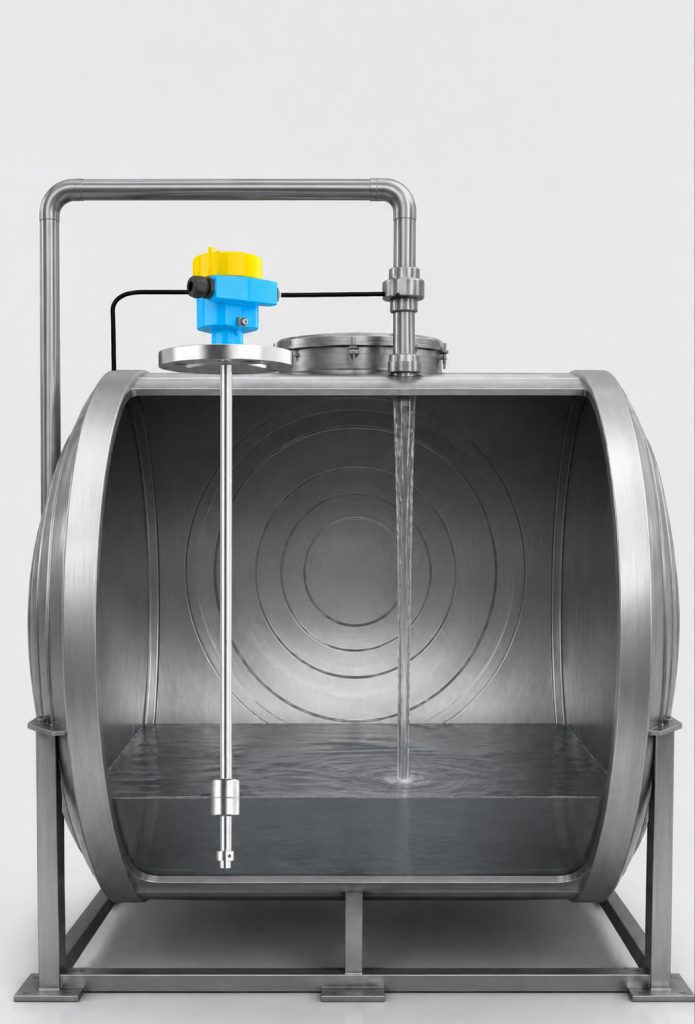
Food processing facilities use liquid storage tanks for water, cleaning liquids, syrups, oils, and other process media. Float level gauges can help monitor and control tank levels during production and storage.
When used in food-related applications, users should also evaluate hygiene requirements, wetted materials, cleaning procedures, and process compatibility.
5. Pharmaceutical and Biopharmaceutical Processes
In pharmaceutical and biopharmaceutical applications, liquid level measurement is often required in preparation tanks, reaction vessels, acid/alkali tanks, and auxiliary process systems.
For corrosive or chemically active media, coated float level gauges provide better material compatibility and longer service life.
Advantages of Float Level Gauges
Float level gauges remain popular because they offer several practical advantages for industrial users.
Simple and Reliable Working Principle
The buoyancy-based operating principle is easy to understand and proven in real-world applications. There is no need for complex signal interpretation or advanced calibration logic.
Continuous Level Measurement
Unlike point level switches that only detect specific high or low positions, float level gauges can provide continuous level output across a defined measuring range.
Standard 4–20mA Output
The 4–20mA signal is widely accepted by industrial control systems, making integration with PLCs, DCS systems, and display instruments convenient.
Suitable for Various Tank Applications
Float level gauges can be used in storage tanks, process vessels, wastewater tanks, chemical tanks, and other liquid containers.
Material Options for Different Media
With stainless steel and coated material options, the Float-11 series can be selected according to the chemical properties of the liquid.
Installation Tips for Float Level Gauges
Correct installation is essential for accurate and stable measurement. Even a well-designed instrument can perform poorly if installed in the wrong position.
1. Avoid Strong Turbulence
Do not install the float level gauge directly under an inlet, near strong agitation, or in areas with severe liquid turbulence. Excessive movement can cause unstable readings.
If the float is bouncing around like it has joined a trampoline competition, the signal will probably not be very calm either.
2. Ensure Free Float Movement
Before installation, make sure there are no internal obstructions such as baffles, pipes, welding slag, or structural parts that could block the float.
The float must be able to move smoothly along the guide rod throughout the measuring range.
3. Consider Medium Characteristics
Viscous, sticky, crystallizing, or scaling media may affect float movement. In these cases, maintenance access and cleaning frequency should be considered during selection and installation.
4. Protect Coated Surfaces
For acid and alkali resistant models, the coating is critical for corrosion protection. Avoid scratching, striking, or damaging coated surfaces during handling, installation, or maintenance.
A damaged coating is like a raincoat with a hole in it. It may still look fine from a distance, but trouble can find its way in.
5. Follow Explosion-Proof Wiring Requirements
If the instrument is installed in a hazardous area, wiring and installation must follow the applicable explosion-proof standards and the product manual. Electrical safety should never be left to “close enough.”
Common Selection Questions
How Do I Choose the Right Float Level Gauge?
To choose the right float level gauge, confirm the following information:
- Liquid name
- Medium density
- Temperature
- Pressure
- Corrosiveness
- Viscosity
- Whether the medium crystallizes, scales, or contains solids
- Tank height and measuring range
- Installation position
- Process connection
- Required output signal
- Explosion-proof requirements
With this information, it becomes much easier to select between a standard stainless steel model and a coated corrosion-resistant model.
Can a Float Level Gauge Measure Corrosive Liquids?
Yes, but the correct material must be selected. For strong acids, alkalis, or highly corrosive media, a coated float level gauge such as the Jiwei Float-11P with ECTFE or PTFE wetted parts is recommended.
What Is the Difference Between a Float Level Gauge and a Float Level Switch?
A float level gauge is used for continuous liquid level measurement and typically outputs a signal such as 4–20mA. A float level switch is used for point level detection, such as high-level alarm or low-level pump protection.
In other words, a float level gauge tells you “how much,” while a float level switch tells you “whether it has reached this point.”
Why Does a Float Level Gauge Get Stuck?
A float level gauge may get stuck due to:
- Bent guide rod
- Internal tank obstruction
- Sticky or crystallizing medium
- Scaling or deposits on the guide rod
- Damaged float
- Incorrect installation position
- Improper material selection
Regular inspection and correct installation can greatly reduce the risk of float jamming.
Is a Float Level Gauge Suitable for Viscous Liquids?
It depends on the viscosity and tendency of the liquid to stick or build up deposits. For highly viscous or sticky media, the float may not move freely. In such cases, the application should be carefully evaluated before selection.
Maintenance Tips for Float Level Gauges
A float level gauge does not usually require complicated maintenance, but regular checks help ensure long-term reliability.
Recommended maintenance practices include:
- Check whether the float moves smoothly
- Inspect the guide rod for deposits or scaling
- Clean wetted parts when necessary
- Check wiring and terminal connections
- Verify 4mA and 20mA output points during commissioning
- Inspect coated surfaces for damage in corrosive applications
- Confirm that the instrument is not operating beyond its rated temperature, pressure, or measuring range
Good maintenance is not about doing something dramatic. It is about preventing small problems from quietly becoming expensive ones.
Conclusion: A Practical Solution for Industrial Liquid Level Measurement
A float level gauge is a mature, practical, and reliable instrument for continuous liquid level measurement. Its working principle is simple: the liquid level changes, the float moves, the sensing system responds, and the transmitter outputs a standard signal to the control system.
The Jiwei Float-11 series float level gauge provides standard stainless steel and acid/alkali-resistant coated options for different industrial media. With a 4–20mA output, 300–6000mm measuring range, IP66/IP67 protection rating, and explosion-proof certifications, it is suitable for a wide range of tank and vessel level measurement applications.
For chemical processing, water treatment, petroleum storage, food processing, pharmaceutical production, and other industries, a properly selected float level gauge can provide stable level measurement, improve process control, and help reduce operational risks.
So, the next time you see a float level gauge installed on a tank, do not underestimate it. It may look like a simple float on a rod, but it is quietly doing an important job: tracking the liquid level, converting movement into a signal, and helping the entire process stay under control.