1. Why Are Corrosive and Foaming Conditions So Difficult for Level Measurement?
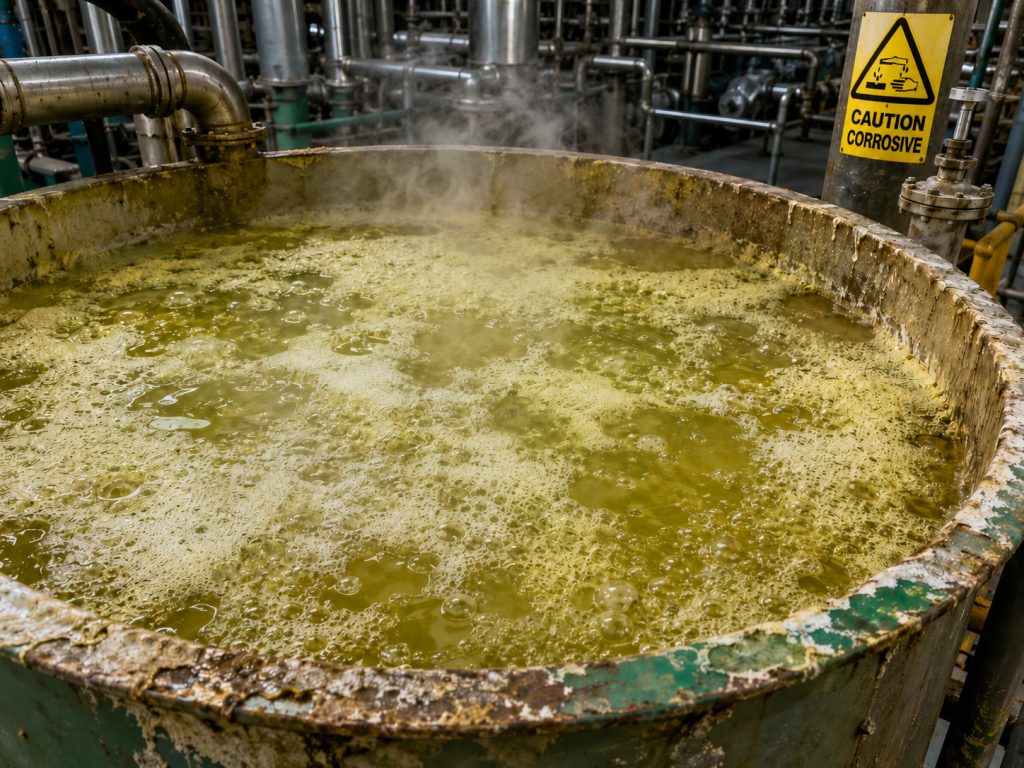
In chemical, petrochemical, pharmaceutical, new energy materials, environmental protection, metallurgy, and fine chemical industries, level measurement is not always performed on clean, calm, and simple liquid media. In many real industrial applications, the operating conditions are far more complex. The medium may be highly corrosive, the liquid surface may be continuously covered by foam, and the tank may also involve steam, condensation, agitation, feed impact, temperature changes, and pressure fluctuations. Under such conditions, a level meter must not only be able to detect the level, but also measure it accurately, stably, and reliably over the long term.
Corrosive and foaming conditions are commonly found in acid and alkali storage tanks, reaction intermediate tanks, buffer tanks, scrubber circulation tanks, degassing tanks, gas-liquid separators, waste liquid collection tanks, and process vessels containing surfactants. During production, the liquid level changes continuously due to feeding, discharge, reaction, circulation, and cleaning. The thickness of the foam layer also varies with temperature, pressure, flow rate, and chemical reaction status. Once the foam layer covers the real liquid surface, traditional level instruments may suffer from false high readings, signal drift, data fluctuation, or false alarms.
For industrial sites, level data is often not used only for display. It is frequently connected to pump start-stop control, high and low level alarms, overflow protection, dry-run protection, DCS control, and safety interlocks. If the level measurement is unstable, it may lead to incorrect pump shutdown, pump dry running, tank overflow, false interlock actions, or even unplanned shutdowns. Therefore, selecting the right radar level meter for corrosive and foaming conditions is essential for ensuring safe and stable plant operation.
2. Limitations of Traditional Level Meters in Corrosive and Foaming Environments
In complex operating conditions, submersible level transmitters, differential pressure level transmitters, float level meters, magnetic level gauges, and some contact-type instruments often face obvious limitations.
A submersible level transmitter must remain immersed in the medium for a long time. It is easily affected by corrosion, scaling, foam wrapping, and medium density changes. Especially in strong acids, strong alkalis, organic solvents, or composite chemical media, the sensor diaphragm, seals, and cable sheath may all be corroded. After long-term operation, problems such as zero drift, slow response, and inaccurate measurement may occur.
Differential pressure level transmitters rely on pressure changes for measurement. Their measurement results can be affected by medium density, temperature, gas-phase pressure, and the condition of impulse lines. If the medium is prone to crystallization, blockage, or foaming, impulse line blockage and frequent maintenance become more prominent issues.
Float, displacer, and magnetic level gauge instruments depend on mechanical structures in direct contact with the liquid. If the medium is sticky, corrosive, or heavily foaming, the float may become stuck, the bypass chamber may become blocked, and long-term stability may be difficult to maintain.
Guided wave radar level transmitters perform well in some complex conditions, but the probe rod or cable still needs to extend into the tank. When the medium is highly corrosive, foam adhesion is severe, or the tank contains agitators or material buildup, contamination and corrosion of the probe may still affect long-term performance.
By contrast, a non-contact radar level meter is installed on the tank top and does not require the sensor to be immersed in the medium. It can effectively reduce the influence of corrosion, material buildup, crystallization, foam wrapping, and cleaning maintenance. Therefore, in corrosive liquid and foaming applications, 80GHz high-frequency radar level meters are becoming the preferred solution for more and more chemical enterprises.
3. Measurement Principle and Application Value of Jiwei JWrada® Radar Level Meters
Jiwei JWrada® series radar level meters adopt 80GHz FMCW frequency modulated continuous wave radar technology. The instrument emits high-frequency electromagnetic waves toward the medium surface through the antenna and receives the echo signal reflected from the liquid surface. By processing the signal, the instrument calculates the distance from the antenna to the medium surface, thereby obtaining the real-time liquid level.
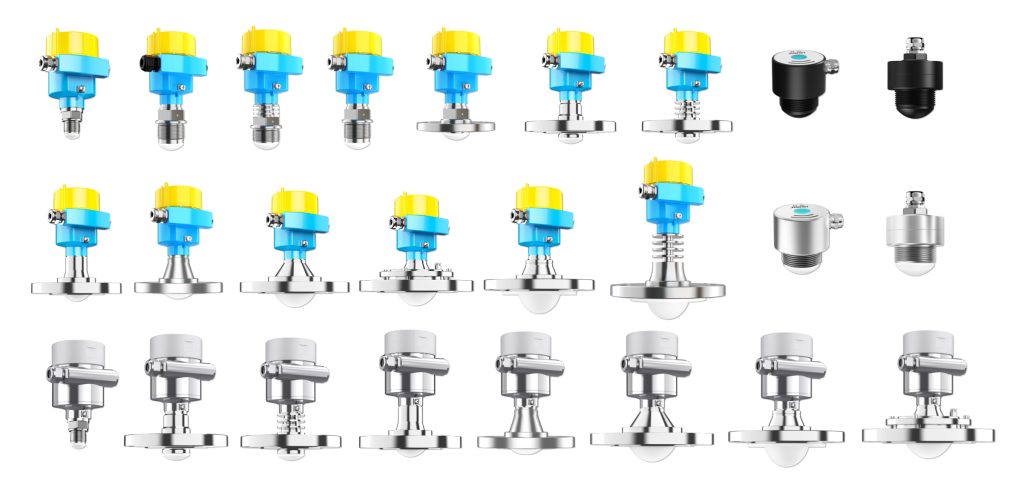
This non-contact measurement method is especially suitable for corrosive media. Since the instrument body does not need to be immersed in the liquid, it reduces direct contact with strong acids, strong alkalis, solvents, and highly corrosive materials. This fundamentally lowers the risk of corrosion damage and maintenance-related shutdowns.
In foaming conditions, the key to level measurement is identifying the real liquid surface echo. Foam layers, tank walls, nozzles, agitators, brackets, feed impact, and steam disturbance may all generate interference echoes. Jiwei JWrada® series radar level meters use intelligent echo learning, adaptive algorithms, false echo recognition, multi-layer echo separation, and dynamic target tracking to analyze and filter complex echoes. This enables the instrument to continuously lock onto the valid level signal under foam, steam, agitation, and fluctuating liquid surface conditions.
For chemical enterprises that require continuous production, this means more stable level data, more reliable alarms, more accurate control system decisions, and less frequent on-site troubleshooting by maintenance personnel.
4. Why Can Jiwei JWrada® Be Comparable to VEGA and Other Leading International Brands?
In the field of radar level measurement, VEGA and other international brands have long been regarded by many chemical, petrochemical, and pharmaceutical companies as benchmarks for high-end level instrumentation. For domestic users, however, choosing imported brands often means higher procurement costs, longer delivery cycles, and higher after-sales service costs.
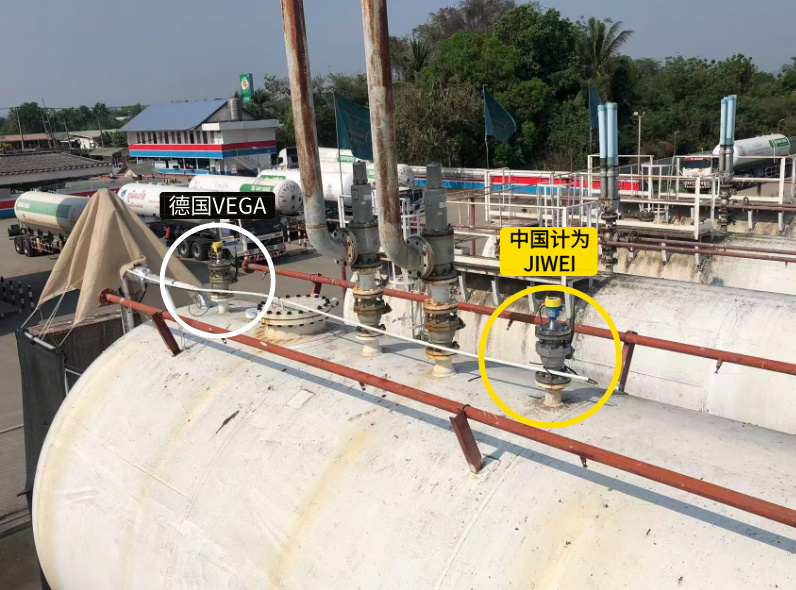
Jiwei JWrada® series radar level meters are high-quality domestic radar level products designed for complex industrial applications. In terms of core measurement technology, adaptability to complex working conditions, structural design, intelligent algorithms, remote commissioning, corrosion resistance, explosion-proof performance, and long-term stability, the JWrada® series is developed with leading international level instrument brands as benchmarks. Its product quality and application performance are comparable to VEGA and other imported brands, providing users with a domestic alternative that offers stronger cost-effectiveness and faster service response.
For users, being comparable to VEGA is not merely about appearance or basic parameters. More importantly, it means comparable on-site application value: whether the instrument can operate stably in corrosive media for a long time, whether it can identify the real liquid level under foam coverage, whether it can adapt to high temperature, steam, explosion-proof areas, and complex installation environments, whether it can be commissioned quickly, whether it can reduce maintenance costs, and whether it can be reliably connected to DCS or PLC systems. Jiwei JWrada® series radar level meters build strong competitiveness in these key dimensions.
At the same time, as a domestic brand, Jiwei is closer to local industrial users in project communication, model selection support, delivery assurance, after-sales service, and on-site commissioning response. For enterprises promoting import substitution, localization upgrades, and cost reduction, the JWrada® series is not only an instrument product, but also a highly reliable level measurement solution for complex operating conditions.
5. 80GHz High-Frequency Radar Improves Stability in Complex Tanks
Jiwei JWrada® series radar level meters use 80GHz high-frequency radar technology. Compared with traditional low-frequency radar, 80GHz radar has a smaller beam angle, more concentrated energy, and better directionality. It can more effectively avoid interference from tank walls, nozzles, agitators, brackets, manholes, and internal structures.
In real chemical plants, multiple ports are often arranged on the tank top, installation space is limited, and many tanks have long nozzles, small installation openings, or complex internal structures. If the radar beam is too wide, it may hit the tank wall or internal components, producing false echoes and affecting level judgment. The 80GHz high-frequency radar offers better focusing capability and can be aimed more precisely at the liquid surface after proper installation, thereby improving the quality of the valid echo.
In addition, 80GHz radar provides higher resolution and is more suitable for small-range, high-precision, and complex vessel measurements. Some models of the Jiwei JWrada® series can achieve measurement accuracy up to ±1mm, meeting the high requirements of chemical storage tanks, reaction vessels, intermediate tanks, metering tanks, and process control applications.
For conditions involving foam, steam, fluctuation, and corrosion, the combination of high-frequency radar and intelligent algorithms can significantly improve the continuity and stability of the level curve, reducing signal jumps and false alarms.
6. Corrosion-Resistant Structural Design for Strong Acids, Strong Alkalis, and Other Corrosive Media
Corrosive media are one of the major causes of instrument failure in industrial level measurement. Strong acids, strong alkalis, salt solutions, organic solvents, chlorine-containing media, and composite chemical liquids may corrode wetted parts, sealing structures, and sensors over time.
Jiwei JWrada® series radar level meters adopt non-contact measurement, so the antenna does not need to be immersed in the medium. This reduces the direct impact of corrosive media on the instrument body. For highly corrosive liquid applications, models such as JWrada®-35 can be equipped with corrosion-resistant materials, professional sealing structures, and PTFE diaphragms, making them suitable for continuous level measurement of strong acids, strong alkalis, and other corrosive media.
This corrosion-resistant design effectively reduces the risk of instrument failure caused by corrosion, adhesion, scaling, and aging. It also helps reduce shutdowns caused by disassembly, cleaning, and replacement. For continuous chemical production units, less maintenance, fewer failures, and stable operation mean higher plant availability and lower total cost of ownership.
This is also one of the key foundations that enables the Jiwei JWrada® series to be comparable to VEGA and other international brands. The comparison is not based on a single parameter, but on a complete reliability design covering materials, structure, sealing, algorithms, and field adaptability.
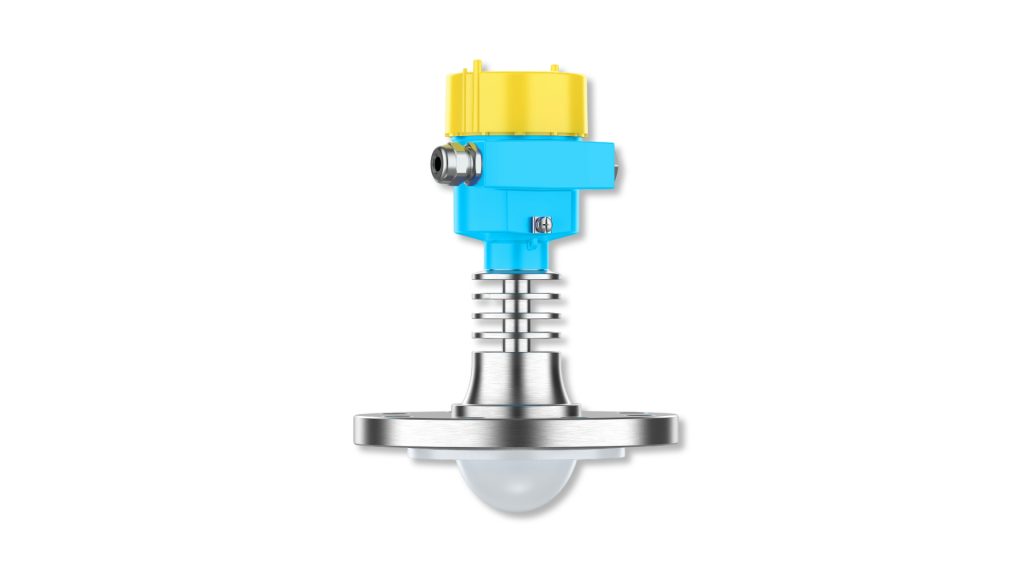
7. Intelligent Echo Algorithms for Foam, Steam, and Liquid Surface Fluctuation
In foaming conditions, the most common problem in level measurement is that the instrument cannot distinguish the foam layer from the real liquid surface. Some foam absorbs or weakens radar waves, while some foam generates unstable echoes. If the instrument’s algorithm is not strong enough, it may mistakenly identify the foam layer as the liquid surface, resulting in falsely high readings. It may also produce fluctuating data due to unstable echoes.
Jiwei JWrada® radar level meters are equipped with intelligent echo learning and adaptive algorithms. The instrument can identify, learn, and optimize field echoes. It can suppress fixed interference echoes, identify multi-layer echoes, track the real level target, and adjust signal processing strategies according to changing operating conditions. Level Meters
In vessels with steam, condensation, agitation, feed impact, and fluctuating liquid surfaces, this algorithmic capability is extremely important. It helps the instrument reduce false echo interference and improve the continuity of the level curve, enabling the control system to obtain more reliable real-time level signals.
For reaction intermediate tanks, foam buffer tanks, acid and alkali storage tanks, and circulation tanks, the JWrada® series can effectively reduce false alarms, incorrect pump actions, and control abnormalities caused by foam and disturbance, providing more stable data support for production safety.
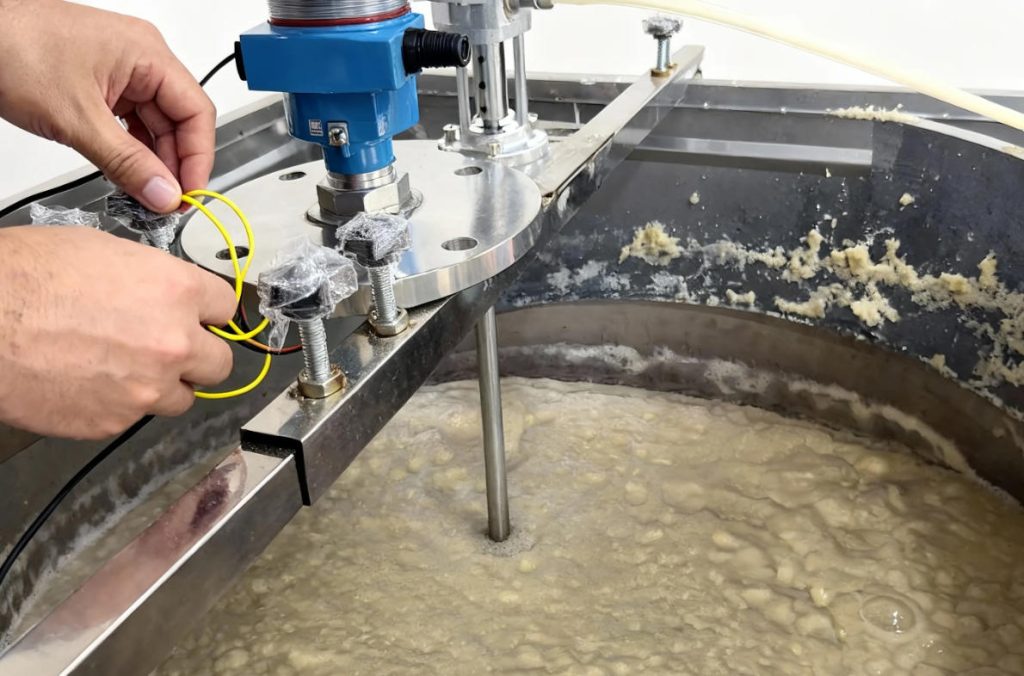
8. Bluetooth Commissioning and Remote Operation Improve On-Site Efficiency
In complex operating conditions, instrument commissioning and maintenance efficiency are also important. Many radar level meters in chemical plants are installed on tank tops, elevated platforms, or hazardous areas. Close-range operation is not only inconvenient but may also involve safety risks.
Jiwei JWrada® series radar level meters are equipped with HART communication protocol and built-in Bluetooth modules. With the “Jiwei Smart Control®” WeChat mini program and mobile app, users can perform wireless commissioning, parameter configuration, real-time monitoring, and data viewing. Engineers do not need to frequently open the instrument cover or stay for long periods at heights or in hazardous areas to complete routine commissioning.
Through cloud data networks, the JWrada® series also supports remote commissioning, remote monitoring, software upgrades, fault code viewing, and echo curve analysis. For complex conditions involving foam, steam, and disturbance, remote echo curve analysis can help engineers quickly identify the source of problems, optimize parameter settings, and reduce on-site troubleshooting time.
This intelligent operation and maintenance capability is also an important direction for domestic radar level meters to benchmark against international brands. Users need not only high-precision instruments, but also a complete user experience featuring easy installation, fast commissioning, clear diagnostics, and simple maintenance.
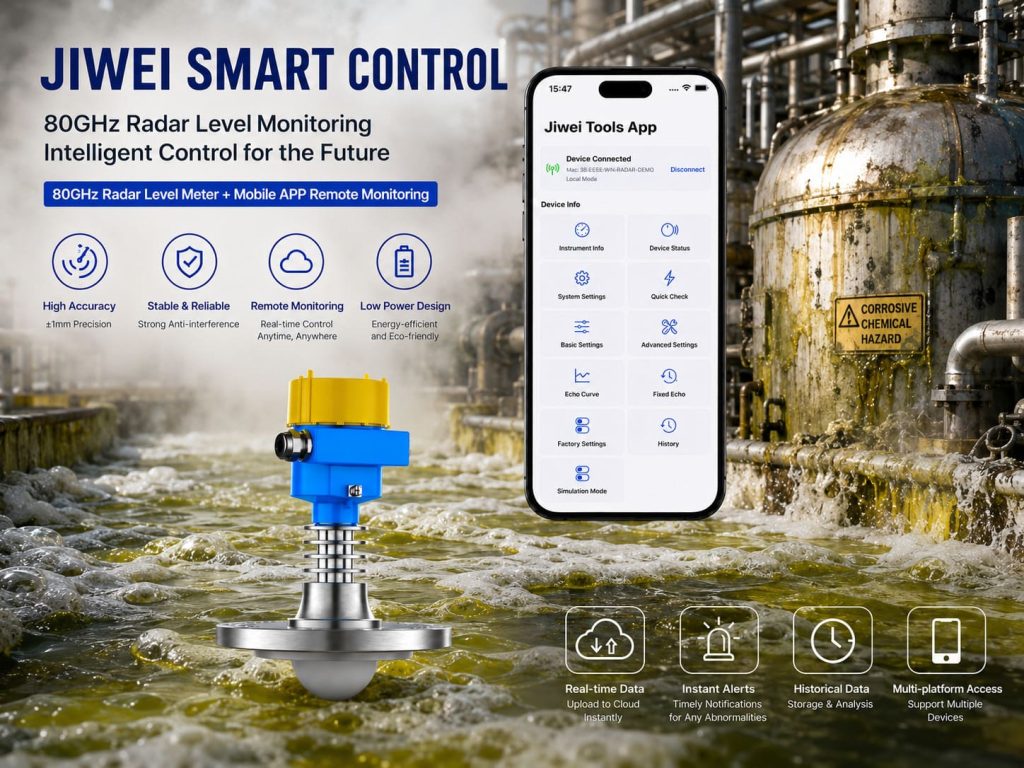
9. Explosion-Proof Design, High-Temperature Resistance, and Multiple Signal Outputs for Industrial Sites
In chemical, petrochemical, coal chemical, pharmaceutical, and new energy material industries, level instruments must meet site safety requirements. Some models of the Jiwei JWrada® series feature various explosion-proof designs, including flameproof, intrinsically safe, dust flameproof, and dust intrinsically safe versions, making them suitable for flammable, explosive, and dust-hazard environments.
In terms of temperature adaptability, some JWrada® models can withstand working temperatures up to 220°C, making them suitable for high-temperature reaction liquids, thermal oil, solvents, steam-associated conditions, and high-temperature storage and transportation applications. For complex projects involving high temperature, corrosion, foam, and explosion-proof requirements at the same time, the appropriate model can be selected based on medium characteristics, temperature and pressure, installation method, and explosion-proof rating.
In terms of communication and output, the JWrada® series supports 4–20mA/HART, RS485/Modbus, and other signal forms, making it easy to connect to DCS, PLC, SCADA, field display instruments, or remote monitoring systems. Process connections are also flexible and can be selected according to tank structure, including threaded, flanged, bracket-mounted, or suspended installation methods.
10. Typical Application: Level Measurement Upgrade for a Corrosive and Foaming Intermediate Tank
Take a chemical reaction intermediate tank as an example. The medium inside the tank is corrosive to a certain extent, and foam is often generated on the liquid surface during operation. Feed disturbance and liquid level fluctuation are also present. When a contact-type level instrument was previously used, the sensor was in long-term contact with the medium and was easily affected by corrosion and foam wrapping, resulting in unstable level signals. Maintenance personnel had to inspect and handle instrument abnormalities frequently.
In such applications, after switching to a Jiwei JWrada® radar level meter, the instrument is installed on the tank top and continuously measures the liquid level through a non-contact method. Since the antenna is not immersed in the medium, the influence of corrosion and adhesion is effectively reduced. The 80GHz high-frequency radar provides a more concentrated beam and clearer echoes, while the intelligent echo algorithm further suppresses interference caused by foam, tank internals, and feed disturbance.
After the level signal is connected to the control system through 4–20mA/HART, continuous level monitoring, high and low level alarms, pump start-stop control, and interlock protection can be realized. Stable level data helps users reduce false alarms, avoid pump dry running, lower the risk of overflow, and reduce the frequency of instrument disassembly, cleaning, and replacement.
From the perspective of long-term operation, Jiwei JWrada® radar level meters not only improve measurement stability but also help users reduce overall maintenance costs, providing more reliable instrumentation support for complex chemical production.
11. How to Select the Right JWrada® Series Model
For different operating conditions, Jiwei JWrada® series Level Meters offer multiple model options.
For small-range liquid measurement, compact installation space, and relatively mild working conditions, JWrada®-31 can be selected. This model is suitable for small-range continuous liquid level measurement in pharmaceutical, food, energy, and water treatment industries. It features flexible installation and convenient commissioning.
For general liquid or solid level measurement requiring explosion-proof performance, high-temperature adaptability, and larger measuring ranges, JWrada®-32 can be selected. This model is suitable for complex industrial environments such as petroleum, chemical, and mining applications, offering strong anti-interference capability.
For high temperature, steam, dust, foam, long-distance measurement, or complex installation environments, JWrada®-34 Radar Level Meters can be selected. Its high focusing capability and strong anti-interference performance make it suitable for level measurement under harsh operating conditions.
For strong corrosive liquids, high temperature and high pressure, foam and steam, strong acids and alkalis, and complex chemical environments, JWrada®-35 is a more targeted choice. This model is specially designed for corrosive liquids and complex conditions. It can be equipped with PTFE diaphragms and corrosion-resistant sealing structures, making it suitable for highly reliable level measurement in chemical, petrochemical, metallurgy, electric power, and other industries.
During model selection, users should confirm key parameters such as medium name, corrosiveness, dielectric constant, foam thickness, tank height, nozzle size, process temperature, process pressure, presence of agitation, presence of steam, explosion-proof rating, signal output requirements, and installation method. Jiwei can provide targeted model selection and application recommendations based on actual site conditions.
12. Competitive Advantages of Jiwei Radar Level Meters in the Trend of Import Substitution
As industrial enterprises pay more attention to cost control, supply chain security, and localization, more and more users are looking for domestic radar level meters that can replace imported instruments. In the past, some complex operating conditions relied heavily on imported brands such as VEGA. However, users also faced pressure from procurement costs, delivery cycles, spare parts supply, and localized service.
Jiwei JWrada® series radar level meters are based on 80GHz high-frequency radar technology and integrate intelligent echo algorithms, corrosion-resistant structures, explosion-proof designs, remote commissioning, and multiple industrial communication interfaces. Their measurement capability in complex operating conditions is benchmarked against leading international brands, while also offering the advantages of a domestic brand in delivery cycle, technical support, after-sales response, and overall cost.
For users in chemical, petrochemical, environmental protection, new energy, metallurgy, and electric power industries, choosing the Jiwei JWrada® series means not only obtaining stable and reliable level measurement data, but also achieving higher cost-effectiveness in project construction, plant upgrades, and spare parts replacement. Especially in corrosive and foaming conditions, high-temperature explosion-proof applications, and imported instrument replacement projects, the JWrada® series offers strong practical value.
13. Why Choose Jiwei JWrada® Radar Level Meters?
The advantages of Jiwei JWrada® series radar level meters can be summarized as follows:
First, they adopt 80GHz FMCW high-frequency radar technology, offering a small beam angle, concentrated energy, and high resolution. They are suitable for complex tanks and high-precision continuous level measurement.
Second, the non-contact measurement method reduces direct contact between the instrument and corrosive media, lowering the risk of corrosion, material buildup, scaling, and maintenance.
Third, intelligent echo learning and adaptive algorithms can identify false echoes, multi-layer echoes, and dynamic level changes, making the meters suitable for foam, steam, agitation, and fluctuating surface conditions.
Fourth, some models are equipped with PTFE diaphragms, corrosion-resistant materials, and professional sealing structures, making them suitable for corrosive media such as strong acids and strong alkalis.
Fifth, the meters support Bluetooth commissioning, WeChat mini program operation, and mobile app operation, enabling wireless configuration, real-time viewing, and remote diagnostics to improve on-site maintenance efficiency.
Sixth, they support 4–20mA/HART, RS485/Modbus, and other communication methods, making them easy to connect to DCS, PLC, and remote monitoring systems.
Seventh, they offer multiple explosion-proof designs and high-temperature adaptability, meeting the safety requirements of chemical, petrochemical, coal chemical, and new energy material industries.
Eighth, their product quality and application performance are comparable to VEGA and other leading international radar level brands, while offering the comprehensive advantages of domestic delivery, service, and cost.
Conclusion
Level measurement under corrosive and foaming conditions tests not only the individual parameters of an instrument, but also its overall engineering adaptability. The instrument must cope with corrosion, foam, steam, agitation, liquid surface fluctuation, high temperature, explosion-proof requirements, and complex installation conditions at the same time. Any weakness in one area may affect long-term measurement stability.
Jiwei JWrada® series radar level meters use 80GHz FMCW technology, non-contact measurement, intelligent echo algorithms, corrosion-resistant structures, Bluetooth commissioning, remote operation and maintenance, and multiple industrial communication interfaces to provide a stable and reliable continuous level measurement solution for corrosive liquids and foaming conditions. With product quality and field application capability comparable to VEGA and other leading international brands, the JWrada® series is an ideal choice for chemical, petrochemical, environmental protection, new energy, metallurgy, and electric power industries seeking import substitution, improved measurement stability, and reduced maintenance costs.
When a site involves strongly corrosive media, foam coverage, steam disturbance, liquid level fluctuation, or explosion-proof requirements, choosing Jiwei JWrada® series radar level meters can not only improve level measurement accuracy and stability, but also help enterprises reduce false alarms, lower maintenance frequency, protect pumps and storage tanks, and provide reliable data support for continuous production.