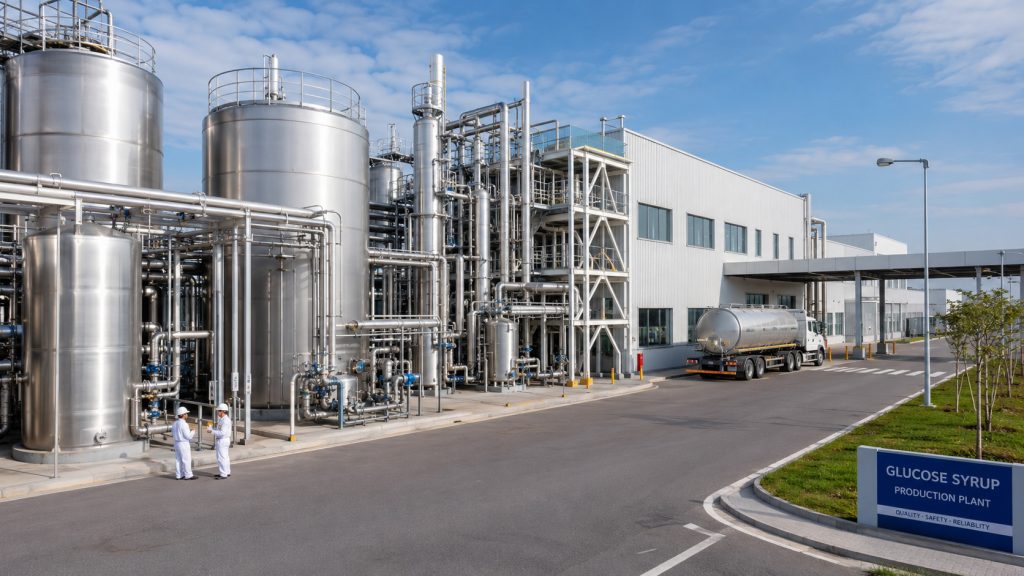
Glucose is an essential raw material widely used in the food, beverage, fermentation, pharmaceutical, and fine chemical industries. In a typical starch-based glucose production process, the production line includes slurry preparation, liquefaction, saccharification, filtration, decolorization, ion exchange, evaporation, concentration, crystallization, and finished glucose syrup storage.
Reaction vessels, intermediate tanks, buffer tanks, evaporator feed tanks, and finished-product storage tanks are installed throughout the process. Reliable level control in these vessels is essential for maintaining continuous material transfer, protecting pumps, preventing overflow, and stabilizing overall production efficiency.
Compared with water, glucose solution and concentrated glucose syrup are more difficult to measure. Their viscosity varies significantly with concentration and temperature. Some process stages generate foam or entrained air, while high-concentration syrup can adhere to instrument surfaces or crystallize after cooling. The equipment must also undergo regular cleaning to meet hygiene requirements.
Mechanical float switches may become less reliable when sticky glucose syrup accumulates around their moving components. Certain instruments that depend heavily on electrical properties may require parameter adjustment when syrup concentration, temperature, or cleaning media change.
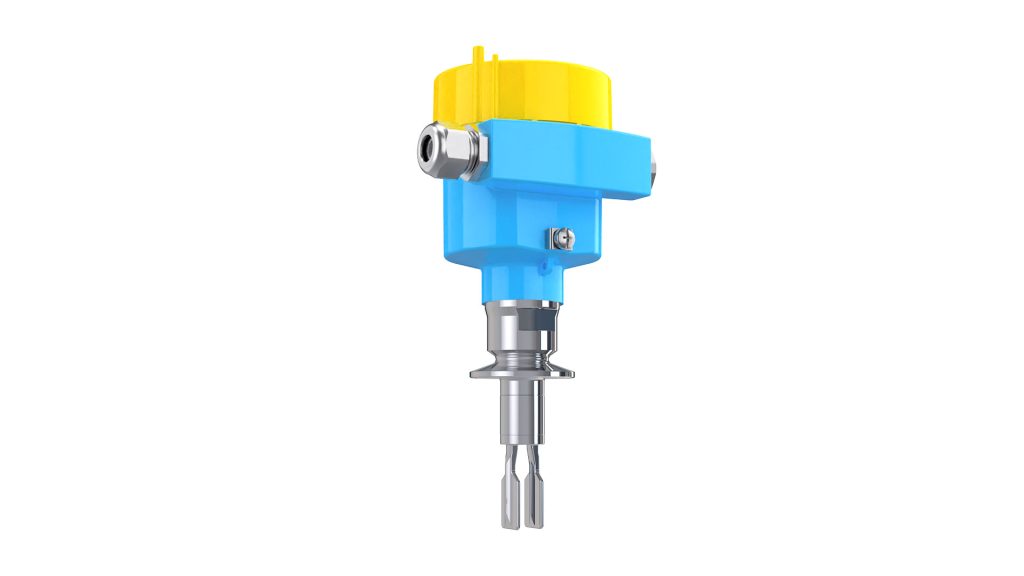
To address these challenges, a glucose manufacturer upgraded the level control system on several critical process tanks. Ring-11 tuning fork level switches were installed on saccharification buffer tanks, evaporator feed tanks, and finished glucose syrup storage tanks.
The switches were used for high-level alarms, low-level interlocks, pump dry-run protection, and independent overfill prevention. By selecting sanitary process connections, optimizing the installation positions, and integrating the switches into the existing PLC system, the production line achieved more dependable point-level detection under demanding glucose-processing conditions.
1. Level Measurement Challenges in Glucose Production
1.1 Syrup Viscosity Changes Throughout the Process
During the early stages of glucose production, the saccharified liquid contains a relatively high percentage of water and flows easily. After filtration, purification, and evaporation, the glucose concentration gradually increases, resulting in much higher viscosity.
Level switches installed at different points on the same production line may therefore be exposed to liquids with significantly different concentrations, temperatures, and flow characteristics.
When a sensing element is highly sensitive to coating, residual syrup on its surface can delay switching or create a false “wet” signal. For this reason, selecting a level switch for glucose production requires more than confirming whether the liquid is conductive.
Engineers must also consider the instrument’s ability to operate in high-viscosity liquids, tolerate surface coating, and maintain stable performance when process conditions change.
1.2 Foam and Air Bubbles Can Affect Level Detection
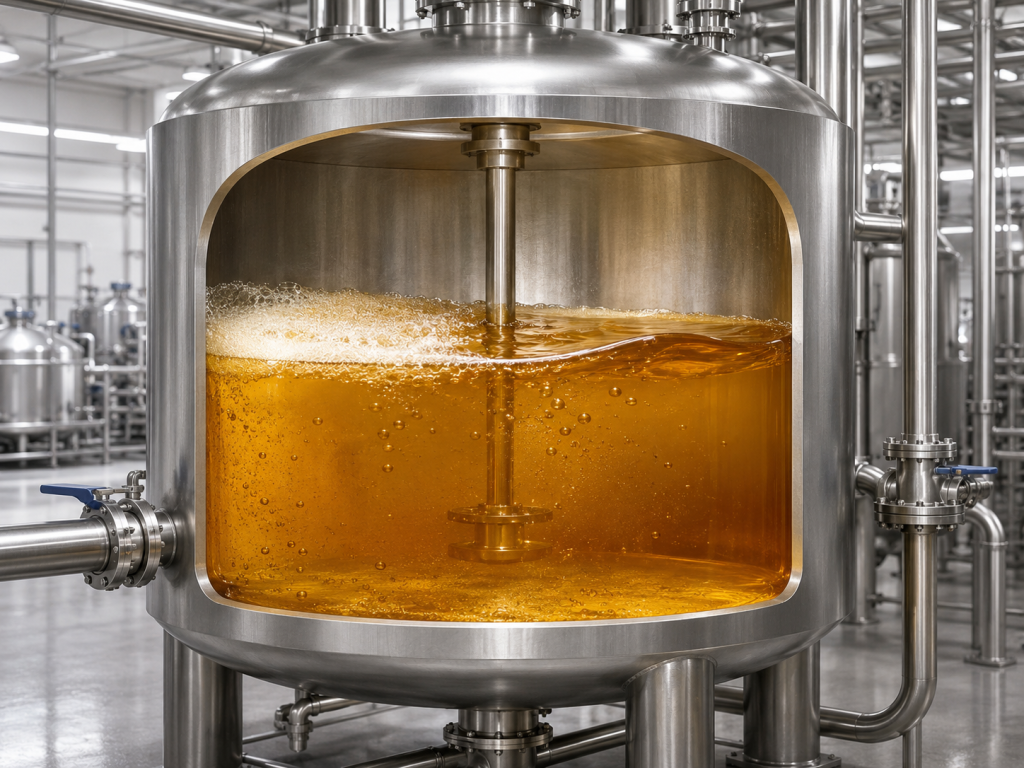
Foam may form when saccharified liquid enters a buffer tank or when pumps, agitators, and recirculation lines introduce air into the liquid. Air pockets can also remain in pipelines during system startup after cleaning.
Foam does not always represent the actual liquid level. A sensor that reacts too strongly to foam may switch before the liquid reaches the intended alarm point. A detector that is highly sensitive to bubbles may produce unstable output signals, leading to unnecessary switching of pumps or inlet valves.
The selected point-level instrument must therefore distinguish between the actual liquid and low-density foam or temporary air bubbles as reliably as possible.
1.3 Food Hygiene and Cleaning Requirements
Glucose is widely used in food and pharmaceutical production. Instruments that come into direct contact with the process medium should minimize hygienic dead spaces and be easy to inspect and clean.
A rough sensing surface can retain glucose syrup, increase cleaning difficulty, and potentially contribute to microbial contamination. Sanitary level switches should therefore use suitable wetted materials, smooth surface finishes, and hygienic process connections.
For refined glucose solution and finished syrup applications, clamp-style connections are often preferred because they simplify disassembly and inspection. The installation should also be coordinated with the tank’s cleaning system to prevent the creation of areas that cleaning liquid cannot reach effectively.
1.4 High- and Low-Level Signals Are Critical to Continuous Production
Glucose production lines typically operate continuously or semi-continuously. An excessively high level in an intermediate tank can result in overflow. An excessively low level can cause the transfer pump to draw air or run dry.
Unstable feed from an evaporator supply tank can also affect the downstream concentration process.
For this reason, critical vessels often require separate high- and low-level switches. The high-level signal may close an inlet valve, stop an upstream transfer pump, or activate an alarm. The low-level signal may stop the discharge pump, switch to a standby tank, or alert the operator that additional material is required.
2. Operating Principle of the Ring-11 Tuning Fork Level Switch
The Ring-11 tuning fork level switch uses piezoelectric elements to drive the fork at or near its natural resonant frequency.
When the tuning fork is in air, it vibrates at its normal frequency and amplitude. When the process liquid covers the fork, the liquid creates additional damping and changes the fork’s vibration characteristics.
The instrument’s electronic circuit continuously monitors this frequency change and converts it into a switching signal. The PLC, relay, alarm system, or safety control circuit can then stop a pump, close a valve, activate standby equipment, or trigger an audible and visual alarm.
This measurement principle does not require a float, linkage, or other mechanical moving parts. It also does not depend primarily on the color of the glucose solution.
When correctly selected and installed, the Ring-11 can provide stable point-level detection in applications involving foam, air bubbles, viscous syrup, and normal equipment vibration.
A tuning fork level switch is a point-level instrument. It determines whether liquid has reached a fixed position, but it does not continuously display the liquid level throughout the tank.
When continuous level indication is required, a continuous level transmitter can be used for routine process control, while the Ring-11 provides an independent high-high or low-low safety signal.
3. Application Conditions and Upgrade Objectives
The main process media in this application included saccharified glucose solution, purified glucose solution, and concentrated glucose syrup.
Some of the existing measuring points used mechanical level switches. After extended operation in concentrated syrup, these devices required frequent inspection and cleaning. The manufacturer wanted to improve the reliability of critical level alarms without making extensive modifications to the existing tanks.
The project established five main objectives.
First, the system had to stop upstream material transfer when the saccharification buffer tank reached the high-level point, preventing glucose solution from overflowing through the tank top or vent connection.
Second, a low-level signal was required in the buffer tank and evaporator feed tank to stop the discharge pump and reduce the risk of dry running.
Third, the finished glucose syrup storage tank required an independent high-high level switch to prevent overfilling if the primary control system failed.
Fourth, instruments in contact with refined glucose solution and finished syrup had to meet the hygiene, material, surface-finish, and cleaning requirements of food production.
Finally, each level switch needed to be compatible with the existing PLC system and provide a suitable relay, transistor, two-wire, or other switching output.
4. Selection of the Ring-11 Tuning Fork Level Switch
4.1 Sanitary Clamp Process Connection
Sanitary Ring-11 tuning fork level switches were selected for the refined glucose solution and finished syrup measuring points.
The instruments used hygienic clamp connections and smoothly finished wetted surfaces, allowing them to integrate with sanitary tanks and process piping.
A clamp connection makes removal and reinstallation easier during planned maintenance or hygiene inspections. Maintenance personnel can quickly remove the instrument and examine the tuning fork, process seal, and connection.
Compared with mechanical switches containing larger or more complicated moving components, the compact tuning fork design can also reduce areas where sticky syrup may accumulate.
4.2 Compact 40 mm Fork for Limited Installation Space
The Ring-11 has a fork length of approximately 40 mm, making it suitable for installation on tank sidewalls, short nozzles, and certain pipelines where space is limited.
In an existing glucose production facility, tanks are often surrounded by insulation, cleaning lines, valve assemblies, support structures, and operating platforms. Available installation space may be restricted.
The short tuning fork reduces intrusion into the process vessel and minimizes interference with the internal flow pattern or cleaning equipment. It also helps reduce the possibility of direct mechanical impact when the instrument is installed away from the main inlet stream.
4.3 Suitability for Different Glucose Concentrations
The Ring-11 can be used for liquids with a density of at least 0.5 g/cm³ and can accommodate viscosities up to approximately 10,000 mPa·s, depending on the selected configuration and actual operating conditions.
These capabilities cover many glucose solutions and syrups encountered throughout the production process. From relatively dilute saccharified liquid to concentrated finished syrup, the medium density will generally meet the detection requirements of a tuning fork level switch.
However, engineers should still provide the actual syrup concentration, minimum operating temperature, maximum operating temperature, and maximum viscosity during selection.
This is particularly important for high-concentration syrup. Its viscosity may increase considerably at low temperatures or during a process shutdown. Selection should not be based only on the viscosity measured at the normal production temperature.
4.4 Temperature Rating Based on the Process
Liquefaction, saccharification, purification, and evaporation can involve elevated temperatures. Finished glucose syrup storage temperatures depend on the process design and the need to maintain suitable fluidity.
Different Ring-11 temperature configurations are available. A standard-temperature version may be suitable for many ordinary storage and buffer tank applications, while higher-temperature process points require an appropriately rated configuration.
The temperature assessment should include normal operating temperature, hot-water cleaning temperature, possible steam-cleaning conditions, and abnormal process temperature.
Selecting the instrument only according to the normal syrup storage temperature may be insufficient if the temperature during cleaning exceeds the allowable limit of the electronic components or process seal.
4.5 Output Signal Compatible with the PLC
The Ring-11 can be configured with several output types, including relay, two-wire, NAMUR, and NPN or PNP transistor outputs.
The output configuration in this application was selected according to the existing PLC input modules and field power supply.
Relay output is suitable when electrical isolation is required or when the switch must control an intermediate relay. NPN or PNP transistor outputs are commonly used with DC digital input modules.
Where intrinsically safe circuits are required, the output type must be selected according to the safety barrier, control system, and hazardous-area design.
5. Ring-11 Installation Points in the Glucose Production Line
5.1 High-Level Alarm on the Saccharification Buffer Tank
After the saccharification reaction, the glucose solution enters an intermediate buffer tank before being transferred to filtration and purification equipment.
Because the upstream feed rate may fluctuate, the buffer tank requires a dependable high-level alarm.
A Ring-11 switch was installed on the tank sidewall at the designated high-level position. When the glucose solution covered the tuning fork, the switch output changed state and the PLC generated a high-level warning.
A separate high-high level switch was installed above the normal high-level point. If the liquid continued to rise and reached the high-high switch, the control system stopped the upstream transfer pump and closed the inlet valve.
Using two independent level points separated normal process control from overfill protection and reduced the risk associated with relying on a single signal.
5.2 Low-Level Protection for the Transfer Pump
A second Ring-11 was installed above the buffer tank outlet as a low-level switch.
When the liquid level dropped below the tuning fork, the switch transmitted a low-level signal to the PLC. After the programmed signal delay and logic verification, the control system stopped the discharge pump to prevent prolonged operation without sufficient liquid.
The low-level switch was not installed directly next to the outlet. If the tuning fork is placed too close to a high-flow suction point, local turbulence, vortices, air bubbles, and rapid velocity changes may affect detection stability.
The final installation position was determined according to the tank geometry, pump capacity, and minimum safe operating level.
5.3 Level Control in the Evaporator Feed Tank
Evaporation and concentration are critical stages in glucose syrup production. A low level in the feed tank can cause unstable supply to the evaporator, while an excessively high level can reduce the tank’s buffering capacity.
High- and low-level Ring-11 switches were installed on the evaporator feed tank.
The low-level signal prevented continued feeding to the evaporator when insufficient material was available. The high-level signal reduced or stopped upstream transfer.
A continuous level transmitter remained responsible for normal process regulation, while the tuning fork switches provided independent limit alarms. This created a measurement architecture combining continuous control with separate point-level protection.
5.4 Overfill Protection on the Finished Glucose Syrup Storage Tank
After concentration and purification, the finished glucose syrup is transferred to a storage tank. At this stage, the syrup concentration and viscosity are relatively high.
A sanitary Ring-11 tuning fork level switch was installed near the upper section of the tank as an independent high-high level protection device.
When the syrup reached the set point, the control system stopped transfer into the tank and, where permitted by the process arrangement, redirected the product to another available storage tank.
The independent tuning fork switch used a different detection principle from the continuous level transmitter. This provided an additional layer of protection against overflow caused by a failure or abnormal reading in the primary measurement loop.
6. Important Installation and Commissioning Details
Reliable operation depends not only on the performance of the level switch but also on its installation position and orientation.
The tuning fork should be aligned as closely as possible with the direction of liquid flow. This allows the glucose solution to pass smoothly around the fork and reduces direct impact and syrup accumulation.
When the instrument is installed horizontally on a pipe or tank sidewall, the orientation markings on the process connection should be used to position the fork correctly.
The switch should be installed away from inlet streams, discharge outlets, agitators, and areas of intense turbulence. Glucose solution falling directly onto the fork can cause mechanical stress or unstable switching. Installation close to a pump suction point may expose the fork to vortices and air bubbles.
Excessively long or narrow mounting nozzles should also be avoided. If the fork is recessed too deeply inside a nozzle, the liquid may not cover or uncover it at the correct time. Cleaning liquid may also be unable to wash the sensing element effectively.
The mounting nozzle should therefore provide sufficient internal clearance for unrestricted fork vibration, liquid movement, and cleaning.
During electrical commissioning, both wet and dry conditions should be simulated. Engineers should verify the PLC indication, audible and visual alarms, inlet valve response, and transfer pump interlocks.
High- and low-level circuits should also be tested under power-loss, broken-wire, and instrument-fault conditions. This ensures that the control logic enters the intended fail-safe state rather than simply confirming that the wiring is correct.
7. Application Results
After the level control system upgrade, the manufacturer assessed the installation in terms of production continuity, maintenance, cleaning, and automation interlocking.
In the saccharification buffer tank and evaporator feed tank, the tuning fork level switches provided clear switching signals without requiring adjustment when the color of the glucose solution changed.
The switches also demonstrated improved signal stability in the presence of ordinary process foam and small air bubbles compared with detection methods that were more sensitive to changing material characteristics.
On the finished glucose syrup storage tank, the compact sanitary fork design reduced the number of moving components and minimized large retention areas.
During planned cleaning and inspection, the clamp connection allowed maintenance personnel to remove the switch and visually check for syrup deposits or glucose crystallization.
After the low-level switch was integrated into the pump interlock, operators no longer had to rely entirely on visual observation to determine when a tank was nearly empty.
The high-high level switch also added an independent protective layer to the continuous level control system, creating a more complete overfill prevention strategy.
However, the performance of any level switch still depends on accurate process data, proper installation, appropriate control logic, and a suitable maintenance program.
In high-concentration glucose syrup applications where crystallization is possible, insulation, heat tracing, temperature control, and cleaning intervals should be considered. This prevents a hard crystalline layer from forming around the tuning fork after an extended shutdown.
8. Key Considerations When Selecting a Glucose Syrup Level Switch
The medium name alone is not enough for reliable instrument selection.
When specifying a level switch for glucose production, the engineer should provide the glucose concentration, density, normal viscosity, maximum viscosity, minimum temperature, maximum temperature, working pressure, cleaning temperature, foam conditions, crystallization tendency, and process connection size.
For measuring points in direct contact with refined glucose solution or finished syrup, a sanitary clamp connection and 316L stainless steel wetted parts should be considered.
When clean-in-place procedures are used, the process seal and electronic components must be able to withstand the actual cleaning temperature and chemicals.
For concentrated syrup, the viscosity and crystallization behavior during shutdown must be evaluated. Glucose syrup may remain fluid during normal heated operation but become significantly more viscous or begin to crystallize after cooling.
A tuning fork level switch can handle viscous liquids, but it cannot compensate for severe crystallization or complete solidification around the sensing element. Insulation, heat tracing, or timely cleaning may still be necessary.
The Ring-11 is designed for liquid point-level detection and is suitable for glucose solution, saccharified liquid, and glucose syrup.
Crystalline glucose powder, anhydrous glucose granules, or other dry materials stored in silos require a level switch specifically designed for bulk solids. A liquid-type tuning fork switch should not be directly used in a dry powder silo without confirming its suitability.
9. Frequently Asked Questions
Can the Ring-11 Detect High-Concentration Glucose Syrup?
Yes, provided that the syrup density, viscosity, temperature, and flow characteristics remain within the instrument’s operating limits.
During selection, particular attention should be given to the syrup’s maximum viscosity at the lowest operating temperature and whether crystallization is likely during shutdown.
Will Foam Cause False Alarms?
The Ring-11 determines liquid presence by detecting changes in the resonant vibration of the tuning fork. It is generally less sensitive to ordinary low-density foam than some alternative point-level technologies.
However, foam characteristics vary significantly. Dense, wet, or highly stable foam may behave differently from light process foam. Unusual applications should be evaluated through sample testing or an on-site trial.
Can the Ring-11 Continuously Display the Level in a Glucose Storage Tank?
No. The Ring-11 is a point-level switch. It detects whether the liquid has reached a fixed installation point.
A radar level transmitter, differential pressure transmitter, or another continuous level instrument should be used when real-time level percentage or inventory measurement is required.
Why Is the Sanitary Version Suitable for Glucose Production?
The sanitary version uses a hygienic process connection, suitable wetted materials, and a smooth surface finish.
These features help reduce glucose syrup retention, simplify inspection and cleaning, and support applications with strict hygiene requirements.
Does a Tuning Fork Level Switch Require Frequent Calibration?
A point-level tuning fork switch generally does not require range calibration in the same way as a continuous level transmitter.
However, the fork, process connection, seal, wiring, and switching function should be inspected periodically. In syrup applications where crystallization may occur, the cleaning and functional test interval should be determined according to actual process conditions.
10. Conclusion
Level measurement in glucose production may appear straightforward, but the actual application involves changing viscosity, foam, air bubbles, sanitary cleaning, crystallization risk, pump interlocking, and overfill prevention.
An unsuitable level switch can result in unstable alarms, increased manual intervention, tank overflow, or pump dry running.
With its vibration-based measuring principle, compact 40 mm tuning fork, sanitary clamp connection, and ability to operate in viscous liquids, the Ring-11 tuning fork level switch can be applied to saccharification buffer tanks, evaporator feed tanks, refined glucose solution vessels, and finished glucose syrup storage tanks.
For reliable operation, the instrument configuration should be selected according to the glucose concentration, density, temperature, viscosity, pressure, and cleaning conditions.
Installation orientation, distance from inlets and outlets, PLC interlock logic, fail-safe configuration, and regular cleaning should also be carefully considered.
By combining the Ring-11 with continuous level measurement and a well-designed control strategy, glucose manufacturers can establish a more reliable, hygienic, and maintainable level protection system for critical production processes.