
In the field of industrial automation measurement, level meters are widely used instruments. Whether monitoring the liquid level in a water treatment tank, measuring the height of liquid in a chemical storage tank, or detecting the material level in grain silos, cement silos, and powder bins, stable and reliable level measurement technology is essential. In many level meters, especially ultrasonic level meters and certain vibrating level switches, piezoelectric ceramics are key materials that should not be overlooked.
Many people may find the term “piezoelectric ceramics” highly technical and unfamiliar. In fact, it is not mysterious. Simply put, piezoelectric ceramics are functional ceramic materials that can convert mechanical energy and electrical energy into each other. When they are subjected to pressure, vibration, or deformation, they generate an electrical signal. Conversely, when voltage is applied to them, they produce slight deformation or vibration. This unique piezoelectric effect makes piezoelectric ceramics important basic components in sensors, transducers, ultrasonic devices, and industrial level meters.
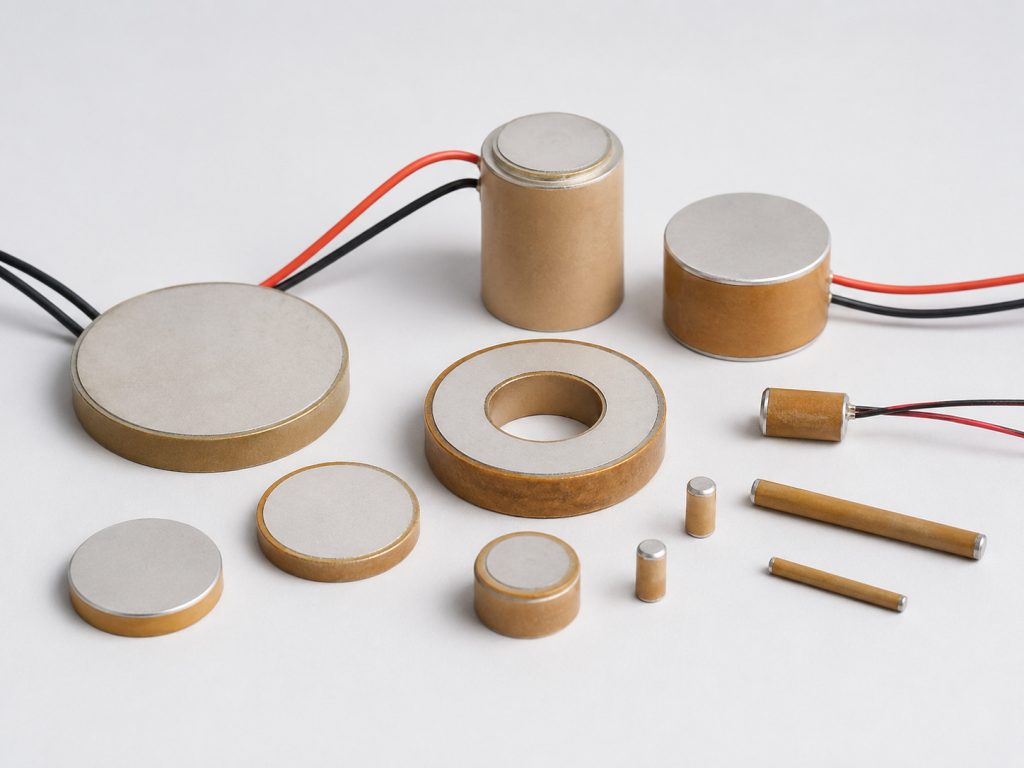
1. What Are Piezoelectric Ceramics?
Piezoelectric ceramics are ceramic materials that acquire piezoelectric properties after special formulation, forming, sintering, and polarization treatment. Common piezoelectric ceramic materials include lead zirconate titanate, often known as PZT piezoelectric ceramics. They are characterized by high electromechanical conversion efficiency, good sensitivity, compact structure, and fast response speed. As a result, they are widely used in industrial testing, medical ultrasound, automotive electronics, acoustic devices, and automation instruments.
The core value of piezoelectric ceramics lies in energy conversion. Energy conversion means transforming one form of energy into another. In level meters, piezoelectric ceramics usually perform the task of transmitting and receiving signals. For example, in an ultrasonic level meter, a piezoelectric ceramic element can convert electrical signals into ultrasonic waves and transmit them outward. When the ultrasonic waves encounter a liquid surface or material surface and are reflected back, the same element can convert the acoustic vibration into an electrical signal. By analyzing the round-trip time of the signal, the instrument can calculate the liquid level or material level height.
2. Working Principle of Piezoelectric Ceramics
The working principle of piezoelectric ceramics mainly comes from two effects: the direct piezoelectric effect and the inverse piezoelectric effect.
The direct piezoelectric effect refers to the phenomenon in which the internal charge centers of piezoelectric ceramics shift under external force, generating charges on the material surface. This effect is commonly used in pressure sensors, vibration sensors, acceleration sensors, and other devices.
The inverse piezoelectric effect is the opposite. When an alternating voltage is applied to both ends of piezoelectric ceramics, the material undergoes periodic deformation according to the frequency of the electrical signal, forming mechanical vibration. If the vibration frequency is high enough, ultrasonic waves can be produced. The probe of an ultrasonic level meter uses the inverse piezoelectric effect to transmit sound waves and the direct piezoelectric effect to receive echo signals.
These two effects work together, allowing piezoelectric ceramics to both “speak” and “listen.” In industrial level measurement, they act like the ears and voice of the instrument, converting invisible electrical signals into sound waves that can propagate, and then converting the reflected sound waves back into electrical signals that can be calculated.
3. Why Do Level Meters Need Piezoelectric Ceramics?
The function of a level meter is to measure the position of the material surface in a vessel, tank, silo, or pool. According to the medium being measured, level meters can be divided into liquid level meters, solid level meters, interface level meters, and more. According to the measuring principle, they can also be classified as ultrasonic level meters, radar level meters, magnetic flap level gauges, capacitance level meters, tuning fork level switches, rotary paddle level switches, and so on.
Among these instruments, piezoelectric ceramics are mainly used in applications that require vibration, sound waves, or mechanical wave conversion. Typical examples include ultrasonic level meters and vibrating solid level switches.
An ultrasonic level meter is usually installed on the top of a tank or silo, with the probe transmitting ultrasonic waves downward. The sound waves travel to the liquid surface or material surface and are then reflected back to the probe. Since the propagation speed of sound waves in air is relatively stable, the instrument can calculate the distance from the probe to the material surface based on the time difference between transmission, reflection, and reception. It then calculates the actual level by combining this distance with the tank height.
In this process, the performance of piezoelectric ceramics directly affects the strength, stability, and sensitivity of the ultrasonic signal. If the piezoelectric ceramic has high conversion efficiency, the transmitted sound waves are more concentrated, and the received echo is clearer. If the material has poor stability, signal attenuation may become obvious, resulting in measurement fluctuation, a larger blind zone, or increased error.
4. The Role of Piezoelectric Ceramics in Ultrasonic Level Meters
An ultrasonic level meter is a non-contact level measurement instrument suitable for measuring water, wastewater, acids and alkalis, slurry, and some granular materials. It does not need to directly contact the medium, making installation and maintenance relatively convenient. Therefore, it is widely used in water treatment, chemical engineering, environmental protection, food processing, pharmaceuticals, mining, and municipal engineering.
In an ultrasonic level meter, piezoelectric ceramics are usually located inside the probe and serve as the key component of the transducer. Their main functions include three aspects.
First, they transmit ultrasonic waves. The control circuit applies a high-frequency electrical signal to the piezoelectric ceramic, causing it to vibrate rapidly and push the surrounding air to form ultrasonic waves. These sound waves propagate downward until they encounter the liquid surface or material surface.
Second, they receive echo signals. When ultrasonic waves encounter the surface of the medium, they are reflected back to the probe. The weak reflected sound waves cause the piezoelectric ceramic to vibrate mechanically, and the material converts this vibration into an electrical signal.
Third, they affect measurement accuracy and stability. The frequency characteristics, sensitivity, dielectric properties, mechanical strength, and temperature stability of piezoelectric ceramics all influence the actual performance of a level meter. High-quality piezoelectric ceramics can help ultrasonic level meters achieve better echo recognition, especially in complex working conditions involving foam, vapor, dust, or agitation.
5. Relationship Between Piezoelectric Ceramics, Liquid Level Meters, and Solid Level Meters
Liquid level meters mainly measure the height of liquids, such as the level in water tanks, pools, and storage tanks. Solid level meters mainly measure the position of solid particles, powders, or bulk materials, such as the level in cement silos, grain silos, coal bunkers, and plastic pellet bins. A level meter is a broader concept that can include both liquid level meters and solid level meters.
The applications of piezoelectric ceramics in liquid level meters and solid level meters are not exactly the same. For liquid media, ultrasonic liquid level meters often focus on factors such as surface stability, vapor, foam, and temperature changes. For solid materials, ultrasonic solid level meters must deal with dust, material angle of repose, scattering, particle size, and internal silo structure interference.
Whether measuring liquid level or solid level, as long as the instrument relies on ultrasonic transduction, piezoelectric ceramics will affect its core performance. A stable piezoelectric ceramic transducer can help a level meter maintain good repeatability and response speed during long-term operation. For continuous production lines, this stability is very important because level data is often directly related to feeding control, inventory management, pump and valve linkage, and safety alarms.
6. What Are the Advantages of Piezoelectric Ceramics?
Piezoelectric ceramics are widely used in level meters and industrial sensors because they offer multiple advantages.
First, piezoelectric ceramics have high sensitivity. They can detect very small changes in pressure, vibration, and sound waves, making them suitable for precision detection equipment.
Second, piezoelectric ceramics respond quickly. The conversion between electrical signals and mechanical vibration can occur almost instantly, which is critical for ultrasonic level meters that rely on time-of-flight measurement.
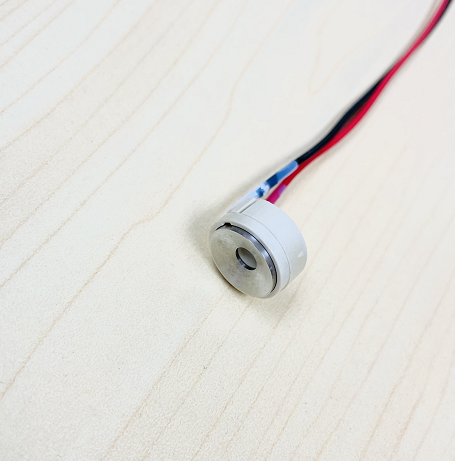
Third, piezoelectric ceramics are compact in structure. They can be processed into sheets, rings, tubes, and other shapes, making them easy to integrate into probes, sensors, and transducers.
Fourth, piezoelectric ceramics are suitable for high-frequency operation. Ultrasonic level meters need to transmit stable high-frequency sound waves, and piezoelectric ceramics can meet this requirement.
Fifth, piezoelectric ceramics offer good durability. With proper design and encapsulation, they can adapt to complex industrial environments, such as humidity, vibration, corrosive gases, or temperature changes.
Of course, piezoelectric ceramics are not perfect. They are brittle materials and may be damaged by strong mechanical impact. At the same time, different formulas of piezoelectric ceramics vary in temperature stability, dielectric loss, and mechanical strength. Therefore, in level meter design, it is necessary not only to choose suitable piezoelectric ceramic materials, but also to consider probe structure, sealing method, acoustic matching layer, and circuit algorithm.
7. Key Factors Affecting Level Meter Measurement Performance
When selecting a level meter, many users focus on measurement range, accuracy, output signal, protection rating, and installation method, while paying less attention to the piezoelectric ceramic inside the sensor. In fact, piezoelectric ceramics are only one key part affecting measurement performance. The actual performance of the instrument is determined by the overall match among materials, structure, algorithms, and site conditions.
In ultrasonic level meters, common influencing factors include temperature changes, vapor, foam, dust, agitation, internal tank obstacles, installation angle, and the reflection ability of the medium surface. For example, when the liquid surface has thick foam, ultrasonic waves may be absorbed or scattered, weakening the echo. When there is heavy dust in a powder silo, sound wave propagation may be attenuated. When there are beams, ladders, or agitators inside the tank, interference echoes may occur.
In such cases, high-quality piezoelectric ceramics can provide more stable sound wave transmission and more sensitive echo reception, but the instrument also needs strong signal processing capability. In other words, piezoelectric ceramics are the hardware foundation of a level meter, while algorithms and structural design determine whether the instrument can accurately convert these signals into reliable level data.
8. How to Choose a Suitable Piezoelectric Ceramic Level Meter
When choosing a level meter, users should not focus only on price or promotional parameters. For ultrasonic level meters using piezoelectric ceramic transducers, the following factors should be considered comprehensively.
First, identify whether the measured object is liquid or solid. Liquid level measurement is relatively simple, but if foam, vapor, or strong corrosiveness is present, a corresponding model should be selected. Solid level measurement requires greater attention to dust, material angle of repose, and the reflection ability of the material surface.
Second, confirm the range and blind zone. Ultrasonic level meters have a certain blind zone. During installation, the highest level must be kept outside the blind zone; otherwise, abnormal measurement may occur.
Third, consider the site environment. Temperature, pressure, humidity, explosion-proof requirements, anti-corrosion requirements, and installation space can all affect level meter selection. Some chemical applications require explosion-proof liquid level meters, while corrosive media require anti-corrosion probes.
Fourth, evaluate long-term stability. The quality of the piezoelectric ceramic transducer, probe sealing process, circuit anti-interference capability, and software echo processing ability all influence long-term operation. For continuous production enterprises, stability is often more important than a single nominal accuracy value.
Fifth, consider maintenance convenience. Non-contact ultrasonic level meters require relatively little maintenance, but in environments with heavy dust or condensation, the probe surface may still become contaminated and should be inspected regularly.
9. Piezoelectric Ceramics Make Level Measurement Smarter
With the development of industrial automation, smart manufacturing, and the Internet of Things, level meters are no longer instruments that simply display height. More and more smart level meters now support 4–20 mA output, RS485 communication, HART protocol, remote monitoring, fault diagnosis, and data networking. Behind these intelligent functions, reliable sensor signals remain the foundation.
As the core transducer material in ultrasonic level meters, piezoelectric ceramics provide stable original signals for smart measurement. Without stable sound wave transmission and echo reception, even the most advanced software algorithms cannot obtain accurate data. Therefore, although piezoelectric ceramics are usually hidden inside the probe, they determine the basic performance of many level meters.
In the future, as piezoelectric material technology, encapsulation processes, and digital signal processing technologies continue to improve, the application of piezoelectric ceramics in level meters will become even more mature. Piezoelectric ceramic transducers with higher sensitivity, lower loss, and stronger environmental adaptability will help ultrasonic level meters achieve more stable liquid level and solid level measurement under complex working conditions.
10. Conclusion
Piezoelectric ceramics are functional materials capable of converting electrical energy and mechanical energy into each other. They can both transmit ultrasonic waves and receive echo signals. In level meters, liquid level meters, and solid level meters, especially ultrasonic level meters, piezoelectric ceramics play a core transduction role.
For general users, understanding piezoelectric ceramics helps explain how level meters achieve non-contact measurement. It also helps users pay more attention to sensor quality, site adaptability, and long-term stability during selection. For industrial enterprises, choosing the right level meter is not just about selecting a measuring tool; it is also about building a solid foundation for production safety, process control, and intelligent management.
From a small piece of piezoelectric ceramic to a level meter operating reliably on site, the process reflects the combined progress of materials science, sensor technology, and industrial automation. These seemingly small core components enable modern factories to monitor level changes in every tank, silo, and pool with greater precision.