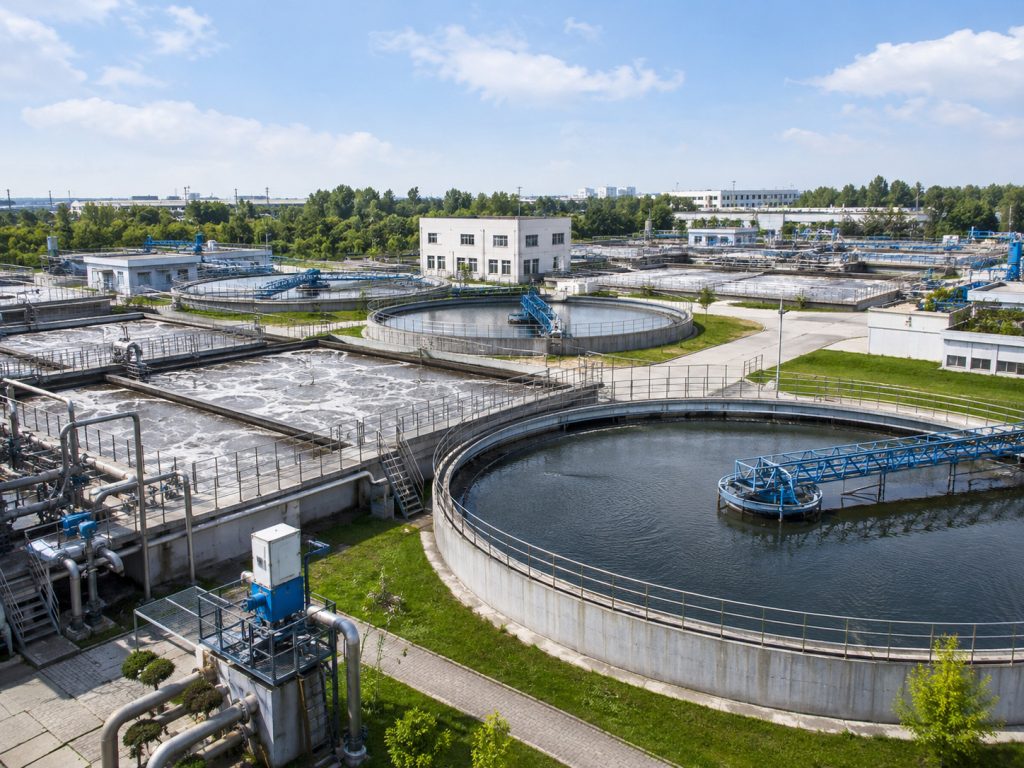
1. Why Do Wastewater Treatment Tanks Need Reliable Level Switches?
In wastewater treatment plants, industrial wastewater treatment stations, municipal water projects, and environmental protection systems, level control is a basic but critical part of process automation. Whether it is an equalization tank, sedimentation tank, aeration tank, sludge thickening tank, sludge dewatering feed tank, lift pump well, or chemical dosing tank, abnormal liquid levels may lead to overflow, pump dry running, equipment shutdown, reduced treatment efficiency, or even environmental risks.
The operating conditions in wastewater treatment tanks are usually more complex than those in clean water tanks. Wastewater may contain suspended solids, grease, foam, flocculated sludge, acidic or alkaline substances, and corrosive media. The tank may also be affected by aeration disturbance, pump vibration, liquid surface fluctuation, and material adhesion. Traditional float level switches and electrode level switches may suffer from jamming, false triggering, contamination, conductivity interference, or frequent maintenance under such conditions. For wastewater treatment systems that require continuous and stable operation, choosing a level control instrument that is not easily affected by foam, adhesion, vibration, and changes in medium properties is especially important.
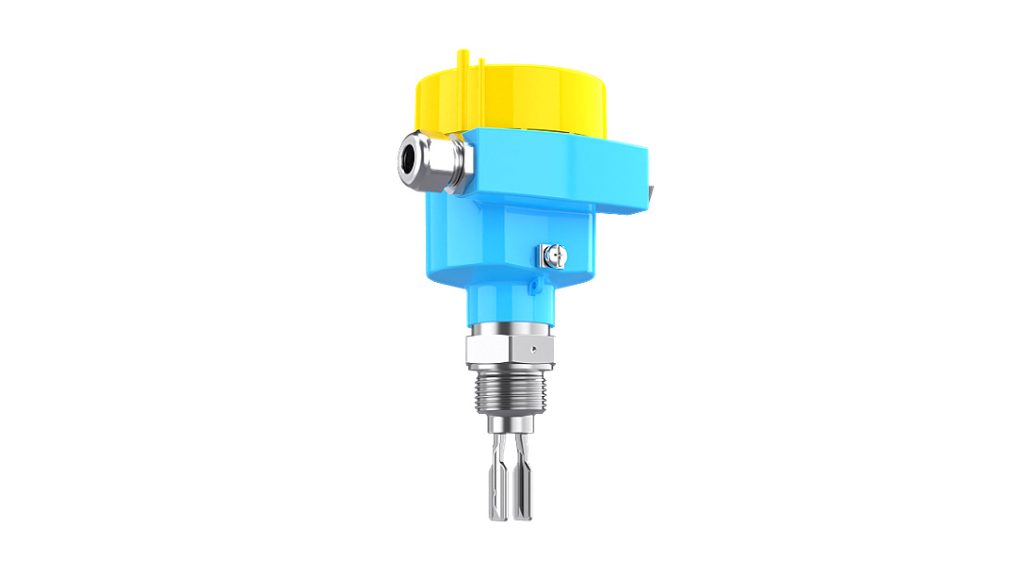
The Jiwei Ring-11 tuning fork level switch is a point level detection device designed for complex liquid applications. It determines the liquid level status by detecting the change in vibration frequency when the tuning fork comes into contact with liquid. With a reliable structure and quick response, it is suitable for high-level alarm, low-level protection, pump interlock control, and signal acquisition in wastewater treatment automation systems.
2. Working Principle of the Ring-11 Tuning Fork Level Switch
The Ring-11 tuning fork level switch works based on the principle of vibrating fork detection. A piezoelectric device inside the instrument drives the tuning fork to vibrate. In air, the fork maintains a fixed mechanical resonant frequency. When wastewater or sludge-mixed liquid contacts the fork, the vibration frequency changes significantly. The detection circuit identifies this frequency change and then outputs a switching signal to a PLC, DCS, SCADA system, or on-site alarm device.
The advantage of this working principle is that it does not depend on the color, transparency, dielectric constant, or conductivity of the liquid. It also does not require a floating mechanism to move up and down. Therefore, in wastewater treatment tanks containing foam, bubbles, suspended solids, viscous liquids, or fluctuating liquid surfaces, the Ring-11 can maintain high stability. For equalization tanks, sedimentation tanks, aeration tanks, and other applications where liquid levels change frequently and operating conditions are complex, tuning fork point level detection is more suitable for long-term operation than traditional mechanical level switches.
3. Typical Application Positions in Wastewater Treatment Tanks
3.1 High and Low Level Alarm in Equalization Tanks
The equalization tank is used to balance influent flow and water quality, making it an important front-end unit in wastewater treatment systems. When incoming water fluctuates, the liquid level in the tank may rise or fall rapidly. The Ring-11 tuning fork level switch can be installed at the high-level point of the equalization tank for overflow warning, or at the low-level point to prevent the lift pump from dry running. When the liquid reaches the set position, the instrument outputs a switching signal to activate an audible and visual alarm, PLC program, or pump start-stop control.
In equalization tank applications, the liquid surface is often accompanied by foam and floating matter. The Ring-11’s resistance to foam and interference helps reduce false alarms and improve the continuity of system operation.
3.2 High-Level Limit Detection in Sedimentation Tanks
Sedimentation tanks are used for solid-liquid separation. The medium inside may contain flocculated sediment, scum, and liquid surface fluctuation. If the level is too high, it may affect the stability of downstream effluent or even cause overflow. The Ring-11 tuning fork level switch can be used as a high-level limit switch in sedimentation tanks for alarm or interlock control.
As a point level detection device, the tuning fork level switch is suitable for safety protection at critical level points. It does not replace continuous level transmitters, but it can act as a safety limit device for high-high level or low-low level detection, adding an extra layer of protection to the wastewater treatment automation system.
3.3 Level Alarm in Aeration Tanks
Aeration tanks contain many bubbles and strong liquid surface disturbance, which can easily affect ordinary level switches. The Ring-11 tuning fork level switch determines the liquid contact status based on changes in fork vibration frequency, making it highly adaptable to foam, bubbles, and liquid surface turbulence. It is suitable for level alarm applications in aeration tanks.
In practical design, the Ring-11 can be installed on the tank wall or in a reserved sleeve for high-level alarm, low-level interlock, or abnormal level indication. When connected to a PLC, it can support automatic recording, remote alarm, and operational interlock.
3.4 Level Control in Sludge Tanks and Sludge Dewatering Feed Tanks
The media in sludge tanks, sludge thickening tanks, and sludge dewatering feed tanks usually have higher viscosity and stronger adhesion, which places higher demands on level switches. The Ring-11 tuning fork level switch has no moving parts, avoiding failure risks caused by sludge entanglement, scaling, or mechanical jamming often seen in float-type products.
In sludge dewatering systems, the low-level signal can be used to protect the feed pump from dry running. The high-level signal can be used to start the transfer pump or trigger an alarm to prevent tank overflow. For sludge liquids containing corrosive substances or chemical agents, anti-corrosion coating versions, Hastelloy versions, or stainless-steel housing options can be selected according to the medium conditions to extend service life.
3.5 Lift Pump Wells and Pump Protection Systems
Pump protection is a very important application in wastewater treatment systems. If lift pumps, return pumps, or sludge pumps run dry for a long time, mechanical seals may be damaged, motors may overheat, and the system may shut down. The Ring-11 can be installed at the low-level position in a pump well or pipeline. When the level drops below the safe operating height, it outputs a low-level signal to stop the pump through interlock control.
Compared with float switches, the Ring-11 has no mechanical swinging parts and is less likely to fail due to entanglement by floating debris. For pipelines, guide pipes, or small pump protection chambers with limited space, the 40 mm ultra-short fork design of the Ring-11 also makes installation easier.
4. Core Advantages of the Ring-11 in Wastewater Treatment Tanks
4.1 40 mm Ultra-Short Fork for Installation in Limited Spaces
Not every measurement point at a wastewater treatment site has sufficient installation space. Some lift pump wells, pipeline bypasses, small tanks, or sleeve installation points have limited room, making traditional long-probe level switches difficult to install. The Ring-11 adopts a 40 mm ultra-short fork design, allowing more flexible installation on tank walls, pipelines, guide pipes, and small vessels.
This feature is especially valuable for retrofit projects. Many wastewater treatment stations require automation upgrades after years of operation, but on-site openings and installation positions are often limited. The short fork design reduces installation difficulty and improves adaptability in retrofit applications.
4.2 Resistance to Foam, Bubbles, and Adhesion to Reduce False Alarms
Foam, bubbles, scum, and adhered material are common in wastewater treatment tanks. Foam may cover the liquid surface, bubbles may cause unstable level signals, and adhered material may lead to false judgments by traditional detection devices. The Ring-11 tuning fork level switch determines the liquid contact status through vibration frequency changes, enabling stable output in complex liquid conditions.
For aeration tanks, equalization tanks, sludge tanks, and other measuring points prone to foam and adhesion, the Ring-11 can reduce false triggering caused by foam contact, liquid surface fluctuation, or material buildup, thereby lowering maintenance frequency.
4.3 Strong Detection Capability for Low-Density Liquids and Wide Applicability
In wastewater treatment systems, the density and viscosity of media vary significantly across different tanks and process sections. The Ring-11 is precisely tuned for low-density liquid detection and is suitable for industrial wastewater, chemical solutions, acidic and alkaline liquids, sewage mixtures, and other liquid media. It can be applied in municipal wastewater, industrial wastewater, chemical park wastewater, automobile plant wastewater, and similar scenarios.
4.4 Multiple Output Options for Easy Integration into Automation Systems
Wastewater treatment plants usually use PLC, DCS, or SCADA systems for centralized control. The Ring-11 supports multiple output types, including relay, two-wire, NAMUR, and transistor outputs, making it easy to connect with different control systems. For traditional retrofit projects, relay output can be used for high and low level alarms. For projects with a higher degree of automation, the switch can be connected to PLC input modules for remote monitoring and interlock control.
In smart water management and unattended pump station construction, a level switch must not only provide alarms but also connect to the system and transmit stable signals. The multiple output configurations of the Ring-11 provide greater flexibility for engineering design.
4.5 Optional Corrosion-Resistant Materials for Complex Industrial Wastewater
Industrial wastewater may contain acids, alkalis, salts, solvents, metal ions, or other corrosive substances. When exposed to corrosive media for a long time, ordinary level switches are easily corroded, which affects service life. The Ring-11 series can be configured with different wetted materials and process connections according to operating conditions, such as 316L stainless steel, Hastelloy C-22, ECTFE, PFA, and enamel coating. These options make it suitable for wastewater treatment applications with different corrosion levels.
In electroplating wastewater, chemical wastewater, pickling wastewater, pesticide wastewater, and new energy wastewater treatment scenarios, choosing the appropriate anti-corrosion Ring-11 model helps improve long-term instrument reliability.
4.6 High Protection Rating for Humid Outdoor and Harsh Sites
Wastewater treatment sites often feature humidity, splashing, corrosive gases, and outdoor exposure. The Ring-11 has a high protection rating and can adapt to site environments with dust, water vapor, and liquid splashing. For open-air equalization tanks, semi-underground pump wells, and water treatment stations, instrument protection capability directly affects long-term stability.
During installation, the appropriate housing material, cable entry, explosion-proof rating, and sealing method should be selected according to site conditions to ensure reliable long-term operation in humid and corrosive environments.
5. Installation Recommendations for the Ring-11 in Wastewater Treatment Tanks
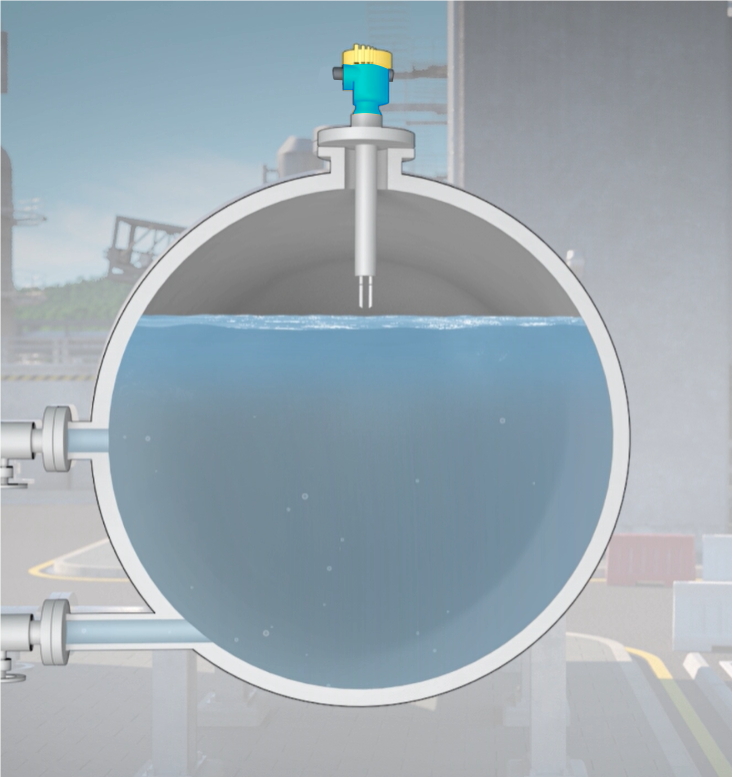
When installing the Ring-11 tuning fork level switch, the high-level point, low-level point, or interlock point should be determined according to the purpose of level control. For high-level alarm, it should be installed at the required upper alarm position. For pump protection, it should be installed above the minimum safe operating level of the pump. For interlock control, the installation height should be determined based on the process logic.
The following points should be considered during installation.
First, the tuning fork should avoid direct installation at water inlets, outlets, or high-speed impact areas to prevent false triggering or mechanical damage caused by long-term flushing. Second, the fork orientation should be arranged reasonably in relation to the medium flow direction to reduce material buildup and sedimentation. Third, in sludge tanks or high-viscosity media, sufficient maintenance space should be reserved for regular inspection. Fourth, for corrosive wastewater applications, the medium composition, temperature, pH value, chloride ion content, and other factors should be confirmed in advance to select the appropriate wetted material. Fifth, if flammable or explosive gases may exist on site, an intrinsically safe or explosion-proof model should be selected according to hazardous area requirements, and wiring should be carried out according to relevant standards.
Good installation practice allows the Ring-11 to fully demonstrate its performance and reduce later maintenance workload.
6. Typical Control Scheme: High and Low Level Alarm Plus Pump Interlock
In wastewater treatment tanks, the Ring-11 is often used in a combined control scheme of high and low level alarm plus pump interlock. For example, two Ring-11 switches can be installed in an equalization tank: one for high-level alarm and the other for low-level protection. When the level reaches the high point, the system triggers an alarm and starts the lift pump. When the level falls to the low point, the low-level switch outputs a signal, and the PLC stops the pump to prevent dry running.
In sedimentation tanks or sludge tanks, the Ring-11 can also be used as a high-level limit switch. When the level rises abnormally, the system can automatically close the inlet valve, start the sludge discharge pump, or send a remote alarm. For unattended stations, this type of point level switch can serve as a safety protection signal and improve the level of system automation.
7. Use with Other Level Instruments
In wastewater treatment systems, continuous level transmitters and point level switches are not substitutes for each other. Instead, they complement each other. Radar level transmitters and ultrasonic level transmitters can be used for continuous monitoring of level trends, while the Ring-11 tuning fork level switch is suitable for alarm and interlock protection at key level points.
For example, an equalization tank can use a radar level transmitter for continuous level monitoring, while Ring-11 switches are installed at the high-high level and low-low level positions as independent protection devices. In this way, even if the continuous level transmitter fails, the point level switch can still provide a safety alarm signal, improving system redundancy and safety.
For environmental compliance and equipment safety, continuous measurement is responsible for monitoring trends, while point level switches are responsible for guarding critical limits. In this system architecture, the Ring-11 is highly suitable for safety limit detection.
8. Key Selection Parameters
When selecting the Ring-11 tuning fork level switch for wastewater treatment tanks, the following operating parameters should be confirmed.
First, confirm the medium type, such as domestic sewage, industrial wastewater, acidic or alkaline wastewater, oily wastewater, sludge mixture, or chemical dosing liquid. Second, evaluate corrosiveness and select 316L stainless steel, Hastelloy, or anti-corrosion coating based on pH value, chemical composition, and temperature. Third, confirm process temperature and ambient temperature to ensure that the instrument temperature rating meets site requirements. Fourth, check the pressure conditions, especially in closed pipelines or pressurized systems. Fifth, confirm the installation method, such as threaded connection, flange connection, sleeve installation, or side mounting. Sixth, select the output signal according to the PLC or on-site alarm system, such as relay, two-wire, NAMUR, or transistor output. Seventh, confirm explosion-proof requirements. If there is a risk of flammable gas in the tank, sludge treatment unit, or chemical wastewater treatment area, the appropriate explosion-proof type should be selected.
Accurate model selection allows the Ring-11 to better match wastewater treatment tank conditions and avoids on-site problems caused by mismatched materials, interfaces, or output types.
9. Value of the Ring-11 for Wastewater Treatment Automation
The wastewater treatment industry is placing increasing emphasis on intelligent, automated, and low-maintenance operation. Although a level switch is only a point level detection instrument, it directly affects pump station operation, tank safety, alarm interlock, and maintenance efficiency. When used in wastewater treatment tanks, the Ring-11 tuning fork level switch can deliver the following value.
First, it improves the reliability of level alarms and reduces false alarms caused by foam, sludge, and adhesion. Second, it protects pump equipment and reduces the risk of dry running, abnormal shutdown, and equipment damage. Third, it is compatible with PLC, DCS, and SCADA systems, making centralized monitoring and remote operation easier. Fourth, it reduces jamming problems associated with mechanical moving parts and lowers on-site maintenance frequency. Fifth, through anti-corrosion, explosion-proof, and multi-material configurations, it adapts to the complex environments of industrial wastewater treatment.
For municipal wastewater treatment plants, industrial park wastewater stations, automobile plant wastewater stations, chemical wastewater treatment projects, and environmental engineering contractors, the Ring-11 is not only a level alarm switch but also a key instrument for improving system safety and stability.
10. Conclusion: Choose the Ring-11 Tuning Fork Level Switch for Reliable Wastewater Tank Level Control
Level measurement in wastewater treatment tanks is not simply about determining whether liquid is present or absent. It is a key part of equipment protection, process stability, environmental safety, and automated operation. In the face of complex conditions such as foam, bubbles, sludge, corrosion, vibration, and limited installation space, the Jiwei Ring-11 tuning fork level switch provides a stable and reliable solution for level alarm and interlock control with its 40 mm ultra-short fork, vibration frequency detection principle, strong anti-interference capability, multiple output options, and various material choices.
In equalization tanks, sedimentation tanks, aeration tanks, sludge tanks, lift pump wells, and sludge dewatering feed tanks, the Ring-11 can be used for high-level alarm, low-level protection, pump interlock control, and integration into automation systems. For wastewater treatment projects that require low maintenance, high reliability, and long-term stable operation, the Ring-11 tuning fork level switch is a level control device worth serious consideration.
If you need to select a suitable level switch for wastewater treatment tanks, industrial wastewater tanks, or environmental water treatment projects, it is recommended to consider medium corrosiveness, installation position, output signal, explosion-proof requirements, and automation system interface. With proper selection and installation, the Ring-11 can deliver more stable, safer, and more efficient level control performance on site.