1. Why Does the Petroleum Industry Need Stable and Reliable Level Measurement?
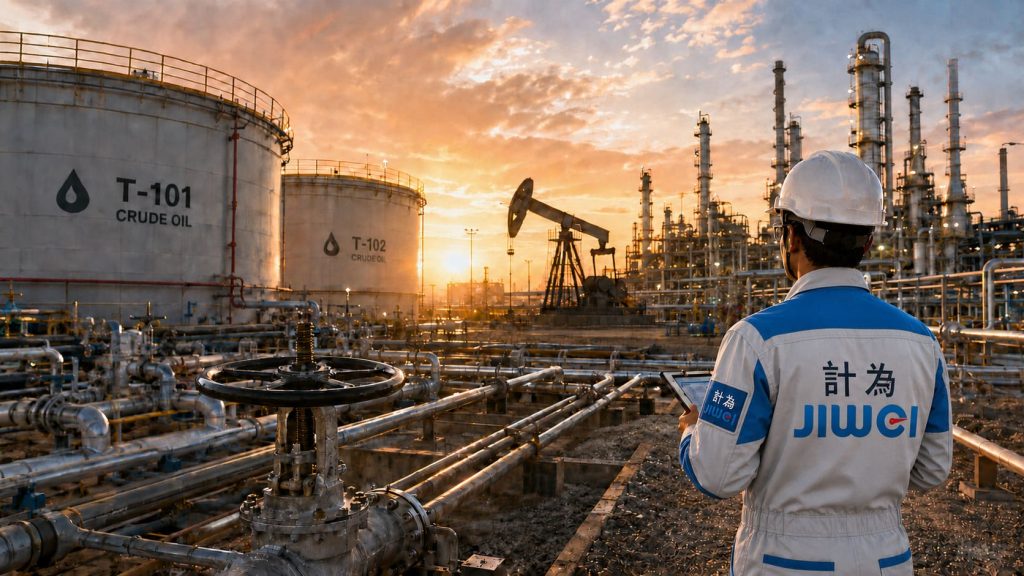
In petroleum exploration, storage, transportation, refining, and petrochemical production, level measurement is a fundamental yet critical part of process control. Whether in crude oil storage tanks, refined oil tanks, oil-gas separators, buffer tanks, metering tanks, or wastewater treatment tanks, accurate level data is directly related to production safety, inventory management, equipment protection, and process stability.
If level indication is inaccurate, it may lead to material overflow, pump dry running, abnormal interlocks, or even leakage, fire, explosion, and other safety risks.
Operating conditions in the petroleum industry are often complex. The measured media may be flammable, explosive, corrosive, viscous, or subject to significant temperature and pressure fluctuations. Traditional glass plate level gauges can provide local indication, but their safety and maintenance convenience may be limited in high-pressure, corrosive, and hazardous environments.
By contrast, magnetic level indicators are widely used in petroleum level measurement because of their intuitive local display, reliable structure, good sealing performance, remote transmission capability, alarm function, and low maintenance requirements.
2. Working Principle of a Magnetic Level Indicator
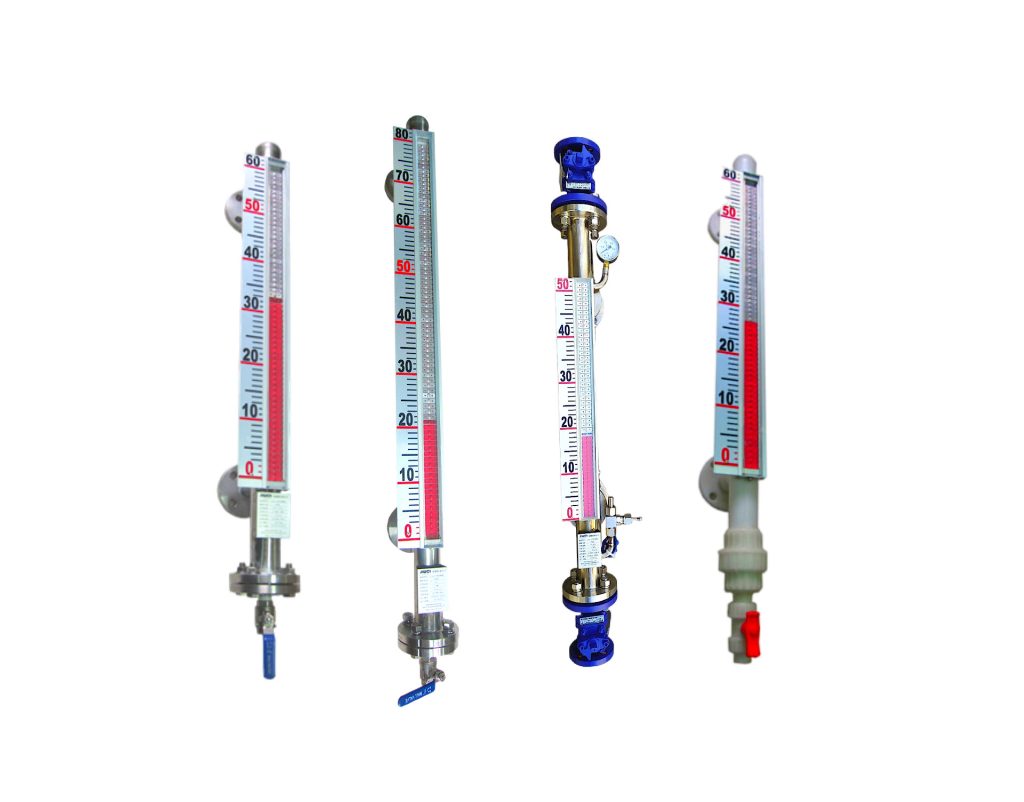
A magnetic level indicator mainly consists of a chamber, magnetic float, flap indicator, connecting flanges, drain valve, and optional accessories such as magnetic switches and remote transmitters.
Its working principle is based on the communicating vessel principle and magnetic coupling. The level indicator is connected to the vessel through flanges or other process connections. When the liquid level inside the vessel rises or falls, the magnetic float inside the chamber moves accordingly. The permanent magnet inside the float drives the external red-and-white flaps to rotate through non-contact magnetic coupling, thereby providing a clear local level indication.
Normally, the red area indicates the liquid phase, while the white or silver-white area indicates the gas phase or empty section. The boundary between red and white represents the actual liquid level in the vessel.
This display method is highly visual and easy to read. Operators can quickly determine the liquid level on site without opening the vessel or coming into direct contact with the medium. For outdoor storage tanks, elevated equipment, and hazardous areas in the petroleum industry, this “local direct reading + non-contact indication” structure offers strong practical value.
3. Main Applications of Magnetic Level Indicators in the Petroleum Industry
3.1 Level Monitoring of Crude Oil and Refined Oil Storage Tanks
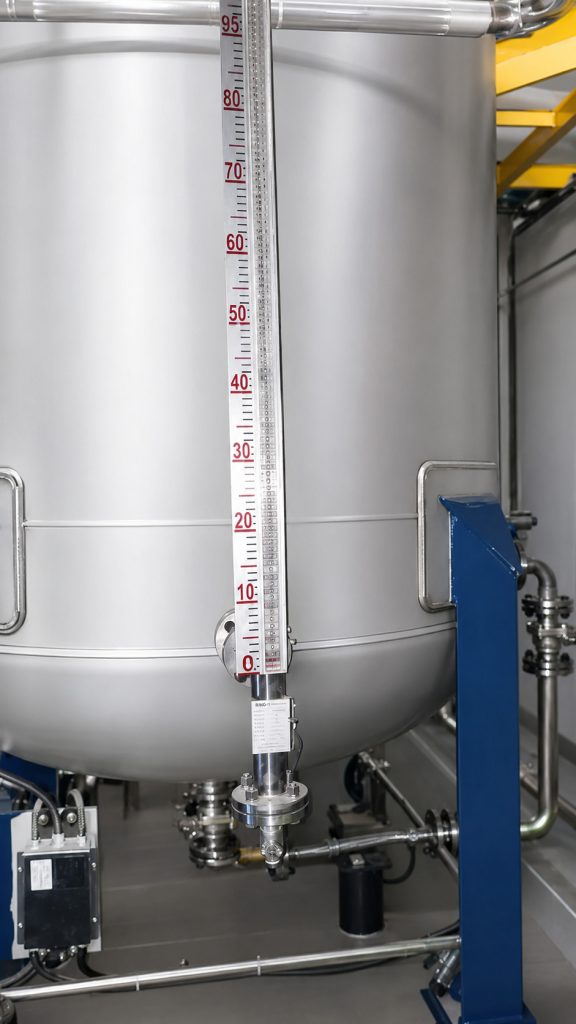
Petroleum storage tanks are one of the most typical applications for magnetic level indicators. Crude oil, gasoline, diesel, fuel oil, lubricating oil, and other petroleum products require continuous level monitoring during storage to prevent high-level overflow and low-level pump cavitation.
A magnetic level indicator can be installed on the side of a storage tank to provide continuous local level indication. For tanks that require automation, a reed-chain remote transmitter can be added to output a 4–20 mA signal, allowing level data to be transmitted to the control room, PLC, or DCS system.
In oil depots, refineries, and petrochemical tank farms, operators often need to read the levels of multiple tanks quickly during routine inspection. Jiwei magnetic level indicators use a widened display panel, making the scale and numbers clearer and easier to read from a distance. This helps improve inspection efficiency and reduce the risk of misreading.
3.2 Level Control of Oil-Gas Separators
Oil-gas separators are common in petroleum production and natural gas processing. Stable monitoring of oil, water, or condensate level is essential. If the liquid level is too high, liquid carryover may occur at the gas outlet. If the level is too low, drainage control may be affected, reducing separation efficiency.
Magnetic level indicators can provide intuitive local level indication for oil-gas separators. They can also be equipped with magnetic switches for high- and low-level alarms, helping operators detect abnormal level conditions in time.
In oil and gas processing stations, gathering and transportation stations, and natural gas purification units, magnetic level indicators can serve as primary local display instruments. They can also be used as auxiliary verification devices alongside radar level meters, differential pressure level transmitters, and other continuous measurement instruments to improve overall measurement reliability.
3.3 Level Measurement for Petrochemical Reactors and Intermediate Tanks
Refining and petrochemical units include many reactors, condensate tanks, solvent tanks, intermediate tanks, and metering tanks. Some media are corrosive, while others require strict control of temperature, pressure, and sealing performance.
The chamber and display structure of a magnetic level indicator are isolated from each other. The medium is contained inside the chamber, while the external flap indicator does not directly contact the process medium. This makes magnetic level indicators safer for corrosive, irritating, or hazardous liquids.
Jiwei magnetic level indicators can be selected with different materials according to the medium, including 304 stainless steel, 316L stainless steel, stainless steel lined with F4/F46, and PP. For petroleum and petrochemical applications involving acids, alkalis, solvents, or corrosive media, proper selection of wetted materials can effectively improve corrosion resistance and service life.
3.4 Level Monitoring of Pipeline Buffer Tanks and Metering Tanks
In petroleum pipeline transportation, loading, and unloading systems, buffer tanks, metering tanks, drain tanks, and similar equipment require real-time level monitoring to ensure stable operation.
Magnetic level indicators have a simple structure and clear indication, making them suitable for these auxiliary vessels. They help operators judge liquid accumulation, discharge status, and process stability.
When alarm or interlock functions are required, magnetic switches can be mounted externally on the magnetic level indicator. When the float reaches the set position, the magnetic switch is triggered and outputs a switching signal. This can be used for high-level alarm, low-level alarm, pump start-stop protection, or drainage control.
In this way, the instrument retains the advantage of local direct reading while also meeting automation and control requirements.
3.5 Level Measurement of Oily Wastewater and Process Waste Liquids
Petroleum production and refining processes generate oily wastewater, acidic water, alkaline liquids, and industrial wastewater. These media often have complex compositions and place higher requirements on instrument material, sealing performance, and maintenance.
Magnetic level indicators can be configured with suitable materials according to the corrosiveness of the medium. Drain valves, isolation valves, and other structural designs can also be used to facilitate cleaning and maintenance.
For media containing impurities, the selection should consider viscosity, density, crystallization tendency, and blockage risk. When necessary, insulation, electric tracing, steam jacket, or flushing structures can be added to ensure smooth float movement and stable operation.
4. Features of Jiwei Magnetic Level Indicators
4.1 Intuitive Local Display and Clear Reading
One of the biggest features of a magnetic level indicator is visual local indication. The red-and-white flaps create a clear boundary, allowing operators to read the liquid level directly.
Jiwei magnetic level indicators adopt a widened display panel and clear scale design, offering better visibility and a wider viewing angle. This makes them suitable for petroleum tank farms, process units, offshore platforms, and other sites where operators need to read levels from a distance.
4.2 Non-Contact Indication for Higher Safety
Magnetic level indicators transmit level information through magnetic coupling, while the display part is isolated from the measured medium.
For flammable, explosive, toxic, or corrosive media in the petroleum industry, this structure reduces the possibility of direct contact between operators and hazardous liquids, improving on-site safety.
4.3 Suitable for High-Temperature, High-Pressure, and Complex Conditions
Petroleum and petrochemical units often operate under high temperature, high pressure, or fluctuating operating conditions.
Jiwei Flap-11A standard magnetic level indicators can be used over a wide pressure range, from vacuum to high-pressure applications, and can also withstand a broad process temperature range. Depending on site conditions, they can be equipped with steam jackets, electric heating, thermal insulation, or vacuum jackets.
For low-temperature, anti-frost, high-viscosity, or easily crystallized media, proper accessory configuration can improve operating stability and measurement reliability.
4.4 Multiple Material Options and Strong Corrosion Resistance
The petroleum industry does not only measure oil products. Many applications involve acids, alkalis, solvents, sulfur-containing media, saline wastewater, and other complex liquids.
Jiwei magnetic level indicators are available in 304 stainless steel, 316L stainless steel, PP, and F4/F46-lined structures. Users can select the most suitable material according to corrosion resistance, temperature, pressure, and process requirements.
For most petroleum and petrochemical liquids, 316L stainless steel offers good general applicability. For strongly corrosive media, lined or plastic structures may be more appropriate.
4.5 Remote Transmission and Alarm Functions for Automation Integration
Modern petroleum and petrochemical companies increasingly focus on digital, centralized, and intelligent management.
A magnetic level indicator can not only provide local indication, but also work with magnetic switches and reed-chain remote transmitters. Magnetic switches can provide high- and low-level alarms, while remote transmitters can output continuous 4–20 mA signals.
This allows level information to be connected to PLC, DCS, or tank farm monitoring systems, combining local display with remote monitoring and automatic control.
4.6 Explosion-Proof, High Protection, and Functional Safety Options
Many petroleum industry sites are classified hazardous areas, so instruments must meet strict safety and explosion-proof requirements.
Jiwei magnetic level indicators can be equipped with explosion-proof magnetic switches and remote transmitters. Relevant SIL functional safety options are also available, making them more suitable for petrochemical projects that require safety instrumented systems and hazardous area installation.
For refineries, oil and gas stations, tank farms, and chemical plants, selecting level instruments with appropriate explosion-proof ratings and safety certifications helps reduce compliance risks and improve overall plant safety.
5. Advantages of Magnetic Level Indicators in the Petroleum Industry
First, magnetic level indicators have a simple structure, stable performance, and relatively low maintenance requirements. Petroleum plants often operate continuously for long periods, and shutdown maintenance can be costly. Low-maintenance level instruments help reduce inspection and maintenance workload.
Second, magnetic level indicators provide excellent local readability. Even when the control system fails or power is unavailable, operators can still determine the liquid level through the flap indication. This is especially important for safety inspection and emergency response.
Third, magnetic level indicators have a wide application range. With different materials, process connections, pressure ratings, temperature ratings, and accessories, they can be used for storage tanks, separators, reactors, buffer tanks, wastewater tanks, and many other petroleum industry applications.
Fourth, magnetic level indicators can combine local indication, remote transmission, and alarm interlock functions. For oil tank level measurement and automated process control, magnetic switches and remote transmitters can be used to achieve level alarms, interlock protection, and remote monitoring.
Fifth, magnetic level indicators offer strong cost performance. Compared with some complex continuous level instruments, they are easier to install, simpler to commission, and more convenient to maintain. They are especially suitable for petroleum and petrochemical projects that require large numbers of local level indicators.
6. Key Selection Points for Magnetic Level Indicators in Petroleum Applications
When selecting a magnetic level indicator for the petroleum industry, users should not only consider measuring range and price. Actual operating conditions must also be evaluated carefully.
First, the density and viscosity of the medium should be confirmed. The magnetic float must be designed according to medium density. If the density is too low or the viscosity is too high, float response and measurement stability may be affected.
Second, temperature and pressure must be confirmed. High-temperature and high-pressure applications require appropriate chamber wall thickness, flange rating, sealing structure, and material selection. The instrument must also meet site safety requirements.
Third, materials should be selected according to medium corrosiveness. Common oil products can generally use stainless steel structures. For more corrosive petrochemical liquids, 316L stainless steel, F4/F46-lined structures, PP, or other special materials may be required.
Fourth, accessories should be selected according to actual site requirements. If only local indication is needed, a basic magnetic level indicator may be sufficient. If alarm output is required, magnetic switches can be added. If remote monitoring is needed, a reed-chain remote transmitter can be configured. For media that easily solidify, crystallize, or frost at low temperatures, steam jackets, electric heating, insulation, or vacuum jackets should be considered.
Fifth, installation and maintenance should not be ignored. The magnetic level indicator should be installed vertically. Isolation valves are recommended between the level indicator and the vessel to make inspection and cleaning easier. Strong magnetic fields or ferromagnetic objects should be avoided around the instrument to prevent interference with flap movement and indication accuracy.
7. Conclusion
In petroleum industry level measurement, magnetic level indicators are widely used in oil tanks, oil-gas separators, pipeline buffer tanks, petrochemical reactors, and oily wastewater treatment systems because of their intuitive display, reliable structure, safety, corrosion resistance, easy maintenance, remote transmission capability, and alarm functions.
For applications that require local reading, safety interlock, and remote monitoring at the same time, a magnetic level indicator is a highly practical level measurement solution.
Jiwei magnetic level indicators offer strong adaptability in display clarity, protection rating, explosion-proof configuration, SIL functional safety, material selection, and customization capability. They can provide stable and reliable level monitoring support for petroleum, natural gas, and petrochemical enterprises.
As the petroleum industry continues to raise its requirements for safety, digital management, and equipment reliability, magnetic level indicators will continue to play an important role in storage, transportation, refining, and petrochemical production.