In energy and chemical processing facilities, reliable high- and low-level detection in storage tanks, separators, and process pipelines is essential for maintaining continuous operation. It also plays an important role in preventing tank overfill, protecting pumps against dry running, and initiating safety shutdown actions.
An energy and chemical company in Barcelona, Spain, required reliable point-level detection for methanol-water mixtures and other complex gas-liquid media used in its gas treatment, solvent recovery, and wastewater gasification systems.
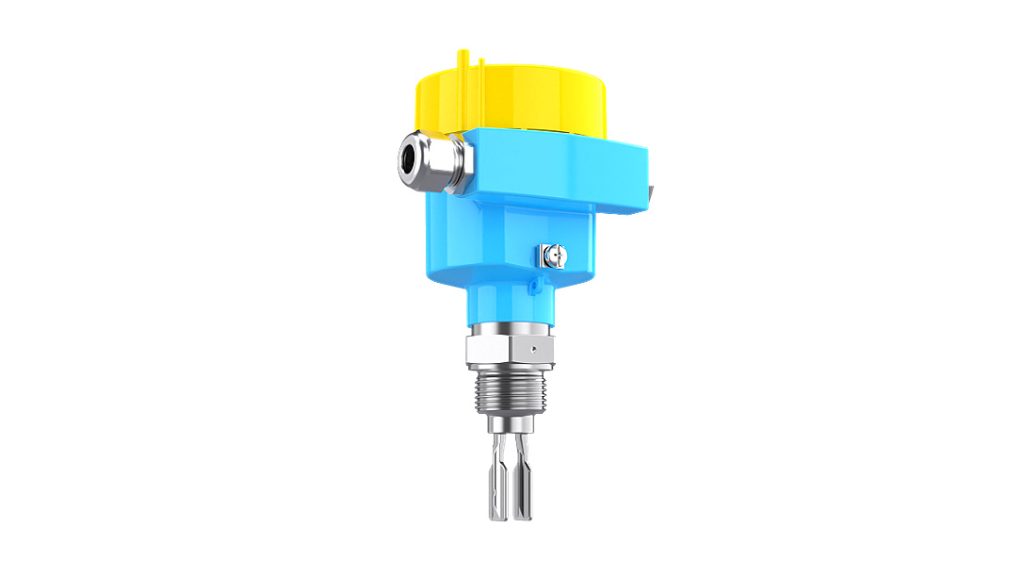
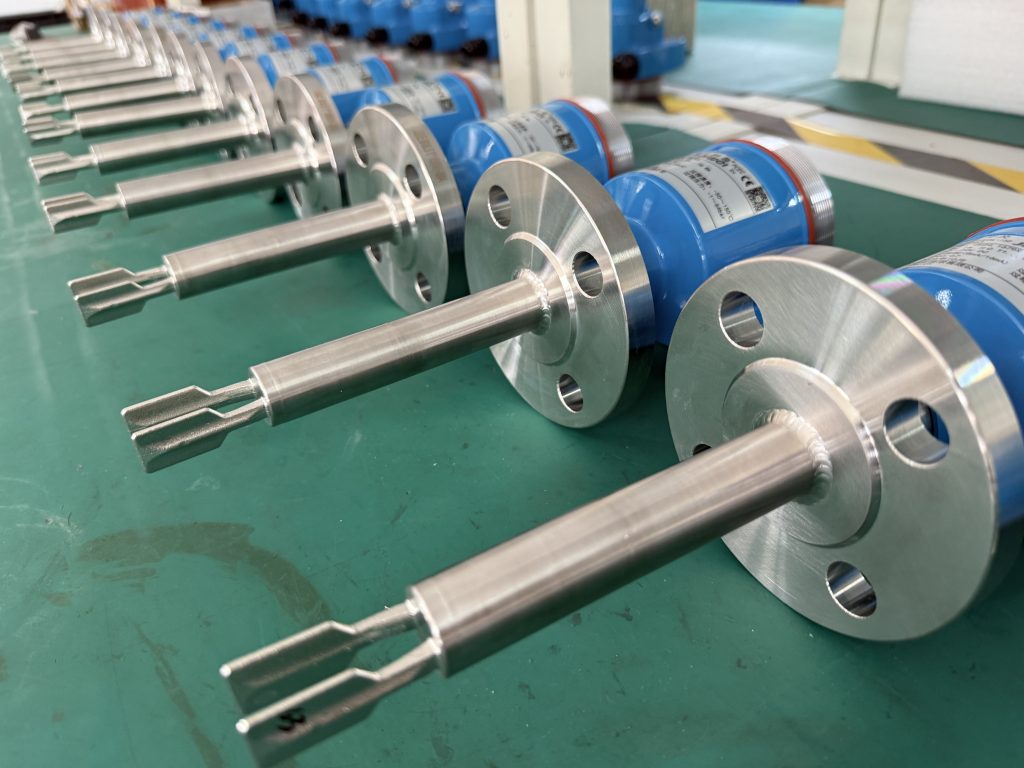
After reviewing the operating conditions and safety requirements, the customer selected Jiwei Ring-11 SIL vibrating fork level switches. The instruments were installed on several storage vessels and process pipelines to provide high-level alarms, low-level alarms, overfill prevention, and pump dry-run protection.
Project Background: Demanding Gas-Liquid Applications
The project involved several process stages, including:
- Gas-liquid separation
- Feed gas transportation
- Solvent storage
- Solvent recovery
- Gas storage
The principal process media included:
- Methanol-water mixtures
- Carbon dioxide
- Methane
- Nitrogen
- Hydrogen
- Process streams containing small amounts of hydrogen sulfide and sulfur dioxide
Some measuring points were exposed to elevated operating pressures and temperatures. The liquid media could also contain bubbles or foam, while their density and chemical composition could vary during operation.
The plant had previously used mechanical float level switches. These devices rely on floats, connecting rods, pivots, or magnetic transmission components to initiate switching actions.
In applications involving deposits, frequent process fluctuations, or limited installation space, mechanical moving components may be exposed to sticking, wear, and increased maintenance requirements.
The customer therefore required a point-level switch without floats or mechanical linkages. The instrument also needed to provide a stable and clearly defined switching signal to the plant’s safety instrumented system.
Main Level Detection Challenges
1. Multiple Liquid and Gas-Liquid Media
The level switches needed to operate with methanol-water mixtures and process media containing carbon dioxide, methane, nitrogen, and other gases.
Liquid density, viscosity, bubble content, and process conditions could change during production. The selected instrument therefore needed to maintain reliable switching performance under varying operating conditions.
2. Elevated Temperature and Pressure
The maximum design pressure of the measuring points was 21 bar, while the highest process temperature reached 150°C.
The level switches had to operate reliably within the required temperature and pressure ranges.
3. Hazardous-Area Safety Requirements
Flammable and explosive gases may be present in energy and chemical processing facilities.
The selected level switches therefore needed appropriate intrinsically safe or explosion-proof protection. They also had to meet the functional safety requirements of the plant’s safety instrumented system.
4. Fast and Reliable Limit Detection
A delayed or failed high-level alarm could result in tank overfill. An unreliable low-level alarm could allow a pump to operate without sufficient liquid.
The level switches needed to provide a prompt switching signal and integrate reliably with the plant’s SIS, PLC, or other control systems.
5. Reduced Maintenance Requirements
Some measuring points were distributed across continuously operating process areas. The customer wanted to reduce instrument removal, cleaning, adjustment, and recalibration work.
Measuring Points and Control Functions
Ring-11 vibrating fork level switches were installed at the following measuring points:
| Measuring Point | Application | Main Process Media | Design Pressure | Maximum Temperature | Control Function |
|---|---|---|---|---|---|
| LS-1481 | V-106 vessel | Methanol/water | 21 bar | 150°C | High-level alarm and overfill protection |
| LS-2483 | T-101 system | CO₂, CH₄, N₂ | 15 bar | 90°C | Low-level alarm and pump dry-run protection |
| LS-2484 | Gas-liquid separation pipeline | Methanol/water and CO₂ | 20 bar | 120°C | Pipeline liquid detection |
| LS-4487 | V-208 solvent storage tank | Methanol/water | 20 bar | 145°C | Tank level control |
| LS-4489 | Solvent recovery system | Methanol/water and N₂ | 20 bar | 130°C | Solvent recovery level monitoring |
| LS-4491 | Gas storage system | CO₂ and H₂ | 20 bar | 145°C | Vessel level protection |
The process connection, wetted material, hazardous-area approval, and electrical output should be confirmed separately for each measuring point according to the medium, chemical compatibility, temperature, pressure, and hazardous-area classification.
Why the Ring-11 Vibrating Fork Level Switch Was Selected
1. Vibrating-Frequency Detection Principle
The Ring-11 vibrating fork level switch uses piezoelectric elements to drive the fork into vibration at its natural resonant frequency.
When the fork enters a liquid, its vibration frequency changes significantly. The electronic module detects this frequency change and converts it into a switching output.
This measurement principle does not depend on a float or mechanical linkage. It is suitable for point-level detection in:
- Storage tanks
- Process vessels
- Pipelines
- Gas-liquid separators
- Small containers
- Pump protection systems
2. Compact 40 mm Fork for Pipes and Confined Spaces
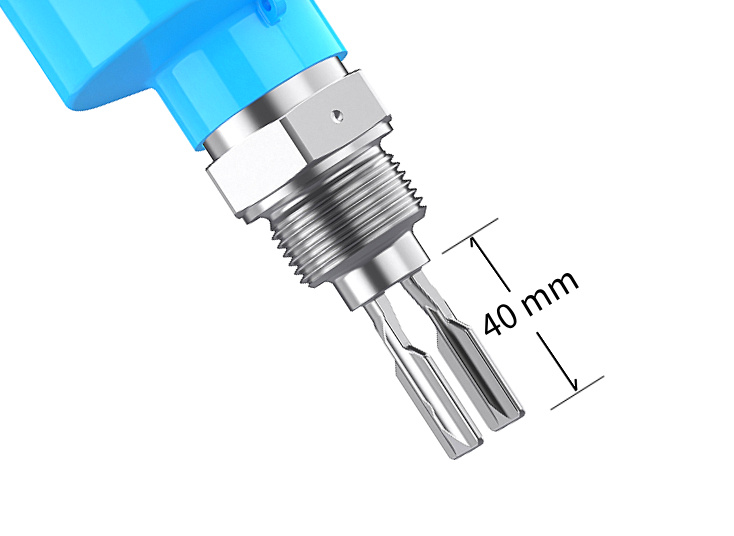
The Ring-11 has a compact fork length of 40 mm. Its short insertion length helps reduce the amount of space required inside a pipe or small vessel.
This makes the instrument particularly suitable for measuring points with limited installation space.
According to Jiwei product specifications, the Ring-11 can detect liquids with a density of at least 0.5 g/cm³. It is suitable for media with viscosities from 0.1 to 10,000 mPa·s and can be used in applications involving foam, bubbles, or process vibration.
3. Temperature and Pressure Ratings Suitable for the Project
The Ring-11 series is designed for process pressures from -1 to 64 bar.
The standard-temperature version supports process temperatures from -50°C to 150°C. High-temperature versions are available for applications up to 280°C, while special configurations can be selected for even more demanding temperature conditions.
The highest temperature in this project was 150°C, and the maximum design pressure was 21 bar. Suitable process connections, sealing structures, and product versions could therefore be selected for the individual measuring points.
4. Multiple Wetted Materials and Corrosion-Resistant Options
The Ring-11 is available with several wetted-material configurations, including:
- 316L stainless steel
- Hastelloy C-22
- ECTFE coating
- PFA coating
- Enamel coating
For methanol-water mixtures or process media containing corrosive components, material compatibility should not be determined solely by the general name of the medium.
The actual concentration, temperature, pressure, contaminants, and chemical composition should also be evaluated before selecting the wetted material.
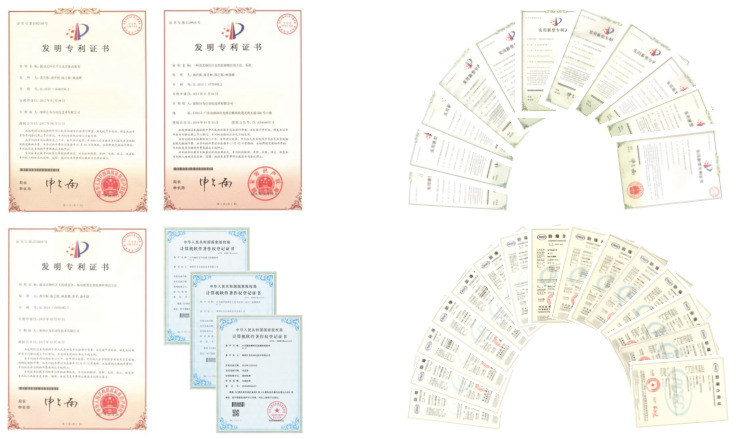
5. SIL Capability and Hazardous-Area Versions
Ring-11 product documentation specifies the following functional safety capabilities:
- SIL 2 with HFT = 0
- SIL 3 with HFT = 1
Intrinsically safe, explosion-proof, and gas-and-dust hazardous-area versions are also available.
A SIL-certified instrument does not automatically make every installation a SIL 3 safety loop. The final safety integrity level depends on the complete safety instrumented function, including:
- Sensor configuration
- Hardware redundancy
- Logic solver
- Final control element
- Proof-test interval
- Failure-rate calculations
- Overall system architecture
6. Flexible Output Options
The Ring-11 can be supplied with several output types, including:
- Relay output
- Two-wire electronic output
- NAMUR output
- Transistor output
For this project, the output configuration could be selected according to the input requirements of the SIS or PLC.
The switching signal could then be used to initiate functions such as:
- Valve closure
- Pump start or stop
- Overfill prevention
- Emergency shutdown
- Process interlocking
Installation and Commissioning Considerations
Several installation requirements were considered to ensure stable operation of the vibrating fork level switches.
Recommended Installation Practices
- Select side mounting or top mounting according to the tank, vessel, or pipeline configuration.
- Align the fork surfaces with the direction of process flow whenever possible to reduce flow resistance and mechanical impact.
- Avoid installing the fork directly in a high-velocity inlet or outlet stream.
- Select an appropriate threaded or flanged process connection for the vessel or pipeline.
- Configure the fail-safe mode according to whether the instrument is used for high-level or low-level protection.
- Perform wet, dry, and power-loss switching tests during commissioning.
- Conduct a complete loop test for every measuring point connected to the safety instrumented system.
The fork orientation should be selected with consideration for the direction of liquid movement. The instrument should also be positioned away from direct filling streams to reduce the risk of unstable switching or mechanical impact.
Project Results
According to project operating feedback, the Ring-11 vibrating fork level switches provided stable switching signals in methanol-water mixtures and complex gas-liquid process environments.
The following functions operated according to the required control logic:
- High-level alarm
- Low-level alarm
- Overfill prevention
- Pipeline liquid detection
- Pump dry-run protection
Compared with the previously used mechanical float switches, the vibrating fork level switches do not rely on floats, shafts, or mechanical connecting rods.
This design helps reduce maintenance issues associated with:
- Mechanical sticking
- Component wear
- Frequent adjustment
- Moving-part failure
- Deposit-related obstruction
The installation improved the stability of the level alarm signals and increased the reliability of the plant’s safety interlocking functions.
The project also demonstrates that selecting a level switch for an energy or chemical application requires more than checking the connection size or measuring range.
The following factors should be evaluated together:
- Liquid density
- Liquid viscosity
- Process temperature
- Process pressure
- Chemical compatibility
- Hazardous-area classification
- Required SIL level
- Electrical output
- Fail-safe switching mode
- Installation position
- Process flow conditions
Applications for the Ring-11 Vibrating Fork Level Switch
In addition to the methanol-water and gas-liquid separation applications in this project, the Ring-11 can be considered for:
- High- and low-level alarms in chemical storage tanks
- Pump inlet monitoring and dry-run protection
- Solvent tank overfill prevention
- Gas-liquid separator level detection
- LNG and LPG pipeline liquid detection
- Industrial wastewater level control
- Recovered-liquid monitoring
- High-temperature reactor and process vessel protection
- Point-level detection in liquids containing foam or bubbles
- Point-level detection in viscous liquids
Each application should be evaluated according to the liquid density, viscosity, corrosiveness, operating temperature, process pressure, and hazardous-area requirements.
Depending on the operating conditions, users can select standard-temperature, high-temperature, explosion-proof, Hastelloy, or coated corrosion-resistant versions.
Conclusion
In this Spanish energy and chemical plant project, Jiwei Ring-11 SIL vibrating fork level switches were used for tank overfill prevention, pipeline liquid detection, solvent recovery monitoring, and pump dry-run protection.
The compact 40 mm fork, multiple electrical output options, functional safety capability, and available high-temperature, explosion-proof, and corrosion-resistant configurations made the Ring-11 suitable for demanding point-level detection applications.
For accurate product selection, users should provide the following process information:
- Medium name and concentration
- Liquid density
- Liquid viscosity
- Maximum process temperature
- Design pressure
- Process connection
- Required wetted material
- Hazardous-area classification
- Required electrical output
- Control-system interface
- High- or low-level fail-safe requirement
Providing complete process data allows the manufacturer to recommend a vibrating fork level switch configuration that is appropriate for the application.
Frequently Asked Questions
Can a vibrating fork level switch detect a methanol-water mixture?
Yes. However, the density, temperature, pressure, and corrosiveness of the mixture must be confirmed.
The Ring-11 can detect liquids with a density of at least 0.5 g/cm³. The wetted material should be selected according to the actual chemical composition and operating conditions.
Can a vibrating fork level switch replace a continuous level transmitter?
Not completely.
A vibrating fork level switch detects whether the liquid has reached a predetermined point. It is generally used for:
- High-level alarms
- Low-level alarms
- Overfill protection
- Pump dry-run protection
A continuous level transmitter, such as a radar level transmitter, continuously measures and outputs the changing liquid level.
The two types of instruments can be used together in applications requiring both continuous measurement and independent point-level protection.
Does SIL 3 certification mean that one instrument forms a SIL 3 safety loop?
No.
The product documentation specifies SIL 2 capability with HFT = 0 and SIL 3 capability with HFT = 1.
The SIL level achieved by the complete safety loop also depends on sensor redundancy, system architecture, the logic solver, the final control element, proof testing, and the calculation and verification of the complete safety instrumented function.
Should a vibrating fork level switch be installed near a filling inlet?
It should generally not be installed directly in a high-velocity filling stream or an area exposed to strong process impact.
The installation point should be positioned away from direct inlets and outlets whenever possible. The fork orientation should also be aligned appropriately with the process flow to improve measurement stability.