In modern industrial automation, level measurement is a critical factor in industries such as chemical, petroleum, food and beverage, wastewater treatment, and high-risk industrial environments. Accurate and reliable level data not only ensures production efficiency but also directly impacts safety and economic benefits. With technological advancements, the RS-485 communication protocol and radar level meters have become essential components in industrial measurement systems. This article will provide a popular science explanation of RS-485 technology and explore the applications and advantages of Jiwei JWrada® radar level meters in global industrial fields.
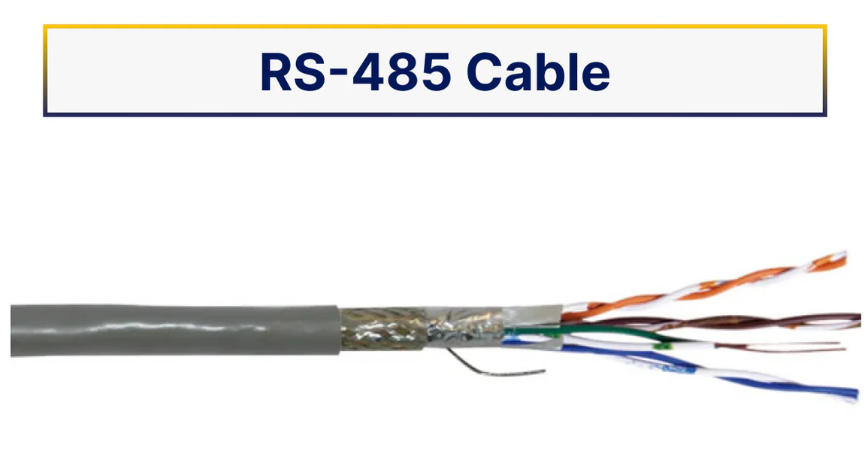
I. What is RS-485?
RS-485 is a widely used industrial serial communication standard, officially known as “Recommended Standard 485”. It is commonly applied in industrial automation and process control due to the following characteristics:
- Differential Signal Transmission
RS-485 uses differential signals (A and B lines) for data transmission. Compared with single-ended signals, it is more resistant to electromagnetic interference, ensuring stable data transmission in complex industrial environments. - Long-Distance Communication
RS-485 can transmit data up to 1200 meters, far exceeding RS-232 (approximately 15 meters), making it ideal for factories, storage facilities, and large tanks. - Multi-Node Networking
RS-485 supports a multi-point bus structure, connecting up to 32 nodes (standard load) and expandable via repeaters or adapters, allowing centralized monitoring and remote control of multiple devices. - High-Speed and Stable Transmission
RS-485 can reach transmission speeds up to 10 Mbps for short distances, providing sufficient real-time data transmission for most industrial applications.
Application Example: In a level measurement system, multiple radar level meters, sensors, or controllers can be connected via an RS-485 bus to a PLC or DCS system, enabling centralized monitoring and data recording while reducing wiring costs and improving system reliability.
II. Basic Applications of Radar Level Meters
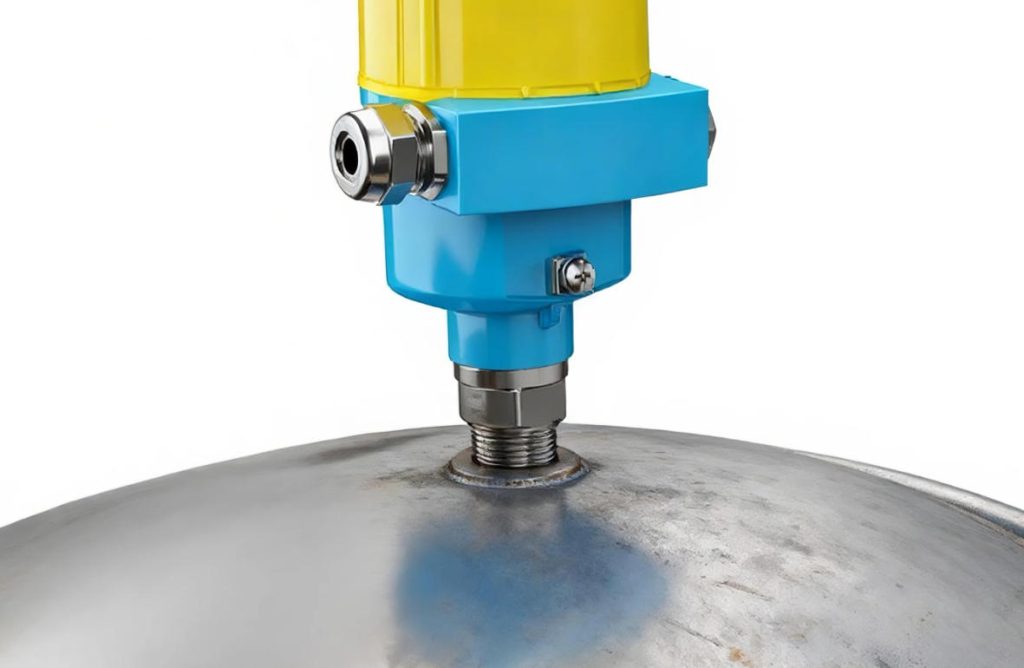
Radar level meters are non-contact level measurement instruments based on electromagnetic wave principles, providing continuous and precise level data in various liquid or solid storage environments. Their primary applications include:
- Tank Level Monitoring
Radar level meters can be applied to chemical tanks, petroleum storage, LNG tanks, and food and beverage fermentation tanks, continuously measuring liquid levels to ensure safe and stable production processes. - Complex Process Measurement
Radar level meters provide stable and reliable measurements in complex environments, including steam, foam, stirring, and dust, avoiding false readings common in traditional float or mechanical switches. - Process Automation Control
Integrated with PLC, DCS, or MES systems, radar level meters enable automatic liquid level control, alarm interlocks, and material feed/discharge automation, improving overall plant automation efficiency. - Non-Contact Advantages
Non-contact measurement avoids corrosion, adhesion, and wear caused by liquids, extending the service life of instruments, reducing maintenance frequency, and lowering long-term operational costs. - Food and Hygienic Applications
In food, beverage, and brewing industries, radar level meters meet hygienic standards, preventing liquid contamination and ensuring safe and reliable production processes.
III. Technical Features of Jiwei JWrada® Radar Level Meters
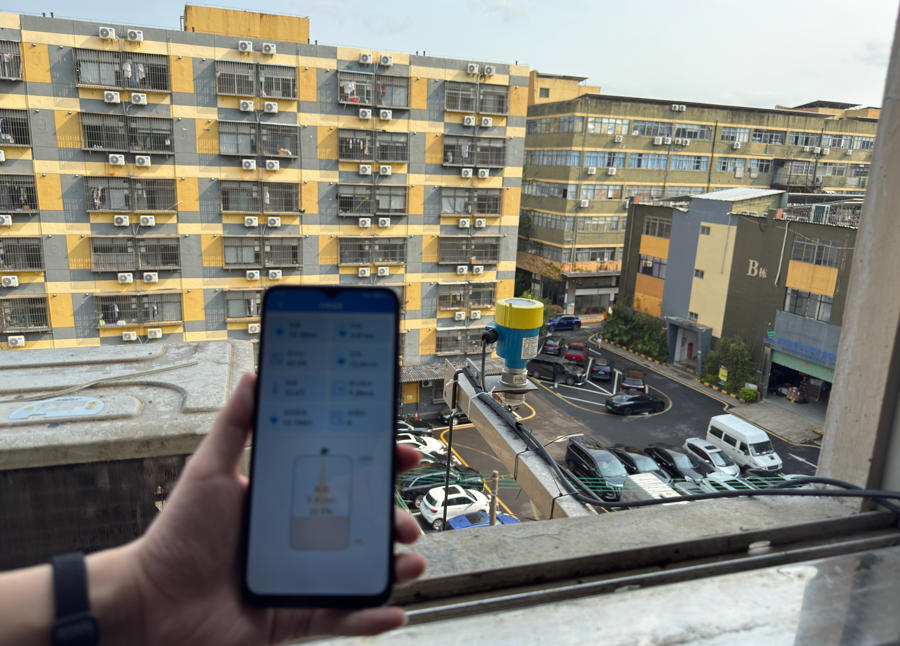
As a leading brand in Chinese industrial automation, Jiwei JWrada® radar level meters integrate multiple innovative functions, improving measurement accuracy, flexibility, and operational efficiency.
- Bluetooth Smart Configuration
JWrada® features a built-in stable Bluetooth module, enabling wireless configuration, real-time monitoring, and remote control via the JW Tools® APP. Each device can be configured in 2–5 minutes, even with liquid already in the tank. Engineers can copy parameters from one device to multiple units in one step, eliminating the need for individual device setup and significantly improving commissioning efficiency. - Intuitive Operation Interface
In addition to Bluetooth APP operation, the device includes LCD display and physical buttons, supporting full manual control and real-time level display, making on-site operation and data verification easy. - High-Precision Continuous Measurement
Using 80GHz FMCW radar technology, JWrada® achieves ±1mm accuracy with a 60-meter range and no blind zones. The narrow radar beam concentrates energy for precise measurement, suitable even for low dielectric liquids, powders, or tanks with complex geometries. - Intelligent Echo Processing and Interference Resistance
Proprietary echo processing algorithms can identify false echoes, separate multi-layer echoes, and dynamically track levels, ensuring accurate measurements under steam, foam, vibration, or dust interference. - Non-Contact Measurement and Durability
Non-contact radar avoids liquid adhesion, corrosion, and high-temperature wear, extending service life and reducing maintenance costs. The device can operate at temperatures up to 220°C and is certified for gas and dust explosion-proof environments, suitable for high-risk industrial applications. - Global Application and Import Replacement
JWrada® radar level meters have successfully replaced VEGA products multiple times, representing the most competitive radar solution in China. They provide global industrial markets with maximum flexibility, efficiency, and reliability, offering a high-performance alternative to imported instruments.
IV. Advantages of Combining RS-485 with JWrada® Radar Level Meters
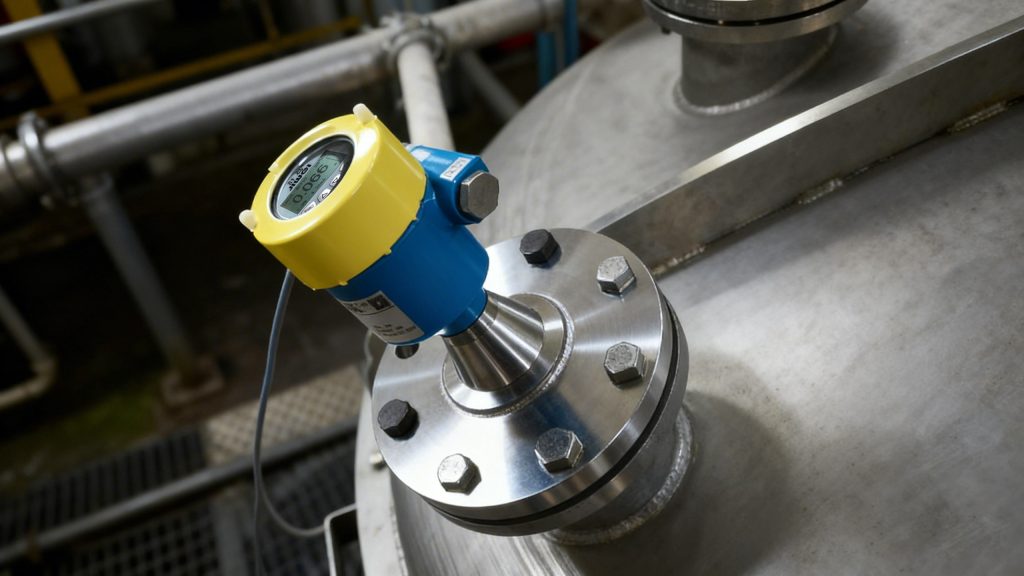
Connecting JWrada® radar level meters to a PLC (Programmable Logic Controller) or DCS (Distributed Control System) via an RS-485 communication bus provides a highly efficient, reliable, and scalable solution for industrial level measurement and process control. The RS-485 protocol, known for its differential signal transmission and robust anti-interference capabilities, ensures stable data communication even in electrically noisy industrial environments or over long distances. By integrating JWrada® devices through RS-485, multiple radar level meters can transmit continuous level data, alarm status, and diagnostic information to a central controller in real time, enabling centralized monitoring and intelligent decision-making.
Centralized Multi-Point Management
With RS-485, multiple radar level meters can be connected in a multi-drop configuration, allowing a single PLC or DCS system to manage dozens of devices simultaneously. This centralized architecture simplifies plant-wide liquid level management, facilitates automated control of high and low point alarms, and supports historical data logging for process analysis. By reducing the need for individual point-to-point wiring, RS-485 improves system reliability and significantly lowers installation and maintenance costs.
Remote Commissioning and Maintenance
When combined with JWrada®’s Bluetooth smart configuration and Jiwei SmartControl® app, RS-485 enhances both on-site and remote commissioning capabilities. Engineers can perform parameter setup, calibration, and real-time monitoring from a single location, while parameters from one device can be copied to multiple units without repeating manual adjustments. This capability reduces commissioning time, prevents configuration errors, and minimizes maintenance workload for large-scale installations, especially in facilities with multiple tanks or complex piping networks.
Data Security and Stability
RS-485 provides differential signal transmission that is highly resistant to electromagnetic interference, ensuring consistent and accurate data delivery under harsh industrial conditions such as high-voltage equipment, motors, or heavy machinery. The protocol’s robustness supports long cable runs and network expansion, guaranteeing uninterrupted communication between JWrada® radar level meters and control systems. This stability is critical for process automation, as reliable level data directly impacts safety, efficiency, and regulatory compliance.
Flexible Expansion and Automation
RS-485 networks are inherently scalable, supporting multiple nodes and repeaters, which allows the integration of additional measurement points as plant requirements grow. This flexibility enables operators to easily expand their monitoring and control systems, integrate new tanks or vessels, and adapt to evolving automation needs without extensive rewiring. Moreover, RS-485 supports real-time interaction with PLCs, DCS, or SCADA systems, enabling intelligent automation strategies such as predictive maintenance, process optimization, and automated scheduling, thereby maximizing operational efficiency and reducing human intervention.
In summary, leveraging RS-485 communication with JWrada® radar level meters provides a high-performance solution for modern industrial applications, combining centralized control, remote configuration, secure and stable data transmission, and flexible system expansion. This integration ensures reliable, continuous level measurement in demanding environments such as chemical storage, petroleum tanks, wastewater treatment, and food and beverage production, ultimately enhancing operational safety, efficiency, and automation capabilities.
V. Application Scenarios
- Food, Beverage, and Brewing Industry
In stainless steel fermentation tanks, mixing tanks, or storage tanks, JWrada® provides continuous non-contact level monitoring. Combined with Ring-11 tuning fork level switches for high/low point alarms, it ensures full-process automation and hygienic safety. - Chemical and Petroleum Tanks
For chemical liquids or petroleum storage, radar level meters provide stable data under high temperature, high pressure, and corrosive conditions, while RS-485 allows centralized multi-tank monitoring. - Wastewater Treatment and Industrial Water Systems
In wastewater treatment plants and industrial water systems, radar level meters enable online liquid level monitoring, automatic water inlet/outlet control, and intelligent scheduling, improving efficiency and reducing maintenance costs.
VI. Conclusion
With the development of industrial automation and smart manufacturing, level measurement has become indispensable in modern production. RS-485 provides a reliable foundation for industrial data transmission, while Jiwei JWrada® radar level meters offer wireless Bluetooth configuration, LCD and button operation, high-precision continuous measurement, and durable non-contact design.
Whether in food and beverage, chemical and petroleum, wastewater treatment, or high-risk industrial environments, JWrada® radar level meters can replace imported instruments, providing low-maintenance, high-accuracy, and safe level measurement solutions, delivering comprehensive automation control for global industrial customers.
RS-485, radar level meter, JWrada®, level measurement, industrial automation, non-contact measurement, Bluetooth smart control, process control