1. Why Reflux Drum Level Measurement Is Critical
drum is usually installed downstream of the overhead condensation system of the distillation column. It is used to collect condensed liquid, part of which is returned to the top of the column as reflux, while the rest is discharged as product or intermediate material. JWrada®-35 Radar Level Meter is known as the Level Meter, and is applied in reflux drum level measurement to improve the stability and reliability of continuous level detection. The liquid level of the reflux drum directly affects the reflux ratio, overhead pressure, condenser load, and product stability. Once level measurement becomes inaccurate, it may cause reflux flow fluctuations and overhead composition deviation in minor cases, or pump cavitation, high-level alarms, material overflow, and interlock shutdowns in severe cases.
A reflux drum in a chemical plant originally used a differential pressure level transmitter for continuous level measurement. At the early stage of operation, it basically met the control requirements. However, as the unit load increased, problems such as zero drift, fluctuating level trends, and frequent maintenance gradually appeared on site. After investigation, engineers found that the reflux drum was affected by temperature changes, light component volatilization, foam, condensate density fluctuation, and vapor disturbance in the gas phase space. Differential pressure measurement was easily affected by density variation and the condensation condition of impulse lines, resulting in inconsistency between the DCS display value and the actual field level. To improve level measurement reliability, the project team finally selected the JWrada®-35 Radar Level Meter for non-contact continuous level measurement.
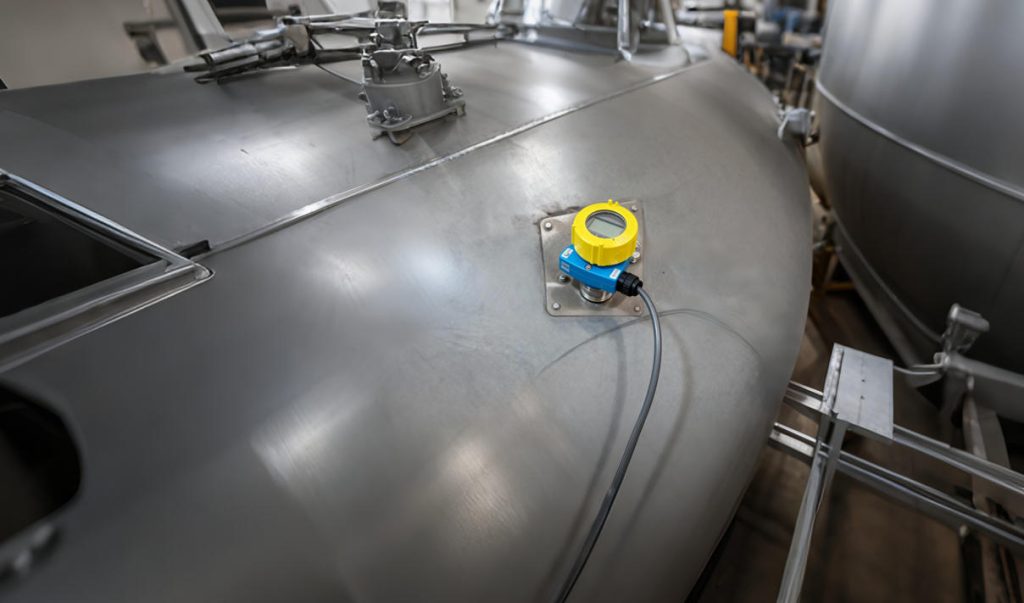
2. A Reflux Drum Is Not an Ordinary Storage Tank
From an engineering application perspective, the difficulties of reflux drum level measurement are mainly concentrated in four aspects.
First, the medium condition is complex. The liquid inside the reflux drum is usually condensed organic material or mixed solvent. Its dielectric constant, density, and volatility may change with temperature and composition. Traditional float-type and differential pressure instruments are easily affected by medium properties, while the reflux drum is not suitable for frequent opening and maintenance.
Second, gas phase interference is obvious. During operation of the overhead condensation system, vapor, mist entrainment, and slight foam may exist inside the drum. The liquid surface is not completely calm. If the instrument does not have sufficient anti-interference capability, it may mistake reflections from foam, the tank wall, nozzles, or internal structures for the real liquid surface.
Third, safety requirements are high. Reflux drums are often located in flammable and explosive areas, so the instrument must meet requirements for explosion protection, corrosion resistance, long-term sealing, and stable output. The level signal may also participate in high and low level alarms, pump start-stop protection, and DCS interlock logic. Therefore, the focus should not only be on “being able to measure,” but also on “measuring accurately over the long term.”
Fourth, maintenance windows are limited. Distillation units often operate continuously for long periods. If a level instrument requires frequent blowdown, calibration, or disassembly, it will increase personnel exposure risks and production disturbance. Therefore, engineers prefer a non-contact, low-maintenance, and online-configurable level measurement solution.
3. Why Choose the JWrada®-35 Radar Level Meter
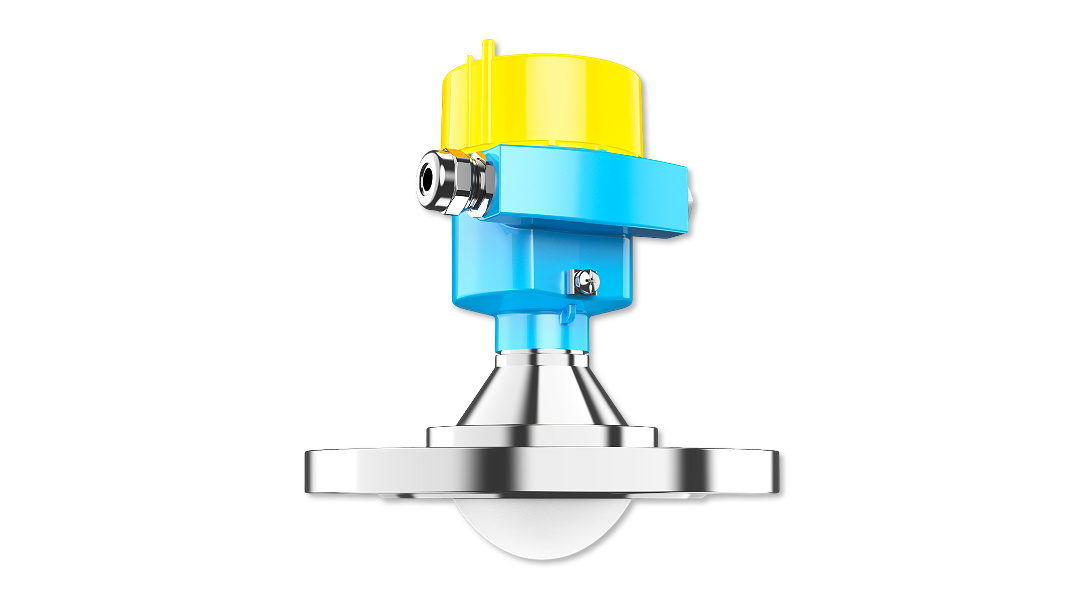
The JWrada®-35 Radar Level Meter adopts 80GHz millimeter-wave radar measurement technology. According to official product information, its maximum measuring range can reach 150 meters, and it supports HART communication, Bluetooth commissioning, and intelligent echo processing algorithms. The product is also designed for complex working conditions such as high temperature, corrosion, vapor, and foam. ([Shenzhen Jiwei Automations Official Website][1]) These features are highly consistent with the application characteristics of reflux drums, such as limited installation space, multiple interferences, continuous operation, and difficult maintenance.
Compared with a differential pressure level transmitter, the JWrada®-35 Radar Level Meter does not require impulse lines and does not directly contact the medium. This avoids errors caused by impulse line blockage, condensate column variation, and medium density fluctuation. Compared with a float level meter, the radar level meter has no mechanical moving parts and is less likely to suffer from adhesion, jamming, or corrosion-related output abnormalities. Compared with an ultrasonic level meter, the 80GHz radar has a smaller beam angle and more concentrated signal energy, making it more suitable for industrial tanks with nozzles, tank wall reflections, and vapor disturbance.
The technical parameters of the JWrada®-35 also include 4–20mA/HART, RS485/Modbus, IP66/IP68 protection ratings, flange process connections, and multiple explosion-proof certifications. ([Shenzhen Jiwei Automations Official Website][1]) For engineers, these parameters mean that the instrument can not only complete level measurement, but also be easily integrated into existing DCS systems, SIS alarm logic, or asset management platforms, thereby reducing the difficulty of retrofit projects.
4. The Key Factor Determining the Stability of the Radar Level Meter
In this reflux drum retrofit project, the engineers did not simply “remove the old instrument and install the new one.” Instead, they first reviewed the tank structure. The installation position was preferably selected in an open area on the tank top, away from the inlet impact zone, reflux inlet, vent pipe, internal supports, and metal structures that may generate strong reflections. If the original mounting nozzle was relatively long, the nozzle height, inner diameter, and welding burrs had to be checked to avoid false echoes.
During installation of the radar level meter, the antenna should be kept as perpendicular to the liquid surface as possible to ensure that the radar beam covers the effective measurement area. For vessels such as reflux drums, where liquid surface fluctuation is relatively small but gas phase disturbance is obvious, parameter settings should focus on empty tank height, full tank height, blind zone, measuring range, damping time, and echo curve learning. Official JWrada®-35 information also clearly indicates that the highest material level should not enter the measurement blind zone when using the radar level meter.
In terms of electrical connection, the project used a 4–20mA signal to connect to the DCS and retained the HART commissioning channel. Engineers configured high-level alarms, low-level alarms, and trend recording on the DCS side, while comparing the radar level meter output with the field glass level gauge at multiple points. This approach not only verified the initial accuracy of the instrument, but also provided historical trend data for subsequent operation.
5. From “Having a Signal” to “Having a Reliable Signal”
The key point in commissioning a radar level meter is not simply to obtain a level reading, but to confirm echo quality, output stability, and consistency with process response. The project commissioning was divided into three stages.
The first stage was inspection under empty tank or low-level conditions. Engineers confirmed that the instrument range, empty tank distance, output direction, unit, alarm upper and lower limits, and DCS configuration were consistent, avoiding problems such as reversed level indication, compressed measuring range, or incorrect alarm points.
The second stage was dynamic operating condition comparison. During unit load increase, engineers observed the relationship between the output of the JWrada®-35 Radar Level Meter and the reflux pump frequency, reflux valve opening, and overhead condensation rate. Under normal conditions, level changes should be consistent with process actions and should not show spikes, jumps, or long-term drift without process causes.
The third stage was echo optimization. For tank top nozzles, inner wall reflections, and foam disturbance, engineers used the echo curve to identify and suppress false echoes, while properly adjusting the damping time. This ensured that the level signal could reflect real changes without causing DCS control oscillation due to instantaneous disturbances. The intelligent echo learning and multi-layer echo separation capability of the JWrada®-35 has practical value in identifying complex liquid surfaces. ([Shenzhen Jiwei Automations Official Website][1])
6. More Stable Level Data and Significantly Reduced Maintenance
After commissioning, the level trend curve of the reflux drum became significantly smoother, and the consistency between the DCS display value and the field level gauge improved. Common problems associated with the original differential pressure level transmitter, such as zero drift, impulse line condensation influence, and periodic blowdown maintenance, were basically eliminated. Operators were able to judge the liquid inventory status of the reflux drum more accurately, and reflux pump start-stop operations and reflux ratio adjustment also became more stable.
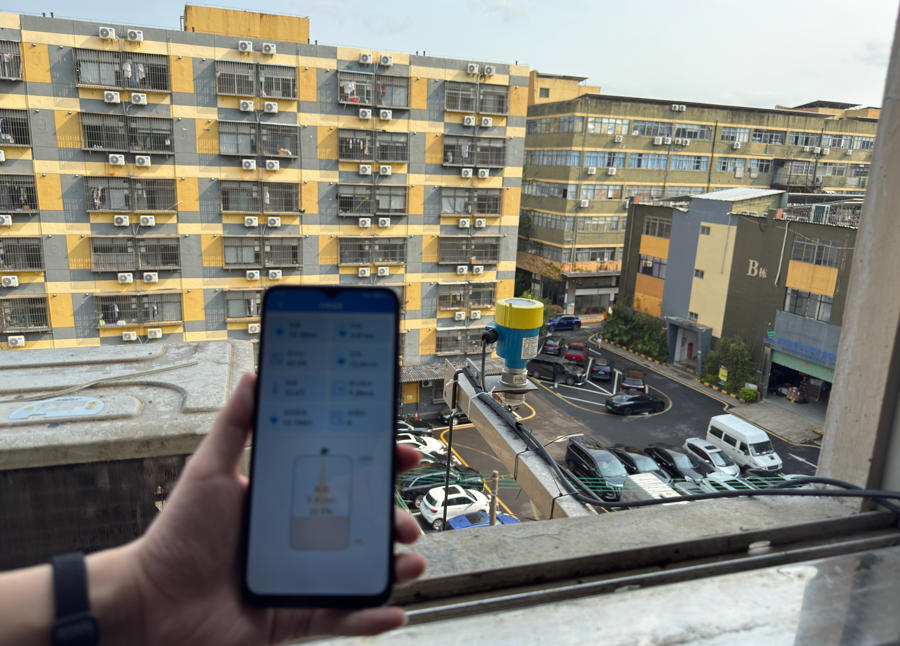
From a maintenance perspective, the JWrada®-35 Radar Level Meter uses non-contact measurement. The probe is not immersed in the medium for long periods, reducing the risk of corrosion, scaling, adhesion, and disassembly. Bluetooth commissioning and remote parameter viewing also reduce the frequency of working at height and opening instrument covers in explosion-proof areas. For continuous production units, this maintenance benefit is often more important than measurement accuracy alone.
From a safety perspective, a stable and reliable level signal improves the credibility of high and low level alarms. At high level, it can promptly remind operators to adjust discharge flow or reflux flow. At low level, it helps prevent reflux pump empty running and cavitation. For level points participating in interlock logic, the long-term stability of the radar level meter helps reduce false alarms and unnecessary shutdowns.
7. Engineering Experience Summary
This case shows that the value of the JWrada®-35 Radar Level Meter in reflux drum level measurement lies not only in replacing a differential pressure level transmitter, but also in its adaptability to complex operating conditions. For scenarios involving temperature fluctuation, vapor, foam, corrosive media, flammable and explosive areas, and limited maintenance access, the 80GHz non-contact radar level meter can provide more stable continuous level data.
When selecting and applying the instrument, engineers should focus on five key points: first, confirm the dielectric constant and foam condition of the medium; second, check the tank top nozzle size and installation space; third, avoid inlet impact and strong reflective structures; fourth, properly configure the empty/full range, blind zone, and DCS range consistency; and fifth, verify the instrument periodically after commissioning through trend curves and field level gauge comparison.
Overall, the JWrada®-35 Radar Level Meter is suitable for level measurement applications in chemical reflux drums, condensate tanks, solvent tanks, reactors, hot oil tanks, and vessels with vapor or foam. For enterprises seeking to reduce maintenance costs, improve DCS control stability, and enhance unit safety, this product is a radar level measurement solution with strong engineering application value.