In the level measurement industry, I have noticed one common problem during instrument selection: many users pay close attention to measuring range, accuracy, medium type, output signal, and installation method, but often overlook one very important process condition — process pressure.
From my experience, process pressure is not only a parameter for pressure gauges or pressure transmitters. It is also closely related to level instruments. Whether the application uses a radar level transmitter, magnetic level gauge, ultrasonic level meter, float level switch, guided wave radar level transmitter, or differential pressure level transmitter, pressure can directly affect measurement stability, instrument structure, sealing performance, service life, and operational safety.
That is why I believe process pressure should always be considered at the beginning of level instrument selection. In this article, I would like to explain what process pressure means, why it matters in level measurement, how it affects different types of level instruments, and what information users should provide before choosing a suitable level measurement solution.
What Is Process Pressure?
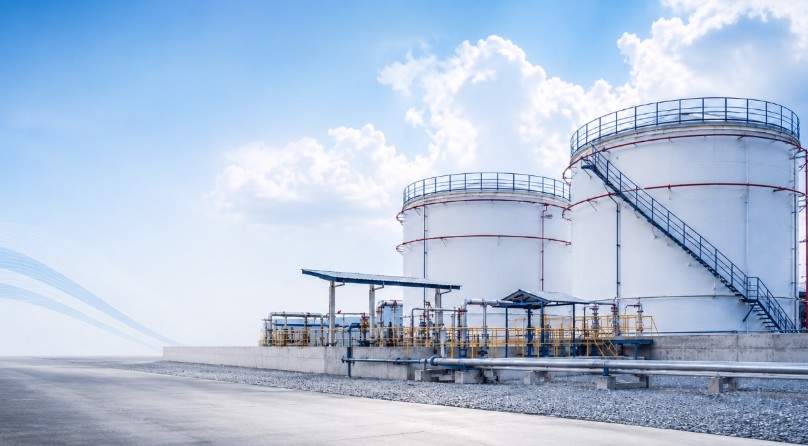
In industrial applications, process pressure refers to the pressure inside a tank, vessel, pipeline, reactor, separator, boiler drum, or other process equipment during operation. It may be atmospheric pressure, slight positive pressure, high pressure, negative pressure, or vacuum.
For example, an open water tank usually works under atmospheric pressure. In this case, the pressure requirement for the level instrument is relatively simple. However, a sealed chemical storage tank, pressure vessel, steam condensate tank, liquefied gas tank, or high-pressure reactor may operate under much higher pressure. In these applications, the level instrument must not only measure the level accurately, but also withstand the internal pressure safely.
This is why I often ask users to provide the pressure condition when selecting a level transmitter or level gauge. Some users may ask, “I only need to measure liquid level. Why do I need to provide pressure data?” The answer is simple: once a level instrument is installed on a tank or vessel, its flange, process connection, sealing components, antenna, probe, chamber, float, or diaphragm may be exposed to process pressure.
If the pressure condition is ignored, the instrument may not be suitable for the application. In mild cases, it may cause unstable readings or shortened service life. In serious cases, it may lead to leakage, instrument failure, or safety risks on site.
Why Process Pressure Matters in Level Instrument Selection
A level instrument does not work independently. It is part of the process system. Therefore, process pressure affects not only the measuring principle, but also the mechanical design and installation safety of the instrument.
For a radar level transmitter installed on an atmospheric tank, a standard threaded connection or low-pressure flange may be sufficient. But when the same type of instrument is installed on a high-pressure reactor, the selection becomes more complex. The flange rating, antenna design, sealing material, temperature resistance, pressure rating, and overall mechanical structure must all match the operating conditions.
For a magnetic level gauge, process pressure is even more directly related to the instrument body. The measuring chamber is connected to the tank and bears the same pressure as the vessel. Therefore, the chamber wall thickness, welding quality, flange standard, vent valve, drain valve, and sealing structure must meet the pressure requirement.
For a differential pressure level transmitter, process pressure is part of the measurement principle. The instrument calculates liquid level by measuring pressure difference. In a closed tank, the gas-phase pressure above the liquid can influence the measurement result. Therefore, pressure compensation, remote seals, capillary systems, or density correction may be required.
In other words, process pressure affects both safety and accuracy. It is not a small detail. It is one of the basic conditions for correct level instrument selection.
Common Process Pressure Conditions in Level Measurement
In practical applications, I usually divide process pressure into several common categories.
Atmospheric Pressure Applications
Atmospheric pressure applications are very common. Examples include open water tanks, wastewater pools, rainwater collection tanks, ordinary storage tanks, open reservoirs, and some material silos.
For these applications, the internal pressure is close to normal atmospheric pressure. The selection focus is usually on measuring range, medium characteristics, foam, dust, corrosion, blind zone, installation position, and signal output.
Common level instruments for atmospheric applications include radar level transmitters, ultrasonic level meters, submersible level transmitters, float level switches, and capacitance level sensors.
Slight Positive Pressure Applications
Some sealed tanks operate under slight positive pressure. For example, solvent tanks, buffer tanks, chemical storage tanks, or nitrogen-blanketed tanks may have low internal pressure.
In these cases, I pay attention to the sealing performance, process connection, pressure rating, and explosion-proof requirements of the level instrument. Even if the pressure is not high, the instrument still needs to be properly sealed and mechanically suitable for the tank.
High-Pressure Applications
High-pressure applications include reactors, pressure vessels, liquefied gas tanks, high-pressure separators, boiler drums, and some chemical processing equipment.
These applications require more careful level instrument selection. The instrument must have a suitable pressure rating, temperature rating, process connection, sealing structure, and material compatibility. In some cases, the instrument may also need explosion-proof certification or compliance with specific industry standards.
For high-pressure level measurement, radar level transmitters, guided wave radar level transmitters, magnetic level gauges, differential pressure level transmitters, and special high-pressure level instruments are commonly considered.
Negative Pressure and Vacuum Applications
Vacuum and negative pressure conditions are often found in distillation, drying, crystallization, pharmaceutical, and fine chemical processes.
From my experience, vacuum applications should not be ignored. Negative pressure may affect sealing stability, mechanical structure, and measurement reliability. Some level instruments that work well under atmospheric pressure may not perform well under vacuum conditions.
When selecting a level instrument for vacuum service, it is important to confirm whether the instrument is suitable for vacuum operation, whether the sealing structure is reliable, and whether the selected material can handle the process medium.
How Process Pressure Affects Different Level Instruments
Different level instruments respond to process pressure in different ways. The influence depends on both the measurement principle and the mechanical design.
Radar Level Transmitters
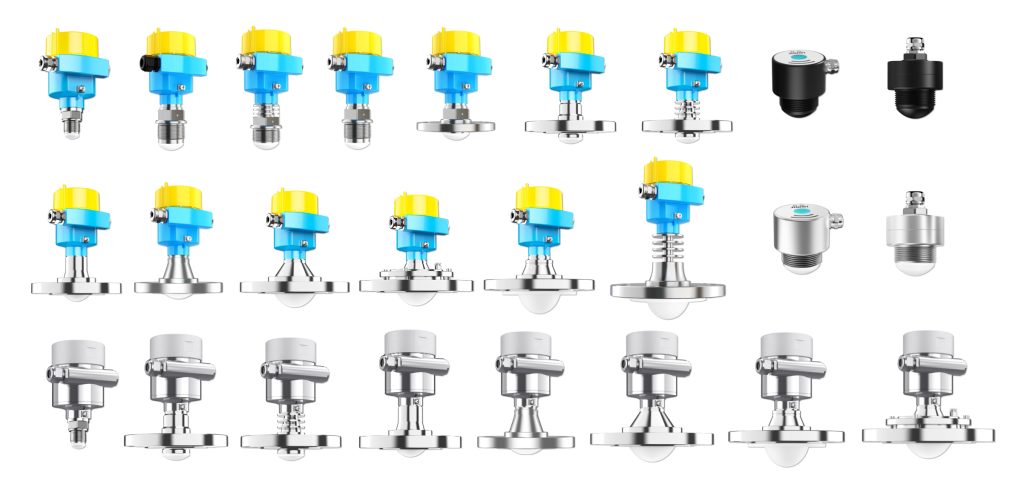
Radar level transmitters are widely used in industrial level measurement. They are suitable for many challenging conditions, including high temperature, high pressure, steam, dust, corrosive media, and volatile liquids.
For radar level transmitters, process pressure mainly affects the antenna structure, process seal, flange rating, and material selection. In high-pressure applications, it is important to choose a radar level transmitter with the correct pressure rating and sealing design.
Although pressure itself usually has limited influence on electromagnetic wave propagation, pressure-related conditions such as steam, condensation, foam, turbulence, and dielectric constant changes may affect the echo signal. Therefore, the actual process environment must be evaluated carefully.
Guided Wave Radar Level Transmitters
Guided wave radar level transmitters use a probe to guide microwave pulses along the measuring path. They are often used in tanks with steam, turbulence, foam, or low dielectric constant liquids.
In pressurized vessels, the probe, process connection, and seal must withstand the operating pressure. If the application involves high temperature and high pressure at the same time, probe material, seal material, and installation structure become even more important.
Guided wave radar can be a good solution for many closed tanks, but the pressure rating and medium compatibility must be confirmed before selection.
Ultrasonic Level Meters
Ultrasonic level meters are commonly used in open tanks, water treatment systems, wastewater pools, and non-pressurized vessels. They measure level by sending sound waves and receiving echoes from the material surface.
Because ultrasonic measurement depends on sound wave propagation through air or gas, pressure, vapor, temperature change, and gas composition may affect measurement performance. For this reason, I usually do not recommend ordinary ultrasonic level meters as the first choice for sealed high-pressure vessels.
Ultrasonic level meters are more suitable for atmospheric and relatively stable environments.
Magnetic Level Gauges
Magnetic level gauges provide local visual indication and are widely used in tanks, boilers, chemical vessels, and industrial storage systems.
In this type of instrument, the measuring chamber is connected to the vessel. Therefore, the chamber must bear the same pressure as the process equipment. The wall thickness, welding quality, flange standard, valve configuration, gasket material, and float design all need to match the pressure and temperature conditions.
For high-pressure or high-temperature applications, magnetic level gauges must be selected with great care. Material selection and manufacturing quality are especially important.

Float Level Instruments
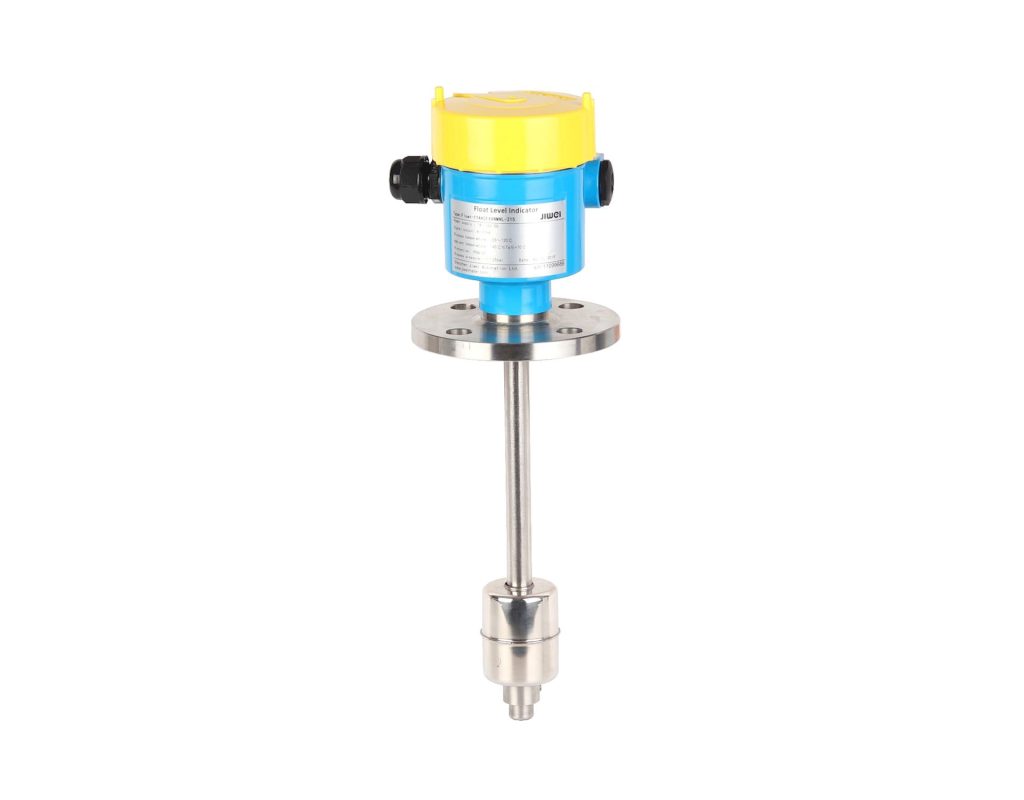
Float level meters and float level switches rely on buoyancy. Process pressure can affect the mechanical design, float strength, sealing structure, and long-term reliability.
If the pressure is high, the float must be strong enough to avoid deformation or damage. At the same time, the density of the medium must be considered. If the medium density changes significantly, the float movement and switching point may also be affected.
Differential Pressure Level Transmitters
Differential pressure level transmitters measure liquid level by converting hydrostatic pressure into level height. They are widely used in tanks, vessels, and sealed containers.
For open tanks, the calculation is relatively simple. For closed tanks, however, vapor-phase pressure must be considered. If the pressure above the liquid is not compensated correctly, the measured level may be inaccurate.
In high-temperature, corrosive, or viscous media, remote diaphragm seals or capillary systems are often used. In these cases, pressure, temperature, density, installation height, and capillary effects should all be evaluated.
The Relationship Between Pressure, Temperature, and Medium
In real industrial applications, pressure rarely appears alone. It is often related to temperature and medium characteristics.
For example, high-pressure steam applications usually involve high temperature as well. In this situation, the level instrument must be both pressure-resistant and temperature-resistant. The seal material must not age too quickly, the electronic components must be protected, and condensation or coating on the antenna or probe must be considered.
For corrosive media, pressure may not be very high, but material compatibility can become the main issue. Strong acids, strong alkalis, solvents, and aggressive chemicals may require PTFE, Hastelloy, titanium, lined structures, or diaphragm seals.
For flammable and explosive media such as methanol, ethanol, solvent oil, and liquefied gas, safety requirements become even more important. Explosion-proof rating, sealing performance, leakage prevention, and grounding must be considered together with pressure.
This is why I always evaluate pressure together with temperature, medium, installation method, and safety requirements. A correct level measurement solution depends on the full process condition, not only one parameter.
Does Process Pressure Affect Measurement Accuracy?
Yes, process pressure can affect measurement accuracy, but the influence depends on the type of level instrument and the process condition.
For contact level instruments, pressure may affect medium density, buoyancy, impulse lines, or remote seal systems. For example, a float instrument depends on buoyancy, so a change in medium density may change the float position. A differential pressure level transmitter depends on pressure conversion, so vapor pressure and liquid density must be considered.
For radar level transmitters, pressure itself is usually not the main cause of measurement error. However, pressure-related factors such as steam, condensation, foam, turbulence, and dielectric changes may reduce echo quality and affect measurement stability.
For ultrasonic level meters, pressure can influence gas properties and sound velocity. Therefore, ultrasonic instruments may have limitations in closed or pressurized vessels.
In my opinion, accuracy should not be judged only by the number on the datasheet. A level instrument may have high laboratory accuracy, but if it is not suitable for the actual pressure condition, the field measurement result may still be unstable.
What Pressure Information Should Users Provide?
When selecting a level instrument, I usually recommend users provide the following pressure-related information:
- Normal operating pressure
- Maximum operating pressure
- Design pressure of the vessel
- Whether pressure fluctuation or pressure shock exists
- Whether the vessel operates under vacuum or negative pressure
- Whether the tank is open, sealed, or nitrogen-blanketed
- Required flange standard, such as PN16, PN40, Class 150, or Class 300
- Operating temperature and maximum temperature
- Medium name, density, corrosion, viscosity, and volatility
- Explosion-proof or safety certification requirements
The more complete the process information is, the more accurate the level instrument selection will be.
One common mistake is describing the pressure only as “low pressure” or “not very high.” This is not enough. For different instruments and industries, the meaning of “low pressure” can be very different. A pressure of 0.6 MPa may already require careful confirmation for some instruments, while several megapascals may be normal for high-pressure applications.
Accurate pressure data helps suppliers recommend the correct model, connection, seal, material, and installation method.
Common Pressure-Related Problems in Level Measurement
In field applications, I have seen several common problems caused by insufficient attention to process pressure.
One problem is choosing an instrument with a pressure rating that is too low. The tank is pressurized, but the level instrument is selected as if it were used on an atmospheric tank. This may cause leakage, unstable readings, or instrument damage.
Another problem is considering only normal pressure and ignoring maximum pressure. During startup, shutdown, cleaning, purging, or abnormal operation, the pressure may rise temporarily. If the instrument has no safety margin, risk increases.
A third problem is ignoring vacuum conditions. Some instruments can work well under positive pressure but may not be suitable for vacuum service.
A fourth problem is checking pressure without checking temperature. Pressure ratings are often related to temperature. At higher temperatures, sealing materials and mechanical strength may change.
A fifth problem is flange mismatch. The process connection must match the site standard. This is not only about installation size, but also about pressure resistance and sealing safety.
How I Select a Level Instrument Based on Process Pressure
When I select a level instrument, I usually follow a clear process.
First, I confirm whether the vessel is open, sealed, pressurized, or under vacuum. Then I check the normal pressure, maximum pressure, and design pressure. After that, I consider temperature, medium characteristics, corrosion, viscosity, foam, steam, agitation, explosion-proof requirements, and installation conditions.
For atmospheric tanks or open pools, radar level transmitters, ultrasonic level meters, or submersible level transmitters may be suitable.
For sealed pressurized tanks, radar level transmitters, guided wave radar level transmitters, magnetic level gauges, and differential pressure level transmitters are often considered.
For high-temperature and high-pressure reactors, I pay special attention to pressure rating, temperature rating, sealing structure, flange standard, and material compatibility. In some cases, a customized level measurement solution may be required.
Finally, I check whether the selected instrument meets the process connection, sealing material, pressure rating, protection grade, output signal, and certification requirements. Only when all these conditions match can the instrument be considered suitable for the application.
Conclusion: Process Pressure Is a Key Factor in Reliable Level Measurement
In the level measurement industry, I have learned that stable measurement does not depend only on instrument accuracy. It depends more on whether the instrument matches the actual process conditions.
Process pressure is one of the most important conditions. It affects installation safety, sealing performance, measurement stability, service life, and maintenance cost. For this reason, pressure should never be treated as a minor detail during level instrument selection.
When choosing a level instrument, users should not only ask about measuring range, accuracy, price, and delivery time. They should also provide clear information about process pressure, temperature, medium, vessel type, installation position, and safety requirements.
For users, accurate pressure information helps them choose a more reliable level measurement solution. For manufacturers and engineers, careful pressure confirmation helps ensure that the level instrument works safely and stably in real production.
A level instrument is designed to measure what happens inside a tank or vessel. But before measuring the level, we must first understand the pressure boundary of the process. Only then can level measurement become safer, more accurate, and more dependable.