In chemical storage tanks, acid and alkali vessels, seawater systems, wastewater basins, reactors, and high-salinity processes, level probes are often continuously exposed to aggressive media.
Conventional 304 or 316L stainless steel may suffer from pitting, crevice corrosion, general corrosion, or stress corrosion cracking when used in strong acids, chloride-containing solutions, hydrofluoric acid, reducing media, or high-temperature brine. These forms of corrosion can gradually reduce probe thickness, cause unstable measurement signals, damage insulation layers, and even create a risk of process-medium leakage.
For this reason, Hastelloy level probes and Monel level probes have become important solutions for highly corrosive industrial applications.
However, the term “corrosion-resistant alloy” does not mean that a material can withstand every chemical environment. The service life and measurement reliability of a level probe depend on several factors, including alloy grade, chemical composition, concentration, temperature, pressure, oxygen content, flow velocity, suspended solids, welding condition, surface deposits, and sealing materials.
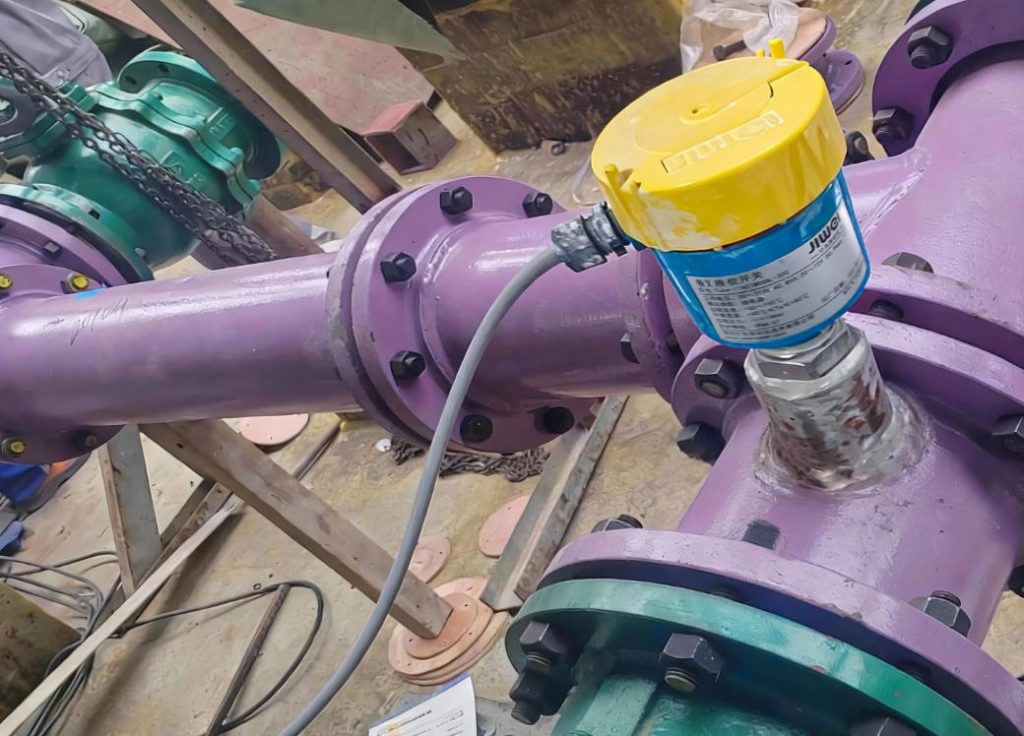
During material selection, the probe rod, cable, flange, process connection, welds, fasteners, insulation, and seals must be evaluated as one complete wetted system. Selecting a probe based only on the material of its main sensing element is rarely sufficient.
1. What Is a Hastelloy Level Probe?
Hastelloy is a family of nickel-based corrosion-resistant alloys containing elements such as chromium, molybdenum, tungsten, and iron.
Common Hastelloy grades used in level instrumentation include C-276 and C-22, with Hastelloy C-276 being one of the most widely used materials.
Hastelloy C-276 is primarily composed of nickel, with approximately 16% chromium, 16% molybdenum, and about 4% tungsten. Its high chromium and molybdenum content provides resistance to both oxidizing and reducing environments while improving protection against chloride-induced pitting, crevice corrosion, and stress corrosion cracking.
Material data published by Haynes International indicate that C-276 has relatively high critical pitting and critical crevice corrosion temperatures in acidified ferric chloride testing. This demonstrates its strong resistance to localized corrosion in severe chloride-containing environments compared with conventional austenitic stainless steels.
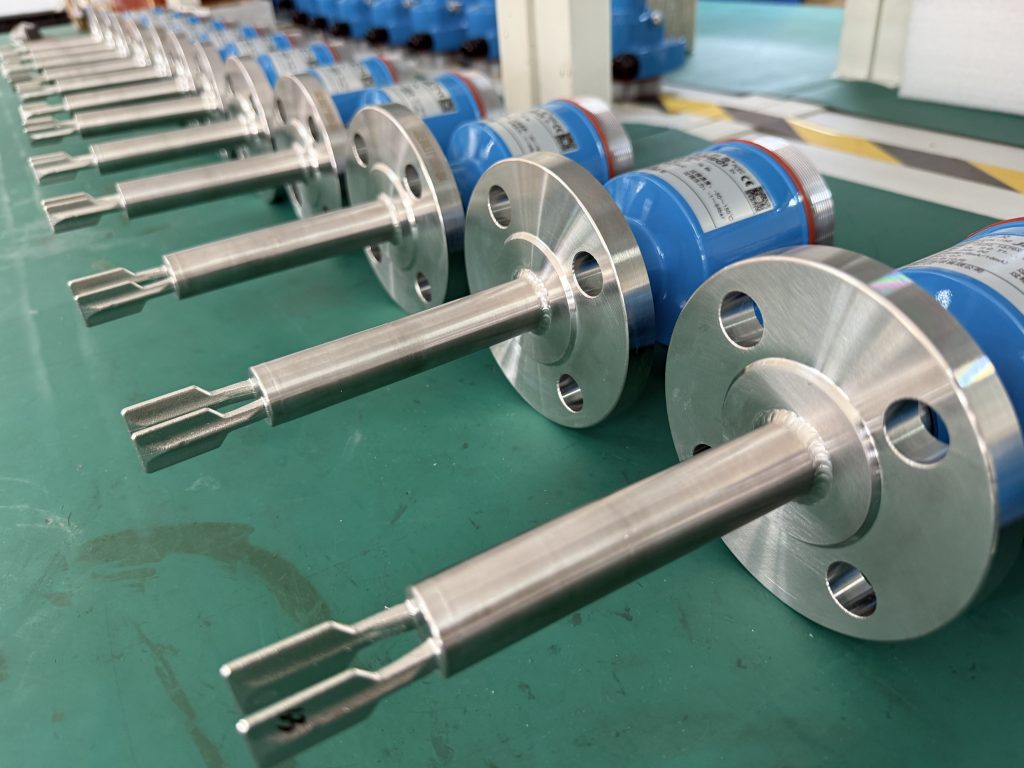
A Hastelloy level probe generally refers to an instrument in which the wetted probe rod, guided-wave rod, coaxial probe, cable, sheath, or process connection is manufactured from Hastelloy. In some designs, a base metal may be clad or coated with a Hastelloy alloy.
Hastelloy wetted components may be used in:
- Capacitance level sensors
- RF admittance level instruments
- Guided wave radar level transmitters
- Conductive level switches
- Specially designed industrial level sensors
It is important to note that the instrument housing is not necessarily made from Hastelloy. The corrosion resistance of the instrument mainly depends on whether all wetted components are manufactured from materials compatible with the process medium.
2. Which Media Are Suitable for Hastelloy Level Probes?
Hastelloy C-276 is commonly considered for chloride-containing solutions, hydrochloric acid, sulfuric acid, phosphoric acid, halogen-containing media, acidic wastewater, and chemically complex process mixtures.
According to the alloy manufacturer’s technical data, C-276 provides strong resistance to chloride-induced pitting, crevice corrosion, and stress corrosion cracking. It is widely used in chemical reactors, heat exchangers, columns, piping systems, and other chemical-processing equipment.
Hastelloy level probes are often suitable for applications involving:
- Acidic wastewater with high chloride concentrations
- Hydrochloric acid storage tanks
- Hydrometallurgical leaching solutions
- Flue-gas desulfurization liquids
- Acid-pickling solutions containing oxidizing agents
- Pharmaceutical reaction liquids
- Complex chemical wastewater with changing compositions
- Corrosive mixtures that attack 316L stainless steel
Hastelloy is particularly valuable where conventional stainless steel is vulnerable to pitting, weld corrosion, crevice corrosion, or stress corrosion cracking.
Nevertheless, applications involving both high concentrations and elevated temperatures should still be evaluated using the alloy manufacturer’s corrosion charts, previous operating experience, laboratory immersion tests, or field corrosion-coupon testing.
Published corrosion data also emphasize that laboratory results obtained in reagent-grade solutions cannot completely represent actual industrial process conditions. Whenever possible, field verification should be performed before a material is approved for long-term service.
3. What Is a Monel Level Probe?
Monel generally refers to a family of nickel-copper alloys in which nickel and copper are the principal elements.
The most common grades used for level probes include Monel 400 and the higher-strength Monel K-500.
Monel 400 normally contains at least approximately 63% nickel and between about 28% and 34% copper. It is a classic nickel-copper corrosion-resistant alloy.
Monel K-500 maintains corrosion resistance similar to that of Monel 400 while achieving greater strength and hardness through the addition of aluminum and titanium and the use of age-hardening heat treatment.
The main advantage of a Monel level probe is not that it can replace Hastelloy in every corrosive application. Instead, Monel provides excellent and highly targeted performance in certain specific media.
Technical literature from Special Metals indicates that Monel 400 has good resistance to many reducing environments and is especially well known for its resistance to hydrofluoric acid. Monel alloys are also frequently used in seawater, certain sulfuric acid conditions, alkaline solutions, and marine engineering equipment.
4. Which Media Are Suitable for Monel Level Probes?
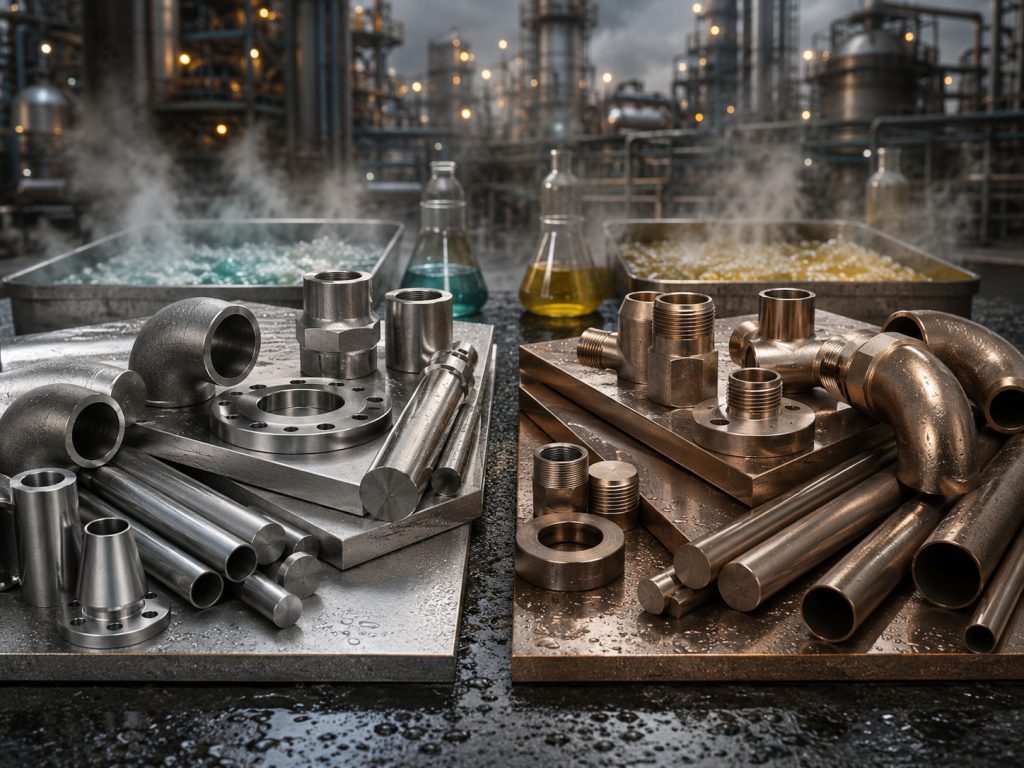
Monel level probes are commonly used in seawater tanks, concentrated brine systems, ships, offshore platforms, hydrofluoric-acid processes, alkaline vessels, certain reducing acids, and high-salinity liquids with relatively low oxidizing potential.
For seawater and hydrofluoric-acid applications, Monel 400 is often one of the important candidate materials considered during engineering selection.
Typical applications include:
- Seawater level measurement
- Ship ballast tanks
- Offshore and coastal circulation-water systems
- Hydrofluoric acid storage vessels
- Fluorochemical production equipment
- Caustic soda and alkaline salt-solution tanks
- Certain reducing-media applications in petrochemical plants
- High-salinity process vessels
However, Monel alloys also have clear application limits.
In strongly oxidizing acids, certain solutions containing oxidizing metal ions, some sulfur-containing media, or systems involving high flow velocity and erosion, the material must be evaluated carefully.
Trace contaminants, air ingress, changes in dissolved oxygen, and increasing temperature can all alter the corrosion mechanism. Therefore, a probe material should never be selected based only on a broad description such as “seawater,” “acid,” or “brine.”
5. Hastelloy vs. Monel Level Probes: How to Choose
The difference between Hastelloy and Monel can generally be understood as the difference between broad corrosion resistance in complex environments and targeted resistance in specific media.
Hastelloy C-276 is generally more suitable for chemically complex environments, high-chloride liquids, changing oxidation-reduction conditions, and applications with a significant risk of localized corrosion.
It is especially useful where ordinary stainless steel is likely to suffer from pitting, crevice corrosion, weld corrosion, or stress corrosion cracking.
Monel 400 offers more specialized advantages in seawater, hydrofluoric acid, and many reducing environments.
When selecting a corrosion-resistant level probe, the following process information should be confirmed:
- Complete chemical name and composition of the process medium
- Main chemicals, secondary components, and impurities
- Normal and maximum concentrations
- Continuous operating temperature
- Maximum process and cleaning temperature
- Operating pressure, vacuum, and pressure fluctuations
- Presence of agitation, turbulence, erosion, crystallization, deposits, or suspended particles
- Compatibility of the flange, seals, insulation, weld filler, and fasteners
- Required measurement principle and probe structure
- Expected inspection and maintenance intervals
If any of these conditions are overlooked, even an expensive alloy probe may fail prematurely because of seal damage, galvanic corrosion, weld corrosion, mechanical wear, or an unsuitable installation design.
6. Material Requirements for Different Level Measurement Technologies
6.1 Conductive Level Probes
Conductive level probes detect the presence of a liquid by completing an electrical circuit through the process medium.
The metallic electrodes must therefore provide both stable electrical conductivity and sufficient corrosion resistance.
When the liquid tends to form deposits, crystals, foam, or conductive coatings, a bridge may develop between electrodes and cause false level alarms.
In these applications, selecting a corrosion-resistant alloy is only one part of the solution. Electrode spacing, probe geometry, installation position, sensitivity, and alarm-delay settings must also be optimized.
6.2 Capacitance and RF Admittance Level Probes
Capacitance and RF admittance level probes often use a metallic rod covered with an insulating material such as PTFE or PFA.
For these instruments, corrosion evaluation must include not only the Hastelloy or Monel probe material but also the insulation layer.
Important insulation properties include:
- Maximum service temperature
- Chemical resistance
- Solvent resistance
- Permeation resistance
- Swelling resistance
- Mechanical wear resistance
- Resistance to cracking and delamination
Even when the metal probe remains corrosion-free, solvent penetration, scratches, thermal degradation, or swelling of the insulation can still cause measurement drift and false switching.
6.3 Guided Wave Radar Level Probes
Guided wave radar instruments commonly use rod, cable, or coaxial probes that remain continuously exposed to the process medium.
Industrial guided wave radar products may be designed for corrosive liquids using highly chemical-resistant wetted materials, protective cladding, coatings, or non-metallic components.
In addition to alloy selection, guided wave radar applications require consideration of:
- Probe length
- Cable tensile load
- Agitator impact
- Deposits and buildup
- Dielectric constant
- Internal tank obstructions
- Nozzle dimensions
- Mechanical vibration
- Pulling forces caused by solids or viscous liquids
The correct probe material alone cannot compensate for an unsuitable mechanical design.
7. Installation and Maintenance Considerations
When installing a Hastelloy or Monel level probe, contact between the probe and the tank wall, agitator, heating coil, baffle, or other internal equipment should be avoided.
Long rods and cables should be evaluated for vibration, deflection, impact, and tensile loading.
Where necessary, corrosion-resistant non-metallic guides may be used. However, the guide structure should not create narrow gaps where liquid, sediment, or crystals can accumulate, because these areas may increase the risk of crevice corrosion and buildup.
Connections between dissimilar metals are another common source of failure.
For example, a Hastelloy probe rod may be connected to carbon-steel fasteners, lower-grade stainless-steel flanges, or incompatible welding materials. If these components are exposed to the process medium, the joint may become the weakest point in the entire level instrument.
Routine inspections should focus on the following conditions:
- Pitting or small surface cavities
- Unusual discoloration
- Local wall thinning
- Cracks around welded areas
- Scaling and crystallization
- Corrosion products
- Swelling or bubbling of insulation
- Discoloration or detachment of protective coatings
- Seal degradation
- Mechanical bending or wear
Cleaning procedures should not focus only on removing deposits.
Strong-acid cleaners, chloride-containing cleaning chemicals, high-temperature steam, and mechanical scraping can alter the alloy surface or damage insulating layers.
Maintenance procedures should therefore be consistent with the material certificate, instrument manual, process-safety requirements, and chemical compatibility data.
For critical storage tanks, it is advisable to record the original probe dimensions and establish a periodic thickness-measurement program. Corrosion-rate trends can then be evaluated before the probe becomes perforated or the measurement signal becomes unstable.
8. Common Misunderstandings About Hastelloy and Monel Level Probes
Misunderstanding 1: Hastelloy Is Always Better Than Monel
Different alloys resist corrosion through different chemical compositions and protective mechanisms.
Monel 400 may offer more suitable and targeted performance than some Hastelloy grades in hydrofluoric acid and certain reducing environments.
Material selection should not be based solely on price, alloy category, or perceived material grade.
Misunderstanding 2: A Corrosion-Resistant Probe Rod Is Enough
The flange, seal, weld, insulation sleeve, fasteners, cable, and guiding structure may also come into contact with the process liquid.
If any wetted component has inadequate corrosion resistance, the complete instrument may fail even when the main probe rod remains undamaged.
Misunderstanding 3: Room-Temperature Corrosion Resistance Guarantees High-Temperature Performance
Increasing temperature generally accelerates chemical reactions and diffusion.
It may also change the oxidizing characteristics, vapor pressure, concentration, crystallization behavior, and phase composition of the process liquid.
Materials must therefore be evaluated according to the maximum actual operating temperature rather than room-temperature data alone.
Misunderstanding 4: Products With the Same Alloy Name Always Have the Same Corrosion Resistance
Castings, forgings, bars, welded components, clad materials, and products with different heat-treatment conditions may have different microstructures and corrosion behavior.
When purchasing a corrosion-resistant level probe, specifications should clearly state:
- UNS alloy designation
- Exact wetted components
- Material certification requirements
- Welding filler material
- Manufacturing method
- Heat-treatment condition
- Surface treatment
- Coating or cladding thickness
- Inspection and testing requirements
A purchase order should not simply state “Hastelloy” or “Monel” without identifying the exact grade.
9. Frequently Asked Questions
9.1 Can a Corroded 316L Level Probe Be Directly Replaced With Hastelloy C-276?
Hastelloy C-276 may be an appropriate upgrade, but it should not be selected automatically.
The failure mechanism of the original 316L probe should first be identified. Possible causes include:
- General corrosion
- Pitting corrosion
- Crevice corrosion
- Stress corrosion cracking
- Erosion-corrosion
- Weld corrosion
- Seal failure
- Mechanical wear
The process temperature, concentration, impurities, oxygen content, and cleaning conditions should also be reviewed.
If the original problem was caused by a seal, weld, installation arrangement, or galvanic connection, replacing only the probe rod may not solve the problem completely.
9.2 Should a Seawater Level Application Use Hastelloy or Monel?
For ordinary seawater applications, engineers may first evaluate Monel 400, duplex stainless steel, titanium, or a non-metallic coated probe.
If the seawater is stagnant, heavily polluted, exposed to oxidizing chemicals, or contained in equipment with complex crevices, a more detailed corrosion assessment is required.
Hastelloy C-276 offers strong resistance to chloride-related localized corrosion, but the final selection must also consider temperature, flow velocity, mechanical structure, oxygen content, maintenance requirements, and project budget.
9.3 Can Hastelloy Be Used for Hydrofluoric Acid Level Measurement?
A material should not be approved for hydrofluoric acid service simply because it is a nickel-based alloy.
Monel 400 is well known for its use in hydrofluoric-acid environments, but corrosion behavior can still be strongly affected by acid concentration, temperature, oxygen content, water content, and impurities.
The final choice should be based on detailed process parameters, manufacturer compatibility data, previous operating experience, and, when necessary, field testing.
9.4 Does a Hastelloy Level Probe Require an Additional Protective Coating?
Not necessarily.
A solid Hastelloy probe can be used directly as a wetted component. Depending on cost, construction, or process requirements, other options may include:
- Hastelloy cladding
- PTFE coating
- PFA coating
- Non-metallic sleeves
- Replaceable protective sheaths
However, coated probes can be vulnerable to pinholes, permeation, thermal expansion, mechanical damage, and delamination.
Specifications should therefore define coating thickness, application method, inspection procedures, pinhole testing, operating temperature, and allowable mechanical loading.
9.5 Which Has a Longer Service Life: Hastelloy or Monel?
There is no universal answer.
Service life depends on whether the alloy is correctly matched to the process medium.
A properly selected Monel probe may provide excellent long-term performance in seawater or hydrofluoric acid. A more expensive Hastelloy probe may still corrode rapidly if it is used in an unsuitable chemical environment.
Correct material compatibility is more important than alloy price.
10. Conclusion
Hastelloy and Monel level probes are important solutions for liquid-level and material-level measurement in aggressive industrial environments.
Hastelloy C-276 is generally more suitable for chemically complex acidic solutions, chloride-containing media, and applications with a high risk of localized corrosion.
Monel 400 offers distinct advantages in seawater, hydrofluoric acid, and many reducing environments.
Reliable selection does not depend on choosing the most expensive alloy or the material perceived to have the highest grade. The correct approach is to match the alloy characteristics with:
- Process-medium composition
- Chemical concentration
- Operating temperature
- Pressure and vacuum
- Measurement technology
- Mechanical design
- Installation conditions
- Cleaning procedures
- Inspection and maintenance strategy
Before purchasing a corrosion-resistant level probe, the user should provide the instrument manufacturer with a complete process-medium data sheet and request confirmation of the materials used for every wetted component.
For high-risk services, processes with changing chemical compositions, or applications without proven operating experience, corrosion coupons, immersion testing, laboratory evaluation, or a limited field trial should be considered.
Only by treating probe materials, instrument technology, mechanical design, and actual process conditions as one integrated system can users extend probe service life, reduce maintenance and shutdown costs, and improve the long-term safety and reliability of level measurement in corrosive media.