1. Project Background: Growing Demand for Reliable Level Control in Irrigation Systems
In modern agricultural irrigation systems, water reservoirs, elevated tanks, pump station sumps, filter buffer tanks, and fertigation storage tanks play an important role in water storage, regulation, pressure stabilization, and continuous water supply. Whether the application is orchard drip irrigation, greenhouse irrigation, mountain sprinkler irrigation, or large-scale farmland water-saving irrigation, stable water level control directly affects irrigation efficiency, pump service life, and crop water supply.
In the past, many agricultural irrigation projects relied on manual water level inspection or traditional float switches to control pump start and stop. Although manual inspection is simple, it is easily affected by time, weather, and operator experience. It is difficult to achieve continuous, all-weather monitoring. Especially in night irrigation, continuous water replenishment during hot seasons, and unattended remote pump stations, failure to detect a low water level in time may cause the irrigation pump to run dry. If a high water level is not detected and the pump is not stopped in time, water overflow may occur, resulting in wasted water resources and possible damage to pump room equipment.
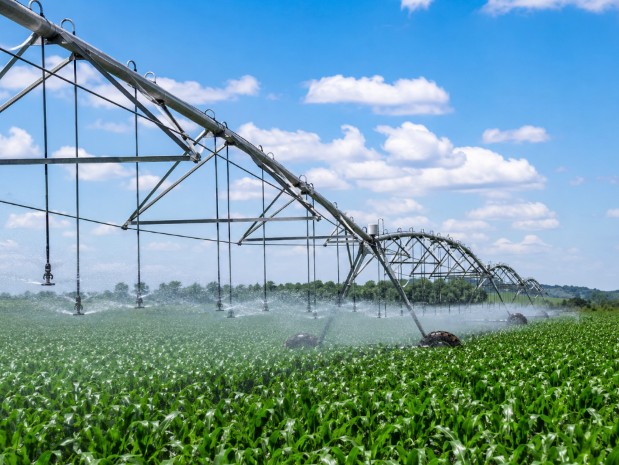
A certain agricultural base encountered typical level control problems during an irrigation system upgrade. The base was equipped with an underground reservoir, elevated water tank, replenishment pump, irrigation pump, filtration system, and zone control solenoid valves. It served fruit trees, vegetable greenhouses, and open-field cash crops. The original system used float level switches for water level detection. After long-term operation, however, mud, algae, and impurities caused the float switches to become sluggish, jammed, or prone to false alarms.
To improve the automation and reliability of the irrigation system, the project owner decided to use the Jiwei Ring-11 tuning fork level switch to upgrade the key level detection points.
2. Level Detection Challenges in Irrigation Sites
Agricultural irrigation water usually comes from wells, rivers, canals, mountain springs, sedimentation tanks, or treated recycled water. Compared with clean process water, irrigation water may contain small amounts of sand, suspended solids, algae, and microorganisms. After long-term use, deposits may also form on tank walls, probes, or floating mechanisms. These site conditions place higher requirements on level detection instruments.
First, the water level in irrigation tanks changes frequently. When the replenishment pump starts, the water level rises quickly. When the irrigation pump runs, the water level drops continuously. When different irrigation zones operate in rotation, water consumption changes significantly. Therefore, the level switch must be able to provide timely and accurate high and low level signals.
Second, water impact and surface turbulence are common. Waves, bubbles, and local vortices often occur near the inlet, return line, or pump suction area. If the level switch does not have sufficient anti-interference capability, it may generate false signals and cause frequent pump start-stop cycles, affecting the stability of the whole system.
Third, agricultural pump rooms are often installed outdoors or in semi-outdoor environments. They are exposed to humidity, dust, temperature differences, rainwater, and insects. A level instrument must not only detect the water level accurately but also have good protection, sealing performance, and long-term stability.
Finally, irrigation projects usually require simple maintenance. Pump stations, water tanks, and field equipment are often distributed over a wide area, making on-site maintenance costly and time-consuming. Therefore, the level switch should minimize mechanical moving parts and reduce the risk of jamming, wear, and frequent cleaning.
3. Solution: Using the Ring-11 Tuning Fork Level Switch for High and Low Level Control
Based on the site conditions, the technical team installed Ring-11 tuning fork level switches on the reservoir and elevated water tank to achieve high level overflow prevention, low level protection, and automatic replenishment pump control.
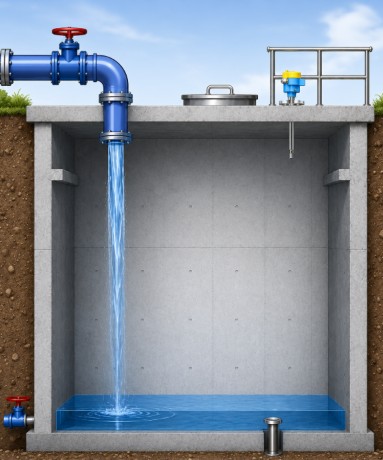
One Ring-11 tuning fork level switch was installed at the upper part of the reservoir as the high level detection point. When the replenishment pump was running and the water level rose to the set height, the liquid contacted the tuning fork. The Ring-11 then output a switch signal. After receiving this signal, the control cabinet immediately stopped the replenishment pump and triggered a high level indication to prevent overflow.
Another Ring-11 tuning fork level switch was installed at the lower part of the reservoir as the low level detection point. When the irrigation pump ran continuously and the water level dropped to the lower limit, the Ring-11 output a low level signal. According to the preset logic, the control system could start the replenishment pump or stop the irrigation pump when the water source was insufficient, preventing pump dry running.
For the elevated water tank, the Ring-11 tuning fork level switch was used to control the start and stop of the lifting pump. When the water level in the elevated tank dropped below the set point, the system started the lifting pump for replenishment. When the water reached the high level point, the lifting pump stopped automatically. With high and low level control, the tank level remained within a reasonable range, providing a stable water source for drip irrigation, sprinkler irrigation, micro-sprinkling, and fertigation systems.
In the overall irrigation control system, the switch signals from the Ring-11 tuning fork level switch can be connected to a PLC, relay control cabinet, RTU, or IoT gateway. The level switch can work together with the replenishment pump, irrigation pump, solenoid valves, alarm devices, and remote monitoring platform to realize automatic water level management.
4. Working Principle of the Ring-11 Tuning Fork Level Switch
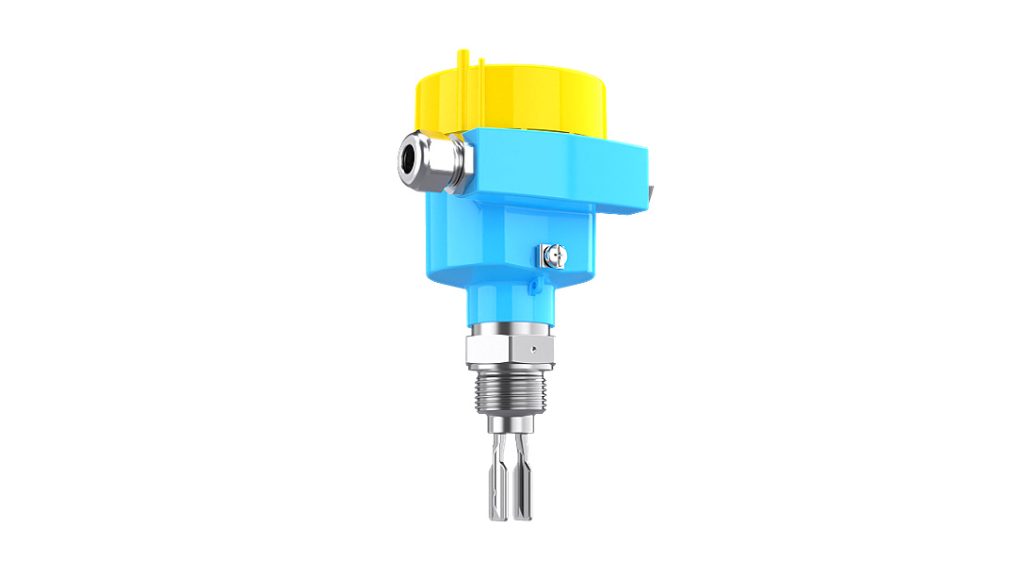
The Ring-11 tuning fork level switch detects liquid level based on the tuning fork vibration principle. The built-in piezoelectric element drives the fork to vibrate at a fixed frequency. When the fork is in air, the vibration state remains stable. When the liquid contacts the fork, the damping effect of the medium changes the vibration frequency. The electronic unit detects this frequency change and outputs the corresponding switch signal.
This detection method does not depend on the conductivity of the medium. It does not require a float, connecting rod, rotating shaft, or other mechanical moving parts. It also does not require complicated calibration. For agricultural irrigation applications, the Ring-11 can be used for point level detection in reservoirs, water tanks, buffer tanks, and pump station sumps. It is suitable for high level alarm, low level alarm, replenishment control, and pump protection.
Compared with traditional float switches, the tuning fork level switch has a more compact structure, clearer switching point, and better resistance to medium fluctuation and minor buildup. It can maintain stable level detection performance during long-term operation.
5. Key Advantages of the Ring-11 in Irrigation Systems
5.1 Unique Structural Design for Compact Installation
The Ring-11 tuning fork level switch adopts a precisely tuned structural design with a compact fork body. It is suitable for installation on the side wall of water tanks, small reservoirs, pump station sumps, and pipeline bypasses where space is limited. For existing agricultural irrigation systems, only an opening at the required height is needed to complete the level detection upgrade. There is no need for large-scale modification of the original tank or pump station structure.
In this project, both the reservoir and elevated water tank were existing facilities with limited installation space. If a long probe-type instrument or large mechanical float were used, installation and maintenance would be inconvenient. The compact tuning fork structure of the Ring-11 solved the space limitation effectively and made the retrofit process easier.
5.2 Reliable Performance in Complex Operating Conditions
Water levels in irrigation sites change quickly. During inlet and outlet processes, the water surface may be affected by turbulence, foam, bubbles, and water impact. The Ring-11 tuning fork level switch is not significantly affected by installation position, pressure, temperature, foam, or viscosity. It can reliably detect the liquid level under complex working conditions.
For irrigation water containing small amounts of sand, algae, or suspended solids, the Ring-11 has no float mechanism that can easily get stuck. This reduces the risk of false alarms caused by impurity entanglement, float jamming, or mechanical wear. This feature is especially important for agricultural pump stations that run for long periods.
5.3 Suitable for Low-Density Liquid Detection
The Ring-11 tuning fork level switch can detect low-density liquids with a minimum medium density of 0.5 g/cm³. This indicates high detection sensitivity and a wide application range. Although the density of ordinary irrigation water is close to that of clean water, the medium condition may change in fertigation systems, nutrient solution tanks, dilution tanks, and additive mixing tanks due to different formulations, temperatures, or ingredients. The wide adaptability of the Ring-11 tuning fork level switch helps improve system compatibility.
In addition to ordinary clean water irrigation, the Ring-11 tuning fork level switch can also be used for level control of fertilizer-water mixtures, nutrient solutions, recycled water, and other low-viscosity liquids, providing a more flexible solution for agricultural irrigation and facility farming automation.
5.4 Multiple Output Options for Easy System Integration
The Ring-11 supports multiple output options, including relay, two-wire, NAMUR, and transistor outputs. Users can select the proper output according to the site control system. For ordinary agricultural pump stations, relay output can be selected and directly connected to the pump control cabinet for high and low level interlock control. For smart agriculture projects with a higher degree of automation, the Ring-11 can be connected to a PLC, DCS, RTU, or IoT acquisition module for remote monitoring and data transmission.
In this project, the Ring-11 level signals were connected to the PLC control cabinet and linked with the replenishment pump, irrigation pump, and alarm module. When the reservoir reached the high level point, the system stopped the pump automatically. When the water dropped to the low level point, the system started water replenishment or stopped the irrigation pump. The control logic was clear, and the operation was simple for site personnel.
5.5 Certified Safety and Reliable Operation
As a Jiwei tuning fork level switch product, the Ring-11 offers high safety and reliability. It has passed SIL functional safety certification and CE certification and is also available with explosion-proof certification, meeting the requirements of demanding industrial sites for safe operation.
Although ordinary agricultural irrigation environments are usually not hazardous areas, safety certification and reliability remain important in certain special agricultural applications, such as irrigation systems connected with biogas projects, organic fertilizer liquid storage tanks, agricultural chemical liquid storage, and facility farming dosing systems. For project owners, selecting a certified level switch helps improve the overall safety level of the system and reduce long-term operating risks.
5.6 Good Protection Performance for Outdoor Pump Rooms
Irrigation pump stations are often exposed to humid, dusty, and temperature-changing environments. The Ring-11 has good protection performance and can adapt to outdoor pump rooms, semi-open water tanks, and installation conditions near field control cabinets. Reliable sealing and protection help reduce the influence of rainwater, moisture, and dust on the electronic components.
In agricultural projects, equipment often needs to run continuously for months or even all year round. The stable protection performance of the Ring-11 helps users reduce failure rates caused by environmental exposure.
5.7 No Mechanical Moving Parts and Low Maintenance
The Ring-11 tuning fork level switch has no mechanical moving structures such as floats, connecting rods, or hinges. Liquid level detection is completed through changes in tuning fork vibration frequency. This structure reduces mechanical wear and jamming problems and lowers long-term maintenance requirements.
For distributed farmland pump stations, orchard irrigation rooms, and mountain irrigation systems, maintenance personnel may find it inconvenient to reach the site frequently. After using the Ring-11, operators only need to perform simple checks during seasonal shutdowns or tank cleaning, greatly reducing the work required for disassembling, cleaning, and adjusting float switches.
6. On-Site Installation and Commissioning
Before installing the Ring-11, the technical team first determined the high and low level points based on tank height, effective volume, pump flow rate, and irrigation cycle. The high level point was set below the overflow outlet with a safe margin, ensuring that sufficient buffer space remained after the level switch operated. The low level point was set above the pump suction inlet to ensure that the pump would not continue to run under water shortage conditions.
During installation, the Ring-11 was mounted horizontally on the side wall of the tank. To reduce water impact, the installation position avoided the inlet, outlet, and return line. The tuning fork extended into the tank, and the cable was led into the control cabinet through a sealed cable gland. In the control cabinet, relay logic was configured separately for high level and low level signals and connected to the pump start-stop control circuit.
During commissioning, the site team first carried out a simulated filling test. When the water level gradually rose and contacted the high level Ring-11, the control cabinet received the high level signal, the replenishment pump stopped automatically, and the alarm indicator turned on. Then a draining test was performed. When the water level dropped to the low level point, the low level Ring-11 operated, and the system automatically started the replenishment pump or stopped the irrigation pump according to the preset logic.
After several rounds of testing, the Ring-11 responded sensitively, the output signal remained stable, and no frequent false operation caused by surface fluctuation occurred. The project owner then put the system into formal operation.
7. Application Results: Overflow Prevention, Dry-Run Protection, and Unattended Operation
After the Ring-11 tuning fork level switch was put into use, the operation of the agricultural irrigation system improved significantly.
First, the overflow problem was solved. In the past, when the replenishment pump was running, operators had to check the water level on site. If the inspection was not timely, the tank could overflow. After installing the Ring-11, the pump stopped automatically when the water reached the high level point, effectively preventing water waste.
Second, the risk of pump dry running was greatly reduced. When the reservoir water level was too low, the Ring-11 output a low level signal in time. The control system automatically stopped the irrigation pump or prohibited pump startup, preventing pump idling, mechanical seal damage, and motor overheating.
Third, the automation level of the irrigation system was improved. The replenishment pump, elevated water tank, and irrigation pump were linked through level signals. Operators no longer needed to frequently visit the pump room to check the water level. Even during night irrigation, the system could operate automatically according to the water level status.
Fourth, maintenance cost decreased. Since the Ring-11 has no mechanical floating structure, problems such as float jamming, rod wear, and impurity entanglement were reduced. Site maintenance personnel only need to check whether there is obvious buildup on the probe surface during seasonal maintenance and perform simple cleaning when necessary.
Fifth, the system became safer. By linking high and low level signals with the alarm system, managers can quickly identify water shortage, full tank, or abnormal pump station conditions. This provides basic data support for remote management and smart agriculture platforms.
8. More Irrigation Applications of the Ring-11
In addition to ordinary reservoirs and elevated water tanks, the Ring-11 tuning fork level switch can be used in many other agricultural irrigation applications.
In orchard drip irrigation systems, the Ring-11 can be used for high and low level control of storage tanks to ensure continuous water supply to the drip irrigation main line. In greenhouse irrigation systems, it can be used for level detection in nutrient solution tanks, fertigation mixing tanks, and return water tanks to prevent nutrient solution overflow or pump dry running. In mountain irrigation projects, the Ring-11 can be used for replenishment control of elevated water tanks, reducing the need for manual inspection in remote areas. In solar-powered pumping irrigation systems, the Ring-11 can work with solar pump controllers to prevent tank overflow or pump idling when the water source is insufficient.
For smart agriculture projects, the Ring-11 can also serve as a level status acquisition point and be connected to an IoT gateway. Managers can check high and low level status, pump operation status, and alarm records through a mobile phone or computer, further realizing remote, digital, and unattended management.
9. Selection and Application Suggestions
When selecting the Ring-11 tuning fork level switch for agricultural irrigation systems, users should consider the actual site conditions.
First, the measured medium should be confirmed. For ordinary well water, river water, or sedimented water, a standard configuration can meet most level control requirements. If the instrument is used for fertilizer-water mixtures, nutrient solutions, or liquids containing additives, the density, viscosity, corrosiveness, and temperature of the medium should be checked.
Second, the installation position should be determined properly. The high level switch should be installed below the overflow outlet with sufficient safety margin. The low level switch should be installed above the pump suction inlet to prevent the pump from entering a water shortage operating state. The installation position should avoid strong water impact, mixing zones, and areas with heavy sediment buildup.
Third, the output type should be selected according to the control system. For ordinary pump stations, relay output is convenient for connection to the control cabinet. For automation projects, an output type suitable for PLC or remote acquisition modules can be selected. For special applications with higher safety requirements, NAMUR output, explosion-proof certification, and SIL requirements can also be considered.
Finally, after installation, filling, draining, and interlock tests should be carried out to confirm that the Ring-11 switching points are accurate, pump start-stop logic is correct, and the alarm system operates normally.
10. Conclusion: Ring-11 Makes Irrigation Level Control More Stable, Safer, and Easier
The core objective of an agricultural irrigation system is to provide crops with a stable water source at the right time and in the right amount. Although level control is only one part of irrigation automation, it directly affects water replenishment efficiency, pump safety, water resource utilization, and unattended system operation.
With its unique structural design, adaptability to complex working conditions, multiple output options, safety certifications, protection performance, and low maintenance requirements, the Jiwei Ring-11 tuning fork level switch offers excellent application value in agricultural reservoirs, elevated water tanks, pump station sumps, and fertigation systems.
By realizing high level overflow prevention, low level protection, replenishment pump start-stop interlock, and remote alarm management, the Ring-11 helps users reduce manual inspection, lower pump failure risk, and improve irrigation system reliability.
For projects involving water-saving irrigation, smart agriculture, unattended pump stations, and fertigation system upgrades, the Ring-11 tuning fork level switch is a reliable, practical, and easy-to-integrate level control solution.