
Between the main raw material silo and the extruder, an XPS production line commonly includes vacuum loaders, buffer hoppers, mixing hoppers, or small feed hoppers located above the extruder. XPS Vacuum
Unlike a large storage silo, these small vessels do not always require continuous indication of the exact filling percentage.
In most cases, the control system only needs to know two things: when the material level is too low and feeding should start, and when the material reaches the upper level and feeding should stop.
If the high and low level signals are unstable, the vacuum pump may start and stop too frequently. The hopper may run empty or become overfilled, and in serious cases the extruder may lose a stable material supply.
Although small hopper level measurement appears to be a minor detail, it has a significant impact on the reliability of an automated XPS feeding system.
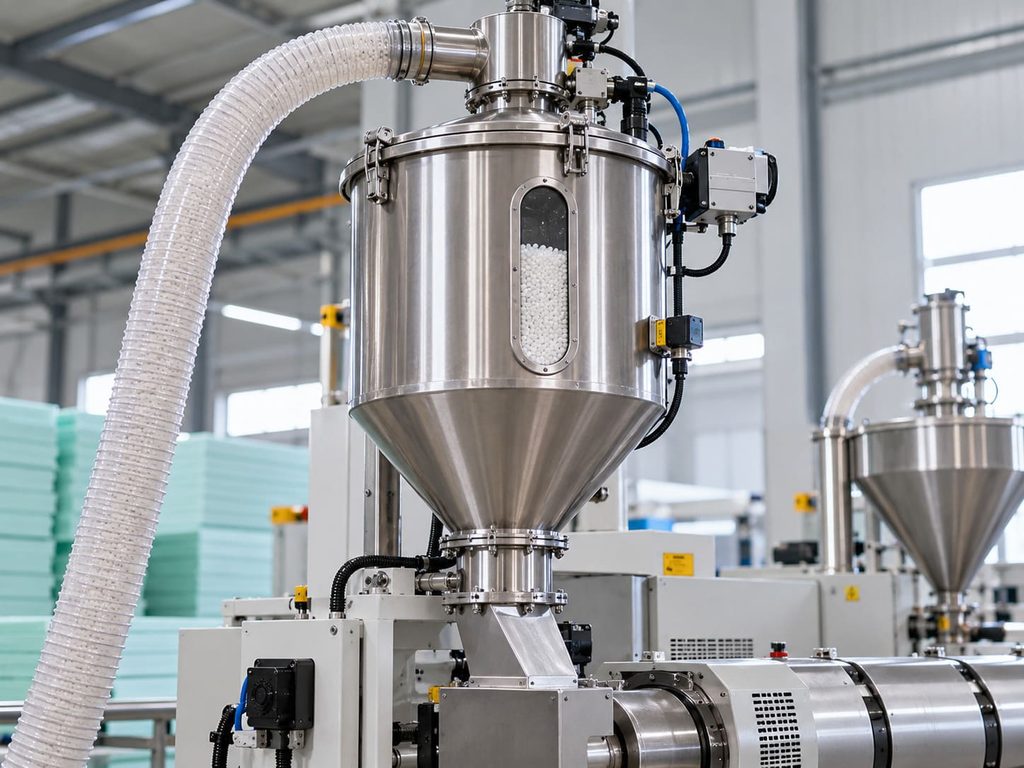
Small Hopper, Fast Filling, Frequent Switching
Vacuum loader hoppers are relatively small, and a complete filling cycle can be very short.
PS granules enter rapidly under vacuum conveying conditions. During filling, the level switch may be exposed to granule impact and dust.
After filling stops, the material is quickly discharged downstream.
As a result, the level switch may experience many transitions between “material present” and “material absent” every day.
Some sensing principles are highly dependent on the dielectric properties of the material. When the formulation, recycled material ratio, or surface condition changes, sensitivity may need to be readjusted.
Mechanical devices with complex moving parts may also require more maintenance under high-frequency operation.
For this type of application, a simple point level switch that detects whether material is covering the sensing element is often a practical choice.
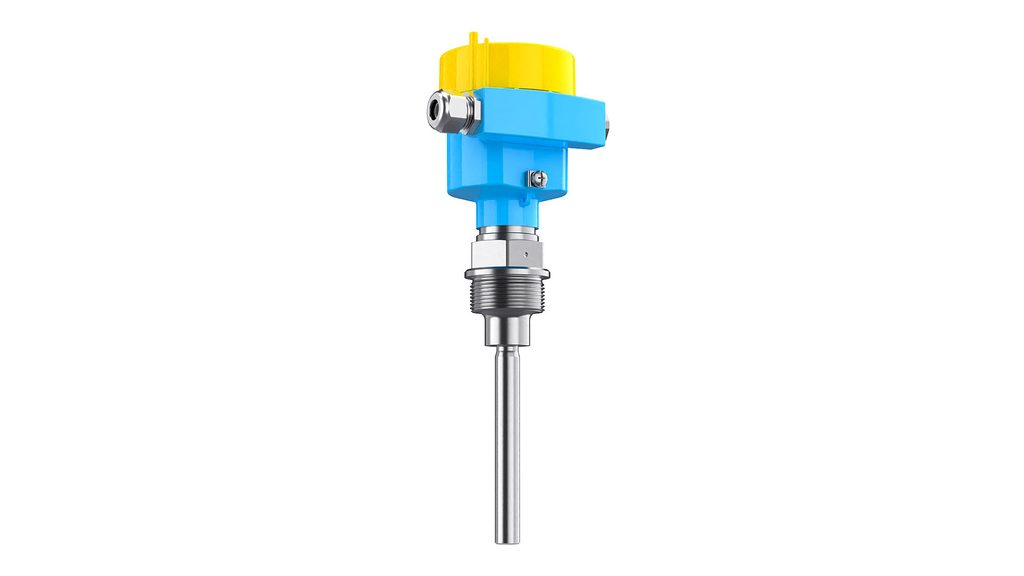
Using the Tube-11 Vibrating Rod Level Switch for High and Low Level Detection
The Tube-11 vibrating rod level switch is designed for point level detection of powders and granular solids, including low-density bulk materials and plastic granules.
During normal operation, the sensing rod vibrates at a defined frequency.
When material covers the probe, the vibration condition changes significantly. The electronics detect the change and produce a switching output.
In an XPS vacuum loading system, one switch can be installed at the high level and another at the low level.
The low-level switch determines when replenishment should begin.
The high-level switch determines when the filling cycle is complete.
For a very small hopper, it may also be possible to use only one high-level switch together with a timed loading sequence.
However, for continuous production where material starvation could affect extrusion stability, a dual high-and-low level configuration generally provides better process visibility.
PLC Logic: Low Level Starts Filling, High Level Stops Filling
A typical control sequence works as follows.
When the low-level switch changes from “material present” to “material absent,” the PLC confirms the condition for a short delay period and then starts the vacuum loader.
As PS granules enter the hopper, the level rises.
When the material reaches the high-level switch, the PLC closes the conveying valve or stops the vacuum loading equipment.
The hopper then continues supplying material to the downstream process until the level falls again and the next cycle begins.
It is advisable to add time delays and timeout logic rather than using the instantaneous switch signal to control equipment directly.
For example, the PLC can require the low-level signal to remain active for several seconds before confirming a low-level condition. This helps reduce unnecessary switching caused by moving material.
After the loading cycle begins, if the high-level switch is not reached within a defined time, the PLC can generate a “loading timeout” alarm.
Operators can then check the main silo, suction line, filter, conveying valve, or vacuum pump.
The High-Level Switch Can Also Provide Overfill Protection
Under normal conditions, vacuum loading should stop as soon as the high-level switch is activated.
If the high-level signal is present while the loader continues running, the PLC should stop the filling operation and generate an abnormal condition alarm.
This can help prevent overfilling caused by a control valve failure, programming error, or equipment malfunction.
If the hopper supplies a dosing or feeding unit directly, the low-level switch can also provide an early warning before the hopper becomes completely empty.
This gives operators additional time to respond before downstream feeding is interrupted.
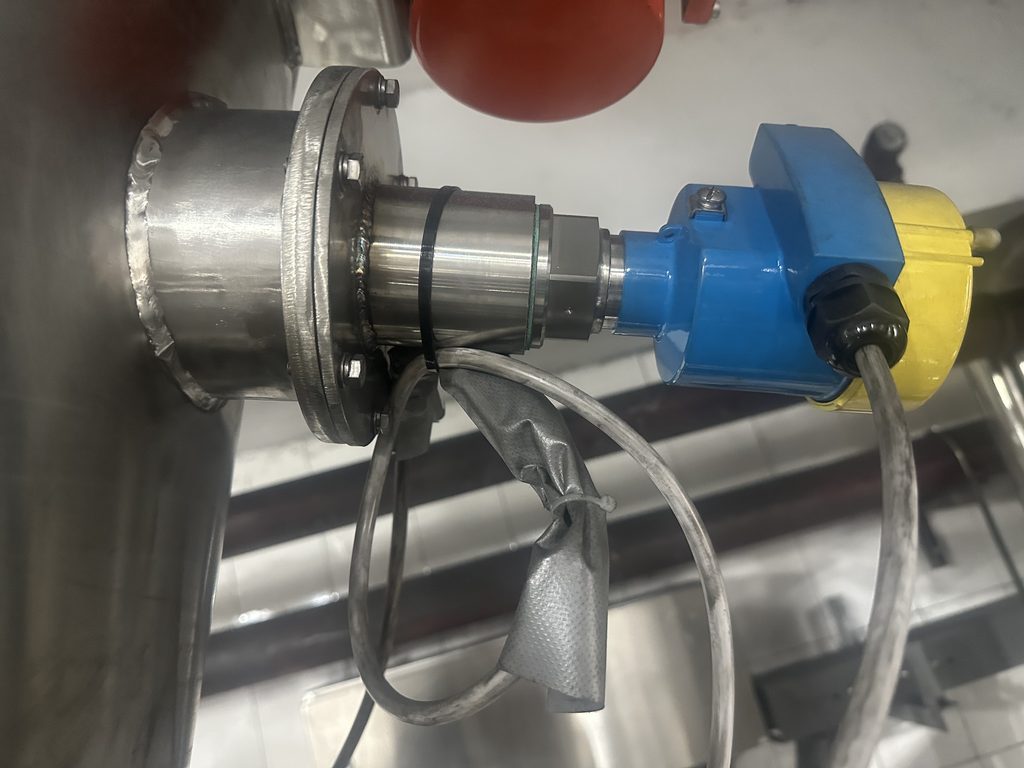
Do Not Install the Probe Directly in the Falling Material Stream
The high-level switch should not be installed directly opposite the suction pipe outlet.
Continuous impact from high-speed granules can cause short-term signal disturbances and unnecessary mechanical loading on the probe.
When installed horizontally, the switch should be located in a relatively stable area of the hopper while still representing the required filling level.
The low-level switch should be positioned high enough to provide sufficient buffer time for the extruder or feeding equipment.
If it is installed too low, the hopper may already be close to empty by the time the alarm is triggered.
If installed too high, the vacuum loader may start too frequently.
The ideal position depends on hopper volume, material consumption rate, and average loading cycle time.
Static Electricity and Hazardous-Area Requirements Should Not Be Ignored
PS granules can generate static electricity during pneumatic conveying.
The hopper, conveying system, and instrumentation should therefore be properly grounded according to the plant electrical design.
If the production area is classified as a combustible dust hazardous area, the selected instrument must comply with the required hazardous-area certification, dust characteristics, and temperature classification.
Explosion protection is a system-level requirement.
The instrument, wiring, cable glands, grounding, and installation environment must all be considered together.
Why a Small Hopper Does Not Always Need Continuous Radar Measurement
A continuous level meter can provide a full percentage reading, but in a vacuum hopper with a capacity of only tens or hundreds of liters, the main control objective is often simply deciding when to start and stop filling.
If inventory calculation is not required, a point level switch provides a direct and efficient solution.
This reflects a basic principle of level instrument selection: more measurement data is not always better.
The measuring method should match the control requirement.
Large raw material silos need inventory and consumption trends.
Small buffer hoppers need fast and reliable switching.
The ideal solution is therefore different for each application.
Application Value
Stable feeding is closely related to continuous operation of an XPS extrusion line.
High and low level switches convert a small hopper from a manually checked component into an automated control point.
The vacuum loading system can then operate according to the actual material condition rather than a fixed time sequence.
In factories with multiple extruders, additive feeders, or several XPS production lines, the number of these small hopper measuring points can be significant.
Standardizing the level switch model, wiring method, and PLC logic can simplify spare parts management and future maintenance.
Frequently Asked Questions
Should an XPS vacuum loader hopper use a continuous level meter or a point level switch?
If the only requirement is to stop filling at the upper level, a point level switch is usually sufficient. Continuous level measurement should be considered only when actual inventory information is required.
Can granule impact cause false switching?
Correct installation can greatly reduce this risk. The probe should not be installed directly in the filling stream, and a suitable confirmation delay can be added in the PLC.
How many level switches does one hopper need?
It depends on the control objective. One high-level switch can stop the filling process. A high-and-low level configuration provides better automatic replenishment, low-level alarm, and fault diagnosis.