Leachate Level Measurement in Challenging Industrial Environments
Leachate level measurement is an important part of landfill leachate treatment and waste-to-energy systems. Reliable level detection helps operators control collection tanks, adjustment tanks, pumps, and downstream treatment equipment while reducing the risk of overflow and unexpected equipment operation.
However, measuring the level of leachate is more difficult than measuring clean water or other conventional industrial liquids.
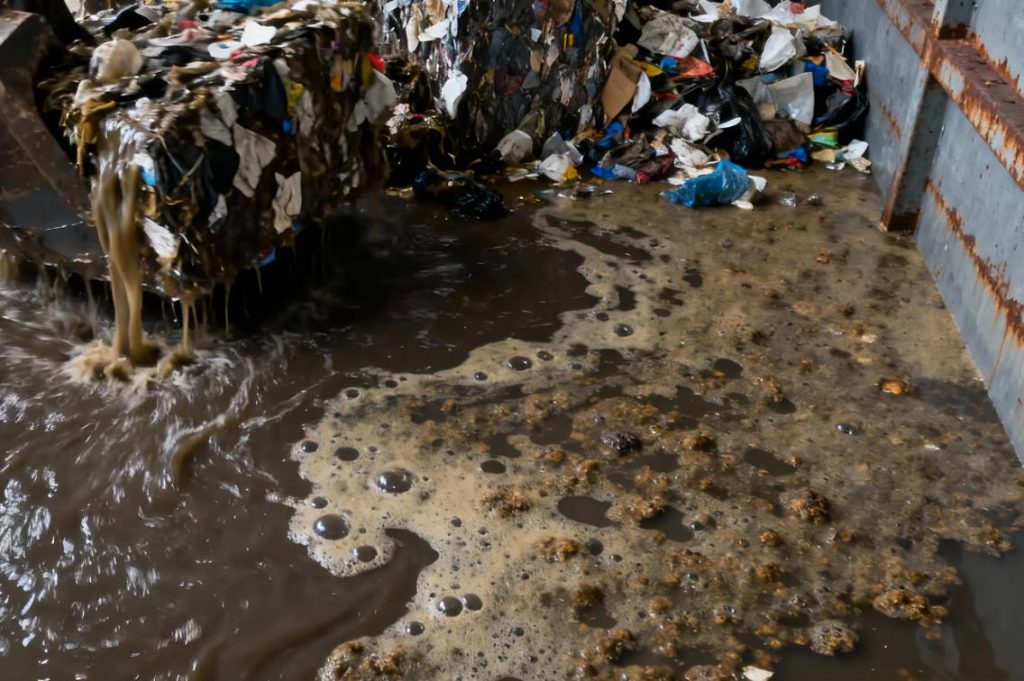
Leachate typically contains a complex mixture of organic substances, suspended solids, contaminants, and corrosive components. Depending on the process and operating conditions, the liquid may also generate persistent foam or experience significant temperature changes.
These characteristics can interfere with conventional level switches and create problems such as false alarms, unstable switching, frequent maintenance, and premature sensor failure.
For this reason, selecting the right leachate level switch requires more than simply choosing a sensor based on measurement range. The instrument should be matched to the actual characteristics of the liquid and the installation environment.
Why Is Leachate Level Measurement So Difficult?
Before selecting a level switch, it is important to understand the main factors that affect level detection in leachate applications.
1. Corrosive Components
Leachate can contain organic acids, salts, chlorides, and other substances that may accelerate corrosion of wetted components.
If the sensor material is not suitable for the process medium, long-term exposure may lead to corrosion, deterioration of sealing components, or reduced service life.
Material selection is therefore an important consideration when choosing a leachate level sensor.
For demanding applications, stainless steel such as 316L can provide better corrosion resistance than standard carbon steel or lower-grade materials. For particularly aggressive media, additional protective coatings or corrosion-resistant alloys may be considered according to the actual chemical composition of the leachate.
2. Foam on the Liquid Surface
Foam is another common challenge.
Leachate can generate a relatively thick and persistent foam layer. A level detection technology that responds directly to buoyancy or surface conditions may sometimes interpret foam as liquid level, resulting in unwanted switching or false alarms.
This is especially problematic when the level switch is connected to pump control or high-level protection.
3. Suspended Solids and Contamination
Leachate may contain suspended solids, sludge, organic matter, and other impurities.
Over time, these substances can accumulate on the sensing element. If the level switch is highly sensitive to deposits or changes in electrical conductivity, signal stability may be affected.
The ability to tolerate minor buildup and process contamination is therefore an important factor in selecting a level switch for leachate applications.
4. Temperature Variations
Depending on the process, leachate tanks may experience elevated or fluctuating temperatures.
The level switch should therefore be selected according to the actual process temperature, pressure, installation conditions, and required switching point.

Why Consider a Vibrating Fork Level Switch for Leachate?
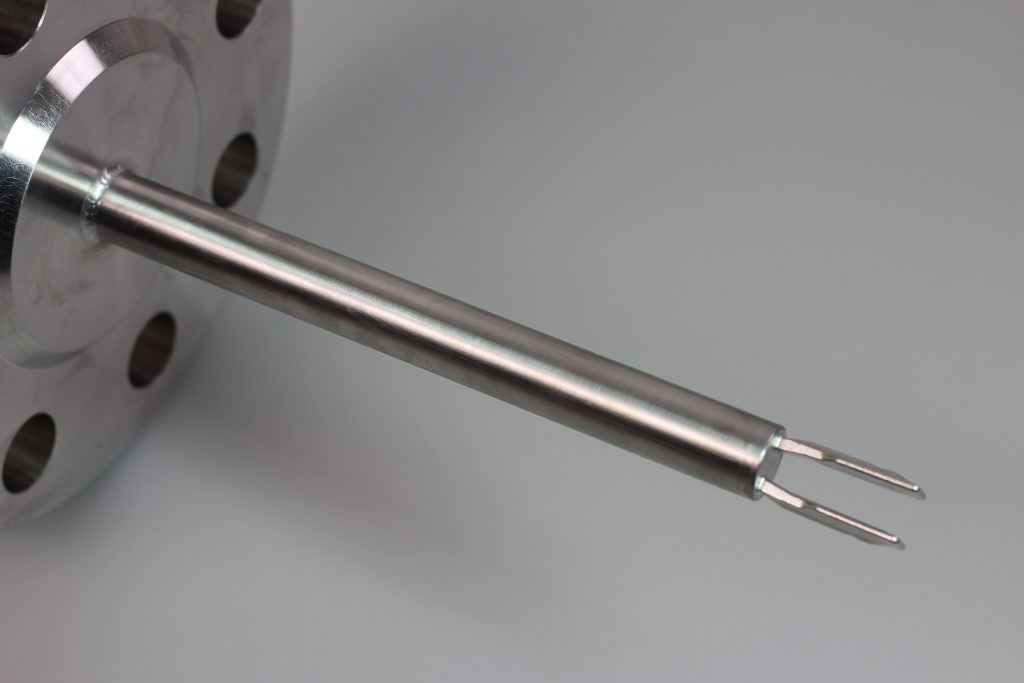
A vibrating fork level switch detects whether the sensing fork is in contact with liquid by monitoring changes in its vibration characteristics.
Unlike float-based switches, the technology does not depend on mechanical buoyancy. It also does not rely on the electrical conductivity of the liquid in the same way as conductive electrode level switches.
This operating principle can make vibrating fork technology suitable for a wide range of liquid level detection applications, including difficult industrial liquids.
For leachate applications, several characteristics are particularly useful.
Stable Point-Level Detection
A vibrating fork level switch is designed to detect whether liquid has reached a defined switching point.
This makes it suitable for applications such as:
- High-level alarm
- Low-level alarm
- Pump protection
- Pump start/stop control
- Overflow prevention
- Tank level monitoring
- Adjustment tank level control
Reduced Influence from Foam
Because the switching principle is based on the vibration state of the fork rather than simply detecting the apparent surface of the liquid, vibrating fork technology can be less sensitive to certain foam-related disturbances than some conventional level detection methods.
However, the actual performance depends on the characteristics of the foam, liquid, installation position, and instrument configuration. Proper application assessment remains important.
No Moving Mechanical Parts at the Sensing Point
The sensing element of a vibrating fork level switch does not require a float or other moving mechanism to detect liquid presence.
This can help reduce mechanical sticking problems in applications where the liquid contains impurities or suspended matter.
Selecting Materials for Corrosive Leachate
Material selection should be based on the actual chemical composition and operating conditions rather than relying only on the name of the medium.
For example, 316L stainless steel is commonly considered for industrial applications where improved corrosion resistance is required.
For more aggressive leachate conditions, engineers may evaluate:
- 316L stainless steel
- Protective anti-corrosion coatings
- Corrosion-resistant alloys such as Hastelloy
- Process connection materials
- Seal and gasket materials
The correct choice depends on factors such as chloride concentration, pH, temperature, chemical composition, operating pressure, and expected service life.
A professional level-switch supplier should therefore evaluate the actual process conditions before recommending the final wetted material.
How to Install a Level Switch in a Leachate Tank
Correct installation is just as important as sensor selection.
When installing a leachate level switch, consider the following factors.
Installation Location
The switch should be positioned at the required control or alarm level.
Avoid locations with excessive turbulence, strong inlet flow, or direct mechanical interference where possible.
Avoid Unnecessary Buildup
The sensing fork should be installed in a position that minimizes the accumulation of sludge, solids, or other deposits.
If buildup is unavoidable, the maintenance interval and cleaning requirements should be considered during the design stage.
Consider Foam and Surface Conditions
If the tank regularly develops a thick foam layer, the installation position should be selected based on the actual liquid level and process behavior rather than simply mounting the sensor close to the visible surface.
Check Process Temperature and Pressure
Before installation, verify that the selected level switch meets the maximum process temperature and pressure requirements.
For high-temperature applications, a suitable high-temperature configuration may be required.
Leachate Level Measurement for Waste-to-Energy Plants
Waste-to-energy plants generate leachate during waste storage, handling, and related processes.
Leachate is typically collected and transferred through a series of tanks, pumps, and treatment systems. Stable level detection is important because abnormal level signals can affect pump operation and downstream processes.
A reliable level switch can be used at critical points such as:
- Leachate collection tanks
- Leachate adjustment tanks
- Waste storage-related drainage systems
- Wastewater treatment tanks
- Pump protection points
- High-level alarm points
- Low-level alarm points
In these applications, the goal is not necessarily to obtain continuous level measurement. In many cases, reliable point-level detection is sufficient for controlling equipment or generating alarms.
This distinction is important when comparing a level switch with a continuous level transmitter.
Level Switch vs. Continuous Level Transmitter for Leachate
The best measurement technology depends on the control objective.
| Application Requirement | Recommended Technology |
|---|---|
| High-level alarm | Level switch |
| Low-level alarm | Level switch |
| Pump start/stop | Level switch |
| Overflow protection | Level switch |
| Continuous level monitoring | Radar or ultrasonic level transmitter |
| Complex process requiring level trend data | Continuous level transmitter |
| Simple point-level detection | Level switch |
A level switch is primarily designed to detect whether the liquid has reached a predetermined point.
A level transmitter, on the other hand, provides continuous level information.
For a leachate tank that only requires high- and low-level control, a vibrating fork level switch may provide a simpler solution. If operators need continuous level data for process optimization, inventory management, or automated control, a continuous level measurement technology may be more appropriate.
What Should You Consider When Choosing a Leachate Level Switch?
A reliable selection process should consider the entire application rather than focusing on one specification.
Process Medium
Identify the chemical characteristics of the leachate, including:
- pH
- Corrosivity
- Chloride content
- Organic content
- Suspended solids
- Foam characteristics
Operating Temperature
Confirm the normal operating temperature as well as possible temperature peaks.
Pressure
Check the operating and maximum pressure of the tank or process vessel.
Required Switching Point
Determine whether the application requires high-level, low-level, or multiple point-level detection.
Installation Connection
Consider the required process connection, insertion length, mounting position, and available installation space.
Wetted Materials
Select materials based on the actual chemical compatibility of the process.
Maintenance Requirements
Consider whether the sensor can be inspected and cleaned easily and whether the installation location is accessible for maintenance.
Case Example: Vibrating Fork Level Switch in a Leachate Adjustment Tank
In a waste-to-energy application, leachate collected during waste storage was transferred to an adjustment tank for subsequent treatment.
The process presented several challenges:
- High organic content
- Corrosive liquid
- Persistent surface foam
- Suspended impurities
- Fluctuating liquid level
- Elevated operating temperature
The original level detection solution experienced unstable switching and required frequent operator attention.
After reviewing the actual process conditions, the project team selected a vibrating fork level switch for critical point-level detection.
The selected configuration used corrosion-resistant materials suitable for the application. Depending on the process conditions, options such as protective coatings or more corrosion-resistant alloys can also be considered.
After commissioning, the level switch provided stable point-level detection for the adjustment tank. The more robust sensing principle reduced dependence on mechanical movement and helped improve the reliability of the level alarm and control system.
The case demonstrates an important principle:
The best leachate level measurement solution is not necessarily the most complex instrument. It is the technology whose operating principle, materials, and installation configuration best match the actual process conditions.
Benefits of Reliable Leachate Level Detection
A properly selected level switch can contribute to several aspects of plant operation.
Improved Pump Control
Reliable high- and low-level signals can help prevent unnecessary pump cycling and provide more stable pump control.
Reduced False Alarms
A level detection technology selected for foam, suspended solids, and process contamination can help reduce unwanted switching.
Better Overflow Protection
High-level detection can provide an additional protection layer for tanks and collection systems.
Lower Maintenance Requirements
A suitable sensor design and material selection can reduce problems caused by corrosion, mechanical sticking, or excessive contamination.
Improved Process Reliability
Stable level signals provide more reliable input for control systems and downstream equipment.
Frequently Asked Questions About Leachate Level Measurement
What is the best sensor for measuring leachate level?
There is no single level sensor that is suitable for every leachate application. The correct choice depends on the liquid composition, foam, suspended solids, temperature, pressure, required measurement type, and installation conditions.
For point-level detection in challenging liquid applications, a vibrating fork level switch can be considered.
Can a vibrating fork level switch detect leachate through foam?
A vibrating fork level switch detects liquid contact based on changes in the vibration state of the sensing element. This can make it suitable for applications where surface foam creates problems for some other level detection methods.
The actual performance depends on foam characteristics and installation conditions, so application-specific evaluation is recommended.
Is 316L suitable for leachate applications?
316L stainless steel can be a suitable choice for many corrosive industrial liquid applications, but material compatibility must be evaluated against the actual chemical composition, temperature, and concentration of the leachate.
For highly aggressive media, additional protective measures or more corrosion-resistant alloys may be required.
What is the difference between a leachate level switch and a level transmitter?
A level switch provides point-level detection, such as high-level or low-level switching.
A level transmitter provides continuous level information.
If the system only needs an alarm or pump control signal, a level switch may be sufficient. If continuous process monitoring is required, a level transmitter may be more appropriate.
How can false alarms be reduced in leachate level measurement?
Start by identifying the cause of the false alarm. Common factors include foam, buildup, suspended solids, unsuitable installation, corrosion, or an inappropriate measurement principle.
The solution may involve changing the sensing technology, repositioning the instrument, selecting a more suitable material, or adjusting the switching configuration.
Conclusion
Leachate level measurement presents a combination of challenges that are rarely found in clean-liquid applications. Corrosion, foam, suspended solids, temperature fluctuations, and changing process conditions can all affect level detection reliability.
For applications that require dependable point-level detection, a vibrating fork level switch can be a practical option because its operating principle does not rely on float movement or liquid conductivity.
However, successful application depends on more than the sensor itself. Material selection, installation position, switching point, process temperature, chemical compatibility, and maintenance requirements should all be considered together.
For landfill, waste-to-energy, and leachate treatment systems, selecting a level switch according to the real process conditions can help improve alarm reliability, pump control, overflow protection, and overall plant availability.
If you are selecting a leachate level switch, provide the liquid characteristics, tank size, operating temperature, pressure, required switching point, and installation connection. These parameters can be used to determine whether a vibrating fork level switch or another level measurement technology is the better fit for the application.