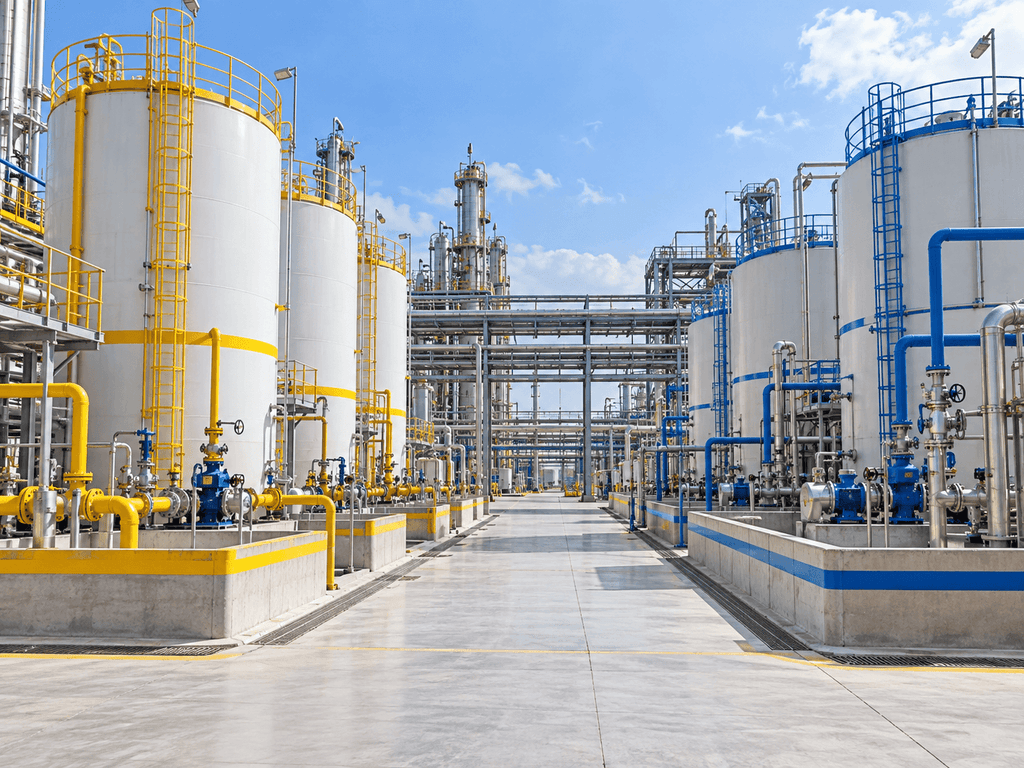
Acid and alkali storage tanks are common in fine chemical plants, pharmaceutical intermediates, surface treatment, water treatment, electronics, battery materials, and many other process industries.
Level measurement in these tanks affects more than inventory. A reliable signal may be used to schedule replenishment, control transfer pumps, prevent overfilling, protect downstream equipment, and reduce the need for manual inspection around hazardous chemicals.
The challenge is that corrosive service is not defined by the chemical name alone. Concentration, temperature, impurities, vapor, pressure, and cleaning procedures all influence material compatibility.
This article explains how to approach continuous level measurement and point level detection for corrosive acid and alkali tanks.
Begin with the Chemical Data
The first step is to collect accurate process information.
For each medium, document chemical name, concentration range, minimum and maximum temperature, normal and maximum pressure, presence of vapor or gas, expected condensation, density, viscosity if relevant, crystallization or salt formation, cleaning chemicals, tank material, and required measurement range.
For mixed chemicals, provide the full composition where possible.
A material that performs well in a dilute solution may not be suitable at a higher concentration or temperature. Likewise, the vapor space can expose seals and antenna surfaces to a different chemical environment from the bulk liquid.
Why Non-Contact Radar Is Attractive
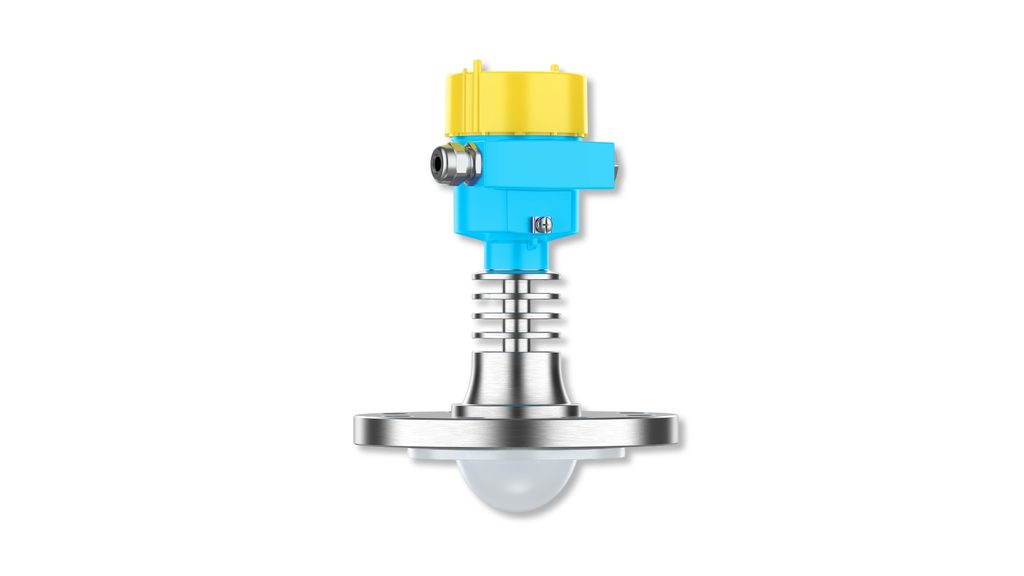
A non-contact radar level meter measures from above the liquid surface.
Because the measuring principle does not require a long probe to be immersed in the liquid, it can reduce direct chemical exposure compared with some contact measurement methods.
This can be particularly valuable for aggressive acids, alkalis, and process chemicals that create maintenance problems on immersed probes.
High-frequency radar also provides a narrow beam that can help in smaller tanks or vessels with limited installation space.
However, the word “non-contact” should not be misunderstood. The antenna face, process seal, gasket, flange, and other process-facing or exposed components are still part of the process boundary and must be chemically compatible.
For highly corrosive service, a PTFE or other chemically resistant process-facing design may be preferable, but compatibility must still be checked for the exact medium.
Choosing Between JWrada Models
Jiwei offers multiple JWrada radar level meter configurations.
A compact liquid radar such as JWrada-31 can be considered for conventional liquid tanks when its process limits and materials match the service.
For more demanding corrosive applications, a model such as JWrada-35 may be more relevant because it is designed for harsh process conditions and uses a PTFE-protected antenna arrangement.
This does not mean one model is automatically “better.” The correct choice depends on tank size, process connection, chemical compatibility, temperature, pressure, hazardous-area requirements, and mounting geometry.
Always review the current datasheet for the exact configuration being supplied.
Vapor and Condensation
Acid and alkali tanks can produce corrosive vapor.
Even when the liquid is stored at moderate temperature, the vapor can condense on cooler surfaces at the top of the tank.
This has two implications.
First, the instrument materials above the liquid can still be exposed to chemical attack.
Second, condensation can collect around the process connection or antenna and influence the measurement if the mounting arrangement traps liquid.
A good tank-top installation should encourage drainage and avoid unnecessary cavities.
If a purge, heating, or protective arrangement is considered, it should be engineered for the chemical service and should not interfere with the radar beam.
Crystallization and Salt Buildup
Some chemical solutions can crystallize when temperature changes or water evaporates.
Crystals can form on nozzles, probes, and process connections.
Non-contact radar reduces the length of sensing material exposed to the liquid, but buildup around the antenna can still create problems.
When crystallization is expected, the maintenance strategy should be part of the original design. Provide access for inspection and cleaning. Avoid narrow recesses where crystals can accumulate.
If periodic flushing is planned, verify that the flushing liquid and temperature are compatible with the instrument.
Point Level Detection for Overfill and Pump Protection
Continuous radar provides the changing liquid level, but many chemical tanks also use point level switches.
A high-level tuning fork switch can provide an alarm or filling interlock. A low-level switch can protect a transfer pump from dry running or indicate that the tank needs replenishment.
The Jiwei Ring-11 corrosion-resistant fork level switch is designed for corrosive liquid applications and is available with protective material options.
When selecting a coated tuning fork, review the complete process-facing construction. Coating type, thickness, mechanical protection, flange surface, and sealing arrangement all matter.
A damaged protective coating can change corrosion resistance, so installation and handling should prevent scratches or impact.
Why Independent High-Level Detection Can Be Valuable
A continuous transmitter can create multiple alarm setpoints in the control system.
For example, a tank may use the radar signal for normal operating level, high alarm, and high-high alarm.
This is convenient, but all of those software alarm points depend on the same sensor, power supply, wiring, and signal chain.
Where the process risk justifies an independent protective layer, a separate point level switch can provide a second physical measurement principle or separate signal path.
The required architecture should be determined by the plant’s risk assessment and safety design.
Plastic Chemical Tanks
Many acids and alkalis are stored in non-metallic tanks.
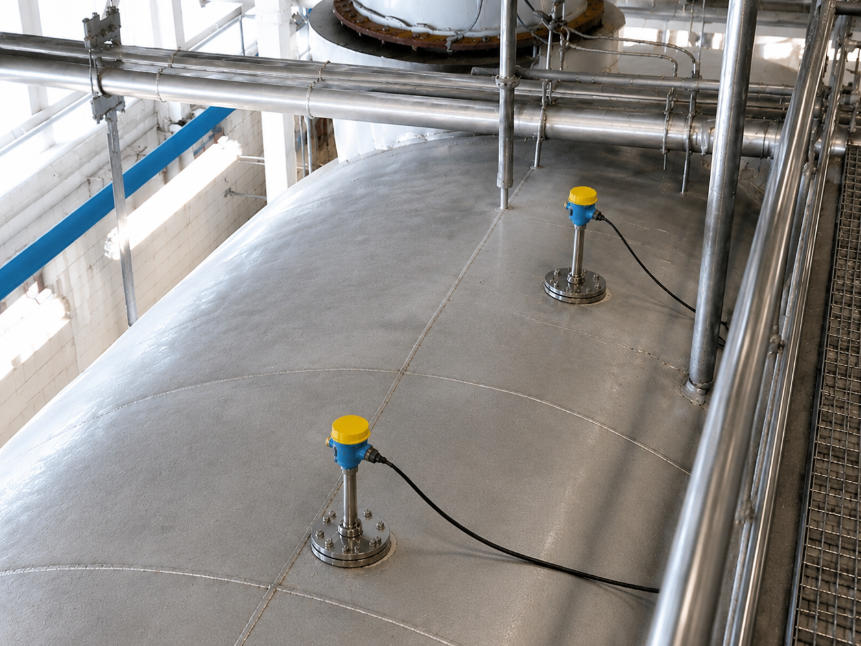
Tank geometry, roof shape, reinforcement ribs, and available nozzles should be reviewed before selecting the mounting point.
In some applications, radar can measure through certain plastic tank roofs from outside, but this should not be assumed for every plastic, wall thickness, reinforcement design, or chemical condition.
If external measurement through a plastic roof is considered, perform an application review or test.
For a conventional nozzle installation, make sure the process connection does not create a long, narrow path that restricts the radar beam.
Installation Checklist
Keep away from the inlet
A radar mounted above the incoming chemical stream may see splashing or receive a strong reflection from the falling liquid.
Check the maximum level
The highest permitted liquid level must remain within the usable measuring range.
Avoid strong internal reflectors
Support pipes, ladders, heating coils, and metal structures can create false echoes.
Protect coated probes
Do not use a coated tuning fork as a mechanical support or install it where it will be struck by incoming liquid or cleaning equipment.
Provide safe access
Corrosive tanks should not require frequent close manual checks. Plan commissioning and maintenance access with operator safety in mind.
Commissioning and Verification
After installation, verify the radar distance against known tank dimensions.
Check the zero and span values and confirm that the displayed level moves in the correct direction during filling and emptying.
Test alarm points using a controlled procedure.
For the point level switch, verify both the normal switching function and the intended fail-safe behavior.
If the switch is used in an interlock, test the complete loop rather than only observing the local instrument indication.
A Typical Chemical Storage Architecture
A practical storage tank system may use one radar transmitter for continuous level and inventory, one high-high tuning fork switch for independent overfill alarm, one low-level switch for pump protection, PLC or DCS logic for normal control, and local or remote indication for operators.
Not every tank needs all of these devices. The architecture should match the consequence of overfilling, running empty, or losing measurement.
Common Selection Mistakes
The first mistake is choosing by chemical name without concentration and temperature.
The second is assuming that “316L” or “PTFE” automatically guarantees compatibility.
The third is forgetting vapor exposure.
The fourth is mounting a radar in a poor nozzle because it is the only available opening.
The fifth is treating a software alarm from the continuous transmitter as automatically equivalent to an independent protective switch.
The sixth is ignoring cleaning chemicals and maintenance methods.
Conclusion
Reliable level measurement in corrosive acid and alkali tanks depends on more than measuring principle.
Non-contact radar can reduce direct exposure to the liquid and provide continuous inventory information. A corrosion-resistant tuning fork can provide high- or low-level switching for alarms and equipment protection.
The success of the system depends on accurate chemical data, correct material selection, good tank-top geometry, realistic alarm philosophy, and proper commissioning.
A level instrument should be selected as part of the chemical process boundary, not as an isolated electronic device.
FAQ
Is non-contact radar completely isolated from corrosive chemicals?
No. The measuring principle does not require an immersed probe, but the antenna face, seal, process connection, and other exposed parts may still contact vapor, condensation, or splashed liquid.
Can one level transmitter provide overfill protection?
It can provide high-level alarms through the control system, but some applications require an independent point level switch. The final design depends on the plant’s risk assessment.
Which material is best for acid tanks?
There is no universal answer. Compatibility depends on the exact chemical, concentration, temperature, impurities, and exposure conditions.
What information is most important when selecting a corrosive level switch?
Provide the chemical composition, concentration, temperature, pressure, tank material, process connection, required alarm position, and hazardous-area requirement.