
Accurate liquid level measurement is an important part of industrial process control. Whether monitoring water tanks, chemical storage vessels, oil reservoirs, or production equipment, industries need reliable instruments to know how much liquid is available and maintain safe operating conditions.
A float level indicator is one of the most widely used technologies for continuous liquid level measurement. Due to its simple operating principle, stable performance, and compatibility with industrial automation systems, it continues to be used in many applications where dependable level monitoring is required.
Many engineers and operators ask: How does a float level indicator work?
The answer is based on a combination of buoyancy, magnetic sensing, and signal conversion technology. The float follows the liquid surface, and its position is converted into an electrical signal that can be transmitted to monitoring and control systems.
This article explains the working principle of float level indicators, their main components, advantages, applications, and selection considerations.

What Is a Float Level Indicator?
A float level indicator is an industrial instrument designed to measure the height of liquid inside a tank or vessel.
The basic concept is simple: a float moves according to changes in liquid level. Because the float remains on the liquid surface, its position directly represents the amount of liquid inside the tank.
Modern float level indicators usually include:
- A magnetic float
- A guide tube or measuring rod
- Internal sensing components
- Electronic signal conversion circuits
- A connection housing
- Process connection components
Depending on the model, the output signal can be a continuous 4–20 mA current signal, allowing integration with PLC, DCS, SCADA, and other automation systems.
Unlike a traditional sight glass or mechanical level indicator, an electronic float level indicator allows remote monitoring and automatic control.
Working Principle of a Float Level Indicator
The operation of a float level indicator is based on the principle of buoyancy.
1. Float Movement Based on Liquid Level
A float is designed with enough buoyancy to remain partially above the liquid surface. When the liquid level increases, the float moves upward. When the liquid level decreases, the float moves downward.
The movement of the float follows the actual liquid level inside the tank.
For example:
- Tank filling → liquid level rises → float moves upward
- Tank emptying → liquid level drops → float moves downward
This mechanical movement provides the basic level measurement information.
2. Magnetic Detection of Float Position
In many industrial float level transmitters, a magnet is installed inside the float.
A sensing element is located inside the guide tube. When the float moves, the magnetic field changes the state of the internal sensing components.
Common sensing technologies include:
- Magnetic reed switches
- Resistance measurement elements
- Electronic position sensors
The sensor detects the float position and converts the mechanical movement into an electrical signal.
This magnetic coupling design has an important advantage: the sensing components are isolated from the process liquid, reducing the risk of corrosion and improving service life.
3. Signal Conversion and Transmission
After detecting the float position, the electronic circuit converts the position information into a standard output signal.
The most common industrial output is:
4–20 mA DC
The signal represents the complete measuring range:
- 4 mA = minimum liquid level
- 20 mA = maximum liquid level
For example, if a tank measuring range is 0–3000 mm:
- 4 mA may represent an empty tank
- 12 mA may represent 50% level
- 20 mA may represent a full tank
The PLC or DCS receives this signal and calculates the current liquid level.
This allows operators to:
- View tank level remotely
- Set alarm points
- Control pumps
- Control filling systems
- Record operating data
Main Components of a Float Level Indicator
Understanding the structure helps explain why float level indicators are reliable in industrial environments.
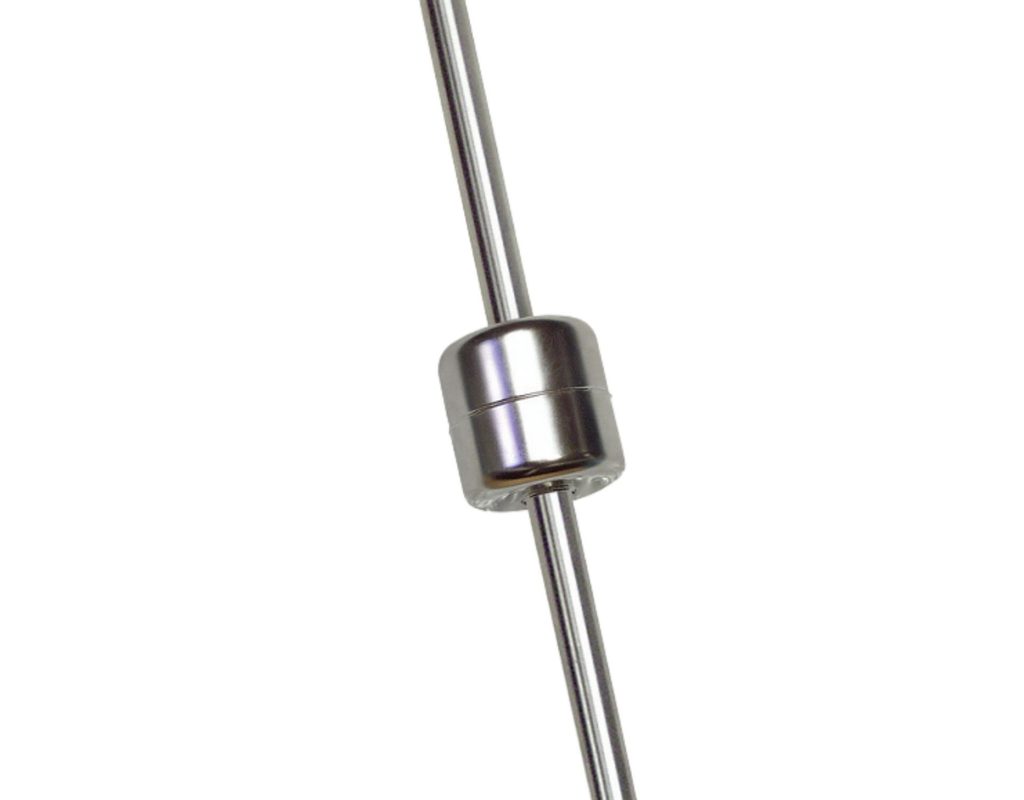
Magnetic Float
The float is the part that directly follows the liquid surface.
Important float design factors include:
- Buoyancy
- Material compatibility
- Pressure resistance
- Temperature resistance
The float material must match the application. Stainless steel floats are commonly used because they provide good mechanical strength and corrosion resistance.
Guide Rod or Measuring Tube
The guide rod provides a controlled movement path for the float.
A well-designed guide system ensures:
- Smooth vertical movement
- Accurate positioning
- Reduced mechanical interference
The measuring length depends on the required tank measurement range.
Many industrial models can support measuring ranges from several hundred millimeters to several meters.
Electronic Converter
The electronic unit converts float movement into an output signal.
Typical features include:
- 4–20 mA output
- Power supply connection
- Signal processing
- Calibration functions
This allows the float level indicator to work with modern industrial automation systems.
Why Use a Float Level Indicator?
Float level indicators remain popular because they provide several practical advantages.
Simple and Reliable Measurement Principle
The operating principle is straightforward. The float directly follows the liquid surface without requiring complex calculations.
Compared with some non-contact technologies, float level indicators are less affected by:
- Vapor
- Foam
- Tank geometry
- Liquid color
when the application conditions are suitable.
Continuous Level Measurement
Unlike point level switches that only detect one position, a float level indicator provides continuous level information.
This allows users to monitor:
- Current tank level
- Level changes over time
- Remaining liquid volume
- Process trends
Easy Integration with Automation Systems
The standard 4–20 mA signal is widely accepted in industrial control systems.
A float level transmitter can easily connect to:
- PLC systems
- DCS systems
- Digital indicators
- Data acquisition systems
This makes it suitable for automated factories and process plants.
Low Maintenance Requirements
Because the sensing components are separated from the process medium, the instrument generally requires limited maintenance.
Regular inspection mainly focuses on:
- Checking float movement
- Confirming electrical connections
- Cleaning deposits when necessary
Applications of Float Level Indicators
Float level indicators are used in many industries where liquid level monitoring is required.
Chemical Storage Tanks
Chemical plants often use storage vessels containing acids, alkalis, solvents, and process liquids.
For these applications, material selection is critical.
Common considerations include:
- 316L stainless steel
- Corrosion-resistant coatings
- Chemical compatibility
- Hazardous-area requirements
A suitable float level indicator can provide stable monitoring in demanding environments.
Water Treatment Systems
Water treatment facilities require accurate monitoring of:
- Raw water tanks
- Filter tanks
- Chemical dosing tanks
- Clean water reservoirs
Continuous level measurement helps maintain stable operation and prevents pumps from running dry.
Oil and Fuel Storage
Fuel tanks and oil reservoirs require reliable level information for:
- Inventory management
- Refill scheduling
- Overflow prevention
Float level indicators are commonly applied in:
- Diesel tanks
- Lubrication oil systems
- Hydraulic oil reservoirs
Food and Beverage Industry
Many food processing systems use liquid storage tanks that require continuous monitoring.
Applications may include:
- Water tanks
- Cleaning solution tanks
- Ingredient storage tanks
Material selection should meet the process requirements of each application.
Float Level Indicator vs Float Level Switch
Although they use similar float technology, float level indicators and float level switches have different functions.
Float Level Indicator
Provides continuous measurement.
Typical outputs:
- 4–20 mA
- Continuous level display
- Remote monitoring
Applications:
- Tank monitoring
- Process control
- Inventory management
Float Level Switch
Provides point-level detection.
Typical functions:
- High-level alarm
- Low-level alarm
- Pump protection
Applications:
- Overflow protection
- Dry-run prevention
The choice depends on whether the application requires continuous measurement or only a specific alarm point.
Factors Affecting Float Level Indicator Accuracy
Although float level indicators are simple devices, several factors affect performance.
Liquid Density
Density determines the buoyancy force acting on the float.
If the liquid density is too low, the float may not operate correctly.
Always confirm the medium density before selecting a model.
Liquid Viscosity
High-viscosity liquids may slow float movement.
Applications involving:
- Thick oils
- Sticky liquids
- Crystallizing materials
should be carefully evaluated.
Installation Conditions
Correct installation improves measurement reliability.
Important considerations include:
- Vertical mounting
- Avoiding turbulence
- Preventing mechanical interference
- Providing enough float travel space
Temperature and Pressure
The instrument rating must match actual operating conditions.
Engineers should confirm:
- Maximum temperature
- Operating pressure
- Pressure fluctuations
before selecting the device.
Frequently Asked Questions About Float Level Indicators
How accurate is a float level indicator?
Accuracy depends on the design and application conditions. Industrial float level transmitters commonly achieve millimeter-level measurement performance when correctly installed.
Can a float level indicator measure corrosive liquids?
Yes, if the materials are properly selected.
316L stainless steel or corrosion-resistant coatings may be used for more demanding applications.
Does a float level indicator require power?
Electronic versions with 4–20 mA output require a power supply, typically supplied through an industrial loop system.
Can a float level indicator be connected to a PLC?
Yes. The 4–20 mA output is widely compatible with PLC and DCS systems.
Is a float level indicator suitable for outdoor installation?
Yes. Models with appropriate enclosure protection can be installed outdoors when environmental requirements are considered.
Conclusion
A float level indicator works by using buoyancy, magnetic sensing, and electronic signal conversion to measure liquid level continuously.
The float follows the liquid surface, the magnetic system detects its position, and the transmitter converts this position into a standard output signal such as 4–20 mA.
Because of its simple design, reliable operation, easy installation, and compatibility with industrial automation systems, float level indicators remain an effective solution for many liquid measurement applications.
For industries requiring stable tank monitoring, pump protection, and process control, a properly selected float level indicator can provide long-term measurement performance with minimal maintenance.
When selecting a float level indicator, engineers should consider liquid density, material compatibility, temperature, pressure, measuring range, installation conditions, and required output signals to ensure the best performance for their application.e, installation conditions, and required output signals to ensure the best performance for their application.