1. Why Is Reliable Level Measurement Important in Nitrile Latex Storage Tanks?
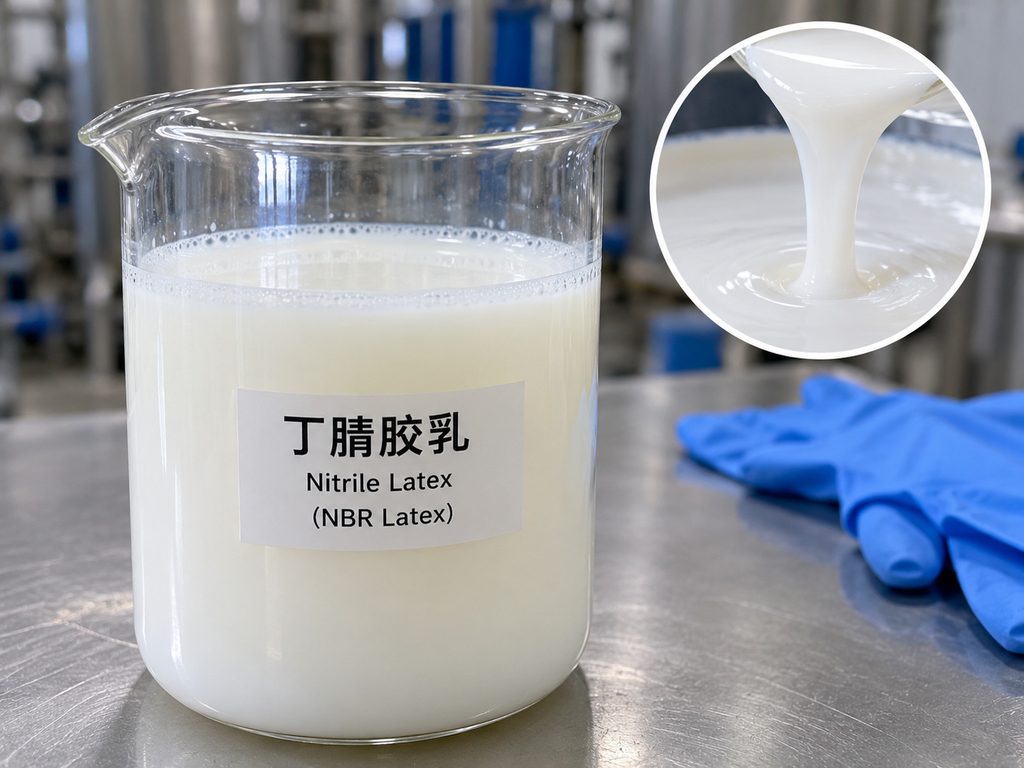
Nitrile latex, also known as NBR latex, is a water-based polymer dispersion primarily produced from butadiene and acrylonitrile. It is generally a milky-white liquid and is widely used in the production of nitrile gloves, oil-resistant rubber products, industrial coatings, adhesives, and other applications.
During the production, blending, storage, and transfer of nitrile latex, tank level is one of the most important process parameters.
For a nitrile latex production facility, level measurement is not simply about knowing how much material remains in a storage tank. The level signal may also be used for filling control, transfer pump operation, high- and low-level alarms, batch management, and inventory monitoring.
An unstable or inaccurate level signal can lead to incorrect filling decisions, pump dry-running, tank overfilling, or interruptions to upstream and downstream processes.
However, nitrile latex presents several challenges for conventional level measurement technologies. The product can adhere to surfaces, while filling, circulation, and agitation may generate foam and significant surface movement. Product buildup can also occur on tank walls and internal components.
For these reasons, a non-contact radar level transmitter can provide an effective solution for continuous level measurement in nitrile latex storage tanks.
2. Challenges of Nitrile Latex Level Measurement
A typical nitrile latex storage and transfer system may include a closed storage tank equipped with inlet and outlet pipes, an agitator, process connections, and other internal components.
Although the storage tank itself may appear relatively simple, several operating conditions can interfere with reliable level measurement.
Foam on the Liquid Surface
One of the first challenges is foam.
During tank filling, circulation, mixing, or agitation, a layer of foam may develop on the surface of the nitrile latex. Depending on the process conditions, the thickness and density of the foam can vary considerably.
For some level measurement technologies, foam can weaken or disturb the measurement signal, resulting in unstable readings or incorrect level detection.
A radar level transmitter must therefore provide sufficient signal quality and intelligent echo processing to distinguish the actual product surface under changing process conditions.
Product Buildup and Adhesion
Another challenge is the adhesive nature of nitrile latex.
When contact-type level instruments are used, the sensing components remain in direct contact with the process medium. Over time, latex can adhere to these components. If the material begins to dry, an additional coating or buildup may form.
This can increase maintenance requirements and may eventually affect measurement performance.
A non-contact radar level meter minimizes direct contact between the measuring device and the process medium, helping to reduce problems associated with coating, sticking, and mechanical blockage.
Agitators and Internal Tank Structures
Internal tank structures can also create false radar echoes.
Agitator shafts and blades, inlet pipes, support structures, nozzles, tank wall welds, and other internal components may reflect radar signals.
If a radar instrument has a wide beam angle or limited echo-processing capability, these reflections may be incorrectly identified as the actual liquid surface.
This is one reason why high-frequency radar technology with a narrow beam angle is particularly useful in tanks containing agitators or complex internal structures.
Hazardous Area and Automation Requirements
In chemical processing plants, level instrumentation may also need to meet requirements for hazardous-area installation, enclosure protection, process connections, and communication with PLC or DCS systems.
Therefore, selecting a level transmitter for a nitrile latex tank should not be based on measuring range alone. The medium properties, tank geometry, internal structures, operating conditions, and plant safety requirements should all be considered.
3. Why Use an 80GHz Radar Level Transmitter?
Considering the characteristics of nitrile latex storage tanks, an 80GHz FMCW radar level transmitter provides several important advantages.
Unlike many contact measurement technologies, a radar level transmitter performs the measurement without requiring the antenna to be immersed in the nitrile latex.
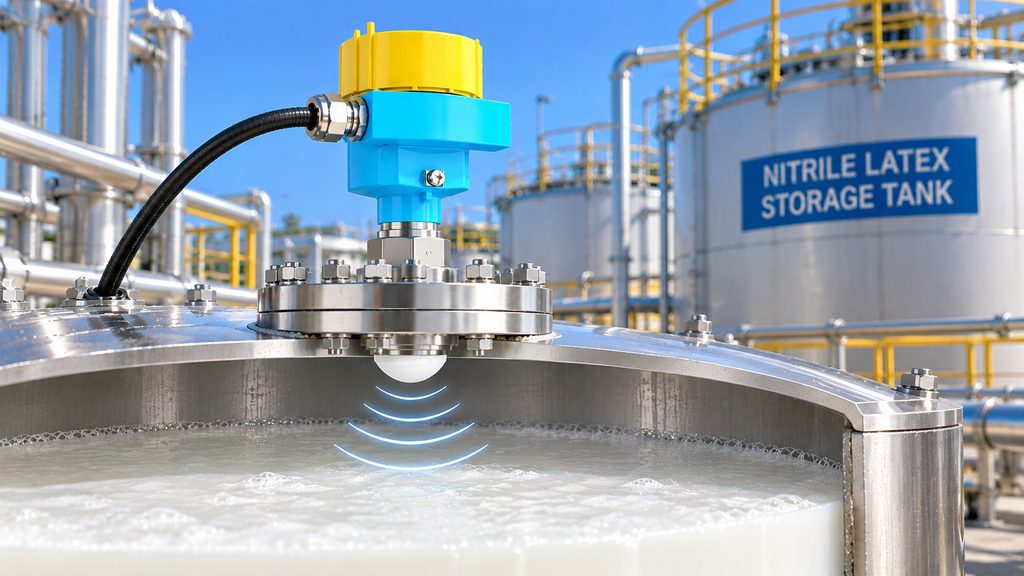
The instrument is installed at the top of the storage tank. The antenna transmits high-frequency electromagnetic waves toward the liquid surface. When the radar signal reaches the nitrile latex, part of the signal is reflected back toward the antenna.
The transmitter analyzes the returned signal to determine the distance between the antenna and the liquid surface. Using the configured tank dimensions, this distance is then converted into the actual liquid level.
Because the measurement is non-contact, there are no moving sensing components continuously immersed in the latex. This helps reduce the effects of product adhesion and can decrease the need for frequent cleaning and maintenance.
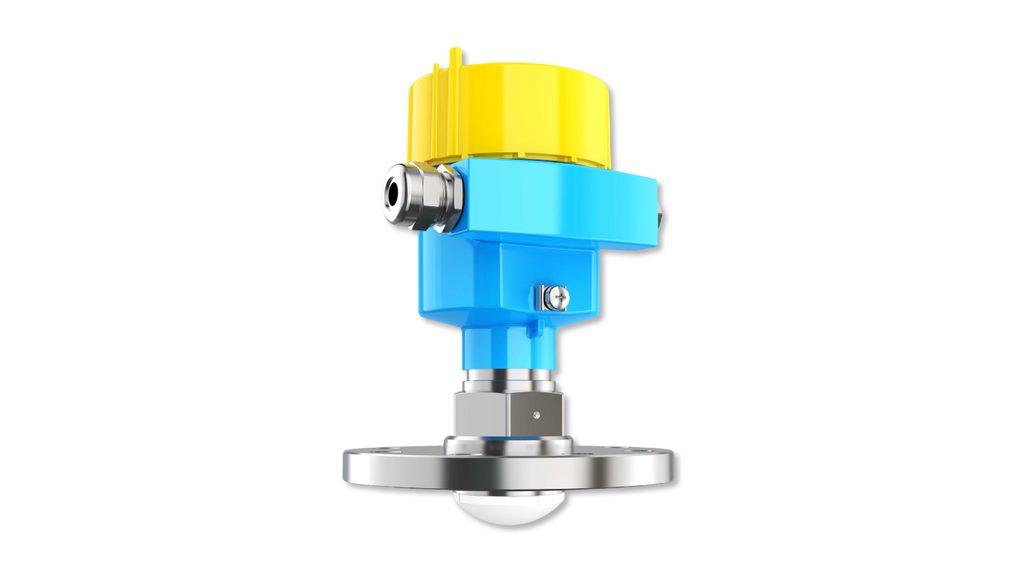
For example, the JWrada®-32 radar level transmitter uses 80GHz FMCW radar technology with a compact lens antenna. It provides a measuring range of up to 60 meters and a liquid level measurement accuracy of up to ±1 mm under appropriate application conditions.
One of the major advantages of 80GHz radar technology is its narrow beam angle.
A narrow radar beam concentrates more of the transmitted energy toward the target surface and makes it easier to avoid tank walls, inlet pipes, agitators, and other internal obstructions.
This characteristic is particularly useful for nitrile latex tanks with limited installation space or complex internal structures.
4. Intelligent Echo Processing for Foam and Agitation
A nitrile latex storage tank is rarely a completely static measurement environment.
When an agitator is operating, the liquid surface may rise and fall continuously. During filling, incoming material can create localized turbulence. Depending on the formulation and process conditions, a layer of foam may also form above the liquid surface.
These conditions make echo identification more complicated.
For this reason, the performance of a radar level transmitter depends not only on the radar frequency and antenna design but also on its signal-processing capabilities.
The JWrada®-32 provides functions such as false echo identification, multiple echo separation, and dynamic target tracking. These functions help the instrument distinguish the actual liquid surface from reflections generated by fixed tank structures.
During commissioning, fixed echoes caused by the agitator shaft, tank wall, process connections, and other structures can be identified according to the actual tank configuration.
After proper configuration, the radar level meter can continuously identify and track the real liquid level among multiple echo signals.
This capability is especially important in nitrile latex storage applications because plant operators need more than an accurate reading at a single moment. They need a stable and continuous level signal that can be reliably used by the process control system.
5. How to Install a Radar Level Transmitter on a Nitrile Latex Tank
Correct installation is essential for achieving reliable radar level measurement.
The first consideration is the filling inlet.
The radar level transmitter should generally not be installed directly above the incoming product stream. If the radar beam points directly into the filling flow, the instrument may detect the falling material instead of the actual liquid surface, resulting in unstable or incorrect measurements.
The transmitter should also be positioned away from agitator shafts and large internal structures.
For tanks equipped with an agitator, the radar can often be installed slightly away from the center of the tank. This allows the radar beam to avoid the agitator shaft while maintaining a clear view of the liquid surface.
A suitable distance should also be maintained between the radar beam and the tank wall.
The exact installation position depends on the tank diameter, measuring range, beam angle, internal structures, and process connections. The objective is to prevent the main radar beam from directly striking the tank wall or other strong reflecting surfaces.
Pay Attention to Mounting Nozzles
Long and narrow mounting nozzles can also affect radar performance.
If the radar transmitter is installed on a tall, narrow nozzle, unwanted reflections may occur inside the nozzle. Where possible, the mounting nozzle should be short, sufficiently wide, and smooth on the inside.
The antenna should have a clear path toward the liquid surface.
Because nitrile latex can adhere to surfaces, the radar should also be installed in a position where direct splashing onto the antenna is minimized. Proper installation can significantly reduce contamination and help maintain reliable long-term measurement.
6. Corrosion Resistance and Hazardous-Area Protection
Reliable chemical tank level measurement requires more than measurement accuracy. Instrument materials and hazardous-area requirements must also be considered.
The JWrada®-32 can be configured with a 316L stainless steel and PTFE antenna structure. PTFE offers good chemical resistance and is suitable for a wide range of industrial liquid applications.
Because radar measurement is non-contact, only a limited part of the instrument is exposed to the process environment compared with fully immersed contact-type level sensors.
This can provide an important advantage when measuring latex and other chemical liquids that are prone to adhesion or coating.
Intrinsically safe and explosion-proof configurations are also available for applications with corresponding hazardous-area requirements.
However, whether explosion-proof instrumentation is required for a specific nitrile latex storage tank should be determined according to the actual chemical composition, residual volatile components, hazardous-area classification, and plant safety specifications.
The requirement should not be determined solely by the name of the medium.
7. Connecting the Level Signal to a PLC or DCS
In modern nitrile latex production facilities, tank level information is usually integrated into a PLC or DCS rather than being used only as a local indication.
Communication capability is therefore an important consideration when selecting a radar level transmitter.
The radar level meter can provide a standard 4–20mA/HART output. RS485/Modbus communication can also be selected according to the requirements of the plant automation system.
Once the transmitter measures the liquid level, the continuous level signal is sent to the control system.
The PLC or DCS can then use this information to implement high-level alarms, high-high level interlocks, low-level alarms, pump protection, and automatic filling or transfer control.
For example, when the nitrile latex level approaches the configured upper limit, the control system can generate an alarm or stop the upstream filling process.
When the liquid level falls below a predefined minimum, the system can stop the transfer pump to reduce the risk of dry running.
Compared with relying on manual tank inspection, continuous radar level measurement allows the nitrile latex storage system to become fully integrated into the plant automation strategy.
8. Key Benefits in Nitrile Latex Storage Applications
The benefits of using an 80GHz radar level transmitter in a nitrile latex storage tank can generally be seen in three areas: measurement stability, maintenance, and process automation.
Reduced Impact of Product Buildup
Non-contact measurement reduces the direct influence of latex buildup on the sensing element.
Because the instrument does not rely on a mechanical float or an immersed measuring component, the risk of measurement problems caused by coating, sticking, or mechanical blockage can be reduced.
This can also simplify routine maintenance.
Better Performance in Tanks with Internal Structures
The narrow beam angle of 80GHz radar, combined with intelligent echo processing, helps minimize interference from agitators, pipes, tank walls, and other internal structures.
With correct installation and commissioning, the transmitter can provide a more continuous and stable level trend even when the liquid surface is moving.
Improved Process Automation
The radar level signal can be directly integrated into the PLC or DCS for filling, discharge, alarm, and interlock control.
For continuous nitrile latex production, reliable level information can also help operators monitor material inventory, coordinate production schedules, and reduce the need for frequent manual level checks.
9. How to Select a Radar Level Meter for NBR Latex
Not every nitrile latex storage tank requires exactly the same radar configuration.
Before selecting a radar level transmitter, several application parameters should be confirmed:
- Tank height and diameter
- Tank roof design
- Mounting nozzle dimensions
- Location of the agitator
- Position of the filling inlet
- Process temperature
- Operating pressure
- Foam conditions
- Internal tank structures
- Required process connection
- Output and communication protocol
- Hazardous-area classification
For tanks with complex internal structures, a high-frequency radar level transmitter with a narrow beam angle and strong false-echo suppression capability is generally preferable.
If the storage tank is located in a classified hazardous area, the appropriate intrinsically safe or explosion-proof version should be selected according to the project’s hazardous-area requirements.
Antenna material, process connection, power supply, and communication protocol should also be matched to the process conditions and plant automation system.
Therefore, selecting a radar level meter for nitrile latex should not be based simply on whether its maximum measuring range exceeds the tank height.
A reliable solution requires consideration of the complete application.
10. Conclusion
Nitrile latex can present challenging level measurement conditions due to product adhesion, foam, surface movement, and interference from agitators and other internal tank structures.
An 80GHz radar level transmitter provides non-contact measurement without requiring sensing components to remain continuously immersed in the latex.
Its narrow radar beam and intelligent echo-processing capabilities help reduce interference from tank walls, inlet pipes, agitators, and changing liquid surface conditions.
With the correct installation position, proper commissioning, suitable antenna materials, and the appropriate hazardous-area configuration, a radar level transmitter can provide continuous and reliable level data for nitrile latex storage tanks.
Through 4–20mA/HART or RS485/Modbus communication, the level signal can also be integrated with PLC and DCS systems for high- and low-level alarms, pump protection, filling control, and other automated process functions.
For nitrile latex, synthetic latex, and other chemical liquids involving product buildup, foam, or agitation, an 80GHz radar level transmitter offers a practical solution for continuous tank level measurement.