Sediment accumulation is a common challenge in municipal wastewater treatment, industrial wastewater systems, chemical processing, power plants, mining operations, and many other water treatment applications.
Unlike conventional liquid level measurement, sediment monitoring is not primarily concerned with the water surface. Instead, the objective is to determine whether sludge, sand, suspended solids, resin particles, or other settled materials have accumulated to a specific level beneath the water.
Reliable sediment detection is essential for maintaining the effective volume of settling tanks and ensuring efficient sludge removal. If accumulated solids are not discharged at the right time, the sediment layer can continue to rise, reducing settling capacity and affecting downstream treatment performance.
In deep tanks, large basins, or applications with long installation distances, conventional rigid level switches may also be difficult to install. Water turbulence, mechanical vibration, bubbles, and changing process conditions can make sediment detection even more challenging.
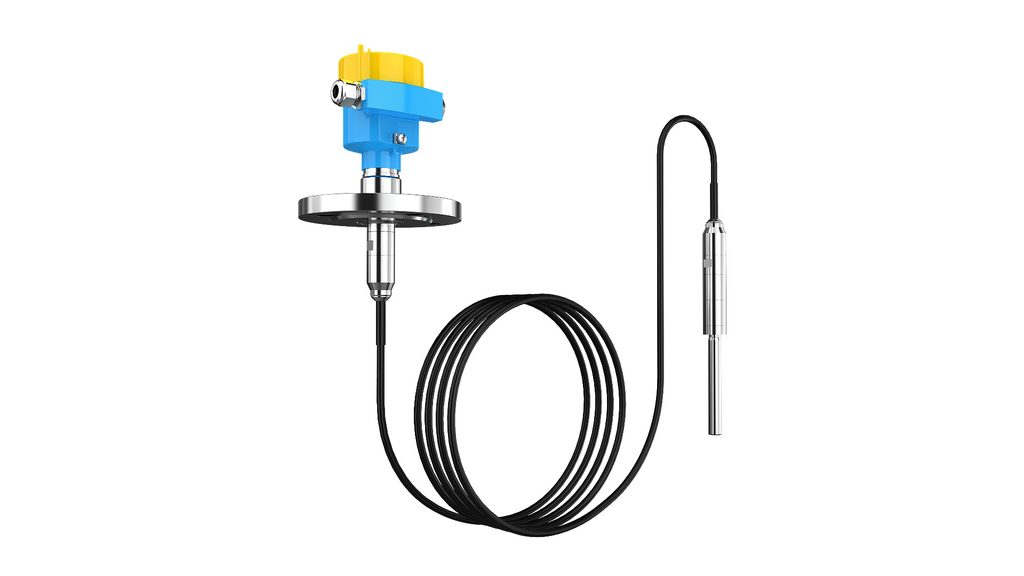
The cable-suspended Tube-11 vibrating rod level switch provides a practical solution for point-level detection of sediment in water. Its flexible suspension design allows the sensing probe to be positioned at the required sediment level inside deep settling tanks, while its vibration-based sensing principle enables reliable detection of accumulated solids.
When integrated with a PLC, DCS, sludge pump, discharge valve, or scraper system, the Tube-11 can become an important part of an automated sludge discharge system.
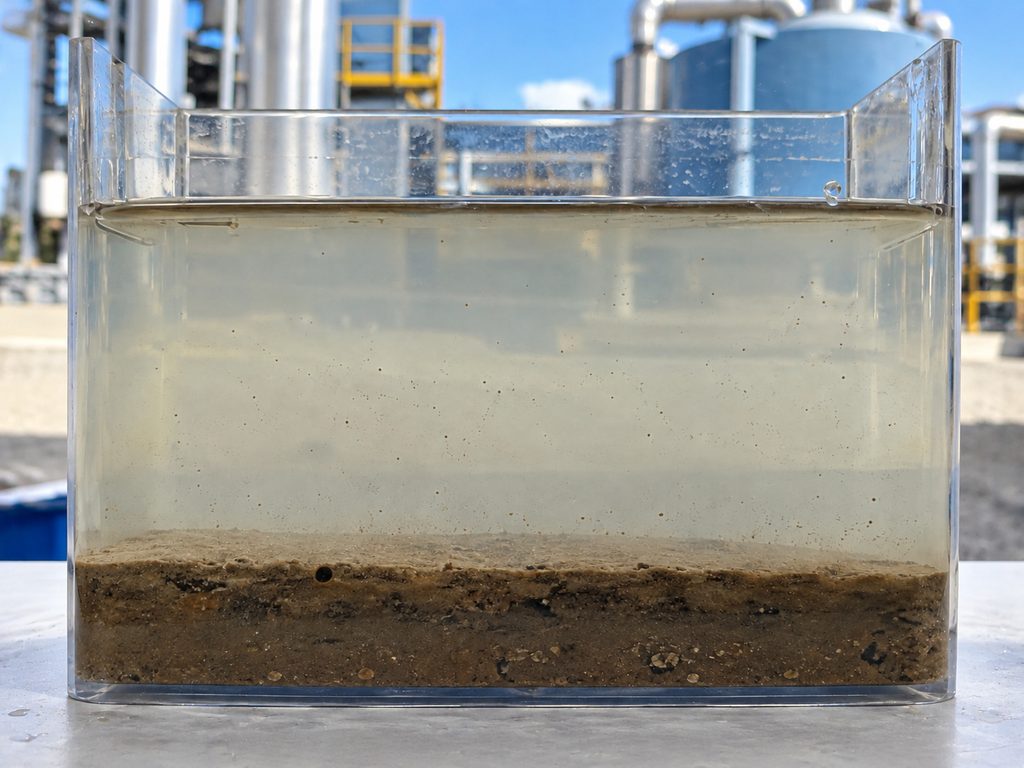
Application Background: Automating Sludge Discharge in a Settling Tank
A large water treatment facility operated several settling tanks designed to remove suspended solids from process water.
During operation, suspended particles, organic solids, sand, and sludge gradually settled to the bottom of the tanks. As the sediment layer increased, the accumulated solids had to be removed periodically to maintain the tank’s treatment capacity.
Previously, sludge discharge was mainly controlled according to operating experience and preset time intervals.
Operators periodically inspected the process and activated the sludge scraper or discharge system according to estimated sediment accumulation.
However, sedimentation rates were not constant.
Changes in influent flow rate, suspended solids concentration, temperature, process load, and particle characteristics could significantly affect how quickly solids accumulated at the bottom of the tank.
As a result, time-based sludge removal was not always efficient.
If the discharge system started too early, pumps, scrapers, and valves operated unnecessarily, increasing energy consumption and equipment wear.
If sludge discharge occurred too late, the sediment layer could rise excessively, reducing the effective settling volume and potentially affecting water quality.
The project therefore required a more direct method of determining when the sediment had actually reached a predefined level.
The objective was to install a sediment level switch at a designated height inside the settling tank. Once the accumulated sludge or sediment reached the sensing point, the instrument would send a switching signal to the control system.
The PLC could then initiate the sludge scraper, sludge pump, or discharge valve according to the programmed control logic.
This approach would allow sludge removal to be based on the actual sediment level rather than on a fixed operating schedule.
Why Sediment Detection in Water Is More Difficult Than Liquid Level Measurement
Measuring sediment beneath water presents different challenges from conventional liquid level detection.
Inside a settling tank, both liquid and solid materials are present simultaneously.
The sensor may remain submerged in water continuously. Therefore, simply detecting contact with liquid is not sufficient. The instrument must remain stable while surrounded by water and respond only when the accumulated solids reach the sensing element.
In practical applications, settling tanks may also experience:
- Flow disturbances near inlet areas
- Air bubbles or aeration effects
- Mechanical vibration from nearby equipment
- Movement caused by sludge scrapers
- Changes in suspended solids concentration
- Variations in sediment density and particle size
These conditions can make conventional point-level detection more complicated.
Tank depth creates another challenge.
In shallow vessels, a standard rigid vibrating rod can often reach the required detection position directly. In deep settling tanks, however, the sensing point may be several meters below the mounting location.
Using an extremely long rigid extension can increase installation difficulty and mechanical stress. Long metal extensions may also be more susceptible to bending forces, vibration, or water movement.
The application therefore required a solution capable of addressing three key requirements:
- Reliable detection of solids accumulated beneath water.
- Installation at a defined sensing point inside a deep tank.
- Reduced mechanical problems associated with very long rigid extensions.
The cable-suspended Tube-11 vibrating rod level switch was selected to meet these requirements.
Solution: Cable-Suspended Tube-11 Vibrating Rod Level Switch
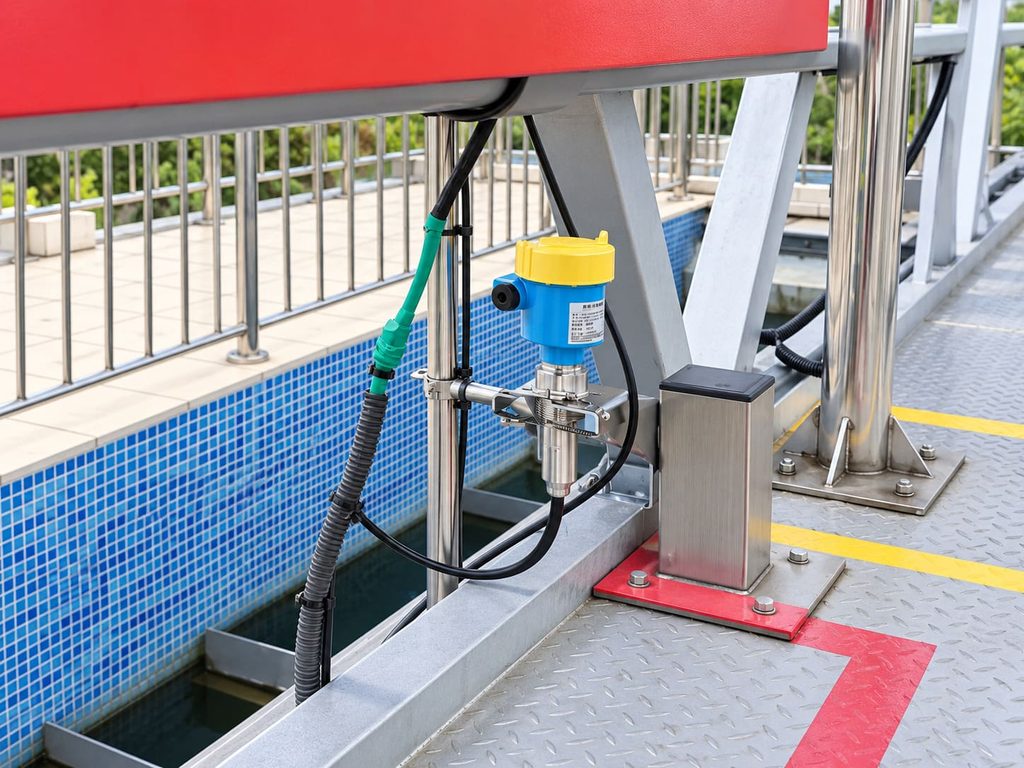
For this settling tank application, the Tube-11 vibrating rod level switch was installed from the top of the tank.
Instead of using a long rigid metal extension, the sensing probe was suspended by a flexible cable and positioned at the required sludge control level.
The transmitter housing remained above the tank while the vibration probe was lowered into the water.
This configuration is particularly useful in:
- Deep settling tanks
- Large water treatment basins
- Tall process vessels
- Tanks with long mounting distances
- Applications where rigid probe extensions are inconvenient
The instrument was used as a point-level sediment detector, rather than as a continuous sludge interface transmitter.
This distinction is important.
The Tube-11 does not need to continuously display the entire height of the sediment layer in this application. Instead, it monitors whether the sediment has reached a specific control point.
When the sludge layer remains below the probe, the level switch stays in its normal output state.
As sediment gradually accumulates and reaches the vibrating probe, the surrounding solids change the probe’s vibration characteristics. The electronics detect this change and switch the output signal.
The PLC then receives the signal and activates the sludge removal system.
After the sediment is discharged and falls below the sensing probe, the instrument returns to its original switching condition.
This creates a simple and effective control loop for automated sludge discharge.
How the Vibrating Rod Detects Sediment Under Water
The Tube-11 uses a tuned vibrating rod sensing principle.
Its sensing section incorporates an inner and outer tube structure designed to operate at a specific resonance condition.
During normal operation, piezoelectric components excite the probe and maintain a stable vibration.
When the probe is not surrounded by accumulated solids, its vibration characteristics remain within the expected operating range.
Once sludge, sand, or other settled particles reach and surround the sensing element, the material absorbs vibration energy and produces a damping effect.
This changes the vibration amplitude and resonance characteristics of the probe.
The electronic circuit continuously monitors these changes.
When the measured vibration condition reaches the switching threshold, the instrument recognizes that sediment has reached the designated sensing position and changes its output state.
This operating principle makes the vibrating rod particularly suitable for point-level detection of many bulk solids and deposited materials.
For sediment applications, the instrument should be selected and configured according to the actual material characteristics, including density, particle size, adhesion tendency, and settling behavior.
Typical Tube-11 specifications include a vibration frequency of approximately 360 Hz, a sensing probe length of approximately 125 mm, and a probe diameter of approximately 16 mm.
For dry bulk solids applications, the design can detect materials with densities down to approximately 0.02 g/cm³, depending on configuration and process conditions.
For sediment detection in water, application suitability should always be evaluated according to the actual sludge or solid material rather than relying only on nominal density specifications.
Cable Suspension Makes Deep-Tank Installation Easier
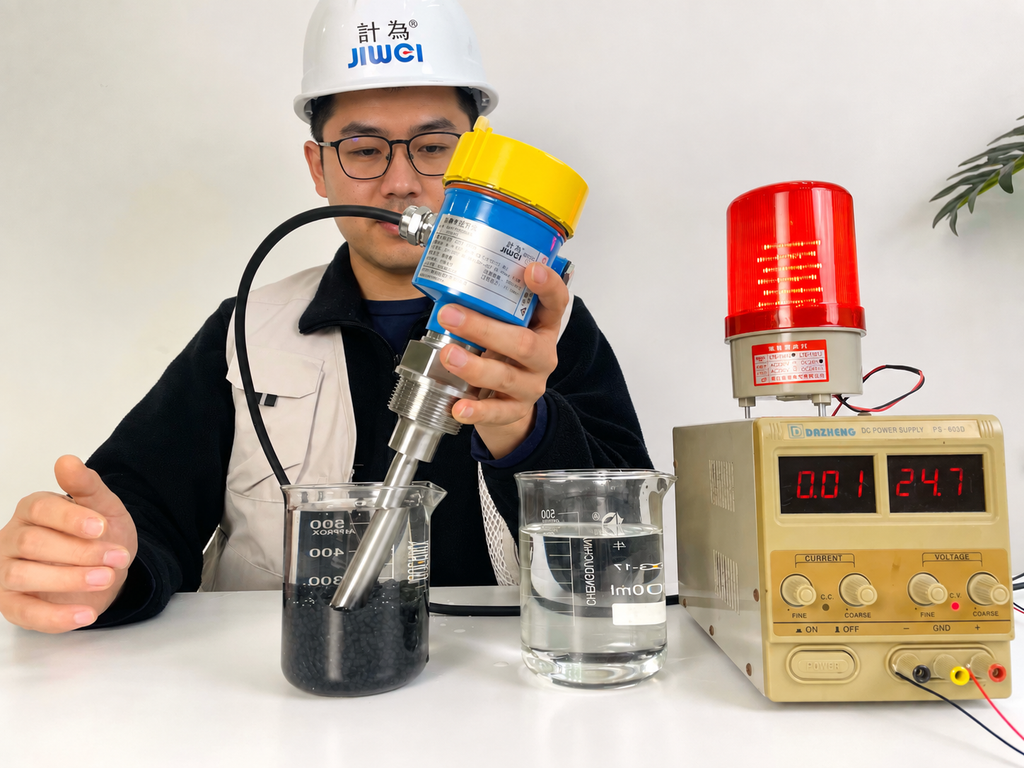
One of the key advantages of this Tube-11 configuration is its flexible suspension design.
In standard hoppers, silos, or small process vessels, a conventional fixed-length vibrating rod may be sufficient.
A deep settling tank is different.
The mounting connection may be located several meters above the required sediment alarm point. Extending a rigid metallic probe over the entire distance can make transportation, installation, and maintenance more complicated.
The mechanical load on a long rigid extension also increases as the extension becomes longer.
A cable-suspended design allows the sensing element to be lowered directly to the required detection position without creating a long rigid structure.
This can reduce installation complexity while also helping the probe accommodate a certain degree of movement caused by vibration or water flow.
The design is therefore useful not only for settling tanks but also for deep process vessels, tall storage tanks, and other applications where the sensing point is located far below the instrument mounting position.
Correct positioning is still essential.
The probe should not be installed directly in areas exposed to strong inlet flow, severe turbulence, or mechanical impact.
It should also maintain sufficient clearance from sludge scraper arms, tank walls, ladders, agitators, and other internal structures.
The cable length should be determined according to the required sediment control level rather than simply according to total tank depth.
Integration with PLC and Automatic Sludge Discharge Systems
Sediment detection becomes significantly more valuable when the level switch is integrated into the process control system.
In this application, the Tube-11 vibrating rod level switch was connected to a PLC.
When the sediment layer rose and reached the sensing probe, the instrument generated a switching signal.
The PLC then executed the programmed sludge discharge sequence.
Depending on the process design, the system could:
- Start a sludge scraper
- Open a sludge discharge valve
- Start a sludge pump
- Trigger a high-sediment alarm
- Initiate a timed discharge cycle
- Interlock related process equipment
As sludge was removed, the sediment interface gradually dropped.
Once the accumulated solids no longer surrounded the vibrating probe, the level switch returned to its normal state. The PLC could then stop the discharge equipment after the required delay or process conditions had been satisfied.
This control method allows sludge removal to respond directly to actual sediment accumulation.
Compared with a purely time-based system, point-level sediment detection can reduce unnecessary equipment operation while lowering the risk of excessive sludge buildup.
Using Multiple Detection Points for Additional Protection
For applications requiring additional process security, more than one vibrating rod level switch can be installed at different heights.
For example, a lower sensing point can be used for normal sludge discharge control, while a second, higher sensing point can serve as a high-level alarm.
Under normal conditions, the lower switch triggers the sludge removal cycle.
If the discharge system fails, the sludge pump becomes unavailable, or solids accumulate faster than expected, the sediment layer may continue to rise.
When it reaches the upper sensor, the second level switch can activate an alarm or additional interlock.
This arrangement provides an independent backup indication and can help operators identify abnormal sediment accumulation before it affects the overall settling process.
Results of the Sediment Detection Application
After installation, the cable-suspended Tube-11 vibrating rod provided stable point-level detection of the sediment layer in the settling tank.
The signal was incorporated into the automatic sludge discharge control system, reducing dependence on manual inspection and fixed discharge intervals.
In comparable water treatment applications, vibration-based sediment detection combined with automated sludge discharge has achieved discharge control accuracy above 98%, while treatment efficiency improvements of approximately 15% have been reported under specific operating conditions.
Actual performance will vary according to tank design, influent characteristics, sediment properties, control strategy, and process conditions.
More importantly, the project changed how sludge discharge decisions were made.
Instead of relying primarily on the question, “How long has the tank been operating since the last discharge?”, the control system could respond to a more relevant process condition:
Has the sediment actually reached the required discharge level?
This allows the sludge removal system to operate according to real process demand.
Potential benefits include reduced unnecessary pump and scraper operation, improved settling capacity, lower manual inspection requirements, and more consistent sludge management.
Why the Tube-11 Is Suitable for Settling Tank Sediment Detection
The Tube-11 combines a vibration-based sensing principle with a cable-suspended mechanical design.
These two characteristics make it well suited to challenging sediment detection applications.
The vibrating sensing element provides direct point-level detection of deposited solids, while the flexible suspension allows the sensing element to be positioned deep inside a tank without requiring an excessively long rigid probe.
The switching output can also be integrated easily with common industrial control systems.
Depending on the selected configuration, wetted parts can be manufactured from corrosion-resistant materials such as 316L stainless steel or 318S13 stainless steel.
Housing protection options can include IP66/IP67, and configurations for hazardous industrial environments may also be available depending on application requirements.
These characteristics allow the vibrating rod level switch to be considered for municipal wastewater treatment as well as industrial water treatment applications in chemical, power, mining, and process industries.
Installation Considerations for Reliable Sludge Level Detection
Proper installation plays an important role in achieving reliable sediment detection.
Before selecting a level switch, the characteristics of the deposited solids should be evaluated.
Important factors include:
- Sediment density
- Particle size
- Sludge consistency
- Adhesion tendency
- Settling behavior
- Water flow conditions
- Operating temperature
- Chemical compatibility
Sediment beneath water behaves differently from dry powder or granular solids.
For unusual sludge compositions or highly variable process conditions, testing with the actual process material is recommended.
The alarm height should also be determined according to the process objective.
The probe position effectively defines the point at which the sludge discharge sequence begins. Its location should therefore consider the available settling volume, scraper operating range, discharge capacity, and expected sediment accumulation rate.
The sensor should normally be installed away from high-velocity inlet streams.
Strong lateral flow can cause unnecessary movement of the suspended probe and may affect long-term mechanical reliability.
Adequate clearance should also be maintained between the sensor and moving scraper components.
For outdoor settling tanks or humid environments, cable entries and enclosure seals should be installed correctly to prevent rainwater, condensation, or moisture from entering the electrical housing.
Other Applications for Sediment Detection in Water
Although wastewater settling tanks are a typical application, cable-suspended vibrating rod level switches can also be considered for many other processes where solids accumulate beneath a liquid.
Typical applications include:
- Industrial wastewater sludge monitoring
- Sand accumulation in water treatment tanks
- Chemical process sediment detection
- Resin particle level detection
- Power plant water treatment systems
- Mineral and mining water treatment
- Slurry settling processes
- Solid particle accumulation in process tanks
The basic application requirement is similar in each case.
The process does not necessarily need continuous interface measurement. Instead, operators need to know whether deposited solids have reached a predefined height.
Once that height is reached, the signal can be used to initiate discharge, pumping, conveying, cleaning, or an alarm.
For processes requiring a continuous measurement of the entire sludge blanket or solid-liquid interface, a continuous interface measurement technology may be more suitable.
However, when the control requirement is simply “activate the process when the sediment reaches this point,” a point-level vibrating rod switch can provide a straightforward and reliable solution.
Conclusion
Reliable sediment monitoring is an important part of settling tank automation.
While conventional liquid level instruments measure the water surface, sediment control requires detection of accumulated solids beneath the liquid.
The cable-suspended Tube-11 vibrating rod level switch uses changes in probe vibration to detect when sludge, sand, or other deposited solids reach a predefined control level.
Its flexible suspension design makes it particularly suitable for deep settling tanks and applications where the sensing position is far below the mounting point.
By connecting the level switch to a PLC, DCS, sludge pump, scraper, or discharge valve, the sensor can become part of an automated sludge management system.
Instead of relying only on manual inspection or fixed discharge intervals, the process can initiate sludge removal according to actual sediment accumulation.
For wastewater treatment plants and industrial processes seeking a practical solution for sediment detection in water, sludge level monitoring, solid-liquid interface point detection, or automated settling tank discharge control, a cable-suspended vibrating rod level switch provides a simple and effective approach to improving process automation and operational consistency.