1. Why HMI and SCADA Are Essential in Industrial Automation
In modern industrial automation systems, the ability to visualize equipment status, control process parameters, respond to alarms, and trace historical data directly affects production efficiency, operational safety, and maintenance costs. HMI and SCADA are two core technologies designed to solve these challenges.
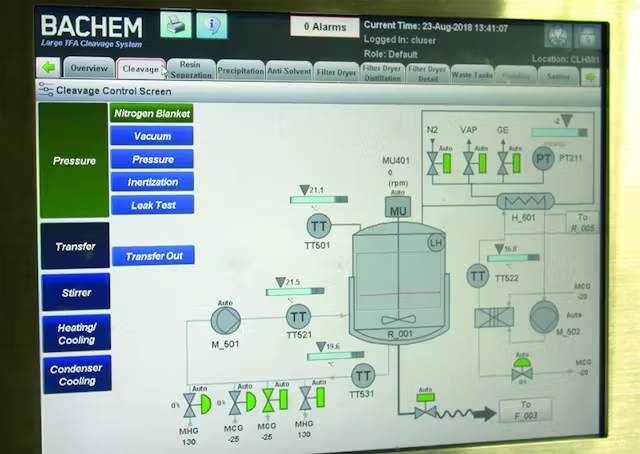
HMI stands for Human-Machine Interface. It is mainly used to present data from equipment, sensors, PLCs, or controllers through graphics, numbers, buttons, trend curves, and status indicators. It also allows operators to perform actions such as starting or stopping equipment, setting parameters, confirming alarms, and switching operating modes.
SCADA stands for Supervisory Control and Data Acquisition. It not only displays field data but also provides centralized monitoring, remote control, historical data storage, alarm management, trend analysis, and report generation across multiple devices, production lines, or remote sites.
In simple terms, HMI is more like the “operation window” of a machine or local process, while SCADA is more like the “central control platform” for an entire factory or system. They are not direct substitutes for each other. Instead, they serve different purposes depending on the scale, complexity, and management requirements of an automation project.
2. What Is HMI? The Core Value of Human-Machine Interface
The main purpose of an HMI is to create an interaction channel between people and machines. In traditional production environments, operators may need to rely on mechanical buttons, indicator lights, gauges, or paper records to understand equipment status. As automation levels increase, HMI has become an important interface for equipment control and operation monitoring.
A typical HMI may be a touch screen, industrial panel PC, operator panel, or computer-based interface. It can communicate with PLCs, variable frequency drives, sensors, actuators, and other field devices to display real-time parameters such as temperature, pressure, flow rate, liquid level, speed, valve position, and motor status.
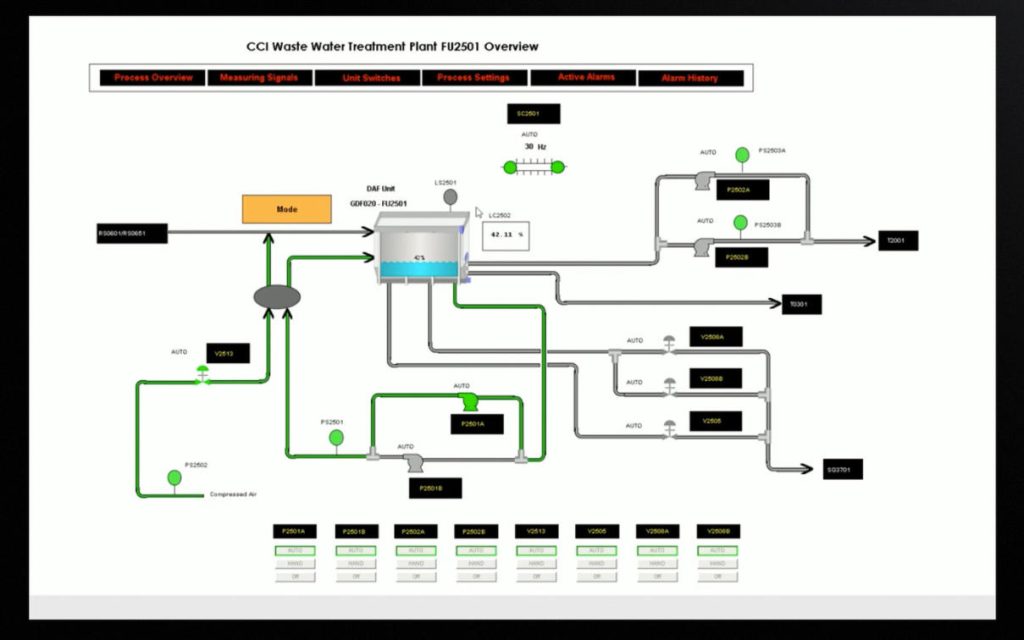
The key advantages of HMI are clarity, speed, and ease of use. Operators do not need to read complex code or understand low-level control logic. Instead, they can understand equipment conditions through a visual interface. For example, in a storage tank level control system, an HMI can display liquid level, pump running status, high and low level alarms, valve open or closed status, and manual or automatic control options.
For a single machine, a small production line, or a local process section, an HMI is often sufficient for daily operation. It is relatively cost-effective, easier to maintain, and fast in response, making it highly suitable for on-site monitoring and control.
3. Main Functions of HMI
Although HMI functions vary by brand, model, and project requirements, most HMI systems include several common capabilities.
The first is real-time data visualization. HMI converts data collected from PLCs or sensors into charts, numbers, status lights, animations, or process diagrams, allowing operators to quickly understand the current operating condition.
The second is equipment control. Operators can use the HMI to start, stop, reset, adjust parameters, and switch modes. For example, they may adjust pump speed, set temperature limits, or switch between automatic and manual operation.
The third is alarm display and event recording. When problems such as over-temperature, over-pressure, low liquid level, communication failure, or motor fault occur, the HMI can display alarm messages and record alarm time, confirmation time, and processing status.
The fourth is parameter setting and user permission management. Some HMIs support different user levels. General operators may only perform basic operations, while engineers or administrators can modify process parameters. This helps reduce the risk of incorrect operation.
The fifth is basic data logging and report output. Some advanced HMIs support historical data storage, trend curves, and simple reports. However, their data storage capacity and analysis capabilities are usually limited, so they cannot fully replace the data management functions of SCADA.
4. What Is SCADA? From Field Monitoring to Centralized Management
SCADA is a system-level platform for monitoring and data acquisition. It typically consists of field devices, PLCs or RTUs, communication networks, servers, databases, operator workstations, alarm systems, and reporting tools.
Compared with HMI, SCADA is not only designed to “see equipment status” but also to “manage the entire system.” It can connect multiple PLCs, production areas, and remote sites, bringing distributed data into one centralized platform for unified monitoring and analysis.
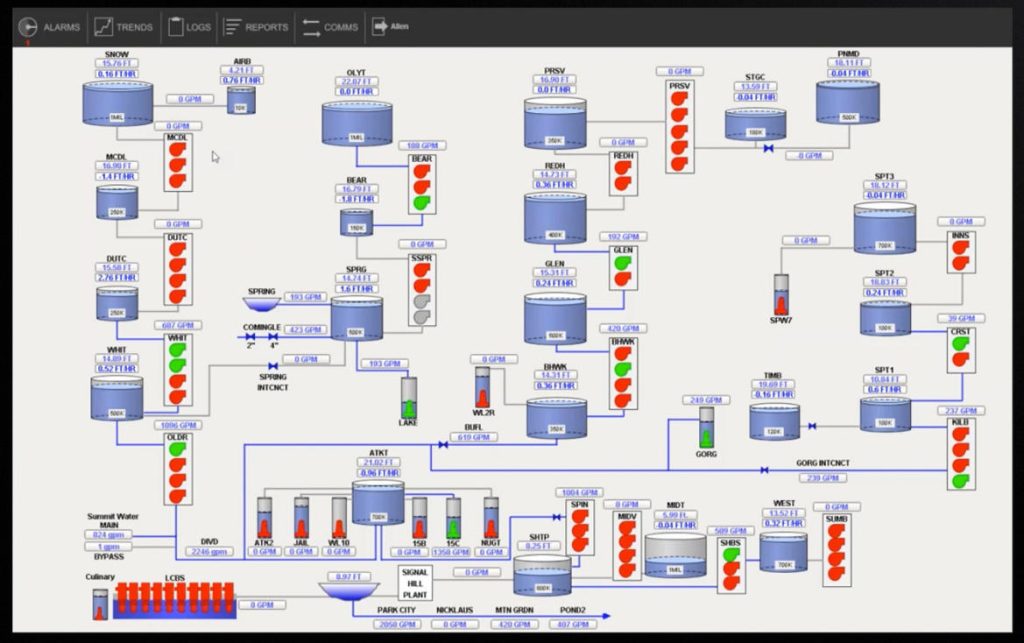
For example, in a water treatment plant, an HMI may be responsible for the local control of a pump or chemical dosing unit. SCADA, on the other hand, can centrally monitor the inlet pump station, sedimentation tanks, filtration system, dosing system, clean water tank, and outlet pump station. Operators in the control room can view the entire process, while managers can check historical trends, energy consumption, alarm records, and equipment runtime.
SCADA is especially valuable in industries such as power, oil and gas, chemical processing, environmental protection, municipal water supply, and smart manufacturing. It helps companies improve remote maintenance capabilities, reduce the need for on-site inspection, shorten fault response time, and provide data support for production optimization and management decisions.
5. Core Functions of SCADA
SCADA systems usually provide more comprehensive functions than HMI systems, especially in scenarios involving large amounts of data, multiple devices, distributed sites, or long-term operational analysis.
The first function is centralized data acquisition. SCADA can collect data from PLCs, RTUs, smart instruments, sensors, gateways, and third-party systems, enabling data integration across multiple devices, areas, and communication protocols.
The second is real-time monitoring and remote control. Operators can view the operating status of the entire system through central control screens and, depending on permission levels, remotely start or stop equipment, adjust setpoints, and control valves.
The third is historical data storage and trend analysis. SCADA systems are often equipped with databases or historical data servers that can store data such as temperature, pressure, flow rate, liquid level, energy consumption, and production output over long periods. Companies can use this data for fault tracing, process optimization, energy analysis, and predictive maintenance.
The fourth is advanced alarm management. SCADA can support multi-level alarms, alarm grouping, alarm confirmation, alarm statistics, and notification mechanisms. This helps companies detect abnormalities quickly and standardize response procedures.
The fifth is reporting and management analysis. SCADA can automatically generate daily reports, monthly reports, energy reports, production reports, and compliance records. This reduces manual statistics work and improves data accuracy.
The sixth is system integration. Modern SCADA systems can connect with MES, ERP, energy management systems, cloud platforms, and industrial IoT platforms, making SCADA an important foundation for smart factory digitalization.
6. Key Differences Between HMI and SCADA
Both HMI and SCADA serve industrial automation, but their positioning is clearly different.
In terms of application scope, HMI is more suitable for single machines, local processes, or small control systems. SCADA is more suitable for multiple devices, multiple sites, long processes, and complex production systems.
In terms of functional depth, HMI focuses on on-site operation, real-time display, and basic alarms. SCADA provides real-time monitoring as well as historical data, trend analysis, remote access, centralized alarms, reporting, and system integration.
In terms of deployment cost, HMI is usually less expensive and easier to install and maintain. SCADA requires higher investment in software, servers, networks, cybersecurity, databases, and engineering development. However, it is better suited for long-term and system-level management.
In terms of data value, HMI focuses more on “current status display,” while SCADA focuses more on “data asset accumulation.” If a company wants to analyze equipment efficiency, energy consumption, alarm frequency, and process stability through historical data, SCADA offers stronger advantages.
In terms of security management, HMI is often used for local operation, so its network exposure may be relatively small. SCADA, however, usually involves remote access, multiple user permissions, and cross-network communication. Therefore, it requires more complete cybersecurity design, including permission control, access auditing, network isolation, VPNs, firewalls, and backup mechanisms.
7. When Should You Choose HMI? When Should You Choose SCADA?
During automation project planning, companies should not simply assume that SCADA is always better than HMI. They should also not ignore future expansion needs just because of budget limitations. The right choice should be based on project scale, data requirements, remote maintenance needs, and budget.
If the project only involves a single machine or a small group of devices, such as a packaging machine, filling machine, mixer, pump control cabinet, or local liquid level control system, HMI is usually the more economical choice. It can meet the needs of on-site operation, parameter setting, status display, and basic alarm functions.
If the project involves multiple production areas, multiple PLCs, or multiple process units, or if it requires centralized management from a control room, SCADA is more suitable. It can display distributed data in one platform and help managers understand the overall operating status.
If the company needs long-term data storage, trend analysis, automatic reports, or traceability management, SCADA should be considered first. This is especially important in industries such as chemical processing, food, pharmaceuticals, environmental protection, and power, where safety, quality, and compliance requirements are high.
If the system includes remote sites, such as sewage lifting pump stations, natural gas pipelines, distributed energy stations, unattended water plants, or photovoltaic power stations, SCADA’s remote monitoring and alarm functions provide significant value.
If the budget is limited but future expansion is likely, a company can start with an HMI solution while reserving conditions for future SCADA connection in PLC selection, communication protocols, data point planning, and network architecture. This helps avoid repeated modifications later.
8. Typical Applications of HMI and SCADA in Different Industries
In the water treatment industry, HMI is often used for local control of pumps, blowers, dosing equipment, or valve control cabinets. SCADA can be used for centralized monitoring of the entire plant, including liquid level, flow rate, pressure, water quality, chemical dosing volume, equipment runtime, and alarm status.
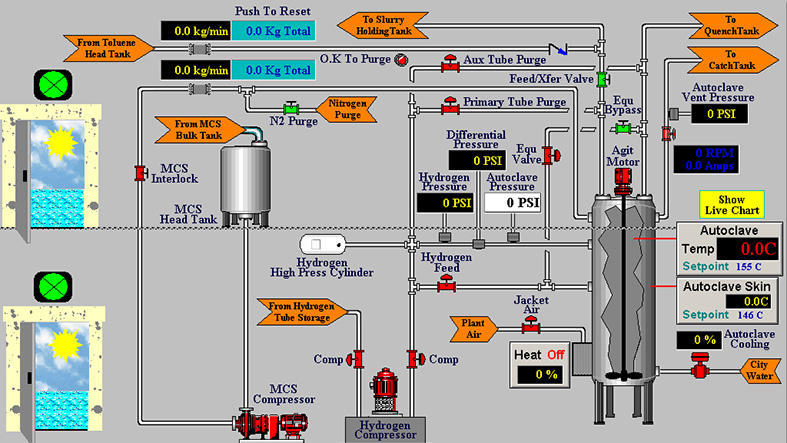
In the chemical industry, HMI can be used for local control of reactors, storage tanks, mixers, and metering pumps. SCADA can support production process monitoring, key parameter recording, alarm and interlock display, energy analysis, and batch data traceability.
In the power and energy industry, HMI can serve as the local operation terminal for field equipment, while SCADA is commonly used for centralized monitoring and dispatching of substations, power distribution systems, photovoltaic power plants, energy storage systems, and microgrids.
In manufacturing production lines, HMI can be used as the operator panel for individual machines such as labeling machines, packaging machines, and inspection equipment. SCADA can connect multiple machines together to achieve line-level production statistics, downtime cause analysis, equipment efficiency evaluation, and production report generation.
In level and material monitoring applications, HMI can display the level, alarm status, and switching signals of a single storage tank or silo. SCADA can centrally manage level data from multiple tanks, silos, or workshops, providing support for inventory management, safety control, and production scheduling.
9. The Integration Trend of HMI and SCADA
With the development of the industrial internet, edge computing, cloud platforms, and smart manufacturing, the boundary between HMI and SCADA is gradually becoming less rigid. Many new-generation HMIs now include stronger data logging, remote access, trend analysis, and web publishing capabilities. At the same time, modern SCADA systems are becoming more lightweight, modular, and cloud-ready.
In the future, industrial automation systems will place greater emphasis on data connectivity. Technologies such as OPC UA, MQTT, industrial Ethernet, and edge gateways will make data exchange between equipment, PLCs, HMI, SCADA, MES, and cloud platforms smoother and more efficient.
At the same time, industrial cybersecurity will become increasingly important. Whether it is HMI or SCADA, once the system is connected to a network, account permissions, access control, communication encryption, log auditing, backup recovery, and security updates must be considered. For critical infrastructure and high-risk production environments, security design should be included from the early stage of project planning instead of being added after the system is already online.
In addition, AI and data analytics will drive SCADA from a “monitoring platform” toward an “intelligent decision-making platform.” By analyzing historical data, alarm data, equipment status, and process parameters, companies can detect equipment abnormalities earlier, optimize production rhythm, reduce energy consumption, and improve maintenance efficiency.
10. Selection Advice: Start from Requirements, Not Products
When choosing HMI or SCADA, the most important step is to clarify actual requirements. Companies can begin by asking the following questions:
Is the system for a single machine, a local process, or plant-wide monitoring?
Is remote access and centralized management required?
Is long-term historical data storage needed?
Is automatic report generation required?
Does the system need to integrate PLCs, smart instruments, or third-party systems from different brands?
Will the production line or number of sites expand in the next three to five years?
Does the on-site team have the ability to maintain a SCADA system?
How strict are the requirements for cybersecurity and permission management?
If the answers mainly involve local operation, simple display, and low-cost deployment, HMI is usually enough. If the answers involve centralized monitoring, remote operation, historical analysis, data traceability, and multi-system integration, SCADA should be prioritized.
For many industrial projects, the best solution is not “HMI only” or “SCADA only,” but a combination of both. HMI handles fast on-site operation and equipment-level interaction, while SCADA manages system-level monitoring, data management, and operational analysis. This layered architecture ensures efficient field operation while supporting the company’s digital management needs.
Conclusion
HMI and SCADA are indispensable components of industrial automation systems. HMI allows operators to control equipment more intuitively and is suitable for single machines, small systems, and local operation scenarios. SCADA is designed for larger-scale centralized monitoring, data acquisition, remote maintenance, and trend analysis, making it suitable for complex production lines, multi-site systems, and smart factory development.
As industrial companies continue to upgrade automation and digitalization, understanding the differences between HMI and SCADA helps reduce selection mistakes, lower retrofit costs, and improve system safety, stability, and scalability. For companies aiming to achieve efficient production, refined management, and long-term data value, proper planning of HMI and SCADA architecture is an important foundation for successful industrial automation projects.