In industrial applications involving powders, granules, fine bulk solids, coal powder, cement, lime, sand, grain, plastic pellets, chemical powders, dust hoppers, and sediment detection in water, level switches play a critical role in process control. They are widely used for high-level alarms, low-level alarms, overflow prevention, empty-bin protection, blockage detection, and equipment interlock protection.
In the past, many plants selected VEGACAP 67 or other imported VEGA level switches for silos, hoppers, and storage tanks. However, with the rapid development of domestic instrumentation technology, more and more users are looking for domestic alternatives that offer stable performance, faster delivery, easier maintenance, and better pricing.
The Jiwei Tube-11 vibrating rod level switch is a high-performance level detection solution designed for this demand. Tube-11 vibrating rod level switch is China’s first vibrating rod level switch with an innovative dual-tube probe design. It is suitable for detecting powders, granules, and sediment in water. With more than ten core patents and dual gas/dust explosion-proof certifications, Tube-11 provides reliable, stable, and accurate level detection in demanding industrial environments.
Unlike traditional capacitive level switches, Tube-11 uses a piezoelectric driver to excite the vibrating rod. When the rod contacts material, the vibration amplitude decreases, and the electronics detect this change and output a switching signal. In other words, Tube-11 does not mainly rely on changes in the dielectric constant of the material. Instead, it determines the material level by detecting the damping effect caused by direct contact with the material.
Therefore, in applications involving low-density powders, materials with varying dielectric constants, dusty environments, sticky materials, clogging issues, or complex operating conditions, Tube-11 offers stronger adaptability.
For users searching for a VEGACAP 67 replacement, VEGA level switch alternative, or domestic replacement for imported level switches, Jiwei Tube-11 not only meets standard level alarm requirements but also provides clear advantages in high-temperature resistance, explosion-proof certification, installation, maintenance, and overall cost.
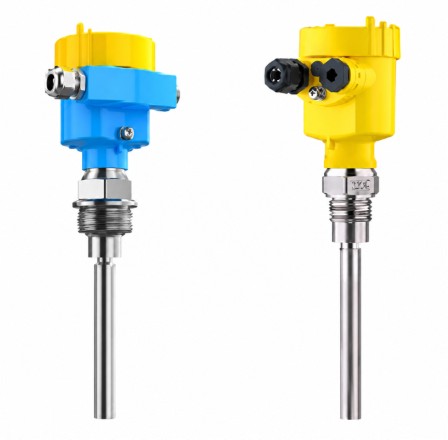
1. Comparison Table: Jiwei Tube-11 vs. Imported Brand Products
The following comparison is based on the contents of the provided image and can be used as a reference when comparing Tube-11 with imported brand products, such as similar VEGA level switches.
| Comparison Items | Jiwei Tube-11 | VEGACAP 61 |
|---|---|---|
| Product design Key to sensitivity and reliability | Dual-tube design; resonance is precisely pre-adjusted | Dual-tube design; resonance is precisely pre-adjusted |
| Minimum measurable density | 0.02g/cm³ | 0.02g/cm³ |
| Maximum process temperature | 400°C | 250°C |
| Material | 316L, 318 S13 | 316L, 318 S13 |
| Driving voltage of piezoelectric component Higher D.V. means shorter lifetime | 12–48V | <48V |
| Flameproof enclosure approval | Ex db IIC T1…T6 Gb; Ex tb IIIC T80°C…T440°C Db | Ex d IIC T6 |
| Intrinsic safety approval | Ex ia IIC T1…T6 Ga; Ex ia IIIC T200 100°C…T200 450°C Da | Ex ia IIC T6 |
| Ingress protection rating | IP67 | IP67 |
| Price | Low, about 2/3 of VEGA | High |
From the comparison table, Jiwei Tube-11 vibrating rod level switch reaches the same level as imported brand products in core structure, minimum measurable density, material, and ingress protection rating. At the same time, Tube-11 has stronger advantages in maximum process temperature, explosion-proof certification coverage, and price.
Especially in high-temperature applications, dust explosion-proof areas, gas explosion-proof areas, and projects with strict budget control, Tube-11 vibrating rod level switch is more suitable as a replacement for VEGACAP 67 or similar imported VEGA level switches.
2. Difference in Working Principle Between Tube-11 and VEGACAP 67
VEGACAP 67 is generally a capacitive level detection product. It mainly determines the material level by detecting capacitance changes caused when the material contacts the probe. Capacitive level switches are mature and widely used in many applications. However, in some powder applications, low dielectric constant materials, environments with significant humidity changes, applications with changing material composition, or conditions with severe material buildup on silo walls, capacitive switches may require adjustment according to the material characteristics.
Jiwei Tube-11 adopts the vibrating rod detection principle. Its internal piezoelectric driver drives the rod to vibrate at a fixed frequency. When the rod is not in contact with material, the instrument remains in its normal vibration state. When the material covers the rod, the vibration amplitude drops, and the electronics immediately recognize this change and output a switching signal.
This detection method is more direct. The detection basis is the damping effect of the material on the vibrating rod, not the dielectric constant of the material.
Therefore, when the material is powder, granules, fine bulk solids, lightweight powder, sticky material, or sediment, Tube-11’s vibrating rod detection method is more stable and more suitable for replacing VEGACAP 67 and other imported level switches.
3. Key Reasons Why Tube-11 Can Replace VEGACAP 67
3.1 Dual-Tube Probe Design for High Sensitivity and Reliability
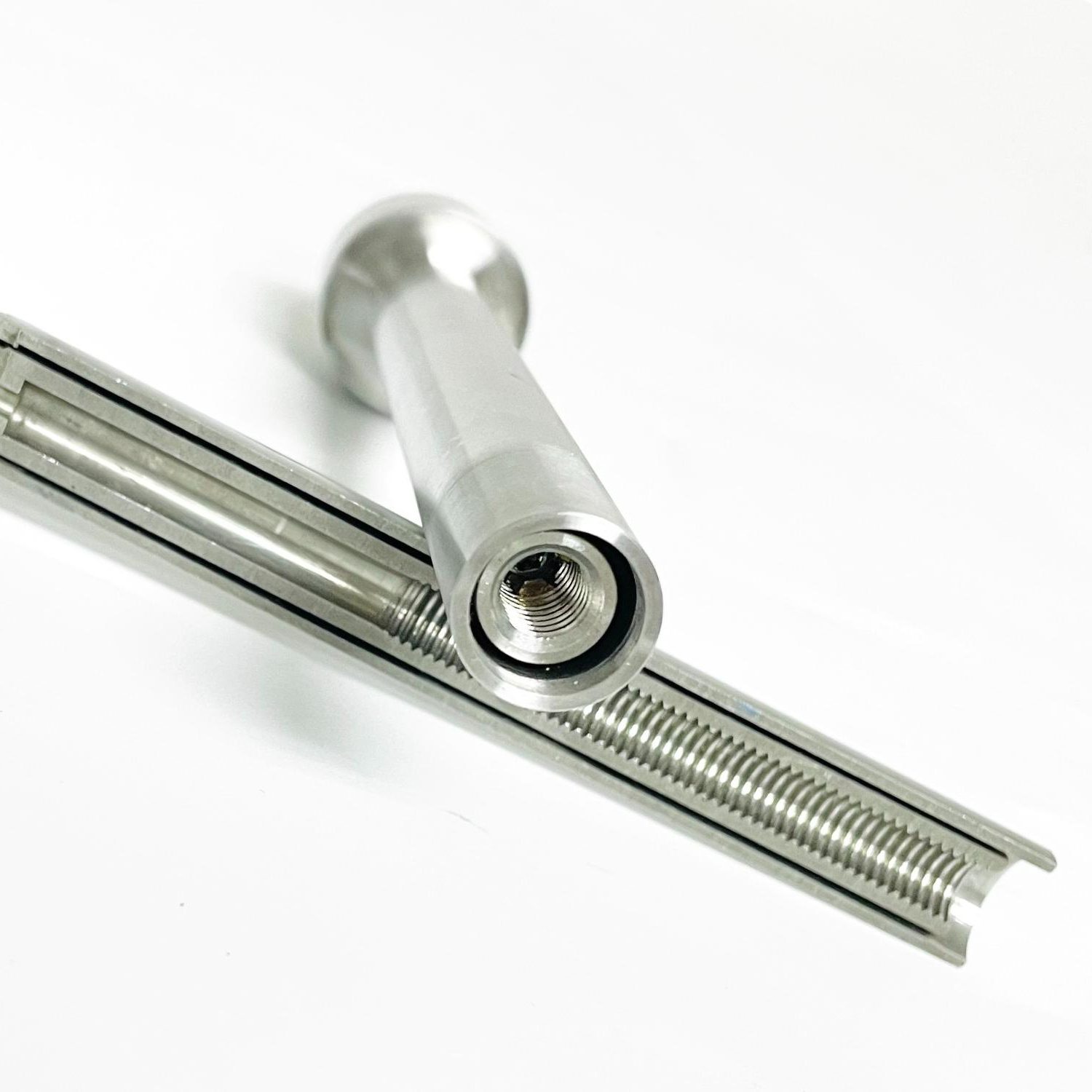
Tube-11 adopts a dual-tube probe design, which is one of its major advantages compared with ordinary vibrating rod level switches. The dual-tube structure improves the probe’s ability to identify whether the material has contacted the sensing element. The resonance is also precisely pre-adjusted, helping improve detection stability and repeatability.
In powder silos, material bulk density, particle size, flow behavior, and moisture content often change. If the level switch does not have sufficient sensitivity, false alarms, missed detection, or unstable reset may occur. Tube-11’s dual-tube design adapts better to these complex changes, making it more reliable in powder, granule, and low-density material detection.
3.2 Minimum Measurable Density Down to 0.02g/cm³
According to the comparison chart, both Jiwei Tube-11 and imported brand products can detect materials with a minimum density of 0.02g/cm³. This means Tube-11 can be used for very light powders and granular materials, such as dust, plastic powder, coal powder, lime powder, flour, chemical powders, grain, sugar, and beans.
Low-density material detection is one of the challenges in level measurement. Traditional switches may produce unstable signals when detecting lightweight powders because the material does not exert enough force on the probe. Tube-11 uses a highly sensitive vibrating rod detection method to identify the material contact state, making it suitable for lightweight powder silos, high-level alarms, and low-level protection.
3.3 Maximum Process Temperature Up to 400°C
The comparison table shows that Jiwei Tube-11 has a maximum process temperature of 400°C, while the imported brand product is listed as 250°C. For high-temperature powder silos, hot material bins, drying equipment, calcination systems, high-temperature chemical processes, building materials plants, and power plant ash handling systems, temperature capability directly determines whether the level switch can operate reliably for a long time.
Tube-11’s high-temperature capability allows it to be used not only for normal-temperature powder level detection but also for more demanding high-temperature applications. When replacing VEGACAP 67 or other imported level switches, if the site involves high-temperature materials, high-temperature silo walls, or high-temperature dust environments, Tube-11 offers stronger application advantages.
3.4 More Complete Explosion-Proof Certification Coverage
In industrial sites, dust explosion and gas explosion risks cannot be ignored. In industries such as chemical processing, grain processing, coal powder, cement, pharmaceuticals, food, plastics, and metallurgy, level switches must meet the corresponding explosion-proof requirements.
According to the comparison table, Tube-11 has both flameproof enclosure approval and intrinsic safety approval.
Its flameproof enclosure approvals include:
Ex db IIC T1…T6 Gb; Ex tb IIIC T80°C…T440°C Db
Its intrinsic safety approvals include:
Ex ia IIC T1…T6 Ga; Ex ia IIIC T200 100°C…T200 450°C Da
The imported brand product listed in the table has:
Ex d IIC T6 and Ex ia IIC T6
From this comparison, Tube-11 provides more complete coverage for both gas explosion-proof and dust explosion-proof applications. It is better suited for complex industrial sites with higher explosion-proof requirements.
3.5 Anti-Clogging Design for Sticky or Adhesive Materials
One of the most common problems in powder level detection is material buildup, caking, adhesion, and clogging. Materials such as cement, lime, coal powder, mineral powder, wet powder, sugar powder, and chemical powder can easily stick to the probe surface in humid or high-temperature environments.
If the level switch is not properly designed, adhered material may cause false alarms or prevent the instrument from resetting.
Tube-11 features an anti-clogging design and is suitable for sticky or adhesive media. Its vibrating rod detection principle, combined with the dual-tube structure, helps reduce the impact of material buildup on detection results, allowing the instrument to maintain better stability in complex powder environments.
For users currently using VEGACAP 67 but frequently experiencing material buildup, adhesion, or false alarms, Tube-11 is a replacement and upgrade solution worth considering.
3.6 No Calibration Required, Easier Installation and Commissioning
Another important advantage of Tube-11 is that it requires no calibration and is plug-and-play. After installation, it can be put into operation without complex adjustment. It is simple to operate and easy to maintain.
For plant users, replacing a level switch is not only about product price. Shutdown time, commissioning cost, and long-term maintenance cost are also important. Imported products may involve longer delivery times, more complicated commissioning arrangements, higher spare-part costs, and slower after-sales response.
As a domestic level switch, Tube-11 offers advantages in supply, technical support, field service, and maintenance cost. It is especially suitable for spare-part localization and replacement of aging imported instruments.
3.7 Price About Two-Thirds of VEGA, Offering Higher Overall Cost Performance
The comparison table shows that Jiwei Tube-11 has a lower price, about two-thirds of VEGA, while the imported brand product is more expensive. For projects involving many silos, multiple detection points, production line upgrades, and spare-part replacement, the price difference directly affects the overall procurement cost.
Tube-11 is not simply a low-cost substitute. It is a competitive product in key performance areas. It features a dual-tube structure, 0.02g/cm³ low-density detection, maximum 400°C process temperature, IP67 protection, complete explosion-proof certifications, intelligent self-diagnosis, no calibration, and anti-clogging design.
Therefore, while ensuring reliable detection, Tube-11 can help users reduce procurement and maintenance costs and achieve higher cost performance.
4. Typical Applications Where Tube-11 Can Replace VEGACAP 67
Jiwei Tube-11 is widely applicable to powder, granule, and sediment level detection, especially in the following applications:
Cement silos, lime silos, coal powder silos, sand silos, mineral powder silos, plastic pellet silos, grain silos, sugar silos, bean silos, chemical powder silos, environmental dust hoppers, food powder silos, pharmaceutical powder silos, building material powder silos, high-temperature hot material bins, drying equipment discharge outlets, hopper blockage detection, and sediment detection in water.
In these applications, users usually care about several issues: whether the material has low density, whether it is easy to stick, whether there is a dust explosion risk, whether the temperature is high, whether maintenance is convenient, and whether replacement cost is controllable.
Tube-11 addresses these pain points and provides a practical solution.
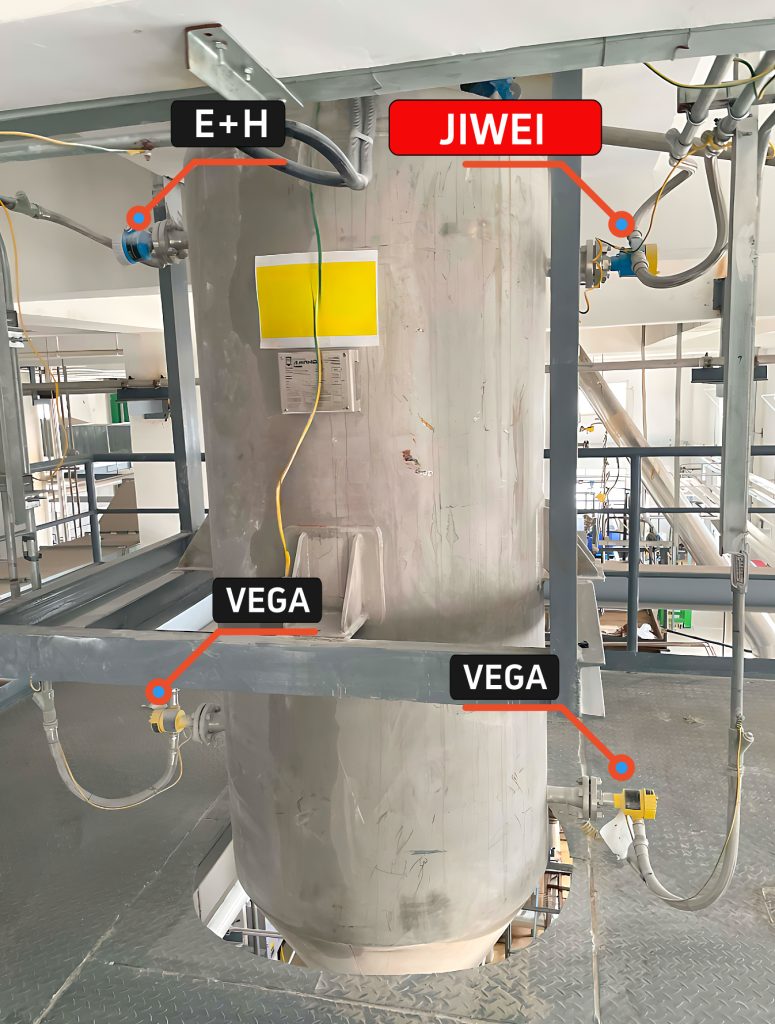
5. What Parameters Should Be Confirmed Before Replacing VEGACAP 67?
Although Tube-11 can be used as an alternative to VEGACAP 67 and similar imported VEGA level switches, the following parameters should still be confirmed before replacement.
First, confirm the process connection, including thread type, flange type, mounting size, and insertion depth. Second, confirm the power supply and output signal to ensure compatibility with the existing PLC, DCS, or alarm system. Third, confirm the site temperature, pressure, material density, material adhesion tendency, and mounting direction. Fourth, check the explosion-proof area classification and select the corresponding flameproof or intrinsically safe model. Finally, confirm whether a cable version is required. Tube-11 supports flexible cable connection up to 20 meters, making it suitable for remote measurement and special installation positions.
As long as these key parameters match, Tube-11 can smoothly replace the existing imported level switch and help users achieve localization upgrades.
6. Conclusion: Tube-11 Is a Cost-Effective Domestic Level Switch for Replacing VEGACAP 67
Overall, Jiwei Tube-11 vibrating rod level switch offers clear advantages in structural design, detection sensitivity, high-temperature capability, explosion-proof certification, anti-adhesion performance, maintenance convenience, and price.
It adopts a dual-tube probe design with precisely pre-adjusted resonance. It can detect materials with density as low as 0.02g/cm³, withstand process temperatures up to 400°C, reach an IP67 ingress protection rating, and provide both gas and dust explosion-proof certifications.
Compared with imported brand products, Tube-11 offers higher temperature capability, more complete explosion-proof coverage, and lower procurement cost while maintaining equivalent core detection performance.
For users looking for VEGACAP 67 replacement, VEGA level switch alternative, domestic replacement for imported level switches, powder level switch, high-temperature level switch, or explosion-proof level switch, Jiwei Tube-11 is a solution worth prioritizing.
In industrial automation upgrades, localization projects, spare-part cost reduction, and complex application retrofits, Tube-11 not only performs traditional level alarm functions but also provides stable and reliable detection in low-density powders, high-temperature materials, sticky media, dust explosion-proof environments, and remote installation applications.
Choosing Jiwei Tube-11 means choosing a high-performance vibrating rod level switch that can replace imported brands, reduce total cost, and improve on-site reliability.