In battery manufacturing, powdered and granular materials such as zinc powder, manganese dioxide, and electrolyte-related additives must pass through several processes, including storage, conveying, batching, and feeding.
Accurate material level monitoring inside storage silos is essential for maintaining a continuous supply to the production line.
When a silo reaches a low material level without triggering an alarm, the result may be interrupted feeding, equipment running without material, or even a complete production line shutdown. If a high material level is not detected in time, the silo may overflow, become blocked, or experience abnormal internal pressure.
For this reason, high- and low-level monitoring in battery material storage and feeding systems is not only part of process automation. It is also important for production continuity, equipment protection, and operational safety.
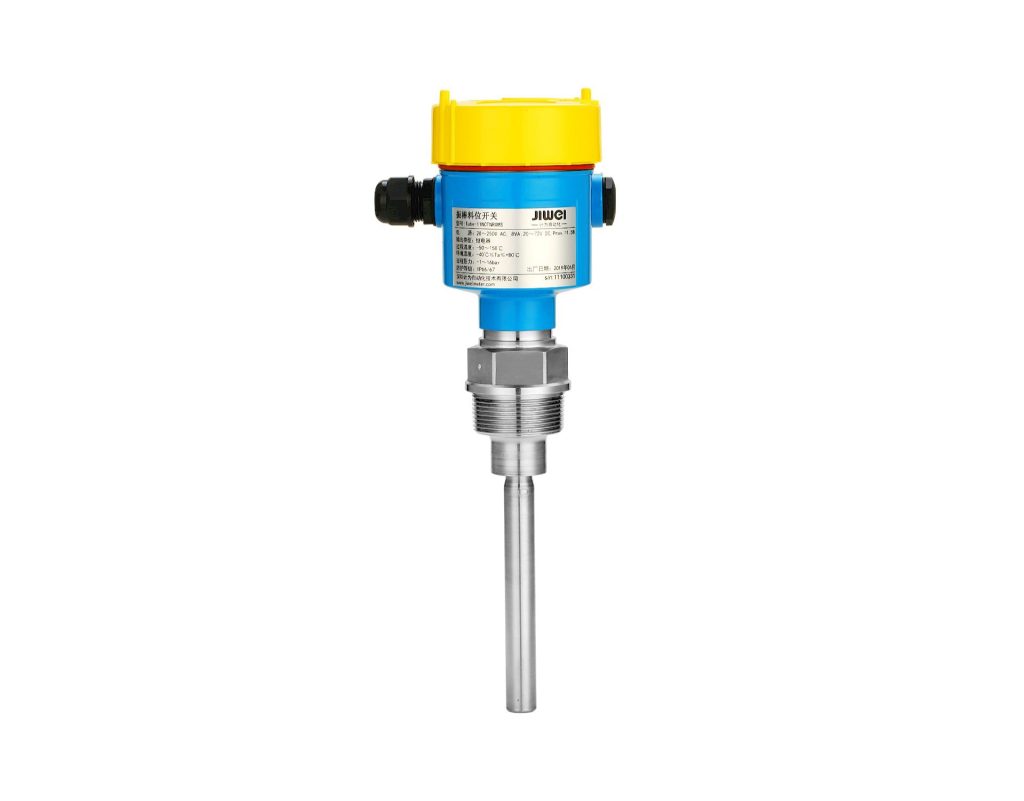
Battery powder silos often contain heavy dust, material buildup, continuous operating conditions, and limited installation space. The Jiwei Tube-11 vibrating rod level switch can be installed for both high- and low-level detection in these challenging environments.
Its switching signal can be connected to a PLC or another industrial control system to activate alarms, stop material feeding, or initiate automatic refilling.
1. Why Is Level Detection Difficult in Battery Powder Silos?
Battery raw materials may behave differently from ordinary granular products. Some powders have extremely small particle sizes and generate large amounts of airborne dust during conveying and filling.
Other materials may adhere to probes and silo walls due to humidity, static electricity, or temperature conditions inside the vessel.
Common challenges include the following.
1.1 High Dust Concentration
Pneumatic conveying, screw conveying, and free-falling materials can produce dense suspended dust inside a silo.
If a level instrument is highly sensitive to dielectric constant changes or surface deposits, signal drift may occur. The device may then incorrectly identify whether material is present at the detection point.
1.2 Material Buildup on the Probe
Fine powders may gradually form a deposit on the sensing element. If a level switch cannot distinguish between a thin layer of residual material and actual material coverage, it may continue to output a material-present signal even after the silo level has fallen.
1.3 Strong Impact During Filling
Material entering from the top of a silo may continuously strike a side-mounted probe.
An excessively long probe, an unsuitable mounting position, or the absence of a protective shield can reduce the service life and measurement stability of the instrument.
1.4 High Reliability Requirements for Continuous Production
Battery production lines are normally highly automated. If a level switch generates frequent false alarms or fails unexpectedly, conveying equipment may start and stop repeatedly.
This can increase maintenance requirements, disturb the production cycle, and affect overall manufacturing efficiency.
When selecting a powder level switch for a battery material silo, users should therefore evaluate more than whether the device can generate a switching signal.
Resistance to dust, material buildup, mechanical impact, response performance, and long-term operating stability should all be considered.
2. Limitations of Conventional Powder Level Detection Technologies
Common point level detection instruments used in powder silos include capacitive level switches and rotary paddle level switches.
A capacitive level switch determines material presence by detecting changes in the dielectric constant around its probe. This technology may provide satisfactory performance for stable materials with little surface adhesion.
However, in dusty environments or applications where powder easily sticks to the probe, the deposited layer may change the capacitance and cause signal drift or false switching.
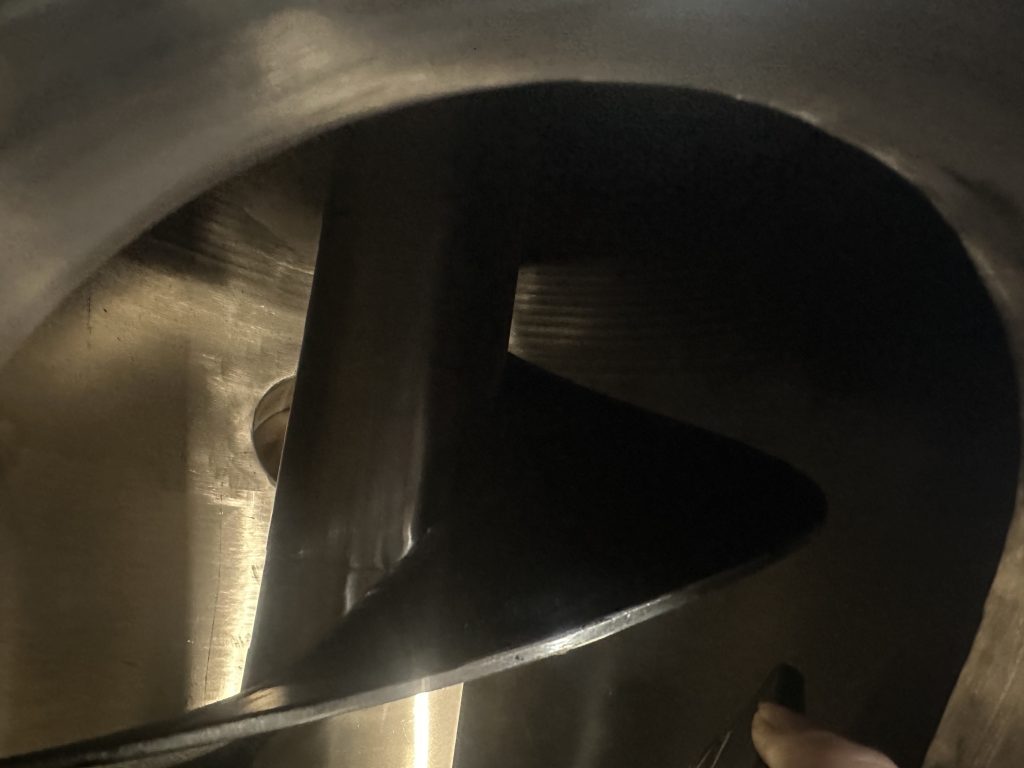
A rotary paddle level switch uses an electric motor to rotate a paddle. When the material blocks the paddle, the instrument generates a level signal.
Although its operating principle is straightforward, the device contains mechanical parts such as a motor, bearing, shaft, and rotating paddle. Under continuous operation, heavy dust, or material jamming conditions, these components may become blocked or worn.
A vibrating rod level switch does not depend on material dielectric properties and does not contain a continuously rotating detection mechanism. It is therefore well suited to powder and granular silos that require reliable, continuous operation.
3. How Does the Tube-11 Vibrating Rod Level Switch Work?
The Jiwei Tube-11 vibrating rod level switch uses a double-tube vibration probe with an inner and outer tube arranged in a nested structure.
Piezoelectric components drive and monitor the vibration of the probe.
When the probe is not covered by material, the inner and outer tubes maintain stable vibration at a predetermined resonance frequency.
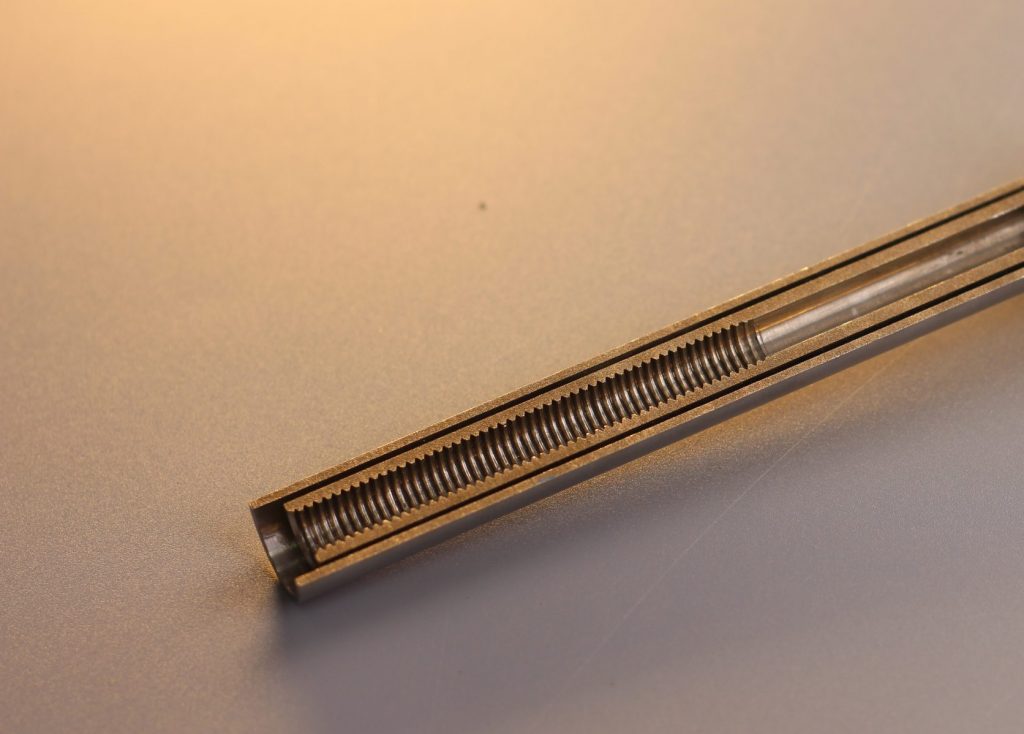
When powder or granular material covers the sensing probe, the damping effect of the material changes the resonance condition of the outer tube. The original resonance relationship between the two tubes is disrupted, causing the vibration amplitude to decrease significantly.
The electronic circuit detects this vibration change and converts it into a switching signal. The signal can then be transmitted to a PLC, DCS, relay, alarm panel, or another control device.
This allows the system to determine whether material is present or absent at the detection point.
Because the technology is based on changes in probe vibration, it does not depend on the electrical conductivity or dielectric constant of the material. This helps reduce interference caused by dust concentration, humidity changes, or variations between material batches.
4. Advantages of the Tube-11 in Battery Material Silos
4.1 Detection of Low-Density Powders and Granules
Battery materials can vary significantly in bulk density and flowability. Some additives are particularly lightweight and may not generate enough resistance to activate certain mechanical level switches.
The Tube-11 vibrating rod level switch can detect solid materials with a minimum density of 0.02 g/cm³.
This allows it to be used for a wide range of powders and granules, including relatively low-density battery additives.
4.2 Minimal Influence from Dust and Dielectric Constant Changes
Vibration-based level detection does not rely on capacitance changes.
As a result, variations in dust concentration, environmental humidity, or material dielectric properties generally do not directly interfere with its detection principle.
In battery powder silos, this feature helps reduce false alarms caused by airborne dust, material deposits, or changes between production batches.
4.3 Sensitive Double-Tube Probe Design
The Tube-11 uses a nested inner and outer vibrating tube structure. The resonance frequencies of the two tubes are matched to create stable vibration.
When material contacts the outer tube, the vibration condition changes noticeably, allowing the electronic circuit to detect material coverage.
This design combines measurement sensitivity with stable vibration performance and is suitable for dusty conditions, slight material buildup, and continuous industrial operation.
4.4 No Continuously Rotating Components
A vibrating rod level switch does not require a motor to continuously rotate a mechanical paddle.
This reduces potential failure points associated with rotating shafts, bearings, paddle blockage, and mechanical wear.
For storage and feeding systems that operate for long periods, this design can reduce routine maintenance and minimize production interruptions caused by mechanical component failure.
4.5 Compact Probe Reduces Material Impact
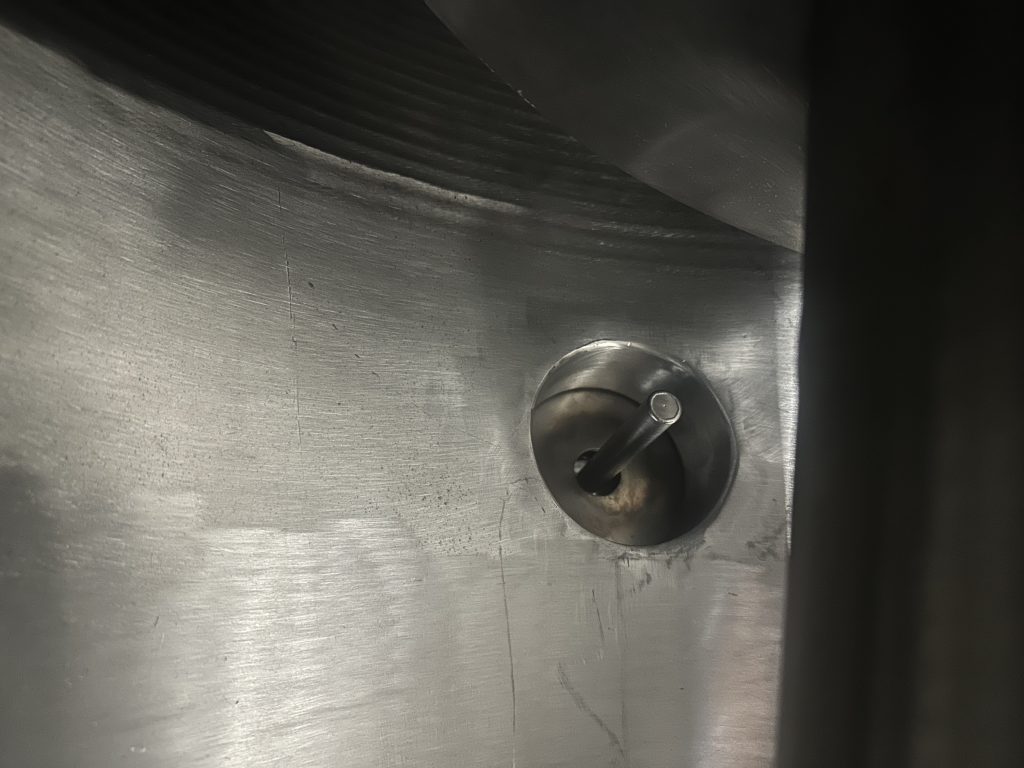
The standard Tube-11 probe has a length of 125 mm and a diameter of 16 mm.
Its compact structure reduces the surface area exposed to falling material. It also makes the device easier to install on silos with limited connection space.
4.6 Easy Integration with Automated Control Systems
The Tube-11 is available with relay output and two-wire output options.
The relay-output model can support a wide range of AC or DC power supplies, while the two-wire model can be integrated into a suitable DC control circuit.
Once the high- and low-level signals are connected to a PLC, the system can perform several automatic control functions:
- Stop material feeding when the high level is reached to prevent overfilling.
- Start refilling or issue a shortage alarm when the low level is detected.
- Activate an interlock during abnormal conditions to protect conveying and production equipment.
5. High- and Low-Level Monitoring for Battery Powder Silos
A battery material storage and feeding system can normally use two point level switches in the same silo: one for high-level detection and one for low-level detection.
High-Level Switch
The high-level switch is installed in the upper section of the silo to monitor the maximum safe material level.
When material covers the probe, the switch generates a high-level signal. The control system can then stop the upstream conveyor, shut a feeding valve, or deactivate the filling system.
This helps prevent material overflow, excessive accumulation, and other overfilling problems.
Low-Level Switch
The low-level switch is installed near the lower section of the silo. It determines whether the remaining material has fallen below the minimum level required for continuous feeding.
When the sensing probe is no longer covered, the instrument outputs a low-level signal.
Depending on the control logic, the system can activate refilling equipment, send a shortage alarm to the operator, or stop downstream machinery to prevent dry running.
By linking the two level switches with a PLC, screw feeder, pneumatic conveying system, or another material handling device, the plant can create a closed-loop control system covering detection, alarms, and automatic equipment operation.
6. Tube-11 Installation Guidelines
Correct installation is essential for achieving reliable powder level detection.
6.1 Avoid the Material Inlet
The level switch should not be installed directly below the material filling point.
Continuous impact from falling material may cause unstable switching and increase mechanical stress on the sensing probe.
When the installation position cannot completely avoid the filling area, a protective shield should be installed above the probe.
6.2 Use an Appropriate Downward Angle for Horizontal Installation
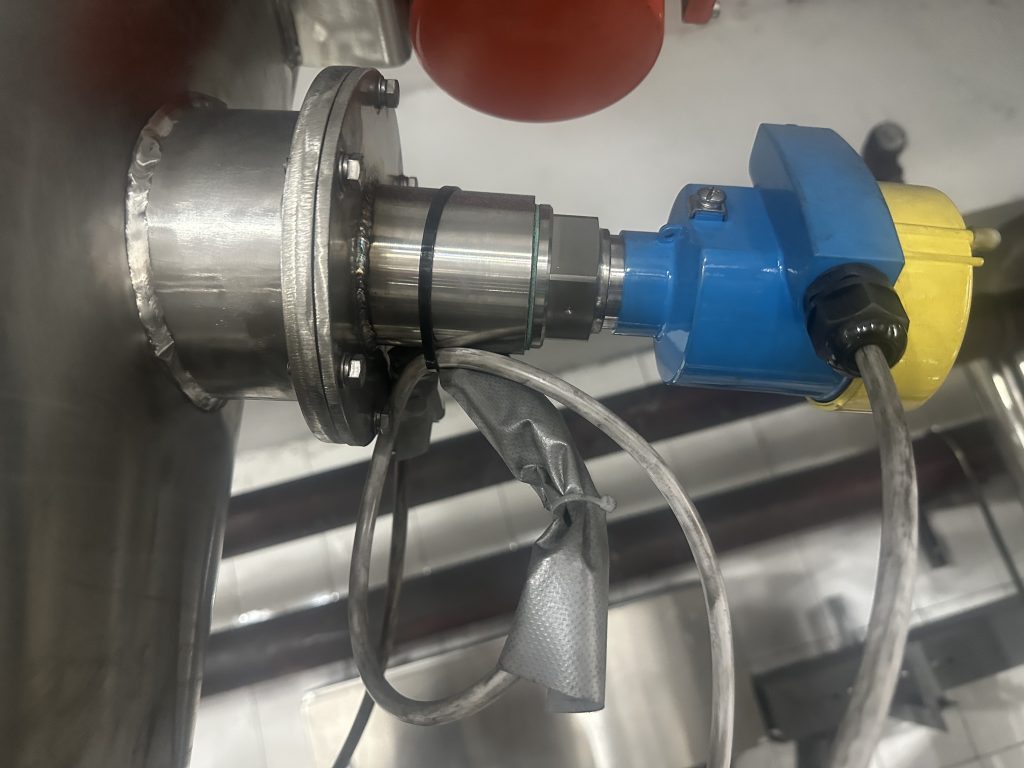
For horizontal mounting, the Tube-11 should generally be installed with the probe angled downward by approximately 20 degrees.
This allows powder and granular material to slide away from the sensing surface naturally and helps reduce buildup.
For coarse, dense, or strongly impacting materials, a V-shaped protective plate may also be installed according to the actual process conditions.
6.3 Avoid Dead Zones Inside the Silo
The installation point should accurately represent changes in the overall material level.
Locations where bridging, rat-holing, or localized accumulation may occur should be avoided.
When selecting a high-level detection point, the angle of repose of the material should also be considered. Otherwise, material may contact the probe on one side of the silo while the remaining area has not yet reached the intended level.
6.4 Select the Correct Process Connection
For retrofit projects, a threaded or flanged connection matching the existing silo nozzle can reduce structural modification work.
Before installation, users should confirm the connection size, insertion length, silo wall thickness, and the presence of any insulation layer.
6.5 Confirm Dust Explosion Protection Requirements
Some battery material powders may be combustible.
When the installation area is classified as a dust explosion hazardous zone, a model with the appropriate dust explosion protection certification must be selected.
A general enclosure protection rating should not be treated as a substitute for certified explosion protection.
The Tube-11 series can be configured for gas and dust hazardous areas. The exact protection method should be selected according to the site classification and applicable safety standards.
7. Information Required for Vibrating Rod Level Switch Selection
To select a suitable level switch for a battery powder silo, users should provide the instrument supplier with complete process information, including:
- Material name and main composition
- Bulk density
- Particle size
- Material flowability
- Tendency to adhere or form deposits
- Normal and maximum operating temperature
- Internal silo pressure or vacuum
- Silo height and diameter
- Intended installation position
- Thread or flange connection size
- Available power supply
- Required output signal
- High-level or low-level alarm function
- Gas or dust explosion protection requirements
- Expected mechanical impact from falling material
Material density, process temperature, installation method, and hazardous-area requirements are especially important during vibrating rod level switch selection.
If the material temperature is elevated, a high-temperature or ultra-high-temperature design should be selected instead of a standard model.
The Tube-11 series is available in standard-temperature, high-temperature, and ultra-high-temperature configurations. Ultra-high-temperature models can also be used with air or water cooling systems for demanding solids level detection applications.
8. Project Application Results
In an application involving Nanfang battery material storage and feeding silos, Tube-11 vibrating rod level switches were installed for both high- and low-level detection.
The instruments were connected to the site PLC through standard switching signals.
According to the project application record, the instruments maintained stable responses under dusty conditions and changing material coverage.
Compared with some previously installed capacitive and rotary paddle devices, false switching and mechanical jamming were reduced. The amount of cleaning and inspection work was also decreased.
This application demonstrates that selecting a detection principle suited to the material characteristics and operating environment is often more important than choosing an instrument with unnecessarily complex measurement functions.
9. Other Applications for the Tube-11 Vibrating Rod Level Switch
In addition to battery materials, the Tube-11 can be used for many powdered and granular products, including:
- Fly ash, coal powder, and lime
- Cement, sand, and construction powders
- PVC pellets and plastic granules
- Activated carbon and chemical powders
- Sugar, grains, beans, and other food materials
- Sawdust, straw, and other lightweight solids
- Ash and granular materials in the power and metallurgical industries
For high-temperature, ultra-high-temperature, hazardous-area, or deep-silo top-mounting applications, high-temperature, explosion-proof, or cable-extension models can be selected according to the process requirements.
Conclusion
Battery powder silos are often affected by dense dust, material buildup, continuous operation, and demanding production requirements.
Conventional capacitive or mechanically rotating level switches may experience signal drift, probe deposits, jamming, or mechanical wear under these conditions.
The Jiwei Tube-11 vibrating rod level switch uses a nested double-tube vibration probe to detect changes in vibration after the sensing element is covered by material.
Its advantages include low-density material detection, resistance to dust interference, no continuously rotating components, no on-site calibration requirement, multiple output options, and hazardous-area configurations.
These features make it a practical point level monitoring solution for battery material storage and feeding systems.
Before selecting a vibrating rod level switch, users should provide accurate information about material density, particle size, temperature, pressure, installation position, process connection, and explosion protection requirements.
Proper product selection and installation allow the level switch to perform effectively in overfill prevention, shortage alarms, equipment protection, and automatic feeding control.