In an XPS extruded polystyrene board production line, polystyrene, or PS, granules are one of the main raw materials. Most factories store bagged or bulk PS resin in indoor or outdoor silos before transferring it to the dosing system and extruder through pneumatic conveying, vacuum loading, or screw conveying.
At first glance, determining how much material remains in a silo may seem straightforward. In reality, silo level has a direct impact on production scheduling, raw material purchasing, and uninterrupted extruder feeding. An inaccurate level reading may result in unnecessary manual inspections and emergency material replenishment. In more serious cases, an empty silo may interrupt the material supply and stop the production line.
Why PS Granule Silos Are More Difficult to Measure Than Liquid Tanks
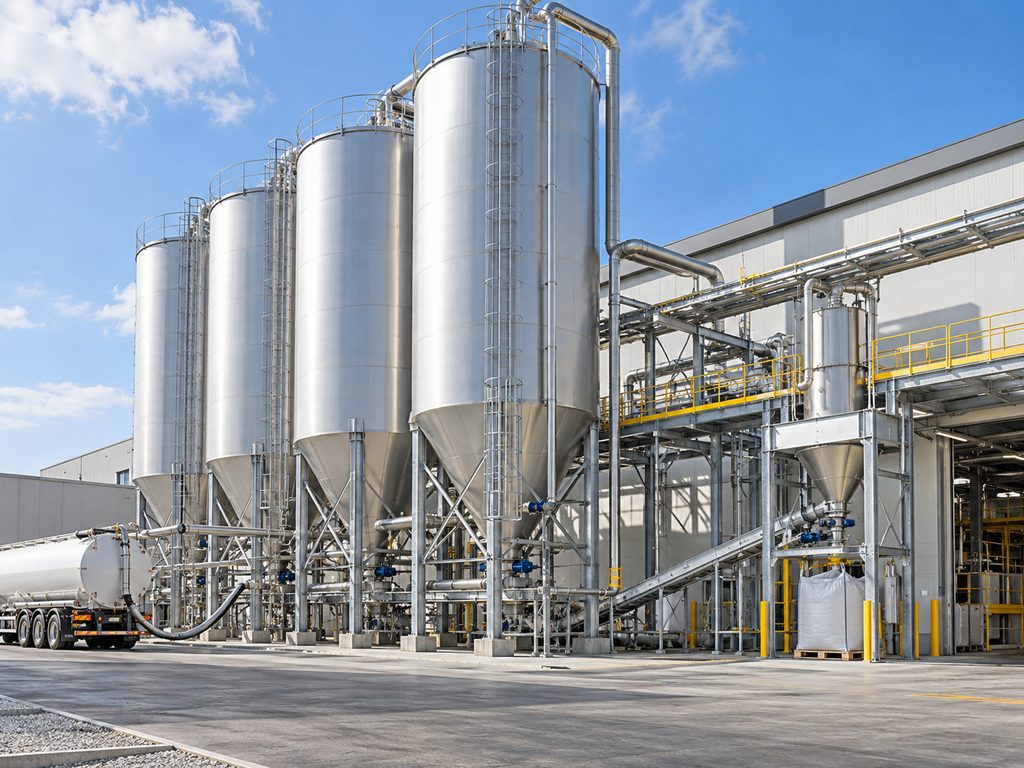
A typical XPS raw material silo is relatively tall, with material entering from the top and discharging through a conical bottom.
During pneumatic conveying, PS granules can generate dust. Near the filling inlet, a high-speed stream of material may also pass through the measuring area.
Unlike a liquid surface, bulk solids do not form a flat horizontal surface. Granules may create peaks, slopes, and local depressions. Internal structures such as ladders, reinforcing ribs, filling pipes, or support beams can create additional false echoes.
Manual inspection cannot provide continuous inventory data. Some mechanical measuring devices also require direct contact with the material, which introduces wear and maintenance concerns over time.
For XPS manufacturers that want to integrate raw material silos into a PLC, DCS, or production management system, non-contact continuous level measurement is usually a more practical solution.
Using an 80 GHz Radar Level Meter for Continuous PS Silo Measurement
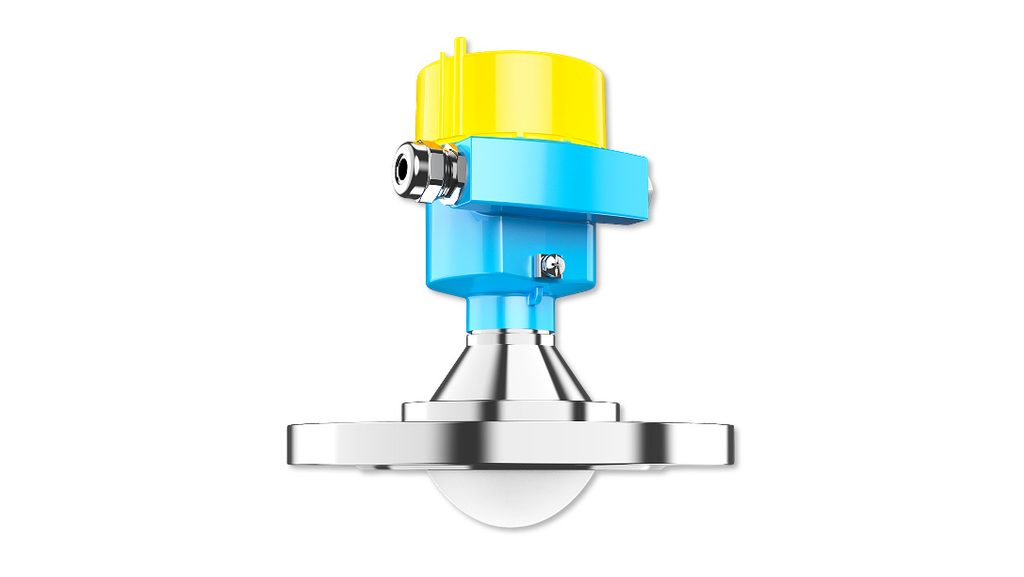
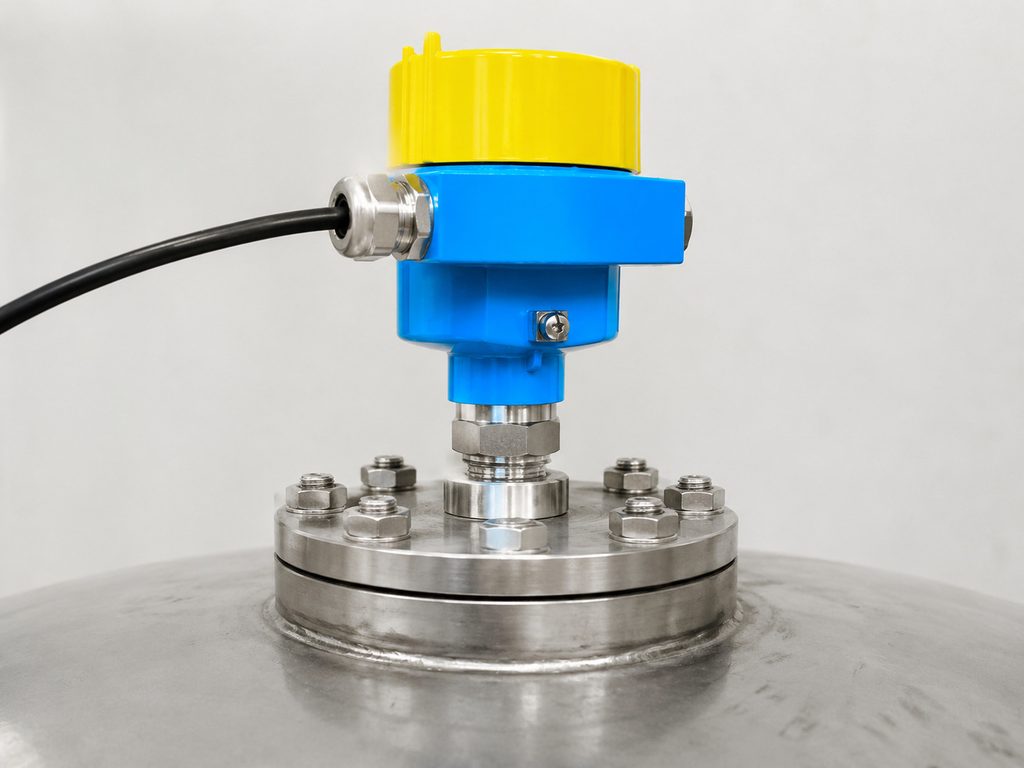
For dusty granule silos with uneven surfaces and relatively low dielectric constant materials, a JWrada®-34 radar level meter can be installed on the silo roof.
The instrument uses 80 GHz FMCW radar technology. Its narrow beam is suitable for continuous level measurement of low-dielectric powders, solid granules, and dusty bulk material applications.
Because the measurement is non-contact, the antenna does not need to be inserted into the material. This helps reduce mechanical wear, impact, and friction caused by moving granules.
In an XPS raw material silo, the radar level meter does more than display a level value.
The continuous output can be converted into a silo filling percentage and integrated with purchasing, conveying, and production scheduling systems. Depending on the control architecture, signals such as 4–20 mA/HART or RS485/Modbus can be transmitted to a PLC or DCS.
Operators can then monitor the current raw material inventory directly from the control room.
Installation Position Is More Important Than Simply Selecting the Correct Measuring Range
The radar level meter should not be installed directly below the pneumatic filling inlet.
If the radar beam points into a fast-moving stream of falling granules, the instrument may detect the material stream instead of the actual bulk surface, causing unstable readings.
The instrument should also not be mounted too close to the silo wall. Internal ladders, reinforcing ribs, beams, or pipes should be avoided whenever possible.
For a silo with a conical bottom, the radar should be directed toward a representative part of the bulk material surface rather than simply aimed at the lowest point of the discharge outlet.
If the silo is tall or available roof openings are limited, the mounting orientation should be carefully adjusted so that the radar beam avoids internal obstacles.
During commissioning, echo conditions should be checked at empty, low, medium, and nearly full levels. False echo suppression and parameter optimization can then be completed based on actual operating conditions.
Combining Continuous Radar Measurement With an Independent High-High Level Switch
Continuous level measurement does not mean that every protection function must depend on the same radar instrument.
For an automatically filled PS silo, the radar can provide low-level, normal-level, and high-level alarms. An independent point level switch can also be installed at the high-high level.
When the material reaches the maximum safe filling level, the independent level switch can send a signal directly to the PLC to stop the conveying equipment.
This creates an additional protection layer. Even if the continuous radar signal becomes abnormal, the silo still has independent overfill protection.
From Level Indication to Automated Raw Material Management
In practical operation, the PS silo can be divided into several control zones.
The normal level range supports routine production. A low-level alarm can trigger replenishment or purchasing reminders. A low-low level alarm can warn operators that the raw material supply needs immediate attention.
A high-level alarm can restrict further filling, while a high-high level signal can stop the conveying system.
Once silo level data is connected to a PLC or production management system, it can also be combined with extruder throughput to estimate material consumption.
Production managers can calculate approximately how many hours of production remain based on the current inventory instead of relying on operators to inspect the silo manually.
This is especially valuable in factories where multiple XPS production lines share the same raw material supply system.
XPS Raw Material Silo Selection Should Not Be Based Only on Measuring Distance
Proper instrument selection should consider more than silo height.
Important information includes total silo height, effective measuring range, silo diameter, hopper geometry, filling position, PS granule characteristics, percentage of recycled material, maximum dust conditions, roof nozzle dimensions, and required automation signals.
For outdoor silos, ambient temperature, enclosure protection, lightning protection, and hazardous-area classification should also be considered.
The more complete the application information is, the easier it is to determine the correct radar mounting position, beam direction, and whether an independent high-high level switch is required.
This also reduces the risk of additional roof openings or repeated commissioning after installation.
Application Value
Stable raw material feeding is essential for maintaining product quality and continuous operation in an XPS extrusion line.
An 80 GHz radar level meter provides continuous silo inventory information without contacting the material. It can reduce manual inspections, improve material visibility, and provide reliable data for automatic replenishment and production planning.
For a new XPS project, it is advisable to reserve a suitable radar mounting nozzle during silo design.
For an existing production line, the available mounting position should first be checked to ensure that it is not directly exposed to the filling stream or major internal obstructions.
Frequently Asked Questions
Does every PS granule silo require a radar level meter?
No. If the only requirement is to determine whether material is present, a point level switch may be sufficient. If continuous inventory, remote monitoring, trend analysis, and purchasing management are required, radar measurement is more suitable.
Will pneumatic conveying dust affect radar measurement?
Dust is common in bulk solid silos. An 80 GHz radar has a narrow and focused beam, but correct installation and commissioning are still important. The radar should not point directly into the filling stream.
Can one radar also provide high-high level protection?
A radar can generate multiple alarm points, but for critical overfill protection, an independent high-high level switch is recommended as a separate protection layer.